This post contains affiliate links. As an Amazon Associate, I earn from qualifying purchases at no extra cost to you.
My Mulberry Tree Was Losing the Battle Against Whiteflies
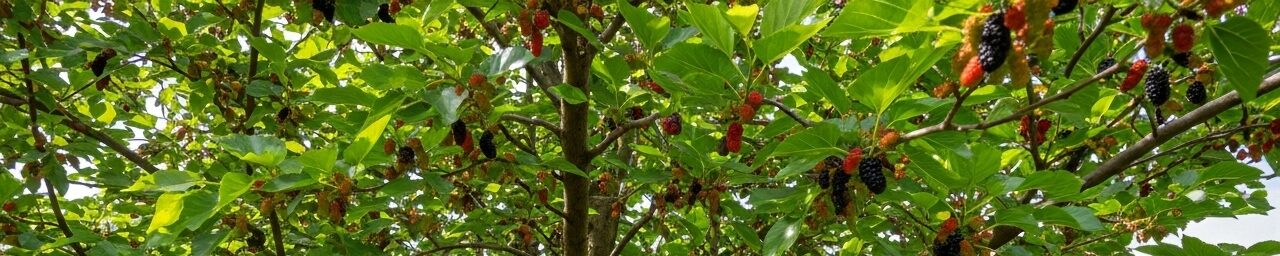
Last June, I walked out to check on my Pakistan mulberry and stopped dead in my tracks. A cloud of tiny white insects exploded off the leaves the moment I brushed a branch. My stomach sank. After weeks of watching the foliage look progressively sadder — yellowing edges, sticky residue on the stems, leaves curling inward — I finally had my answer. Whiteflies. If you’ve been searching for an honest neem oil spray mulberry whitefly review, you’ve landed in the right place, because I spent 30 days systematically testing one specific product to see whether it could actually turn things around.
The infestation wasn’t minor. Turning over even a single leaf revealed clusters of pale, scale-like nymphs clinging to the underside. The adults rose in waves every time I disturbed the canopy. My tree had been in the ground for three years, and this was the first serious pest pressure I’d encountered. I wasn’t about to lose it to something I hadn’t even tried to fight.
I wanted an organic-friendly solution. I have kids and a dog who spend time under that tree, and I wasn’t comfortable reaching for a synthetic systemic insecticide right away. That constraint pointed me pretty quickly toward neem oil — a well-documented, plant-derived option with a reasonable safety profile when used as directed. The question was which product to actually buy.
Why I Chose BioAdvanced Organics Brand Neem Oil
Plenty of neem oil products line the shelves and fill Amazon search results. Some are concentrates you dilute yourself. Others are ready-to-use sprays. After reading through forum threads on mulberry-specific pest management and several university extension pages on whitefly control, I settled on the BioAdvanced Organics Brand Neem Oil, Ready-to-Use, 24 oz.
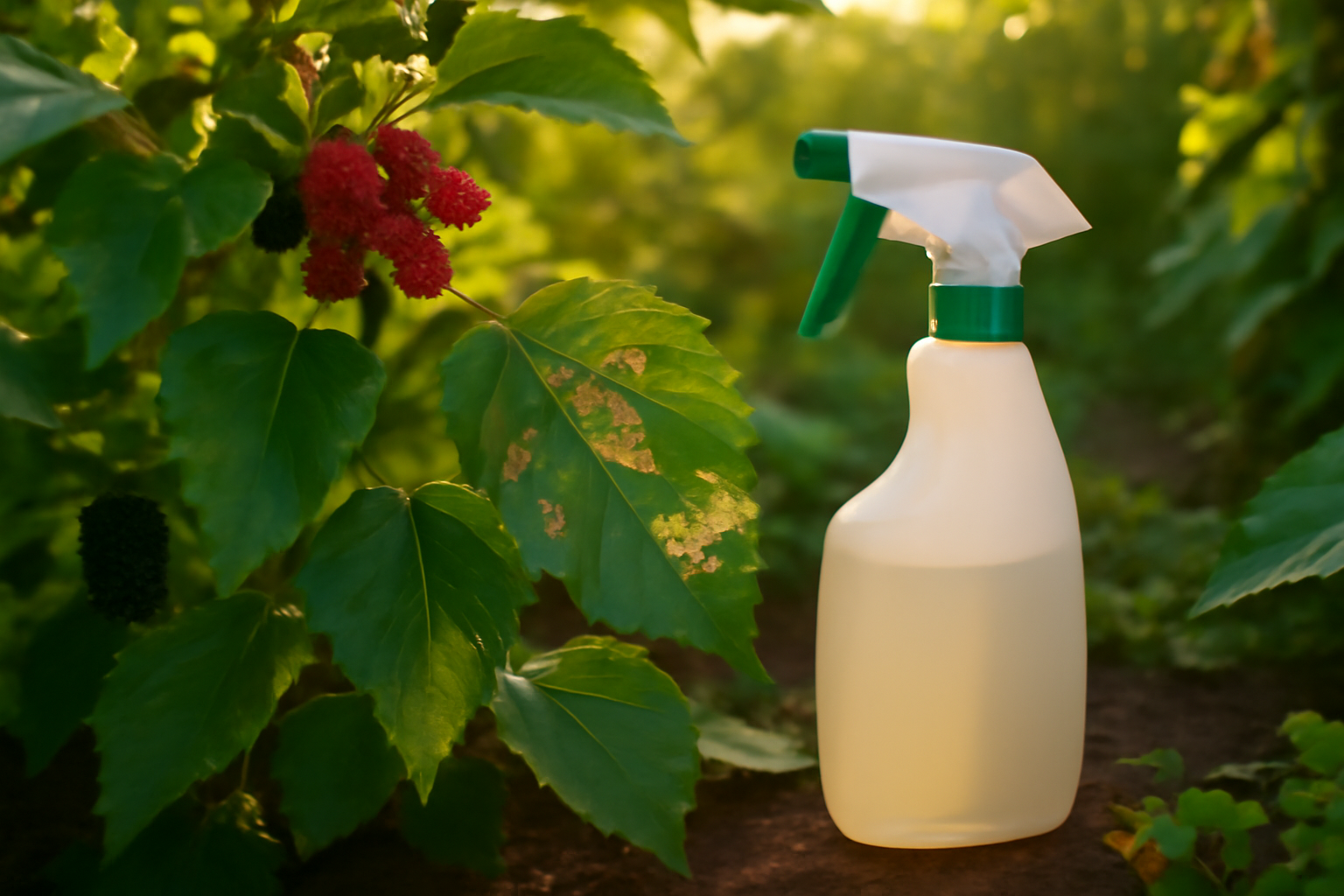
A few factors pushed me toward it. First, the ready-to-use format appealed to me. Mixing concentrates requires getting the emulsification right — too little and the oil separates; too much soap and you can cause phytotoxicity. I wanted to remove that variable from the equation, at least for my first serious neem trial. Second, BioAdvanced is a brand with a fairly long track record in the consumer pest and lawn space, which gave me more confidence than some of the white-label neem products I found. Third, the 24 oz bottle with a built-in spray nozzle made it practical to use immediately without hunting for a separate sprayer.
I also looked closely at the Bonide Captain Jack’s Neem Max as an alternative. More on that toward the end. For now, the BioAdvanced product won my first purchase on the basis of convenience and brand familiarity.
First Impressions Out of the Box
The bottle arrived well-sealed with no leakage — always a relief when ordering liquid pest control online. The trigger sprayer felt sturdy enough, with an adjustable nozzle that switches between a fine mist and a narrow stream. That adjustability turned out to matter more than I expected, because reaching the undersides of leaves on a mature mulberry branch requires a fairly targeted stream rather than a wide mist.
Opening the bottle, the smell is… distinctive. Neem oil has a strong, sulfur-meets-garlic odor that you either tolerate or find genuinely unpleasant. I’ve used neem products before, so it didn’t surprise me. If you’re new to neem, just know the scent dissipates within a few hours outdoors but can linger noticeably indoors.
The label clearly states the active ingredient is clarified hydrophobic extract of neem oil at 0.9%. That’s a lower azadirachtin level than what you’d get from a cold-pressed concentrate, which is worth noting. The product is designed to work primarily as a contact and residual spray rather than delivering high systemic azadirachtin activity. For whitefly control — where contact with nymphs and disrupting their life cycle matters — this approach is still scientifically reasonable.
My 30-Day Testing Protocol
I treated my Pakistan mulberry every five to seven days for four weeks. Each session followed the same routine. I sprayed in the early evening to avoid the heat of the day, which can increase phytotoxicity risk with oil-based sprays. Coating both the upper and lower leaf surfaces was non-negotiable — whitefly nymphs live almost exclusively on leaf undersides, so spraying only the tops would have been largely useless.
My tree stands about 10 feet tall with a moderately dense canopy. Each treatment used roughly 8–10 oz of product. Over the 30-day trial, I went through just over one full 24 oz bottle plus a portion of a second. I noted my observations in a simple journal: adult fly counts before spraying, leaf condition, any new nymph activity, and any signs of phytotoxic damage to the foliage.
Conditions during the trial were typical of a warm Pacific Northwest summer — temperatures between 72°F and 88°F, low humidity, no rain events. I did not apply any other pest treatments during this period to keep the results as clean as possible.
Week-by-Week Breakdown
- Week 1: Applied on Days 1, 6. No visible reduction in adult numbers yet. Nymph clusters on treated leaves appeared unchanged.
- Week 2: Applied on Days 12, 17. Adult cloud noticeably smaller when disturbing branches. Some nymph clusters looked less dense on heavily treated leaves.
- Week 3: Applied on Days 22, 27. Clear improvement. Most leaf undersides had significantly fewer nymphs. New leaf growth looked cleaner.
- Week 4: Final observation on Day 30. Adult populations reduced by roughly 70–80% compared to peak. Sticky honeydew residue on stems had largely stopped accumulating.
What Actually Changed — Honest Results
By the end of week four, the improvement was real and meaningful. The dramatic whitefly clouds that had greeted me every morning were gone. Running my hand along a branch no longer triggered a white blizzard. Leaf yellowing slowed, and the new growth coming in looked healthy and pest-free. The sticky honeydew — which had been attracting ants and creating the conditions for sooty mold — had stopped accumulating on the lower branches.
I want to be honest, though. The results were not instant, and they were not complete. Older, heavily infested leaves never fully recovered their color. Some nymph activity persisted in the densest parts of the canopy through week three, and I genuinely had a moment in week two where I wondered if this was going to work at all. The first ten days showed almost nothing, and I nearly ordered a different product in frustration.
Sticking with the protocol made the difference. Neem oil’s mechanism against insects — disrupting molting, feeding deterrence, some contact kill — requires consistent application across multiple life cycle stages. One or two treatments will rarely solve a moderate-to-heavy infestation. That’s not a flaw unique to the BioAdvanced Organics Brand Neem Oil, Ready-to-Use, 24 oz — it’s a characteristic of neem-based pest control generally.
No phytotoxicity appeared on the foliage at any point, which I credit to the evening application schedule. The leaves tolerated the spray well, even on thin new growth. That was genuinely reassuring given how much I’d read about oil sprays causing leaf burn in hot conditions.
The Downsides I Can’t Ignore
A few real limitations are worth discussing plainly before you decide to buy.
Cost per application is high for larger trees. At roughly $12–14 per 24 oz bottle, and using nearly 10 oz per treatment session on a 10-foot tree, you’ll burn through product quickly. Treating a large, mature mulberry — 15 or 20 feet with a full spread — would almost certainly require a concentrate diluted in a pump sprayer for anything resembling cost-effectiveness.
The built-in sprayer fatigues your hand on a large tree. By the time I’d thoroughly coated all the leaf undersides, my trigger finger was genuinely tired. For a small potted plant or a compact shrub, the ready-to-use bottle is perfectly convenient. On a full-sized fruit tree, the ergonomics become a real annoyance over a 30-minute spray session.
The low azadirachtin concentration is a limitation. The clarified hydrophobic extract formulation in this product works primarily by contact. Cold-pressed neem oil products retain more azadirachtin, which disrupts insect hormone systems more aggressively. If you’re dealing with an extremely heavy infestation, a higher-strength product may deliver faster results.
The smell is a genuine issue near outdoor living spaces. Two of my spray sessions left a noticeable odor near my patio furniture for several hours. It’s not toxic — but if your mulberry grows near a seating area or outdoor kitchen, plan your spray timing accordingly.
Final Verdict: My Neem Oil Spray Mulberry Whitefly Review After 30 Days
After a full month of consistent application, the BioAdvanced Organics Brand Neem Oil, Ready-to-Use, 24 oz delivered a genuine, measurable reduction in my mulberry whitefly infestation. It’s not a miracle product, and it won’t produce overnight results. What it will do — if you apply it correctly, consistently, and at the right time of day — is progressively knock back a whitefly population across multiple life cycle stages without harsh synthetic chemistry.
Buy This If:
- You have a small-to-medium mulberry tree (under 12 feet) with a moderate whitefly problem
- You want an organic-approved, ready-to-use option with no mixing required
- You’re committed to a multi-week spray schedule and realistic about timeline
- You prioritize a safer residue profile around kids, pets, and beneficial insects (when used as directed)
Skip This If:
- Your tree is large and you need to spray frequently — the cost and ergonomics don’t scale well
- You need fast knockdown of a severe infestation and don’t have weeks to invest
- You want maximum azadirachtin content and prefer mixing your own solution from concentrate
Consider This Alternative for Larger Trees
If cost-per-application or azadirachtin concentration are concerns, take a close look at the Bonide Captain Jack’s 64 oz Neem Max Cold Pressed Neem Oil Spray. This is a cold-pressed neem oil product, meaning it retains more of the naturally occurring azadirachtin compound. At 64 oz, it offers significantly more volume for treating larger trees. It requires a separate pump sprayer for efficient application, but that trade-off delivers better economics and potentially stronger systemic activity against pests like whiteflies. For my mid-sized Pakistan mulberry, the BioAdvanced ready-to-use product was the right fit. For a larger specimen or a grower treating multiple trees, Neem Max is worth the extra step of mixing.
Ready to try it yourself? Grab the BioAdvanced Organics Brand Neem Oil, Ready-to-Use, 24 oz on Amazon