
This post contains affiliate links. As an Amazon Associate, I earn from qualifying purchases at no extra cost to you.
If you’ve ever tried growing mulberry trees from seed, you already know the frustration. Germination rates can be painfully low, and moisture control is everything. Last spring, I lost two full batches of stratified mulberry seeds simply because my old flimsy trays dried out too fast. That failure pushed me deep into researching better seed starter trays for mulberry growing — and eventually led me to the SOLIGT Self Watering Seed Starter Trays with Humidity Domes. They’ve genuinely changed how I start my seedlings.
Mulberry seeds are finicky. They need consistent moisture, warmth, and humidity — especially right after stratification when they’re primed to sprout. Even a few hours of drying out can kill a seed that’s just beginning to crack open. I needed a system that could babysit moisture levels without me hovering over the trays every few hours.
After my spring losses, I decided enough was enough. I wanted trays built with intention — not the cheapest dollar-store plastic that cracks by week two. Here’s exactly what happened when I switched.
Why I Chose the SOLIGT Self Watering Seed Starter Trays
My search started on gardening forums and YouTube channels dedicated to tree propagation. One recommendation kept coming up: self-watering trays with deep water reservoirs. The logic made immediate sense. Bottom-watering keeps the growing medium evenly moist without disturbing delicate emerging roots. Top-watering, by contrast, can dislodge tiny seedlings or cause uneven moisture pockets.
Several trays caught my eye. However, many had thin, brittle plastic that reviewers said cracked within a single season. Others had shallow reservoirs that needed refilling twice a day. That wasn’t going to work for me — I’m often away from home for stretches during the workweek.
The SOLIGT trays stood out for a few specific reasons:
- Extra-thick plastic construction mentioned repeatedly in reviews
- A deep base reservoir designed to hold water longer between refills
- Tall humidity domes that give seedlings real headroom to grow
- 72 cells per tray — enough for a meaningful test batch of seeds
- The 3-pack value, letting me run multiple seed varieties at once
Honestly, the price point also helped. Getting three full trays with domes for a reasonable cost meant I wasn’t gambling a huge amount of money on an untested system. I ordered the SOLIGT Self Watering Seed Starter Trays with Humidity Domes, Extra Thick Plastic Seed Starter kit — 3 Pack 72 Cells and waited impatiently for it to arrive.
First Impressions Out of the Box
Opening the package, my first reaction was genuine surprise at the weight. These trays feel noticeably heavier than the flimsy sets I’d used before. The plastic has a slight rigidity to it — you can flex it gently, but it doesn’t creak or bend dramatically under light pressure. That alone was encouraging.
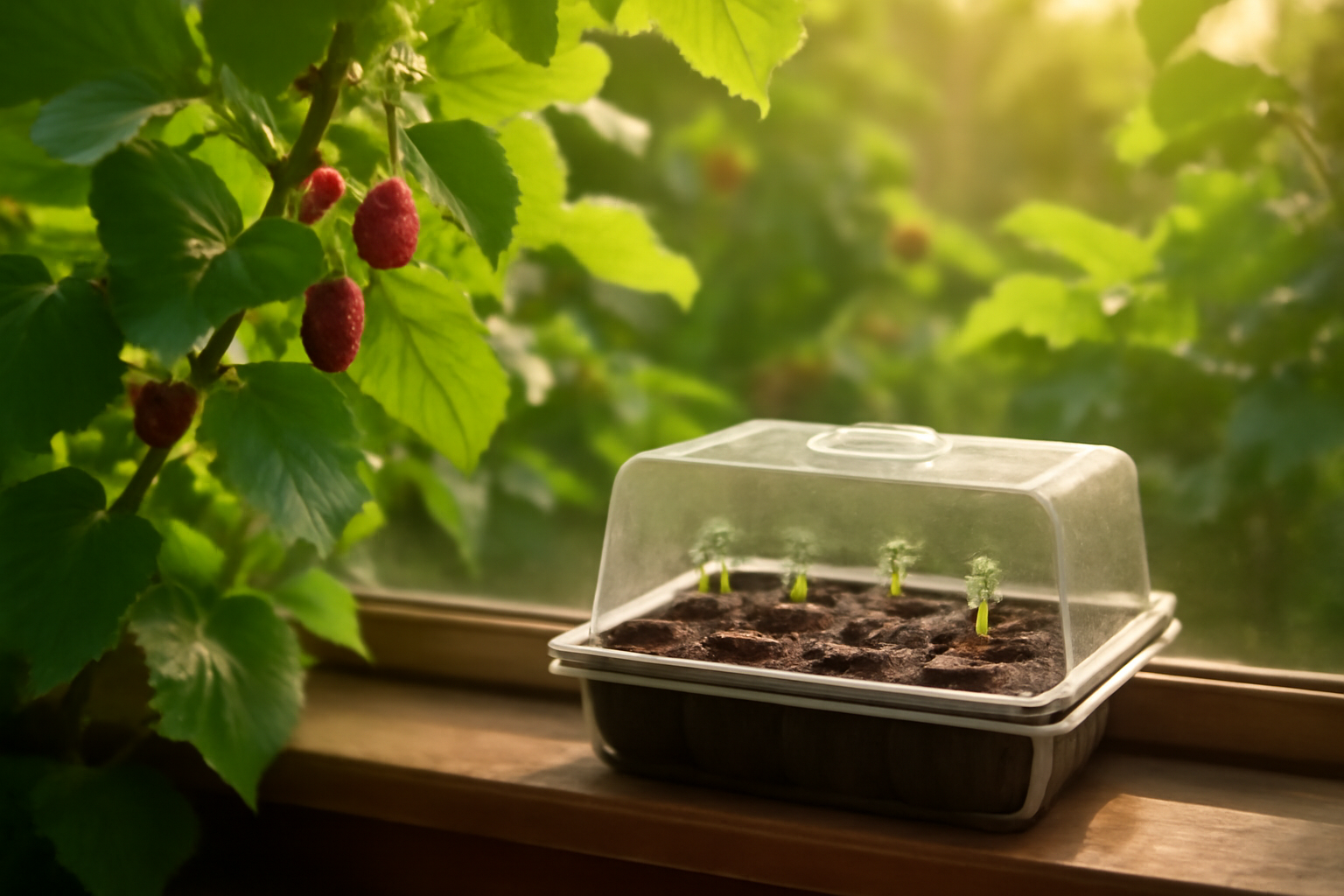
Each kit includes the cell tray, a base reservoir, and a humidity dome. Everything stacks neatly and snaps together without forcing it. The domes sit flush without gaps around the edges, which matters a lot for trapping humidity. I’ve had cheaper domes that barely sealed and fogged unevenly — these were clearly better designed.
The 72-cell trays have reasonably deep individual cells. This matters for mulberry seedlings specifically. Mulberries develop a taproot fairly quickly, and cramped cells cause early root circling. Deeper cells give those roots somewhere to go before transplant time arrives.
One thing I noticed right away: the reservoir base is genuinely deep. Filling it up felt substantial — not like a shallow dish that empties in a day. Build quality overall felt like a step above what I’d been using, and I was cautiously optimistic before even planting a single seed.
My Seed Starting Routine With These Trays
I started testing these trays in late February, following my usual cold-stratification period for the mulberry seeds. Stratification ran for about four weeks in the refrigerator — seeds wrapped in a slightly damp paper towel inside a zip-lock bag.
Once stratification was complete, I filled the 72 cells with a mix of seed-starting medium and a small amount of perlite for drainage. I pressed the medium down lightly to eliminate air pockets, then placed one stratified seed per cell at a shallow depth — roughly a quarter inch.
My watering routine looked like this:
- Filled the base reservoir completely on planting day
- Checked reservoir levels every two to three days
- Kept the humidity dome on for the first three weeks
- Began venting the dome slightly once seedlings reached about an inch tall
- Removed the dome fully once the majority of seedlings had two sets of leaves
The trays sat on a heat mat set to around 70–75°F and received 14–16 hours of light daily under grow lights. I ran three trays simultaneously — one with Morus rubra seeds, one with Morus alba, and one with a white mulberry variety I’d collected locally.
A Moment of Doubt
Around day ten, I started second-guessing myself. The cells looked very moist — almost too moist. I worried I was creating the perfect environment for damping off, which is a fungal problem that kills seedlings at the soil line. For a few days, I left the dome slightly propped open to increase airflow, and I held off on refilling the reservoir.
Nothing damped off. Looking back, the medium was holding moisture well but not becoming waterlogged. The drainage through the cells into the reservoir was working as intended. Still, that nervous stretch reminded me that even good equipment requires observation and adjustment.
What Actually Changed — Honest Results
By the end of week two, I saw my first green sprouts poking through the Morus alba cells. That was earlier than I’d experienced with my old trays in previous years. The Morus rubra seeds followed shortly after. The locally collected variety took closer to three weeks, which I suspect was a seed-viability issue rather than anything tray-related.
Here’s what I tracked over the six-week test period:
- Germination rate — Morus alba: Approximately 65% of cells produced seedlings
- Germination rate — Morus rubra: Approximately 55% of cells produced seedlings
- Moisture consistency: Noticeably better than my previous trays — medium stayed evenly moist without daily attention
- Seedling loss to drying out: Zero — a first for me at this scale
- Tray condition after six weeks: No cracking, no warping, no discoloration
The reservoir refill frequency surprised me. In mild indoor conditions, I was refilling every three to four days rather than daily. That might not sound dramatic, but over a six-week period it added up to significantly less daily maintenance. For someone managing multiple trays alongside work and life, that matters.
The humidity domes also performed well. Condensation was visible inside each dome, indicating genuine humidity retention. Seedlings emerged looking strong rather than leggy, which often signals that humidity and light conditions were appropriate during germination.
The Downsides Worth Knowing
No product earns a completely clean report, and I want to be straightforward here. A few limitations came up during testing.
First, the individual cells are not enormous. For mulberry seedlings specifically, you’ll want to transplant into larger containers fairly promptly — probably around the six-week mark. This isn’t unusual for 72-cell trays, but it’s worth planning ahead for.
Second, the reservoir, while deeper than budget alternatives, still needs monitoring. In a warm, sunny location or under strong grow lights, moisture evaporates faster. During one week when I ran my heat mat warmer than usual, I needed to refill every two days instead of every three or four. It’s self-watering, not self-maintaining.
Third, stacking these trays for storage is a little awkward. The humidity domes are tall, which is a genuine advantage for seedling growth — but it means your stack of stored trays takes up more vertical space than flatter systems.
Finally, the cells don’t have a quick-release mechanism for popping seedlings out cleanly. You’ll need to squeeze the bottom of each cell gently to release the root ball. It works fine, but it’s a slower process with 72 cells than I initially expected.
Final Verdict — Seed Starter Trays for Mulberry Growing
After six weeks of real use with actual mulberry seeds, I’m confident recommending the SOLIGT Self Watering Seed Starter Trays with Humidity Domes, Extra Thick Plastic Seed Starter Kit — 3 Pack 72 Cells to other mulberry growers. This isn’t a product I’m recommending based on a single use or pure spec comparison. It genuinely solved the moisture-consistency problem that had been costing me seedlings season after season.
Buy These If:
- You’re starting mulberry or other tree seeds from scratch and need reliable moisture control
- You can’t check on your trays multiple times per day
- You’ve had past seedling failures caused by inconsistent watering
- You want trays that will last more than one or two seasons
- You’re starting a moderately sized batch — 72 cells per tray is a solid number for home growers
Skip These If:
- You need a very large-scale operation right away and want to minimize individual tray purchases
- You’re starting seeds that prefer drier germination conditions
- Storage space is extremely limited and tall domes are a real constraint for you
For most home mulberry growers — whether you’re starting a small orchard or just trying to propagate a few special varieties — these trays are a genuine upgrade over basic plastic flats. The combination of better moisture retention, durable construction, and effective humidity domes makes a real difference when germinating seeds that need consistent conditions.
Need More Cells? Consider the 6-Pack Option
If you’re starting seeds in larger quantities — perhaps running multiple species, gift seedlings, or scaling up your nursery work — the same SOLIGT system is also available as a 6 Pack 144 Cells version. It gives you double the capacity using the same extra-thick plastic and self-watering reservoir design. For anyone who knows they’ll be starting 100+ seeds per season, the larger pack is worth considering from the start rather than ordering a second set later.