\n\n\n\n
Understanding Mulberry Trees in Your Garden
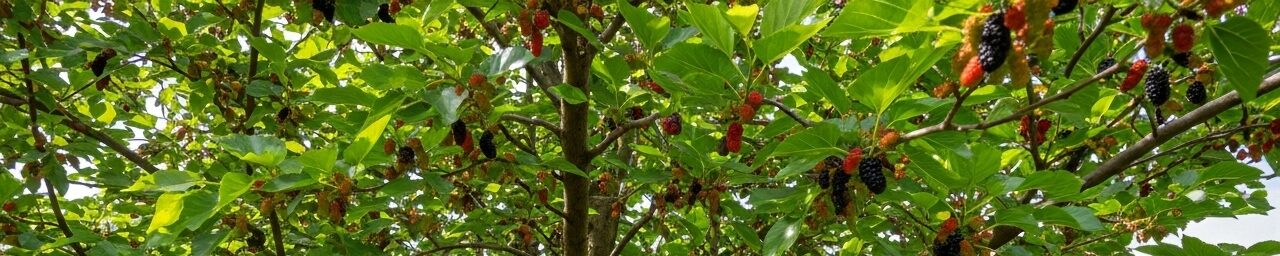
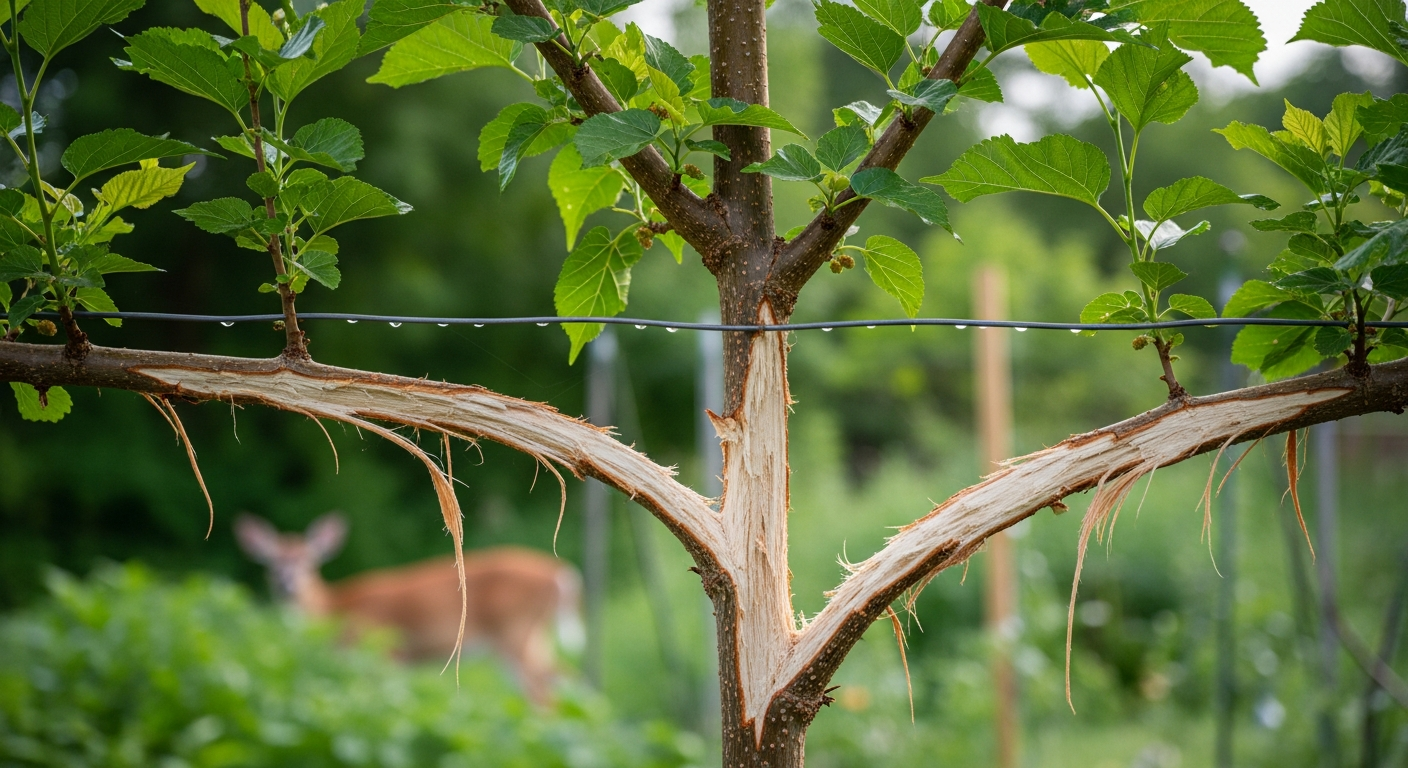
\n\n\n\nMulberry trees offer gardeners a unique combination of beauty, fruit production, and wildlife attraction. However, choosing the right variety requires careful consideration. These deciduous trees produce sweet berries that attract numerous species, including deer. Consequently, understanding which mulberry species work best for your landscape becomes essential for long-term success.
\n\n\n\nDeer frequently visit gardens with mulberry trees. They browse on the foliage, especially tender new growth. Additionally, they consume fallen berries from the ground beneath mature trees. This natural attraction makes mulberries both a blessing and a challenge for gardeners.
\n\n\n\n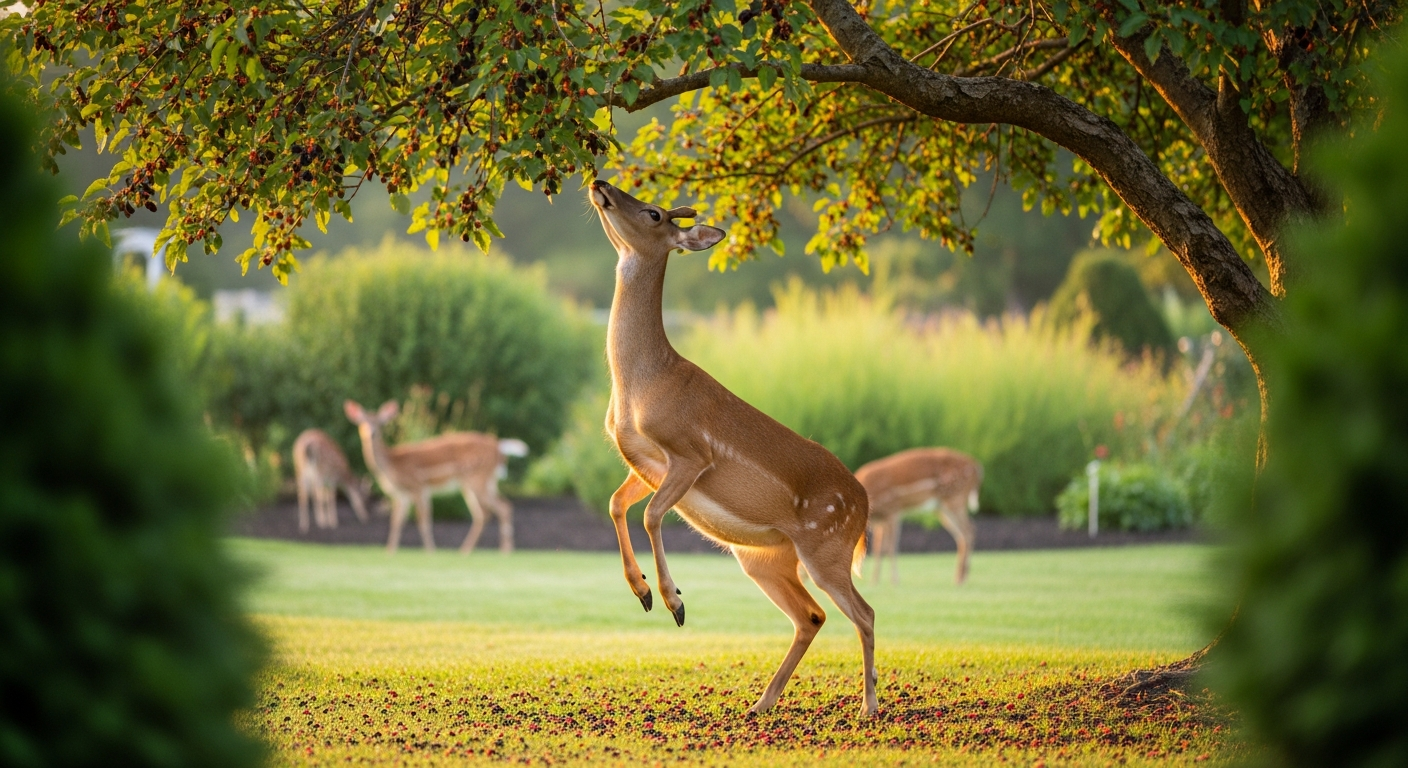
Native Red Mulberry: The Ecological Champion
\n\n\n\nThe native Red Mulberry (Morus rubra) stands as the superior choice for North American gardens. This species evolved alongside local wildlife over thousands of years. Therefore, it provides exceptional ecological benefits that imported varieties cannot match.
\n\n\n\nRed Mulberries reach heights of 35 to 50 feet at maturity. Their broad, heart-shaped leaves create dense shade during summer months. Moreover, the trees produce dark purple to black berries that ripen in early summer. These fruits taste sweeter than their white mulberry counterparts.
\n\n\n\nNative wildlife depends heavily on Red Mulberry trees. Birds, including cedar waxwings and robins, feast on the berries. Meanwhile, mammals like foxes and raccoons gather fallen fruit. The trees support over 40 species of butterflies and moths as larval hosts.
\n\n\n\nWhy Red Mulberry Struggles in the Wild
\n\n\n\nThe native Red Mulberry is a vital component of North American forests. However, this distinct species is disappearing rapidly from the landscape. Several environmental factors contribute to this alarming decline. Consequently, conservationists are deeply concerned about the tree’s uncertain future.
\n\n\n\nThe Impact of Deer Browsing
\n\n\n\nWhite-tailed deer pose the single biggest threat to these trees. In fact, deer find Red Mulberry foliage incredibly delicious and nutritious. Therefore, they aggressively browse on young saplings throughout the growing season. As a result, new trees never get the chance to mature.
\n\n\n\nThis intense pressure causes specific problems for forest regeneration:
\n\n\n\n- \n
- Constant Defoliation: Deer eat leaves and buds immediately after they appear. \n\n\n\n
- Stunted Growth: Saplings remain small shrubs instead of growing into canopy trees. \n\n\n\n
- Reproductive Failure: Older trees die off without young replacements to take over. \n
Competition and Hybridization
\n\n\n\nAn invasive relative also threatens the native tree’s survival. The White Mulberry, originally introduced for silkworm farming, competes aggressively. Unfortunately, it grows much faster than the native variety. Moreover, it steals sunlight and nutrients from the slower-growing Red Mulberry.
\n\n\n\nThe danger goes beyond simple competition for physical resources. Specifically, the two species cross-pollinate frequently in the wild. This process creates hybrid trees that slowly replace pure populations. Over time, the unique genetic identity of the Red Mulberry fades away. Thus, finding a genetically pure specimen is becoming increasingly difficult.
\n\n\n\nThe Deer’s Appetite for Red Mulberry
\n\n\n\nRed Mulberry leaves represent a premium food source for white-tailed deer populations. The foliage contains high protein levels and remains tender throughout the growing season. Deer actively seek out these trees, often traveling considerable distances to reach them. Furthermore, the leaves break down easily during digestion, making them energetically efficient. Young mulberry shoots offer particularly succulent browsing opportunities in spring months.
\n\n\n\nThe feeding behavior of deer follows predictable patterns with mulberry seedlings. Once deer discover a young tree, they return repeatedly to the same location. Moreover, they consume not just the leaves but also the tender stem tissue. Each browsing session removes critical growth points from the developing plant. Consequently, the seedling struggles to accumulate enough energy reserves for survival.
\n\n\n\nRegeneration Failure in Forest Systems
\n\n\n\nThe repeated browsing cycle creates a devastating impact on mulberry reproduction. Seedlings that emerge in spring face immediate grazing pressure within days. Additionally, deer browse the same plants throughout summer and into fall. This relentless feeding prevents the establishment of woody tissue necessary for winter survival. Therefore, very few seedlings ever reach heights beyond deer browsing range.
\n\n\n\nForest ecologists have documented this regeneration gap across numerous woodland sites. In areas with high deer densities, zero successful mulberry recruitment occurs over decades. For instance, researchers in Pennsylvania found mature mulberries surrounded by hundreds of browsed seedlings. However, none of these young plants survived beyond their second year. The browsing pressure essentially creates an invisible fence around reproductive success.
\n\n\n\nThe Isolated Giants Problem
\n\n\n\nMature Red Mulberry trees increasingly exist as biological islands within forest communities. These large specimens may be 50 to 100 years old or more. Meanwhile, the surrounding forest floor shows no mid-sized or young mulberry trees. This creates a distinctive age gap in the population structure. As a result, when mature trees eventually die, entire local populations disappear permanently.
\n\n\n\nThe isolation phenomenon becomes self-reinforcing over time. Older trees continue producing abundant fruit and seeds each year. Nevertheless, the resulting seedlings face immediate destruction from browsing deer. Furthermore, the lack of younger trees means fewer seed sources when mature specimens decline. This demographic collapse threatens the species’ long-term viability in many regions.
\n\n\n\nHabitat loss compounds these problems. Urban development removes mature trees before they produce seeds. Subsequently, fewer opportunities exist for natural regeneration. This combination of factors places Red Mulberry at risk in many regions.
\n\n\n\n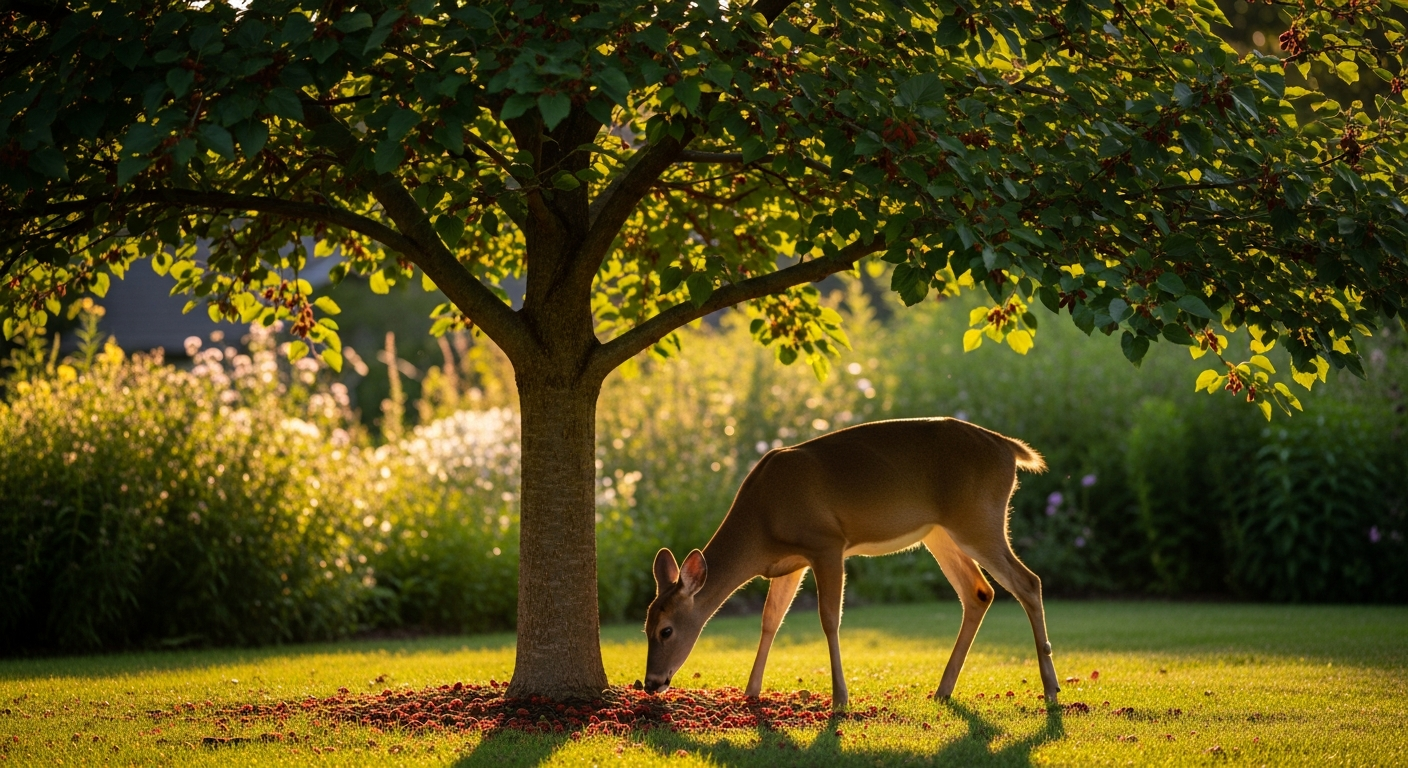
White Mulberry: The Invasive Alternative
\n\n\n\nWhite Mulberry (Morus alba) originated in China and arrived in North America during the 1800s. Importers brought these trees to support silk production. However, the silk industry never flourished here. Consequently, White Mulberries escaped cultivation and spread aggressively.
\n\n\n\nThese trees grow rapidly and produce abundant seeds. Birds distribute the seeds widely through their droppings. Moreover, White Mulberries tolerate poor soils and harsh conditions better than native species. This adaptability makes them highly invasive in many ecosystems.
\n\n\n\nWhite Mulberries hybridize readily with Red Mulberries. This genetic mixing threatens the purity of native populations. Indeed, many trees labeled as Red Mulberries actually show hybrid characteristics. These hybrids often display reduced ecological value compared to pure native specimens.
\n\n\n\nDeer Attraction to White Mulberry
\n\n\n\nDeer consume White Mulberry foliage just as readily as Red Mulberry. The leaves provide similar nutritional content and palatability. Therefore, planting White Mulberry does not reduce deer browsing pressure. Instead, it introduces an invasive species without ecological benefits.
\n\n\n\nWhite Mulberry berries ripen earlier than native varieties. They range from white to pink or purple at maturity. However, these fruits generally taste blander than Red Mulberry berries. Wildlife still consumes them, but they offer less nutritional value overall.
\n\n\n\n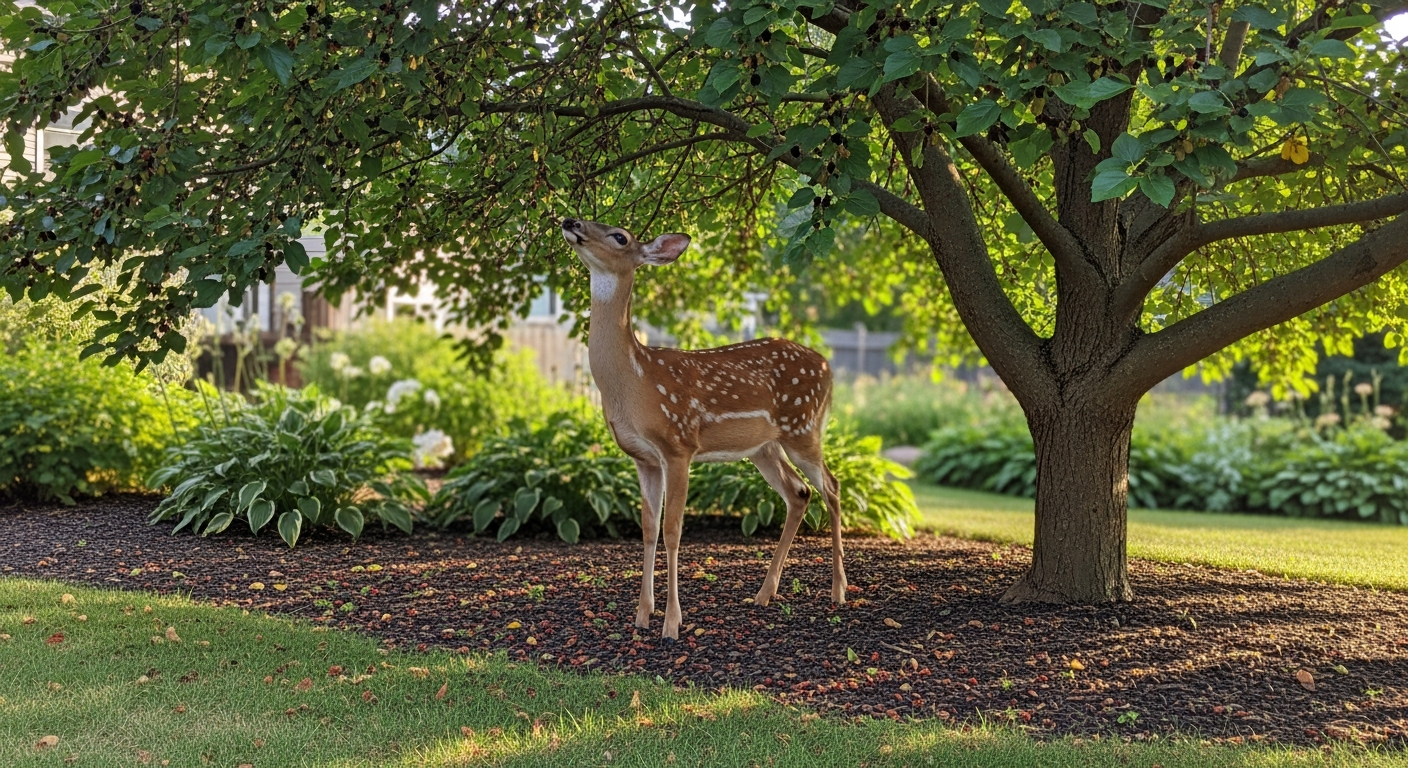
Protecting Young Mulberry Trees from Deer
\n\n\n\nSuccessfully establishing mulberry trees requires deer protection strategies. Young trees remain most vulnerable during their first three to five years. During this period, deer can kill trees through repeated browsing. Therefore, protection measures become essential for survival.
\n\n\n\nPhysical Barriers Work Best
\n\n\n\nFencing provides the most reliable deer protection. Install wire mesh cages around individual trees. Make these cages at least six feet tall to prevent deer from reaching over. Additionally, secure the bottom to prevent animals from pushing underneath.
\n\n\n\nUnderstanding Tree Tube Technology
\n\n\n\nTree tubes represent a dual-purpose protection system for young mulberry plantings. These translucent plastic cylinders typically range from two to six feet in height. They completely encircle individual saplings from ground level upward. The design creates a greenhouse effect around the developing tree. This microclimate boosts humidity levels and traps warmth effectively. Consequently, photosynthesis rates increase substantially within the protected environment.
\n\n\n\nGrowth Acceleration Benefits
\n\n\n\nThe enclosed space produces measurable advantages for mulberry development. Furthermore, young trees often grow two to three times faster than unprotected counterparts. The tube walls diffuse sunlight evenly across all leaf surfaces. This distribution promotes balanced, vertical growth patterns. Additionally, wind protection prevents the constant swaying that stunts development. Moisture retention stays consistently higher inside the cylinder. As a result, saplings require less frequent watering during establishment periods.
\n\n\n\nDeer Deterrence Mechanisms
\n\n\n\nMeanwhile, the physical barrier completely blocks browsing access to tender shoots. Deer cannot reach foliage or bark through the solid plastic walls. The smooth exterior surface offers no grip for animals attempting manipulation. Moreover, the height prevents deer from reaching over the top edge. This protection proves especially critical during winter months. During this time, deer desperately seek any available food sources.
\n\n\n\nCritical Removal Timing
\n\n\n\nHowever, proper tube removal requires vigilant monitoring of tree development. Inspect your mulberry trees monthly during the growing season. Once the trunk diameter approaches the tube’s interior width, take action. Leaving tubes attached too long creates serious hazards. The rigid plastic cannot expand with the growing trunk. Therefore, it begins constricting the bark in a process called girdling. This compression cuts off nutrient and water transport pathways.
\n\n\n\nPreventing Girdling Damage
\n\n\n\nRemove tubes when trees reach approximately 75% of the interior diameter. For example, a four-inch tube should come off when trunks measure three inches. Alternatively, remove them when trees exceed the tube height by twelve inches. Cut the plastic vertically with utility knives for easy removal. Subsequently, trees continue thriving without the restrictive barrier. Consider transitioning to trunk wraps or fencing for continued deer protection.
\n\n\n\nElectric fencing works well for larger plantings. A two-wire system at appropriate heights deters most deer. Nevertheless, these systems require regular maintenance and monitoring. Power failures or damaged wires compromise protection immediately.
\n\n\n\nRepellents Provide Temporary Relief
\n\n\n\nChemical and natural repellents offer short-term protection. These products make foliage taste or smell unpleasant to deer. However, rain washes away most repellents quickly. Consequently, you must reapply them frequently throughout the growing season.
\n\n\n\nHomemade repellents include soap bars, human hair, and hot pepper sprays. Commercial products often contain predator urine or bitter compounds. While these methods help, they rarely provide complete protection. Therefore, combine repellents with physical barriers for best results.
\n\n\n\n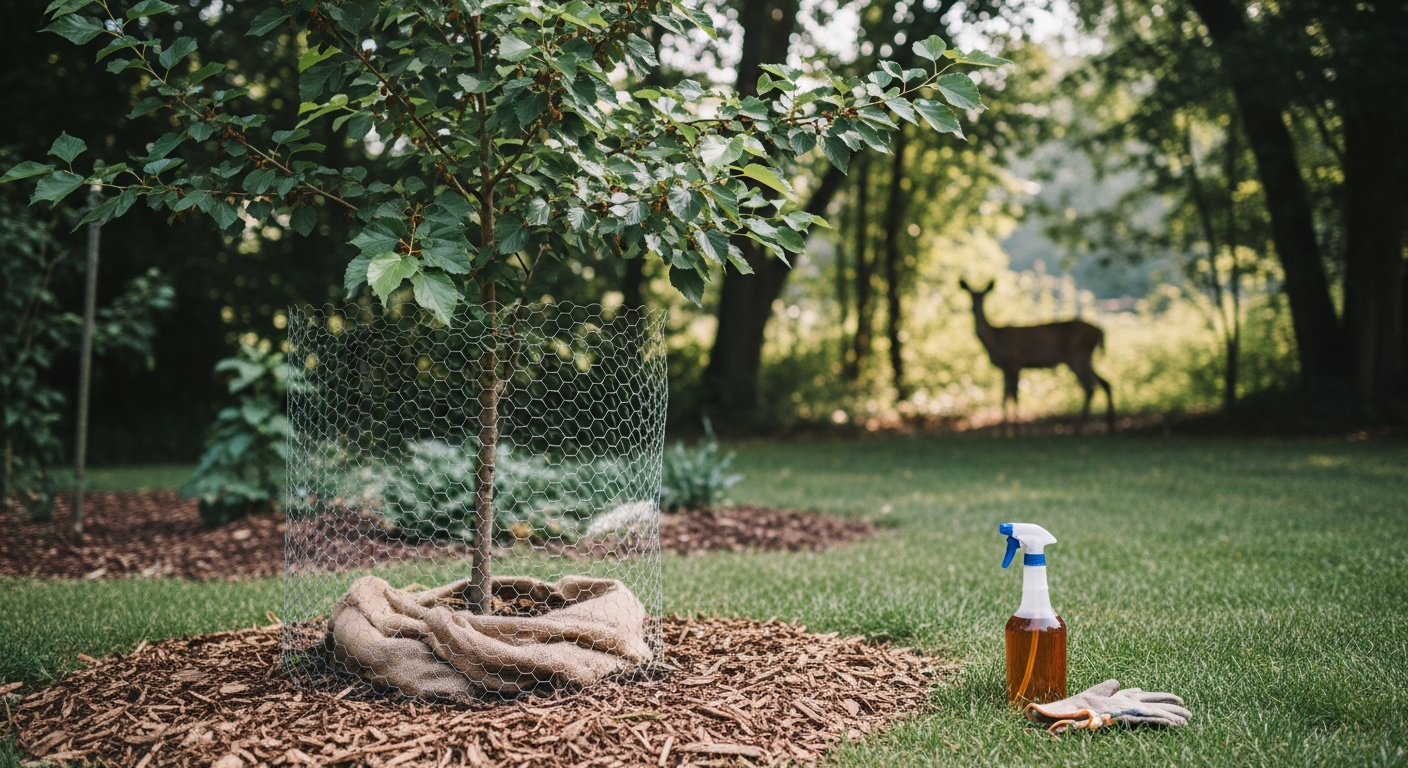
Planting and Care Guidelines
\n\n\n\nMulberry trees thrive in various soil types and conditions. They prefer full sun but tolerate partial shade. Moreover, these trees adapt to clay, loam, or sandy soils. Good drainage remains the primary soil requirement for healthy growth.
\n\n\n\nSite Selection Matters
\n\n\n\nChoose planting locations carefully before installation. Mulberry trees produce messy fruit that stains surfaces. Avoid planting near patios, driveways, or walkways. Instead, position trees in lawn areas or naturalized spaces. This placement minimizes cleanup requirements during fruiting season.
\n\n\n\nUnderstanding Canopy Growth
\n\n\n\nRed Mulberries are not small shrubs; they eventually become massive landscape features. Consequently, you must anticipate their full vertical and horizontal growth. A healthy tree often reaches heights of 60 feet or more. Furthermore, the canopy spreads just as wide, shading a vast area. Therefore, visualize the tree decades from now before digging the first hole.
\n\n\n\nIf you plant too close to other trees, the mulberry will struggle for sunlight. This competition can stunt fruit production, which reduces food for local wildlife. Moreover, a crowded canopy limits air circulation. This lack of airflow often leads to fungal diseases. Thus, selecting an open site is vital for long-term vitality.
\n\n\n\nThe Hidden Danger of Roots
\n\n\n\nThe root system presents an even greater challenge than the branches. Specifically, mulberry roots are aggressive and fast-growing. They constantly seek moisture and nutrients in the surrounding soil. As a result, they will exploit any crack in a foundation or sidewalk. This aggressive nature makes proper placement absolutely critical for property safety.
\n\n\n\nSurface roots can also become a nuisance over time. They often breach the soil line, creating tripping hazards for pedestrians. Additionally, these exposed roots make mowing the grass difficult and dangerous. Therefore, you should plan for a large mulch bed around the base. This simple step protects both the mower blades and the tree itself.
\n\n\n\nStructural Safety Guidelines
\n\n\n\nTo prevent structural damage, adhere strictly to the 30-foot buffer zone rule. In fact, giving them even more space is often better. This distance protects your home’s foundation from heaving and cracking. Additionally, it ensures the tree’s branches do not rub against siding or roofs. Ultimately, adequate spacing preserves both your real estate and the tree’s health.
\n\n\n\nConsider the following spacing checklist when planning your site:
\n\n\n\n- \n
- Homes and Garages: Minimum 30 feet away. \n\n\n\n
- Driveways and Sidewalks: At least 15 to 20 feet away. \n\n\n\n
- Fences: Keep a 10-foot clearance to avoid damage. \n\n\n\n
- Power Lines: Never plant directly underneath overhead wires. \n
Protecting Underground Utilities
\n\n\n\nUnderground infrastructure requires special consideration during the planning phase. Never plant Red Mulberries near septic drain fields or sewer lines. The roots naturally grow toward the nutrient-rich water found in these systems. Consequently, they can penetrate pipes and cause catastrophic blockages. Thus, locating all utility lines before planting is a mandatory safety step.
\n\n\n\nRepairing root damage in septic systems is incredibly expensive. However, you can easily avoid this cost with foresight. Call your local utility companies to mark lines before you break ground. Furthermore, consult your property survey to locate the exact septic field boundaries. By doing so, you ensure your new tree provides benefits rather than burdens.
\n\n\n\nPlanting Techniques for Success
\n\n\n\nDig planting holes twice as wide as root balls. However, make holes only as deep as existing root depth. This prevents trees from settling too deeply after planting. Furthermore, rough up the hole sides to encourage root penetration.
\n\n\n\nRemove containers carefully to avoid damaging roots. Gently loosen circling roots before placing trees in holes. Then, backfill with native soil rather than amended mixes. Water thoroughly to eliminate air pockets around roots.
\n\n\n\nApply mulch in a three-foot circle around new trees. Keep mulch three inches away from trunks to prevent rot. This organic layer conserves moisture and suppresses competing weeds. Consequently, young trees establish faster with less stress.
\n\n\n\nMaintenance Through the Seasons
\n\n\n\nEstablished mulberry trees require minimal maintenance. They tolerate drought once root systems develop fully. Nevertheless, regular care during early years ensures strong, healthy specimens.
\n\n\n\nWatering and Fertilization
\n\n\n\nWater young trees weekly during their first growing season. Provide one to two inches of water with each application. Subsequently, reduce watering frequency as roots expand. Mature trees rarely need supplemental irrigation except during severe droughts.
\n\n\n\nThe Dangers of Synthetic Fertilizers
\n\n\n\nSynthetic fertilizers often act like energy drinks for plants. They force a rapid, unnatural expansion of the canopy. However, this speed comes at a significant cost. The resulting foliage is often exceptionally soft and watery. Deer prefer these tender shoots over tough, woody growth. Furthermore, high nitrogen levels increase the sugar content in leaves. Consequently, your mulberry tree becomes a sweet treat for wildlife.
\n\n\n\nBrowsing deer can smell nutrient-dense foliage from a distance. They will likely bypass native brush to eat your fertilized tree. Therefore, avoiding chemical spikes is crucial for physical protection. It keeps the leaf texture unappealing to these herbivores. By limiting nitrogen, you encourage the tree to develop stronger natural defenses. This makes the foliage harder to digest.
\n\n\n\nWhy Compost Is Superior
\n\n\n\nOrganic matter works differently than chemical options. It focuses on long-term soil health rather than quick results. Compost releases essential nutrients slowly and steadily over the season. As a result, the mulberry tree grows at a moderate, sustainable pace. This steady growth produces stronger, more fibrous leaves. These leaves contain more cellulose, which deer find less palatable.
\n\n\n\nAdditionally, compost improves water retention in the soil. This reduces stress on the tree during summer droughts. Healthy, stress-free trees are naturally more resistant to browsing damage. Moreover, compost supports beneficial microbes near the roots. These microbes help the tree access minerals naturally found in the ground.
\n\n\n\nProper Application Techniques
\n\n\n\nApplying compost correctly ensures maximum benefit for the root system. You must target the feeder roots specifically. These roots extend to the tree’s “drip line,” or the edge of the branches.
\n\n\n\nFollow these steps for best results:
\n\n\n\n- \n
- Clear the area: Remove weeds and grass from the base. \n\n\n\n
- Spread evenly: Apply a 1-to-2-inch layer of finished compost. \n\n\n\n
- Avoid the trunk: Keep material at least 3 inches away from bark. \n
Piling material against the trunk can cause rot. Therefore, you must leave a small gap for airflow. Finally, water the area gently to settle the material. This helps nutrients seep into the ground effectively without washing away.
\n\n\n\nPruning for Structure and Health
\n\n\n\nPrune mulberry trees during late winter while dormant. Remove dead, damaged, or crossing branches first. Then, thin crowded areas to improve air circulation. This reduces disease pressure and promotes even fruit production.
\n\n\n\nYoung trees benefit from structural pruning. Select a central leader and well-spaced scaffold branches. Remove competing leaders and narrow branch angles. These early interventions create strong frameworks that support heavy fruit loads.
\n\n\n\nCompanion Planting Strategies
\n\n\n\nSurrounding mulberry trees with deer-resistant plants creates natural protection. Deer avoid certain plants due to strong scents, textures, or toxicity. Therefore, strategic companion planting reduces browsing pressure on vulnerable mulberries.
\n\n\n\nAromatic Herbs Deter Deer
\n\n\n\nPlant lavender, rosemary, and sage around mulberry bases. These Mediterranean herbs release strong fragrances that deer dislike. Additionally, they thrive in similar conditions as mulberries. Their drought tolerance makes them ideal companions once established.
\n\n\n\nMint family plants also repel deer effectively. However, contain aggressive spreaders like spearmint in pots. Otherwise, they quickly overtake garden areas. Catmint provides a less invasive alternative with similar deer-repellent properties.
\n\n\n\nTextured Foliage Creates Barriers
\n\n\n\nDeer avoid plants with fuzzy, prickly, or leathery leaves. Lamb’s ear, ornamental grasses, and barberries all deter browsing. Plant these in concentric circles around young mulberries. This creates physical and sensory barriers that redirect deer elsewhere.
\n\n\n\nSpring-flowering bulbs like daffodils contain toxic compounds. Deer learn to avoid these plants quickly. Therefore, naturalizing daffodils beneath mulberries provides early-season protection. The bulbs finish blooming before trees leaf out fully.
\n\n\n\nWildlife Benefits Beyond Deer
\n\n\n\nWhile deer present challenges, mulberry trees support diverse wildlife communities. These ecological benefits justify the extra effort required for establishment. Moreover, mature trees become self-sustaining wildlife magnets.
\n\n\n\nSongbirds visit mulberry trees throughout summer. They consume berries and hunt insects in the canopy. Species like orioles, tanagers, and grosbeaks become regular visitors. Their presence adds color and sound to garden spaces.
\n\n\n\nThe Mulberry-Butterfly Connection
\n\n\n\nMulberry trees serve as essential nurseries for various butterfly and moth species. Moreover, these deciduous trees provide critical habitat during vulnerable life stages. The relationship between mulberries and lepidopterans spans generations of ecological dependency.
\n\n\n\nCaterpillars require specific host plants for survival and development. Consequently, mulberry leaves offer ideal nutrition for growing larvae. The foliage contains proteins and minerals necessary for metamorphosis. Additionally, the leaf structure provides protection from predators and weather.
\n\n\n\nMourning Cloak Butterflies and Their Mulberry Habitat
\n\n\n\nMourning cloak butterflies demonstrate particularly strong associations with mulberry trees. These distinctive insects, recognizable by their dark wings with yellow borders, actively seek mulberries. Female butterflies lay clusters of eggs on mulberry branches. Furthermore, the emerging caterpillars feed communally on fresh leaves.
\n\n\n\nThe larvae undergo five developmental stages called instars. Each instar requires increasing amounts of foliage for growth. Therefore, a single mulberry tree can support multiple butterfly generations. The caterpillars eventually form chrysalises on branches or nearby structures.
\n\n\n\nPollination Benefits After Metamorphosis
\n\n\n\nAdult butterflies and moths provide valuable ecosystem services after transformation. However, their dietary needs shift dramatically from their caterpillar stage. Instead of consuming leaves, adults feed on flower nectar. As a result, they become important pollinators for surrounding vegetation.
\n\n\n\nThese transformed insects visit garden flowers throughout their adult lifespan. Meanwhile, they transfer pollen between blooms while feeding. Consequently, the mulberry tree indirectly supports garden productivity. This creates a beneficial cycle connecting trees, insects, and flowering plants.
\n\n\n\n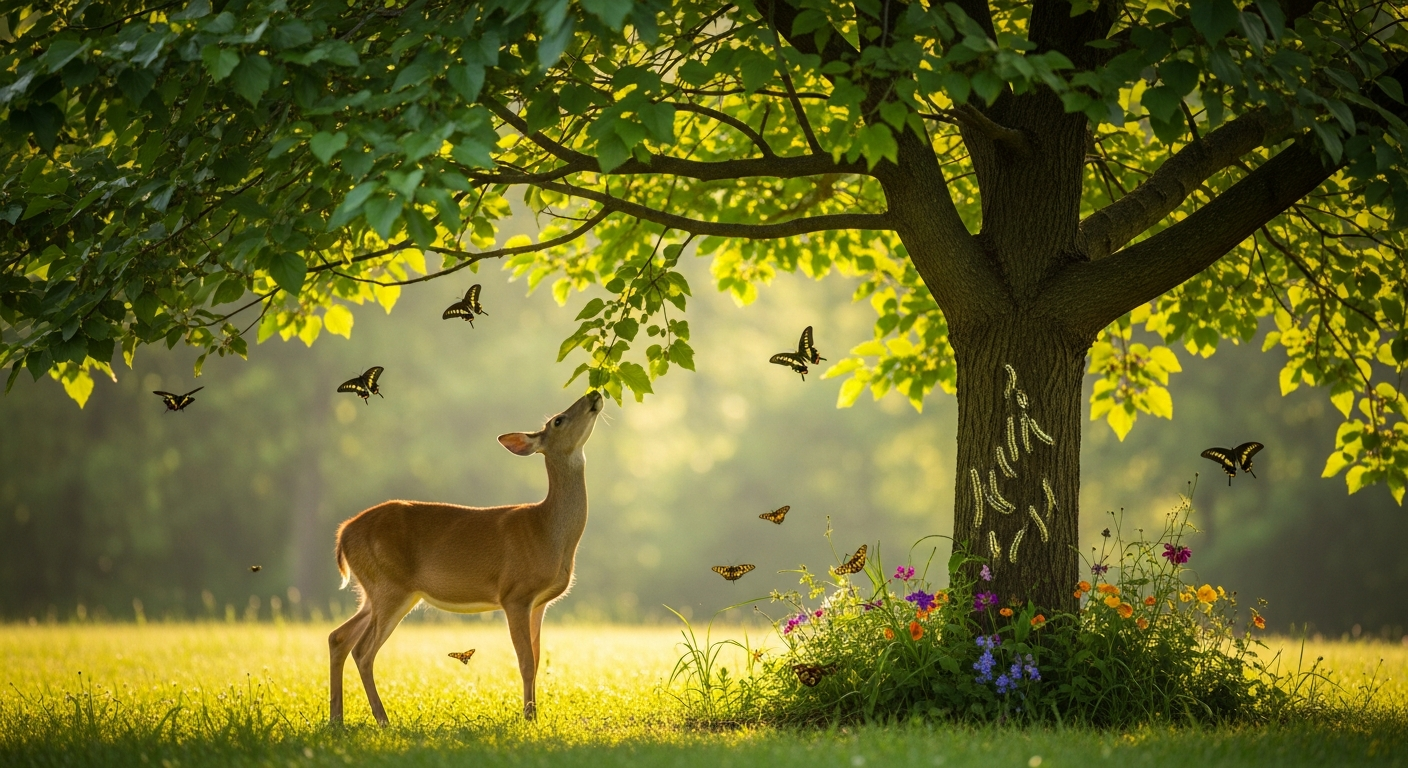
The Mulberry Buffet for Small Mammals
\n\n\n\nThe mulberry tree acts as a powerful magnet for various creatures. Consequently, it supports more than just local deer populations. Gray squirrels, for instance, eagerly climb the highest branches. They seek out the ripest, darkest berries. Meanwhile, chipmunks scurry along the forest floor. They gather fallen fruit for immediate energy. This frenzy of feeding provides excellent viewing opportunities for nature enthusiasts. Furthermore, the abundance of fruit ensures that competition remains low among species.
\n\n\n\nAdditionally, these small mammals act as accidental gardeners. They often bury seeds for winter storage. However, they frequently forget these hidden caches. As a result, new mulberry saplings sprout in unexpected locations. This natural process ensures the tree species continues to thrive. Moreover, it expands the food source for future generations of wildlife. Even deer benefit from this expansion as new saplings emerge.
\n\n\n\nCreating a Vertical Habitat
\n\n\n\nBeyond providing sustenance, mature mulberry trees offer essential protection. Older specimens often develop deep hollows and cavities. Therefore, they become perfect homes for nesting wildlife.
\n\n\n\nHere is how different animals utilize the tree structure:
\n\n\n\n- \n
- Flying Squirrels: They utilize high cavities for safe daytime sleeping. \n\n\n\n
- Raccoons: Larger hollows provide them with secure dens. \n\n\n\n
- Birds: Woodpeckers often enlarge holes for their own nests. \n
Inside these spaces, animals remain safe from predators and harsh weather. In contrast to younger trees, these veterans provide superior insulation. Consequently, a single old tree supports an entire community of inhabitants.
\n\n\n\nUltimately, this activity creates a vibrant backyard environment. You will observe a complex web of life. For example, while deer browse the lower foliage, squirrels occupy the canopy. This vertical layering supports diverse species simultaneously. Thus, a single tree becomes a bustling wildlife hub. Your garden transforms into a dynamic stage for nature. Finally, this biodiversity indicates a healthy, functioning ecosystem.
\n\n\n\nMaking the Right Choice
\n\n\n\nSelecting Red Mulberry over White Mulberry supports native ecosystems. This choice promotes biodiversity and ecological health. Furthermore, it helps preserve a declining native species. While both attract deer equally, only Red Mulberry provides lasting environmental benefits.
\n\n\n\n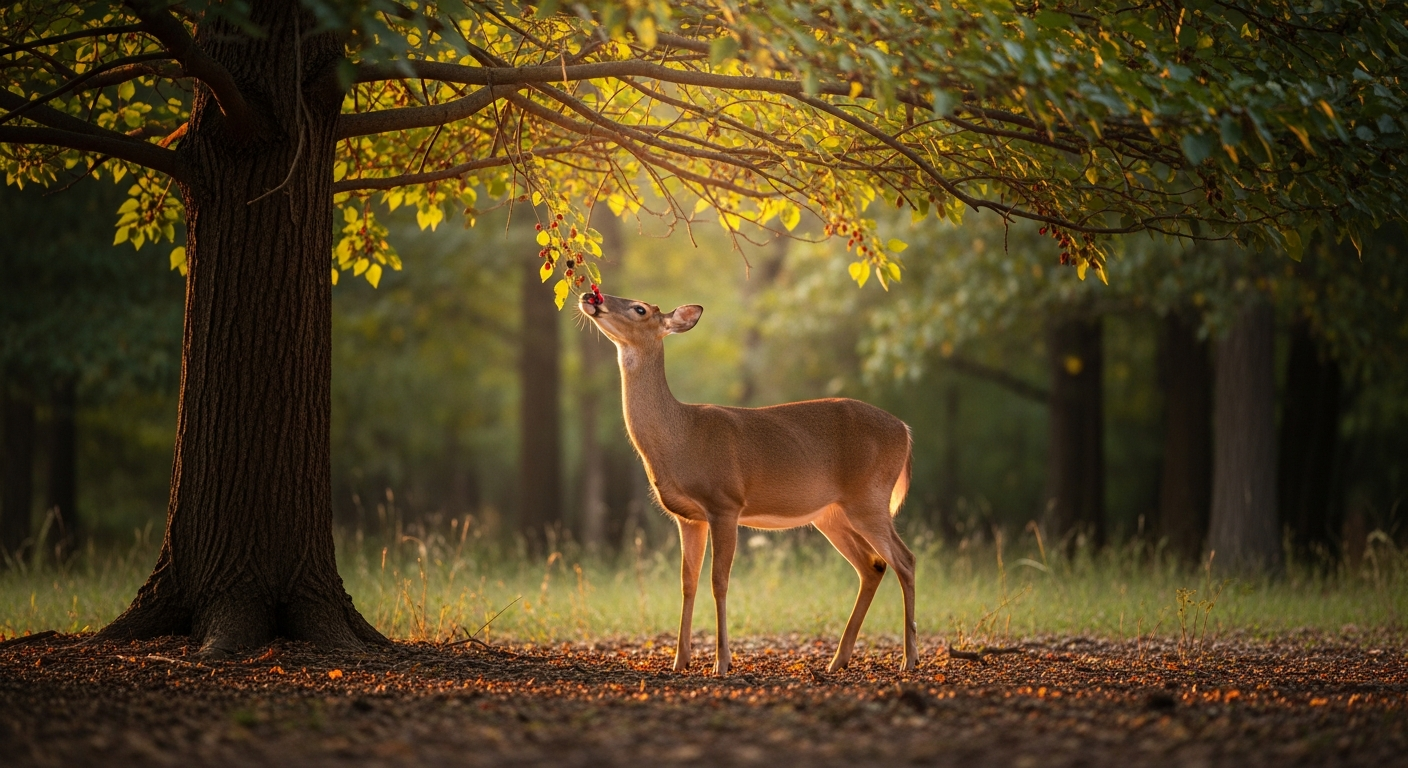
Invest in proper deer protection during establishment. This upfront effort pays dividends for decades. Protected young trees mature into productive specimens that require minimal intervention. Subsequently, they reward gardeners with abundant fruit and wildlife activity.
\n\n\n\nConsider your long-term gardening goals carefully. Native Red Mulberries align with sustainable, ecological landscaping principles. They connect your garden to the broader natural world. In contrast, White Mulberries contribute to ecological problems without offering superior benefits. Therefore, choosing native species demonstrates environmental stewardship while creating beautiful, functional landscapes that serve both human and wildlife needs for generations to come.
\nRecommended Products
White Mulberry Tree Saplings, 1-2 Ft Tall Bareroot Plants, Set of 2
For gardeners looking to establish a deer-friendly mulberry garden as outlined in this guide, these White Mulberry Tree Saplings offer an excellent starting point with their bareroot format that simplifies planting and establishment in most climates. The 1-2 foot height allows new growers to nurture young trees through their critical growth phases while the set of 2 provides options for cross-pollination and increased fruit yield across seasons. These saplings develop into mature trees that produce abundant berries perfect for fresh eating, tea brewing, and recipe experimentation while naturally attracting beneficial wildlife to the garden. Check current pricing on Amazon.
Feitore Deer Fence Netting, 7 x 100 Feet Anti Bird Deer Protection Net Reusable Protective Garden Netting for Plants Fruit Trees Vegetables Against Birds and Other Animals
# Deer-Friendly Mulberry Trees: Product Recommendation Protecting mulberry trees from deer damage is essential for maintaining a thriving harvest, especially when investing time in cultivating these nutritious plants for tea and recipes. The Feitore Deer Fence Netting offers an effective solution with its generous 7 x 100-foot coverage and reusable design, allowing gardeners to safeguard multiple trees without breaking the bank or creating permanent landscape changes. The anti-bird and animal protection net serves double duty by preventing deer from accessing foliage and fruit while also keeping smaller pests from damaging the delicate mulberry leaves and berries needed for quality harvests. Check current pricing on Amazon.
2-in-1 Electric Pruning Shears Cordless with Pole, 20V Cordless Pruning Shears,4.0Ah Battery Operated Pruning Shears, 9.3Ft -Up to 15.3Ft Telescopic Electric Shears for Gardening JOVANT
# Mulberry Tree Maintenance Made Easy Maintaining healthy, productive mulberry trees requires regular pruning to encourage new growth and ensure a bountiful harvest, which is where the JOVANT 2-in-1 Electric Pruning Shears become invaluable. The cordless 20V design with telescopic reach up to 15.3 feet eliminates the need for ladders when trimming upper branches, making it safer and more efficient to shape deer-friendly mulberry trees throughout the growing season. The 4.0Ah battery provides extended runtime for tackling larger trees without frequent recharging, while the dual functionality as both handheld and pole shears offers versatility for various pruning tasks. Check current pricing on Amazon.