This post contains affiliate links. As an Amazon Associate, I earn from qualifying purchases at no extra cost to you.
Two summers ago, my mulberry trees looked embarrassing. The leaves were pale and smallish, the fruiting was sparse, and one of my three trees had barely put on any new growth at all. I had been gardening for years, but mulberries were newer territory for me. After some frustrated research, I landed on trying Jobe fertilizer spikes fruit trees mulberry owners kept recommending in forum after forum. I was skeptical but desperate enough to give them a real shot — and I mean a real shot, across two full growing seasons.
What followed was genuinely surprising. Not a miracle, but a clear, measurable difference I could track season over season. I want to share exactly what happened, what didn’t work as well as I hoped, and whether I think these spikes are worth your money if you’re growing mulberries specifically.
Why I Chose Jobe’s Garden Fertilizer Spikes Over Other Options
Before settling on the Jobe’s Garden Fertilizer Spikes, Easy Plant Care Slow Release Fertilizer for Fruit and Citrus Plants and Trees, 9 Count, I looked hard at liquid fertilizers and granular options. Liquid feeds sounded appealing, but my schedule is unpredictable. I work from home, but I travel in chunks. The idea of missing critical feeding windows stressed me out.
Granular fertilizers were the next option. However, I had two problems with them. First, runoff — my yard has a slight slope, and I had watched nutrients wash away after rain before. Second, I just kept forgetting to apply them consistently. I needed something set-it-and-largely-forget-it.
Slow-release spikes solved both of those problems on paper. Nutrients go directly into the root zone. There is no runoff waste. You hammer them in twice a year and move on. Several mulberry growers on a couple of dedicated fruit tree forums specifically mentioned Jobe’s spikes with positive results. That peer validation pushed me over the edge.
First Impressions: Opening the Box
The 9-count package arrived quickly. Honestly, the packaging is nothing special — a simple cardboard box. Inside, the spikes themselves look like oversized, compressed-fertilizer crayons. They feel solid and dry. There is a mild, earthy smell, but nothing offensive.
The box includes a plastic cap tool to help drive the spikes into the ground without splitting them. That was a nice touch I didn’t expect. Instructions are printed clearly on the back — spacing from the trunk, depth, how many spikes per tree diameter. Simple stuff, but appreciated.
My first impression was that these seemed almost too simple. Part of me wondered if I was just paying for convenience over effectiveness. That doubt stuck around for a while, honestly. But I committed to testing them properly before passing judgment.
My Testing Protocol: Two Full Seasons, Three Trees
I have three mulberry trees in my yard. Two are established trees — probably eight and twelve years old respectively. The third is younger, only about four years in the ground. All three had been fertilized inconsistently before this experiment.
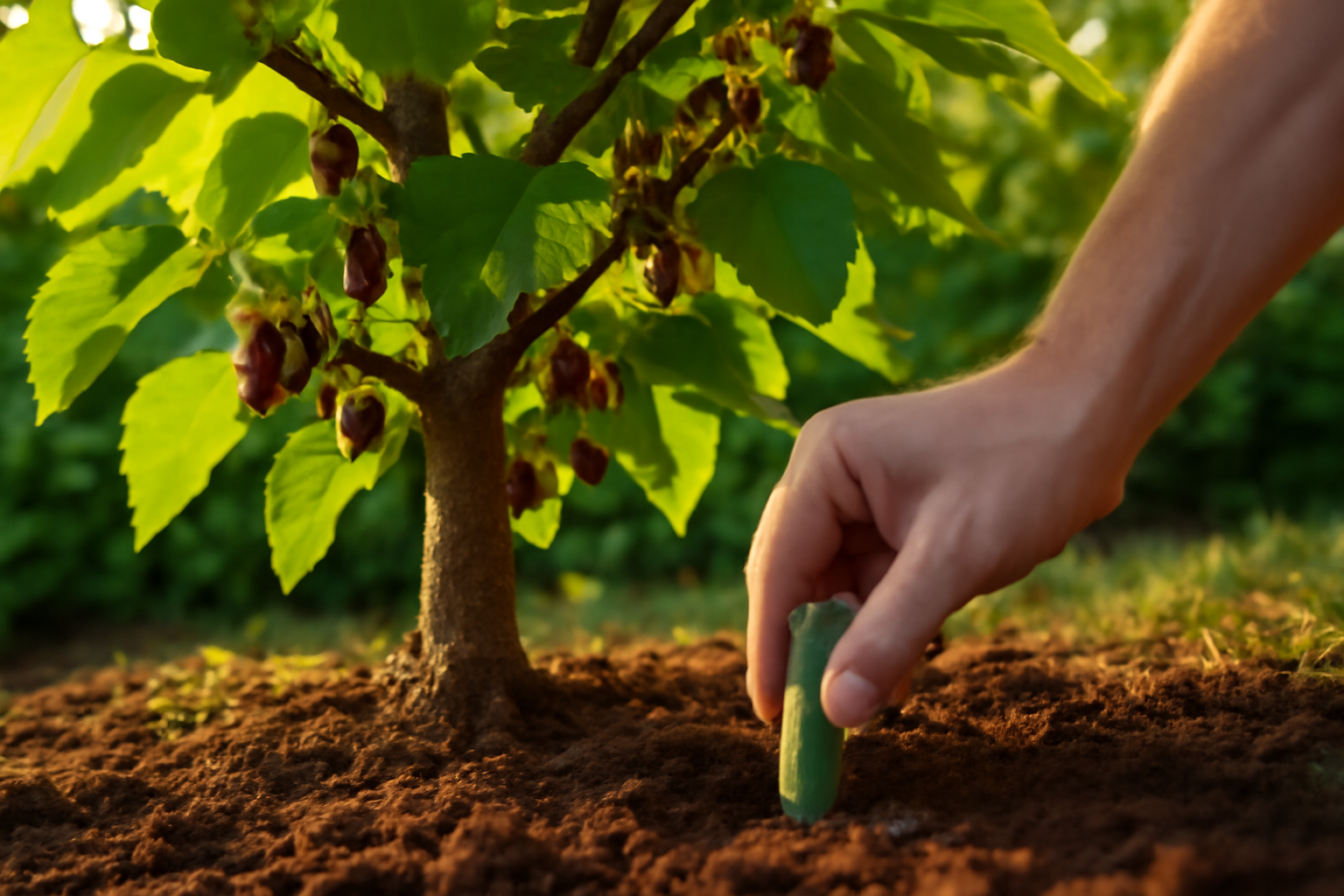
I followed the package directions closely. For each tree, I placed spikes evenly around the drip line, not right against the trunk. I used the plastic cap and a rubber mallet to drive each spike about halfway into the ground. Placement took maybe ten minutes per tree the first time around.
Here is the schedule I followed:
- Early spring (late March): Initial spike placement before new growth flush
- Early fall (late September): Second application to support root development heading into dormancy
- Repeated the same schedule in year two
I took photographs of each tree at the start of each season. I also made rough notes on leaf color, new shoot length, and fruit production. Nothing laboratory-grade, but consistent enough to track real changes.
I did not change anything else significantly during these two seasons. Same watering routine, same mulch layer, same pruning approach. I wanted the spikes to be the main variable.
What Actually Changed: An Honest Season-by-Season Breakdown
Season One: Cautious Optimism
By early May of the first season, I noticed the leaf color on my two older trees had shifted. Darker, more saturated green. The youngest tree showed less dramatic change, which made me a little nervous. New shoot growth on the oldest tree was noticeably longer than the previous year — I measured a few shoots at around eight to ten inches versus what I remembered being four to six inches before.
Fruit production that first year was modestly better. I wouldn’t call it dramatic. The older tree produced a fuller crop, but the middle tree’s improvement was harder to see. I started to wonder if I had misjudged the spike placement on that one.
Fall application went in smoothly. The ground was still workable. I re-evaluated my spike placement on the middle tree and spaced them out more evenly this time.
Season Two: Where It Got Interesting
By the second spring, all three trees looked noticeably healthier at bud break. The youngest tree — the one I had worried about — came out of dormancy with strong, healthy growth. Its leaves were a rich, deep green within a few weeks of the spring application.
Fruit production in year two was the real payoff. My oldest tree had its best crop in several years. The middle tree, with corrected spike placement, also produced significantly more. Even the younger tree, which typically gives lighter crops due to age, put on a respectable harvest.
I want to be careful not to oversell this. Trees improve for multiple reasons. Weather in year two was also favorable. But the consistent leaf health and shoot vigor across all three trees — after two full years of consistent feeding — was hard to chalk up entirely to weather luck.
The Downsides: What You Should Know Before Buying
No product review is honest without real negatives. Here is what frustrated me or fell short of my expectations.
Spike Splitting During Installation
Even using the included cap tool, I cracked two spikes during installation on rocky ground. Once a spike splits significantly, you lose the concentrated delivery mechanism — nutrients scatter rather than releasing in a controlled zone. If your soil is compacted or rocky, pre-soaking the ground first is worth the extra step.
The 9-Count May Not Be Enough for Multiple Trees
For three trees of varying sizes, the 9-count package went fast. Larger or older trees require more spikes around their wider drip line. I ended up buying a second pack mid-season the first year, which was a little annoying. Budget for more than you think you need.
Results Take Time
If you are expecting a rapid green-up like you might see with a liquid feed, you will be disappointed. Slow release means slow. The payoff builds over months and across seasons. Impatient gardeners may give up before the real results show up.
Not a Fix for Poor Soil Overall
These spikes add nutrients. They do not improve soil structure, drainage, or pH imbalances. If your trees are struggling due to waterlogged roots or seriously acidic soil, spikes alone will not solve the underlying problem.
Final Verdict: Who Should Buy Jobe Fertilizer Spikes for Fruit Trees and Mulberry Growers Specifically
After two seasons of consistent use, I genuinely recommend the Jobe’s Garden Fertilizer Spikes, Easy Plant Care Slow Release Fertilizer for Fruit and Citrus Plants and Trees, 9 Count for mulberry growers who want a low-effort, consistent feeding solution. The cumulative effect across two seasons was real. Leaf color improved, shoot growth increased, and fruit production on my older trees was noticeably better.
Using Jobe fertilizer spikes for fruit trees, specifically on mulberries, works best if you commit to at least two full seasons and place the spikes correctly at the drip line. One season may leave you underwhelmed.
Buy These If:
- You have an inconsistent schedule and forget liquid or granular feeding routines
- You want a low-runoff option, especially on sloped ground
- You are willing to commit to at least two full seasons to see cumulative results
- You are growing established mulberries that need consistent, reliable nutrition
Skip These If:
- You need fast visible results — liquid fertilizers will give you a quicker green-up
- Your soil has significant structural or pH problems that need addressing first
- You garden in extremely hard or rocky soil where spike installation is difficult
- You are growing very young trees in their first year and need a more tailored feeding approach
Consider the 15-Count Pack If You Have More Trees
If you are managing more than two or three trees, or if your trees are larger and require more spikes per application, take a look at the Jobe’s Garden Fertilizer Spikes, Easy Plant Care Slow Release Fertilizer for Fruit and Citrus Plants and Trees, 15 Count. It is the same trusted formula with more spikes per pack, which typically offers better value per spike. Running out mid-season — as I did with the 9-count — is an easy problem to avoid by starting with the larger pack.