This post contains affiliate links. As an Amazon Associate, I earn from qualifying purchases at no extra cost to you.
Last June, I watched my young mulberry tree start to struggle. The leaves curled at the edges, the soil cracked like old pottery, and the afternoon heat was relentless. I knew right away that cypress mulch mulberry tree root protection was something I needed to take seriously — and fast. Without a proper moisture barrier, I was risking the health of a tree I’d spent two years nurturing from a bare-root sapling.
I’d been lazy about mulching, honestly. I kept telling myself I’d get around to it. Then we hit a three-week stretch with zero rain and temperatures pushing into the mid-nineties. My mulberry’s canopy started looking tired. The soil around the base felt bone dry just an inch or two down. That was my wake-up call.
I needed something fast, effective, and available without waiting two weeks for a bulk delivery. After a quick search and some time reading through gardening forums, I landed on cypress mulch as my best bet. Its reputation for moisture retention and longevity made it stand out from wood chip alternatives I’d used before.
Why I Chose GARDENWISE Premium Cypress Mulch
My first instinct was to grab whatever bagged mulch was at the hardware store. However, I’d done that before and ended up with a product that broke down within a single season, leaving me to top it up constantly. This time, I wanted to be more intentional about what I put around my tree’s root zone.
Cypress mulch kept coming up in conversations on mulberry and fruit tree growing groups. People specifically praised its ability to resist compaction and decompose slowly. Those two qualities matter a lot when you’re trying to maintain consistent root moisture through a hot summer.
After comparing several options, I settled on the GARDENWISE Premium Cypress Mulch for Landscaping, Gardens, Lawns, Reptile Bedding, and Potted Plants (2 CF – 56 L – 59 QTS). The two-cubic-foot bag was the right volume for a single established tree without overspending. The product also had solid reviews from gardeners specifically using it around trees and in raised beds, which gave me confidence it would perform in my situation.
I also liked that GARDENWISE positioned this as a versatile mulch rather than a throwaway landscaping product. The fact that it’s used for reptile bedding — where moisture control and odor resistance matter — told me something about its quality. That detail stuck with me.
First Impressions Out of the Bag
The bag arrived well-sealed and undamaged, which isn’t always the case with soil and mulch products shipped in standard packaging. Right away, I noticed the pleasant, earthy cypress scent — not overpowering, but distinctly woodsy. It reminded me of a walk through a humid forest, which felt oddly reassuring.
Opening it up, the texture was consistent. The fibers were medium-length with good variability — not a pile of identical shreds, but a natural-looking mix that I knew would knit together well once laid. There was minimal dust, which I appreciated since I was working near my vegetable beds and didn’t want to kick up debris while spreading.
The moisture level of the mulch itself was slightly damp on arrival, which is actually ideal. Bone-dry mulch can initially repel water rather than help retain it. Starting with a bit of moisture in the material meant it would integrate with the soil environment more readily from day one.
My one small gripe at this stage was the bag itself. It’s not resealable. If you don’t use the whole bag in one session, you’ll want a clip or a bucket to store what’s left. That’s a minor packaging issue, but worth knowing ahead of time.
How I Applied It Around My Mulberry
Before laying anything down, I gave the soil around the tree’s drip line a thorough watering. This is important regardless of what mulch you use. Starting with hydrated soil gives the mulch something to lock in rather than just sitting on top of cracked, dry earth.
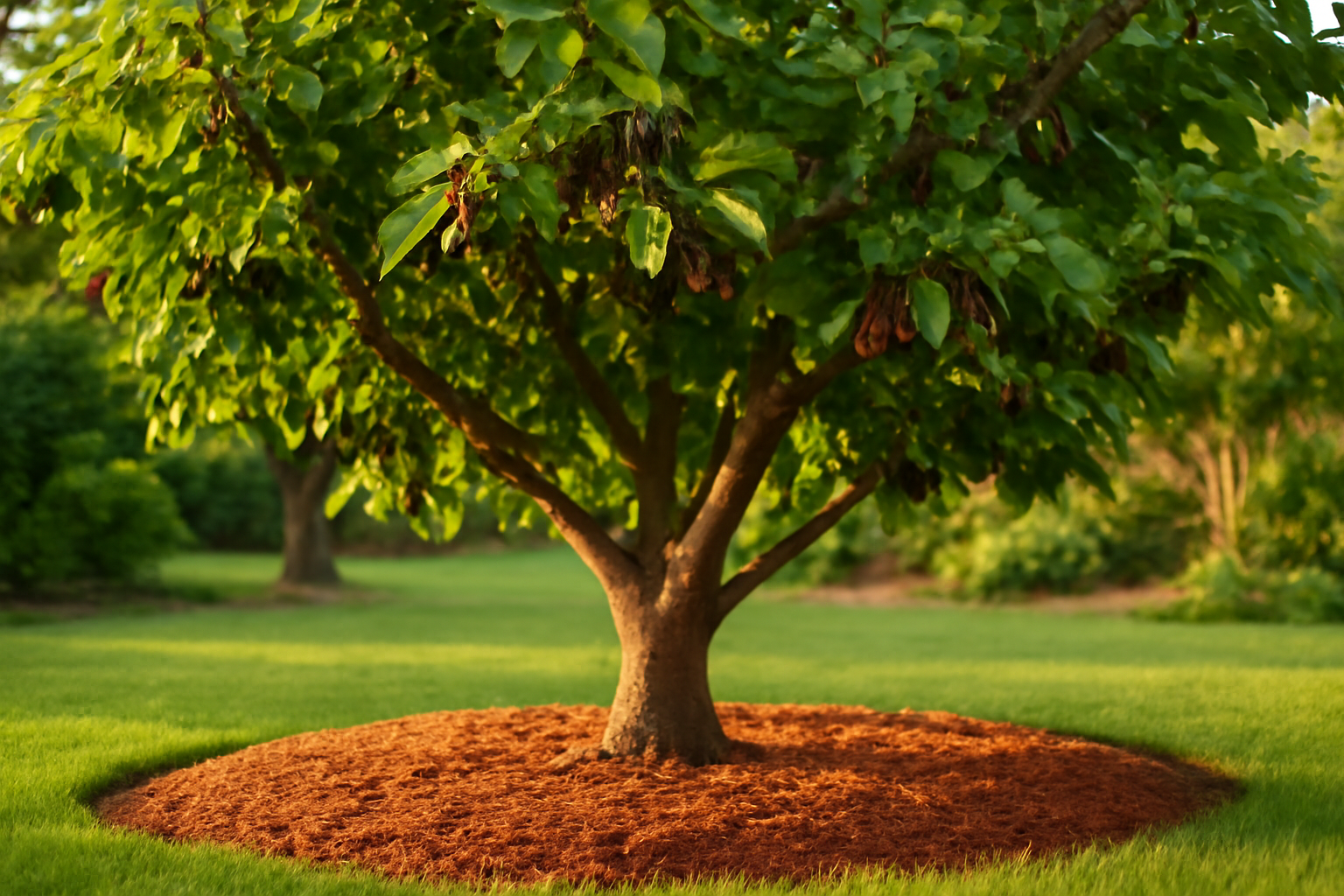
I applied the GARDENWISE Premium Cypress Mulch for Landscaping, Gardens, Lawns, Reptile Bedding, and Potted Plants (2 CF – 56 L – 59 QTS) in a ring around the tree, extending roughly two feet out from the trunk in every direction. I kept a clear gap of about three inches right at the base — mulch piled against bark can cause rot and create habitat for pests, so that buffer matters.
My target depth was three inches. That’s generally the sweet spot for summer moisture retention — deep enough to insulate effectively, but not so thick that water struggles to penetrate when you do irrigate. The two-cubic-foot bag covered this application comfortably, with a small amount left over.
Here’s my simple routine over the summer:
- Week one: Applied mulch after deep watering
- Every 10 days: Checked moisture by pressing a finger two inches into soil beneath the mulch layer
- Monthly: Lightly raked the mulch surface to prevent surface compaction and crust formation
- End of summer: Assessed depth and tree health before the fall season
That was essentially it. Simple, low-maintenance, and easy to fit into my regular garden check-ins.
What Actually Changed — Honest Results
The first thing I noticed was how much longer the soil stayed moist between waterings. Before mulching, I was watering my mulberry every two to three days during the hottest weeks. After applying the cypress mulch, I stretched that interval to five or six days comfortably. The soil beneath the layer stayed noticeably cooler to the touch than the exposed soil nearby.
Within two weeks, my mulberry’s leaves were looking better. The curling reduced, and new growth started appearing again at the branch tips. I want to be careful here — I can’t say the mulch alone was responsible for the recovery. I also adjusted my watering schedule and timing during this period. Still, the improvement was significant and clearly correlated with better root zone conditions.
I did have a moment of doubt around week three. We had an unusually heavy rainstorm, and I wondered if the mulch would trap too much water and create drainage issues. The morning after the storm, I checked the soil carefully. Drainage was fine — the fibrous texture of cypress mulch actually allows water to pass through while slowing surface evaporation. That was reassuring.
By the end of summer, the mulch had settled to about two inches in depth. Some decomposition had occurred at the soil interface, which is actually beneficial — it adds organic matter back to the root zone over time. The surface layer still looked tidy and continued to do its job.
- Watering frequency reduced by roughly 40% during peak summer heat
- Soil temperature under mulch noticeably cooler compared to unmulched beds nearby
- Tree showed renewed growth within two to three weeks of application
- Mulch maintained structural integrity throughout the entire season
- Minimal weed germination within the mulched ring
The Downsides Worth Knowing About
No product is perfect, and I want to be straightforward about the limitations I noticed over the season.
First, one two-cubic-foot bag isn’t much. It worked for my single young mulberry with a modest root zone spread. If you have a mature mulberry with a wide canopy and a large drip line, you’ll need multiple bags to achieve proper coverage. Plan your quantity carefully before ordering.
Second, the mulch does compact and thin over time. By late August, I was down to about two inches from my initial three. That’s normal for any organic mulch — it’s not a flaw unique to this product — but it does mean you’ll need to top up annually to maintain full effectiveness. Factor that into your long-term plan.
Third, the non-resealable bag was genuinely inconvenient. I had about a quarter of the bag left after my initial application. Storing loose mulch without a proper container is a small hassle. A simple zip or twist-tie closure would make this product more practical for single-tree applications.
Finally, if you’re in a very humid climate already dealing with fungal issues around your trees, any organic mulch — including cypress — can potentially contribute to moisture-related problems if applied too thickly or too close to the trunk. Maintain that buffer zone at the base and monitor accordingly.
Final Verdict: Cypress Mulch Mulberry Tree Root Protection That Delivers
After a full summer of use, I’m genuinely glad I made this purchase. The GARDENWISE Premium Cypress Mulch for Landscaping, Gardens, Lawns, Reptile Bedding, and Potted Plants (2 CF – 56 L – 59 QTS) did exactly what I needed it to do. It kept my mulberry tree’s root zone cooler, reduced my watering burden during peak heat, and held its structure far better than cheaper mulches I’ve used in previous years.
For cypress mulch mulberry tree root protection specifically, this product is a strong choice. Mulberry trees are resilient, but they perform best when their roots aren’t baking in dry, compacted soil during summer heat waves. A proper mulch layer makes a real difference — and this one delivered that reliably.
Buy This If:
- You have one or two mulberry trees and want reliable summer root zone protection
- You’re in a hot, dry climate and looking to cut back on watering frequency
- You want a mulch that lasts a full season without completely breaking down
- You prefer a natural, pleasant-smelling product for visible garden areas
Skip This If:
- You need to cover a large area — buying multiple bags adds up quickly
- You’re in a very humid region already managing fungal or moisture issues
- You prefer a bulk, loose delivery over bagged product
What About the Smaller Bag Option?
If you have a younger mulberry sapling or a small potted mulberry tree, the two-cubic-foot bag may be more than you need right now. GARDENWISE also offers a GARDENWISE Premium Cypress Mulch for Landscaping, Gardens, Lawns, Reptile Bedding, and Potted Plants (0.7 CF – 20 L – 21 QTS) — the same quality product in a smaller volume. It’s a practical starting point if you want to test the mulch before committing to a larger amount, or if your tree’s root zone is still compact and contained. Either way, the material is identical — just sized for different needs.