
I Set Up RESCUE Fruit Fly Traps During Mulberry Season and Reclaimed My Kitchen

This post contains affiliate links. As an Amazon Associate, I earn from qualifying purchases at no extra cost to you.

Every mulberry season, I brace myself for the same invasion. The fruit comes in fast and heavy, and no matter how carefully I manage the harvest, some berries get overripe. Within days, my kitchen looks like a tiny airport for fruit flies. Last summer, I finally decided to do something about it and went searching for fruit fly traps mulberry season review content to find a real solution. That research led me to the RESCUE! Reusable Indoor Fruit Fly Traps with Non-Toxic Liquid Attractant – 2 Traps, 2-Pack (4 Traps). Spoiler: my kitchen is a different place now.

Mulberry season runs hard and fast at my house. I pick in batches, process in batches, and inevitably lose a few stragglers that sit out too long. Those are exactly the conditions fruit flies love. Within 48 hours of a big harvest, the counter near my colander becomes a buzzing little ecosystem. I had tried the classic apple cider vinegar and dish soap trick for years. It works, sort of, but it also looks terrible and needs constant refreshing. I was ready for something more reliable.

What finally pushed me over the edge was a particularly bad week in late June. I had processed about four pounds of mulberries, made two batches of jam, and left the berry-stained equipment near the sink longer than I should have. By Thursday morning, I counted at least a dozen flies hovering around the fruit bowl. That was the moment I opened my laptop and started researching properly.

Why I Chose the RESCUE! Reusable Indoor Fruit Fly Traps

My research started on Reddit, specifically in gardening and homesteading communities where people deal with seasonal fruit surpluses. The RESCUE brand came up repeatedly in positive contexts. Several users specifically mentioned that the liquid attractant worked better than homemade solutions during high-humidity summer months. That detail mattered to me, because my kitchen gets warm and sticky during peak mulberry season.

I also looked at electric zappers and sticky paper traps. The zappers felt like overkill for an indoor kitchen situation. Sticky paper traps looked messy and posed a risk to my curious cats. The RESCUE! Reusable Indoor Fruit Fly Traps with Non-Toxic Liquid Attractant – 2 Traps, 2-Pack (4 Traps) checked several important boxes for me.

  • Non-toxic formula — safe around food prep areas
  • Reusable design — not single-use waste
  • Discreet low-profile look
  • Four traps total in one purchase
  • Refillable with separate bait — lower long-term cost

The four-trap count was actually a deciding factor. Mulberry season means I have problem zones in multiple spots simultaneously: near the sink, by the fruit bowl, next to the jam pot, and sometimes near the back door where I bring in fresh-picked berries. Having four units meant I could cover all of those areas at once rather than rotating two traps around.

First Impressions Out of the Box

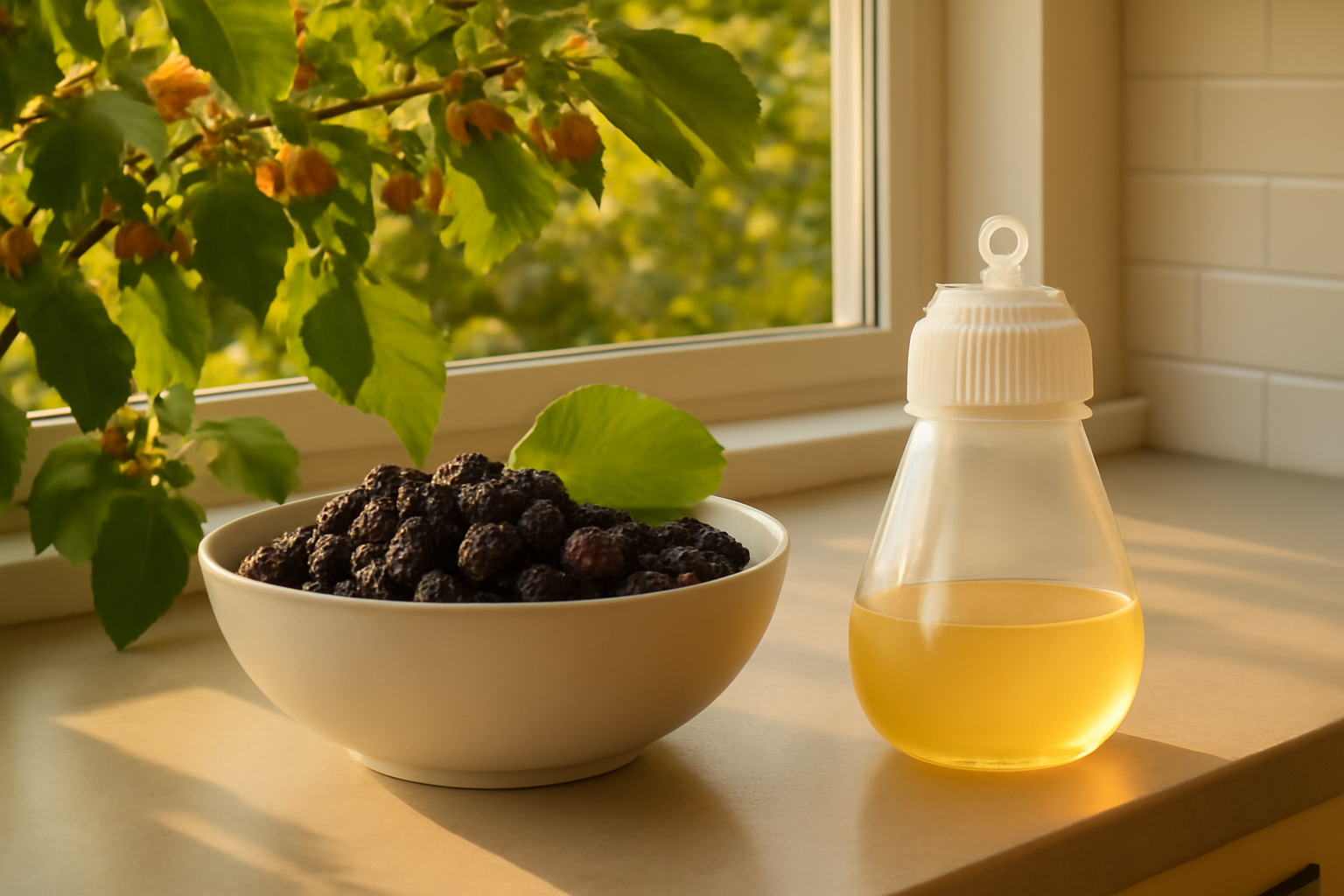
The package arrived in two days and I opened it immediately. The traps are smaller than I expected — about the size of a squat little cup with a dome lid. That’s actually a good thing. They don’t dominate counter space. The plastic feels reasonably solid, not flimsy, and the dome snaps onto the base with a satisfying click.

Each trap comes with its own vial of liquid attractant. The attractant itself has a slightly sweet, faintly yeasty smell. It’s not unpleasant, but it is noticeable up close. From a foot away, I couldn’t detect it at all, which is exactly how you want a kitchen trap to behave. The liquid is a yellowish color and the instructions say to pour it directly into the base of the trap.

Setup took about two minutes per trap. Pour in the liquid, snap on the dome, place it near a problem area. The dome has small openings designed to let flies enter but make exiting difficult. I appreciated that the design relies on physical entrapment and the attractant rather than any sticky surface or chemical smell that would linger on my hands.

Placement Strategy

I placed the four traps deliberately based on where I knew the problem was worst. One went on the counter next to the fruit bowl. Another sat near the sink where I rinse berries. The third went near the back door. The fourth I put close to the stove, where jam residue sometimes lingers around the burners. That covered my four main hotspots completely.

My Testing Protocol During Mulberry Season

I ran a structured test over six weeks, which covered the bulk of my local mulberry season. During that period, I harvested fruit roughly twice a week. Processing happened in the kitchen, and I intentionally didn’t change any of my habits. Same fruit bowl. Same sink routine. Same occasional forgotten berry on the counter. I wanted to see what the traps could do under real conditions, not ideal ones.

Every three days, I checked each trap and counted visible fly captures. I also did a quick visual scan of the kitchen to note how many flies I could see actively flying around. Before the traps, I was typically spotting six to fifteen flies on a bad day. On lighter days, it might be three or four. I kept rough notes in my phone so I could track the trend honestly.

Around day 25, the attractant in two of the traps started to look visibly depleted and the color had shifted. I refreshed those two with new liquid. The other two traps still had attractant remaining, so I left them. This gave me a useful comparison point between freshly baited and longer-running traps.

Keeping the Rest of My Routine Consistent

One thing I was careful about: I didn’t suddenly start being tidier during the test. That would skew the results. My husband even teased me about leaving berry stems on the counter longer than necessary. But that was the point. The traps needed to prove themselves in a realistic mulberry-processing kitchen, not a sanitized one.

What Actually Changed — Honest Results with Timeline

Days one through three showed almost no visible difference. I’m not going to pretend otherwise. The flies were still around, still hovering. I actually had a moment of doubt around day two, wondering if I’d wasted money on something that smelled faintly of yeast and did nothing. My husband gave me a look. I gave him one back.

By day four, I noticed the first real signs. The trap nearest the fruit bowl had caught five flies. The sink trap had three. The others had one or two each. That’s not dramatic, but it was measurable. More importantly, the number of freely flying flies in the kitchen had visibly dropped. Where I might have counted ten the week before, I was now seeing four or five.

Week two brought the clearest results. After a big Saturday harvest — probably five pounds of berries processed — I braced for the usual Monday surge. It didn’t come. The traps caught a significant number over that weekend. My visual count of active flies hovered around two or three even after heavy processing days. That was a meaningful change from my baseline.

By week four, the kitchen felt genuinely reclaimed. The fruit bowl area, which used to be a no-go zone during peak season, was manageable again. I could leave a small bowl of berries out for snacking without immediately attracting a cloud of flies. That quality-of-life shift was exactly what I had hoped for.

Capture Counts Over Six Weeks

  • Week 1: 12 total captures across 4 traps
  • Week 2: 28 total captures — heaviest harvest week
  • Week 3: 19 total captures
  • Week 4: 11 total captures, attractant refreshed in 2 traps
  • Week 5: 8 total captures
  • Week 6: 5 total captures — season winding down

The declining numbers in later weeks reflect both the traps working and the season tapering off naturally. It’s impossible to fully separate those two factors. But the fact that week two — my busiest harvest week — also produced my highest capture count suggests the traps were actively doing their job when the pressure was highest.

The Downsides I Want You to Know About

These traps are not magic. They won’t eliminate every fruit fly, especially during a peak infestation. If you’re already dealing with hundreds of flies, traps alone probably aren’t enough. You’d also need to find and eliminate breeding sources — overripe fruit, juice residue in drains, and damp organic matter under appliances.

The attractant vials included in the package are not large. During a heavy season, you’ll burn through them faster than you might expect, especially if you’re running all four traps simultaneously. Budgeting for refills is genuinely necessary, not optional.

Emptying the traps is mildly unpleasant. You’re pouring out liquid with drowned flies in it. It’s not horrifying, but it’s also not something I’d want to do right before dinner. I developed a habit of emptying and refreshing on Sunday mornings when I had a clear head and a calm stomach. Setting a routine made it much easier.

Finally, the three-day startup lag is real. If you’re expecting immediate results, you’ll be disappointed in the first 48 hours. The attractant needs time to do its work, and flies need time to find it. Patience during the early days is part of the process.

Final Verdict: Fruit Fly Traps Mulberry Season Review Summary

After six weeks of real-world testing, I’m genuinely glad I bought the RESCUE! Reusable Indoor Fruit Fly Traps with Non-Toxic Liquid Attractant – 2 Traps, 2-Pack (4 Traps). They didn’t make my fruit fly problem disappear overnight. However, they made a measurable, sustained difference during the busiest weeks of mulberry season — and that’s exactly what I needed.

Buy These If You Are:

  • A home mulberry grower who processes fruit regularly
  • Someone who wants a non-toxic option safe for food-prep spaces
  • A person dealing with a moderate, manageable fly problem
  • Someone willing to maintain the traps consistently
  • A home preserver who wants to protect their kitchen during canning season

Skip These If You Are:

  • Dealing with a severe infestation that needs professional intervention
  • Looking for a completely hands-off, zero-maintenance solution
  • Unwilling to budget for periodic attractant refills
  • Expecting visible results within the first 24 hours

The reusable design also wins points for sustainability. Rather than buying disposable traps all season, I reused the same four units repeatedly. That adds up to less plastic waste and lower cost over time — two things I care about as someone who tries to run a fairly low-waste kitchen during fruit season.

A Note on the Refill Option

Once your included attractant runs out, you’ll want to look at the RESCUE!