This post contains affiliate links. As an Amazon Associate, I earn from qualifying purchases at no extra cost to you.
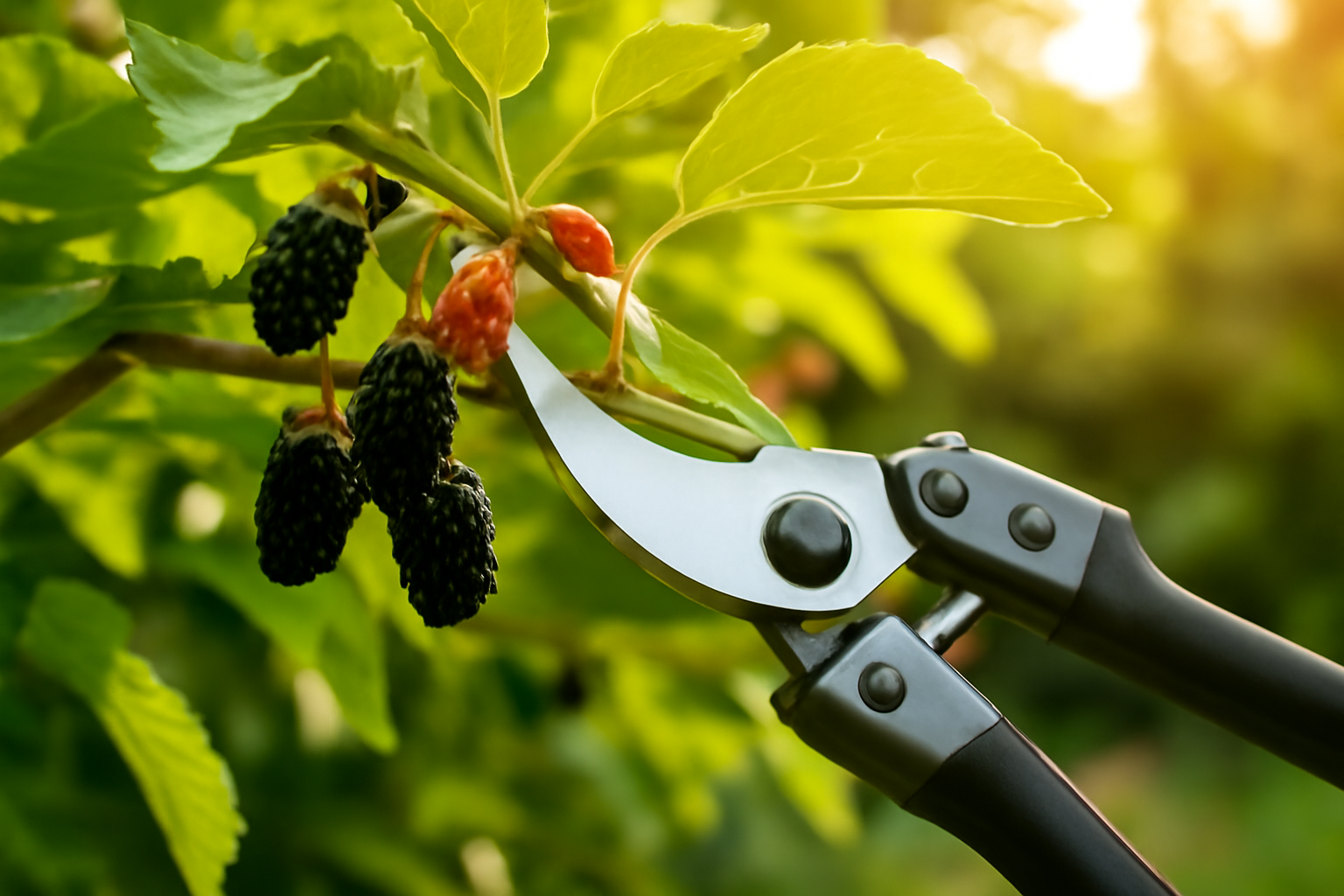
Last spring, I was three trees deep into my annual mulberry pruning session when my old hand pruners finally gave up. The blade had gone dull, the spring was weak, and every cut required twice the effort it should. My hand was cramping, my cuts were ragged, and I still had four trees to go. That afternoon, I started researching my options — and my search for a Fiskars pruning shears mulberry tree review kept circling back to the same product. I ordered a pair of Fiskars Bypass Pruning Shears, 5/8″ Cut Capacity Gardening Scissors, Self-Cleaning Sap Groove Prevents Sticking, Non-Slip Grip for Cutting Stems & Branches, Sharp Steel Blades w/ Low-Friction Coating that same night.
Mulberry trees are not delicate. They push out thick, fast-growing shoots every season. Sucker growth comes up aggressively from the base. Water sprouts shoot straight up from the canopy. Pruning them properly — without tearing the wood or exhausting your hands — requires a tool that can actually handle the job. A flimsy pair of craft-store scissors just doesn’t cut it. Literally.
I’ve now used this pair through three full pruning seasons on my small backyard mulberry orchard. Here’s everything I’ve learned, including the one moment I seriously doubted my purchase.
Why I Chose the Fiskars Bypass Pruning Shears
When my old pruners died, I had a shortlist of maybe five replacements. Some were cheaper. A couple were fancier. Honestly, I almost went with a Japanese brand that had strong reviews in orcharding circles. So why did I land on Fiskars?
Three reasons pushed me toward this model specifically. First, the bypass design. Unlike anvil pruners — which crush the stem between two surfaces — bypass blades slide past each other like scissors. That gives you a cleaner cut, which matters for tree health. Crushed or torn cuts invite disease. Clean cuts heal faster.
Second, the self-cleaning sap groove caught my attention immediately. Mulberry trees bleed sap. Anyone who has pruned them knows that sticky, milky latex that coats your blades within minutes. My old pruners would gum up constantly. The idea that this design actively channels sap away from the blade felt genuinely useful, not just marketing language.
Third, the price point made the decision low-risk. Under $25 at the time of my purchase felt reasonable for a tool I’d use every year. If it failed, I hadn’t lost much. If it delivered, even better.
First Impressions Out of the Box
The packaging is minimal and practical. No fancy unboxing experience here — just a simple clamshell that lets you see the tool before you open it. That’s fine by me. I’m not reviewing the box.
What struck me immediately was the weight. These shears feel substantial without being heavy. The steel blade has a visible low-friction coating that gives it a slightly silvery sheen. Running my thumb carefully along the edge, the blade was noticeably sharp right out of the package — sharper than my old pruners ever were, even when new.
The non-slip grip handle has a comfortable orange and black design. It’s not a soft foam grip, but it has enough texture to feel secure even with gardening gloves on. The spring mechanism opened and closed smoothly, with a satisfying snap. A small locking tab keeps the blades closed during storage, which is a safety detail I genuinely appreciate.
Build quality felt solid. Nothing wobbled or flexed oddly. The pivot screw was tight. Overall, my first impression was positive — these looked like a tool built to work, not just to sell.
My Testing Protocol on Mulberry Trees
I want to be specific here, because “I used them in my garden” tells you very little. Here’s exactly how I’ve tested these shears.
My property has five mulberry trees — three dwarf varieties and two standard-sized trees that I keep heavily pruned to a manageable height. Each spring, I do a full structural pruning session. Each summer, I follow up with a lighter maintenance pruning to remove water sprouts and sucker growth. In fall, I do a final cleanup before dormancy.
Over three seasons, that amounts to roughly nine distinct pruning sessions using these shears. During each session, I’m typically cutting:
- New shoots up to about 1/2 inch diameter
- Water sprouts (thin but extremely fibrous)
- Sucker growth from the base, sometimes at awkward angles
- Crossing branches in the canopy interior
I do not use these for branches thicker than about 1/2 inch. For anything larger, I switch to loppers. That’s important context — I’m using this tool within its stated capacity, not pushing beyond it.
After each session, I wipe the blades with a damp cloth and occasionally apply a small amount of blade oil. I store them in a dry shed between uses. No special treatment beyond basic maintenance.
What Actually Changed: Honest Results Over Three Seasons
The difference in cut quality was apparent from the very first session. My old pruners had left torn, slightly crushed ends on many cuts. These shears produced clean, smooth cuts consistently. That’s not a small thing — ragged cuts on mulberry wood can develop small splits that become entry points for fungal issues.
My pruning sessions also got noticeably faster. Less effort per cut meant less fatigue. During my first full spring session with these shears, I completed all five trees without the hand cramping I’d experienced before. That alone made them worth the price for me.
The sap groove absolutely delivers on its promise. Mulberry latex still builds up — nothing prevents that entirely — but it accumulates much more slowly than with my previous tool. I noticed I was cleaning the blades less frequently during long sessions. The sap that did build up wiped away easily rather than requiring scraping.
Here’s my one honest moment of doubt: about six months in, I noticed the blades weren’t gliding past each other quite as smoothly. Cuts that had felt effortless started requiring a bit more squeeze. I genuinely wondered if I’d made a mistake.
Turns out, the pivot screw had loosened slightly with regular use. A quick adjustment with a screwdriver fixed it completely. That felt like a design limitation — I’d expect a premium tool to hold its tension longer — but the fix was simple enough that it hasn’t happened since. Still, worth knowing.
After three seasons, the blade is still sharp. Not as sharp as day one, but genuinely functional without resharpening. The low-friction coating has worn slightly in the center where blade contact is heaviest, but it hasn’t affected performance in any way I can measure.
The Downsides I Won’t Gloss Over
No tool is perfect, and I’d be doing you a disservice by pretending otherwise. Here are the genuine limitations I’ve found.
The 5/8-inch cut capacity is real, and it’s a meaningful constraint. Mature mulberry branches thicken quickly. During summer water-sprout removal, you’re usually fine. But during spring structural pruning, you will encounter branches that exceed this limit — and forcing the shears past their capacity will damage both the tool and the cut. Know this going in.
The spring tension is moderate rather than strong. Some gardeners prefer a stiffer spring that fully resets the blades after each cut. These feel a little light by comparison. For me, that’s actually a positive — it reduces fatigue. However, if you prefer a firm, positive reset, these may feel a bit loose.
The pivot screw issue I mentioned earlier is worth repeating. Check it every few months during active use. Two minutes of preventive maintenance saves you from a frustrating mid-session decline in performance.
Finally, the non-slip grip, while functional, isn’t particularly ergonomic for extended sessions. After an hour of heavy pruning, I notice some fatigue in my palm in a way that a cushioned grip might reduce. Not a dealbreaker, but relevant if you’re doing marathon pruning days.
Final Verdict: My Fiskars Pruning Shears Mulberry Tree Review After 3 Years
After three seasons and nine pruning sessions across five mulberry trees, here’s where I land: the Fiskars Bypass Pruning Shears, 5/8″ Cut Capacity Gardening Scissors, Self-Cleaning Sap Groove Prevents Sticking, Non-Slip Grip for Cutting Stems & Branches, Sharp Steel Blades w/ Low-Friction Coating is genuinely excellent for light-to-moderate mulberry pruning. The cut quality is clean, the sap groove works as advertised, and the value for the price is hard to argue with.
Buy these if you:
- Are pruning young mulberry trees or dwarf varieties
- Need a reliable everyday pruner for shoots, suckers, and water sprouts
- Want a bypass design for clean, tree-friendly cuts
- Are looking for solid quality at a budget-friendly price point
Skip these if you:
- Regularly prune branches thicker than 5/8 inch
- Want a heavily cushioned grip for marathon pruning sessions
- Prefer a tool that requires zero maintenance over time
For most home mulberry growers, this pair will handle the majority of your pruning needs at a price that makes sense. I reach for mine every single season without hesitation.
What About the Heavy-Duty Alternative?
If your mulberry trees are older and your branches regularly exceed 5/8 inch, consider stepping up to the Fiskars Bypass Pruning Shears, 1″ Cut Capacity Gardening Scissors, Forged Steel Replaceable Blade, SoftGrip Handle Garden Clippers, Rust Resistant Low Friction Coating for Branches & Stems. The one-inch cut capacity gives you more range, the forged steel construction is notably more robust, and the replaceable blade design means you’re not buying a whole new tool when the edge eventually dulls. The SoftGrip handle also addresses the fatigue issue I mentioned above. It costs more, but for large or mature mulberry trees, the extra capability may be worth it.