This post contains affiliate links. As an Amazon Associate, I earn from qualifying purchases at no extra cost to you.
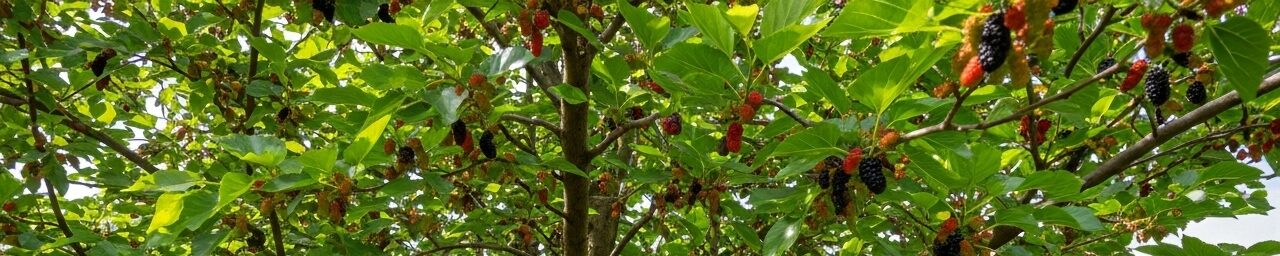
Every mulberry season, I tell myself the same lie: “This year I’ll stay on top of the harvest.” Then July hits, the trees go absolutely wild, and I’m standing outside in the heat with purple-stained hands, picking berry by berry while half the fruit drops to the ground before I can reach it. After reading more than a few berry picker for mulberries reviews online last spring, I finally decided to stop improvising and actually test some tools. What followed was three weeks of side-by-side comparisons across my two mature mulberry trees — and one product genuinely surprised me.
I want to be upfront: I’m not a commercial farmer. My setup is a large backyard with two established mulberry trees that produce more fruit than my family can eat fresh. I preserve, freeze, and make jam — so harvest efficiency genuinely matters to me. Wasted fruit is wasted time and money. That’s the lens through which I tested everything.
Why I Chose the GUGULUZA Berry Picker for Mulberries
Going into this, I tested three pickers total: a cheap plastic scoop from a local garden center, a wire-tine picker I found at a farm supply store, and the GUGULUZA Berry Picker with Metallic Comb, Plastic Blueberry Picker Scoop with Ergonomic Handle, Huckleberry Picking Rakes for Easier Berry Harvester, 9″ x 5.5″ (Green). The GUGULUZA was the only one I specifically sought out after research. Several gardening forums and homestead blogs mentioned it by name, and the metallic comb design stood out to me immediately.
Most pickers I found used all-plastic tines. Mulberries are soft and bruise easily — but they also grow in clusters along thin, flexible branches. I worried that flimsy plastic tines would either snap under pressure or miss berries entirely. The metallic comb on the GUGULUZA looked more precise. Additionally, the ergonomic handle was a selling point I didn’t take lightly. After an hour of repetitive picking motions, hand fatigue is very real.
Price was also reasonable. At under $15 at the time of purchase, it wasn’t a significant financial risk. If it failed, I’d just go back to hand-picking. That said, I still wanted it to earn its spot in my harvest kit — and I went in with genuine skepticism.
First Impressions Out of the Box
The GUGULUZA Berry Picker with Metallic Comb arrived in simple packaging — no frills, just the tool itself. My first reaction was that it was lighter than expected. That’s not necessarily a negative, but I noticed it immediately. The green plastic body felt solid rather than hollow or cheap. There was no flex when I applied pressure to the sides, which gave me confidence in its durability.
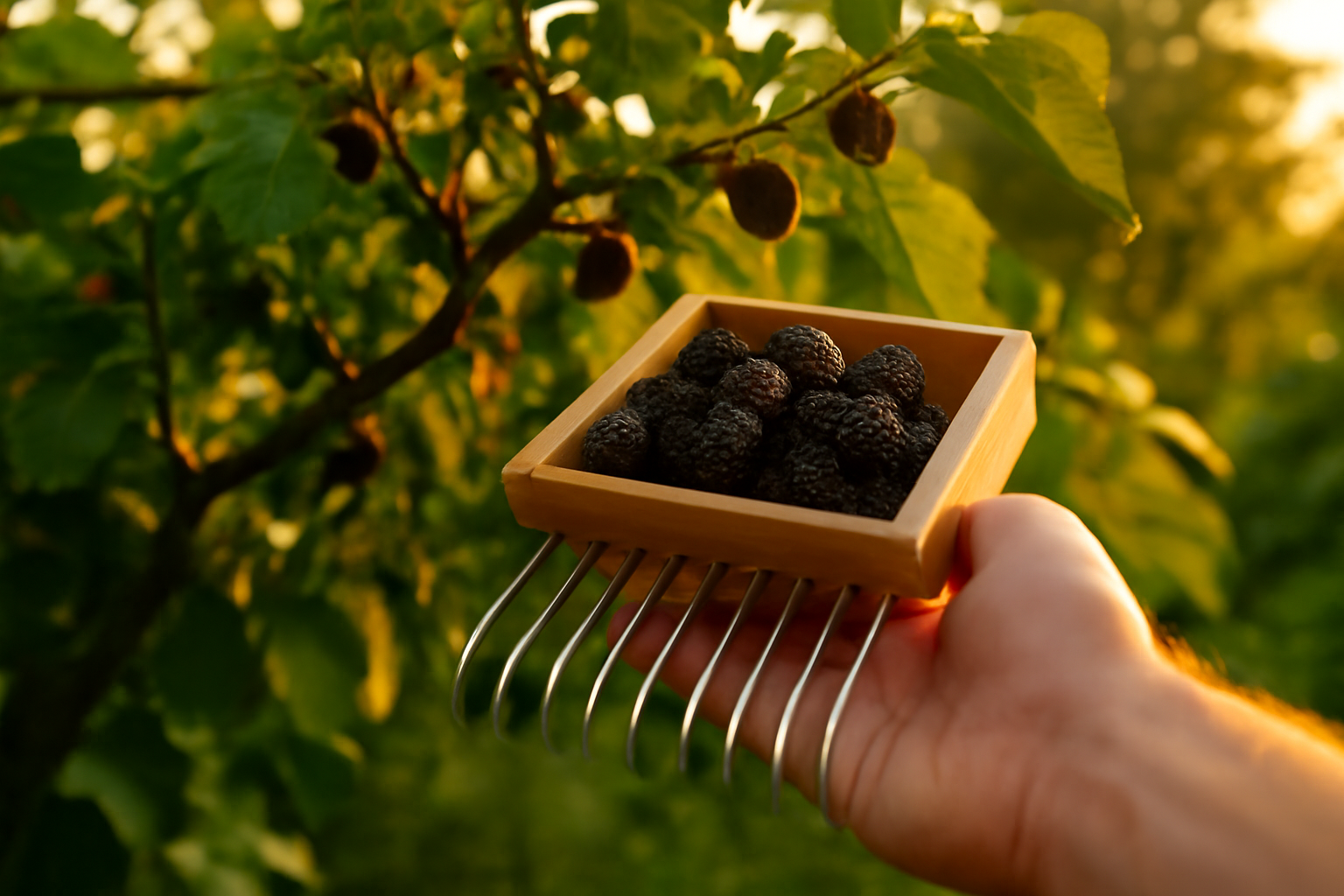
The metallic comb tines were the first thing I examined closely. They’re evenly spaced and smooth at the tips — no sharp edges that might tear into fruit aggressively. The spacing looked appropriate for mulberries, which vary quite a bit in size depending on the variety. My trees produce medium-sized black mulberries, and the tine gap seemed well-matched.
Gripping the handle immediately felt comfortable. It has a slight curve and textured surface that kept my hand from slipping. The 9″ x 5.5″ dimensions give it a generous scoop capacity — noticeably larger than the local garden center picker I’d also purchased. Build quality, on first inspection, cleared the bar I’d set based on the price point.
My Testing Protocol
I tested all three pickers across six separate harvest sessions over three weeks in peak mulberry season. Each session lasted between 45 minutes and one hour. I rotated through the tools during each session — spending roughly 15 minutes with each — to keep conditions as comparable as possible. Both trees were at similar stages of ripeness during testing.
For each session, I tracked three things informally:
- Approximate volume of berries collected per 15-minute window
- How many berries appeared visibly crushed or damaged in the collection basket
- Hand and wrist fatigue on a simple 1–5 scale at the end of each tool’s session
I also noted how each tool performed on different branch positions — low-hanging clusters were easy for every tool, but mid-canopy clusters required more maneuvering. That’s where real differences emerged. I didn’t use any scientific measurement equipment. These are field observations, not lab results — but they were consistent across multiple sessions.
How I Used the GUGULUZA Specifically
With the GUGULUZA, the motion that worked best was a slow, deliberate combing pull through a cluster. Rushing caused more berries to bounce out of the scoop before I could redirect them into my bucket. Once I slowed down and used a controlled stroke, retention improved significantly. It took about two sessions to find the right rhythm.
What Actually Changed — Honest Results
Here’s where I’ll be direct: no berry picker eliminates mess or makes mulberry harvesting effortless. Anyone who tells you otherwise hasn’t actually used one on a full-sized mulberry tree. That said, the GUGULUZA Berry Picker with Metallic Comb, Plastic Blueberry Picker Scoop with Ergonomic Handle, Huckleberry Picking Rakes for Easier Berry Harvester, 9″ x 5.5″ (Green) produced measurable improvements over my baseline hand-picking speed.
By my rough estimates, I collected noticeably more volume in the same time period compared to hand-picking — I’d estimate somewhere in the range of 30–40% more per session once I got the technique down. The metallic tines did a good job of catching ripe berries while leaving clearly underripe ones on the branch more often than the all-plastic alternatives did. That selectivity mattered for jam quality.
Hand fatigue was also lower with the GUGULUZA than with the wire-tine picker, which required more grip force. The ergonomic handle made a real difference during longer sessions. By minute 45, my hand felt noticeably less strained compared to the other tools.
The Moment I Almost Gave Up on It
During my second session, I nearly wrote the GUGULUZA off entirely. I was working a dense mid-canopy cluster and kept losing berries over the front lip of the scoop before I could tilt it back. Fruit was bouncing off the tines and falling to the ground — which felt worse than hand-picking. I genuinely put it down and went back to the wire-tine picker for a while.
What saved it was slowing down. The picker isn’t designed for a fast raking motion the way some blueberry pickers are. Mulberries require a gentler stroke, and once I matched my pace to the tool’s design, the loss rate dropped considerably. Still — that learning curve is real, and it frustrated me initially.
The Downsides I Won’t Gloss Over
No honest review ignores the negatives. Here’s what I think potential buyers should know before purchasing:
- Learning curve is real. It took two full sessions before I was using it effectively. If you only pick once or twice per season, you may not have time to find your rhythm.
- It’s not great for tight branch clusters. Where branches are densely packed, the 9″ width became a hindrance rather than a help. Hand-picking remained faster in those micro-situations.
- Some fruit damage occurs. Ripe mulberries bruise easily. Even with a careful stroke, a percentage of collected berries came out crushed or split. This is likely unavoidable with any mechanical picker on mulberries specifically — they’re just very soft fruit — but it’s worth knowing if you’re selling fresh.
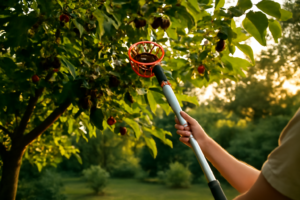
- Not ideal for high branches. Without an extension handle (which this doesn’t include), reaching above shoulder height was awkward and reduced efficiency. I still needed a step stool for upper canopy work.
- Leaf and debris collection. The metallic comb picks up small leaves and twigs along with berries. Sorting time after harvest increased slightly compared to careful hand-picking.
None of these issues were dealbreakers for my use case. But they might be for someone with different expectations or a different harvest setup.
Berry Picker for Mulberries Review: My Final Verdict
After three weeks and six harvest sessions, the GUGULUZA Berry Picker with Metallic Comb, Plastic Blueberry Picker Scoop with Ergonomic Handle, Huckleberry Picking Rakes for Easier Berry Harvester, 9″ x 5.5″ (Green) earned a permanent spot in my harvest kit. It’s not a miracle tool, and it won’t replace your hands entirely. What it does is meaningfully increase throughput on open clusters and reduce hand fatigue during longer sessions — two things that matter a lot when you’re trying to process a heavy harvest before the fruit overripens.
The metallic comb design is genuinely superior to all-plastic alternatives for this application. The build quality exceeded what the price suggests. And once I understood the correct technique, consistency improved noticeably across sessions.
Buy It If:
- You have multiple mulberry trees and need to cover more ground per session
- You preserve, freeze, or make jam — where some bruising doesn’t disqualify fruit
- You experience hand or wrist fatigue during long harvests
- You’re patient enough to spend a session or two learning the technique
Skip It If:
- You’re selling fresh mulberries and need pristine, unblemished fruit
- Your trees are heavily branched with very tight clusters throughout
- You only harvest once per season and don’t want a learning curve
- You need a tool that reaches high branches without a separate extension
For my setup and goals, it’s the clear winner of the three I tested. You can check the current price and availability on Amazon here.
What About the Alternative Color Option?
If green isn’t your preference, the same picker is available in a Black and Red colorway. The GUGULUZA Berry Picker with Metallic Comb, Plastic Blueberry Picker Scoop with Ergonomic Handle, Huckleberry Picking Rakes for Easier Berry Harvester, 9″ x 5.5″ (Black&Red) appears to be the same tool in a different finish. I tested the green version only, so I can’t speak to whether there are any material differences between the two. Functionally, they should perform identically. The Black and Red option is worth considering if you share tools with family members and want something easier to distinguish in a cluttered garden shed.