This post contains affiliate links. As an Amazon Associate, I earn from qualifying purchases at no extra cost to you.
For months, my mulberry leaf tea was a complete gamble. Sometimes it tasted smooth and grassy. Other times it came out bitter and flat. I had no idea what I was doing wrong — until I realized my old kettle was the problem. Finding the right variable temperature kettle for mulberry tea genuinely changed my daily routine. Now I want to walk you through exactly what I found and why it made such a difference.
Mulberry leaves are delicate. Unlike black tea, they don’t respond well to boiling water. I learned this the hard way after ruining batch after batch. The bitter results weren’t from bad leaves — I grow my own mulberries and dry the leaves myself. The culprit was my single-temperature kettle, which blasted everything at a full rolling boil. I needed something smarter.
That frustration sent me down a rabbit hole of kettle research. I wanted precise temperature control, a glass body so I could see what I was doing, and ideally a built-in infuser. After a few weeks of reading reviews and comparing options, I landed on one product that checked nearly every box.
Why I Chose the Chefman Electric Kettle with Temperature Control
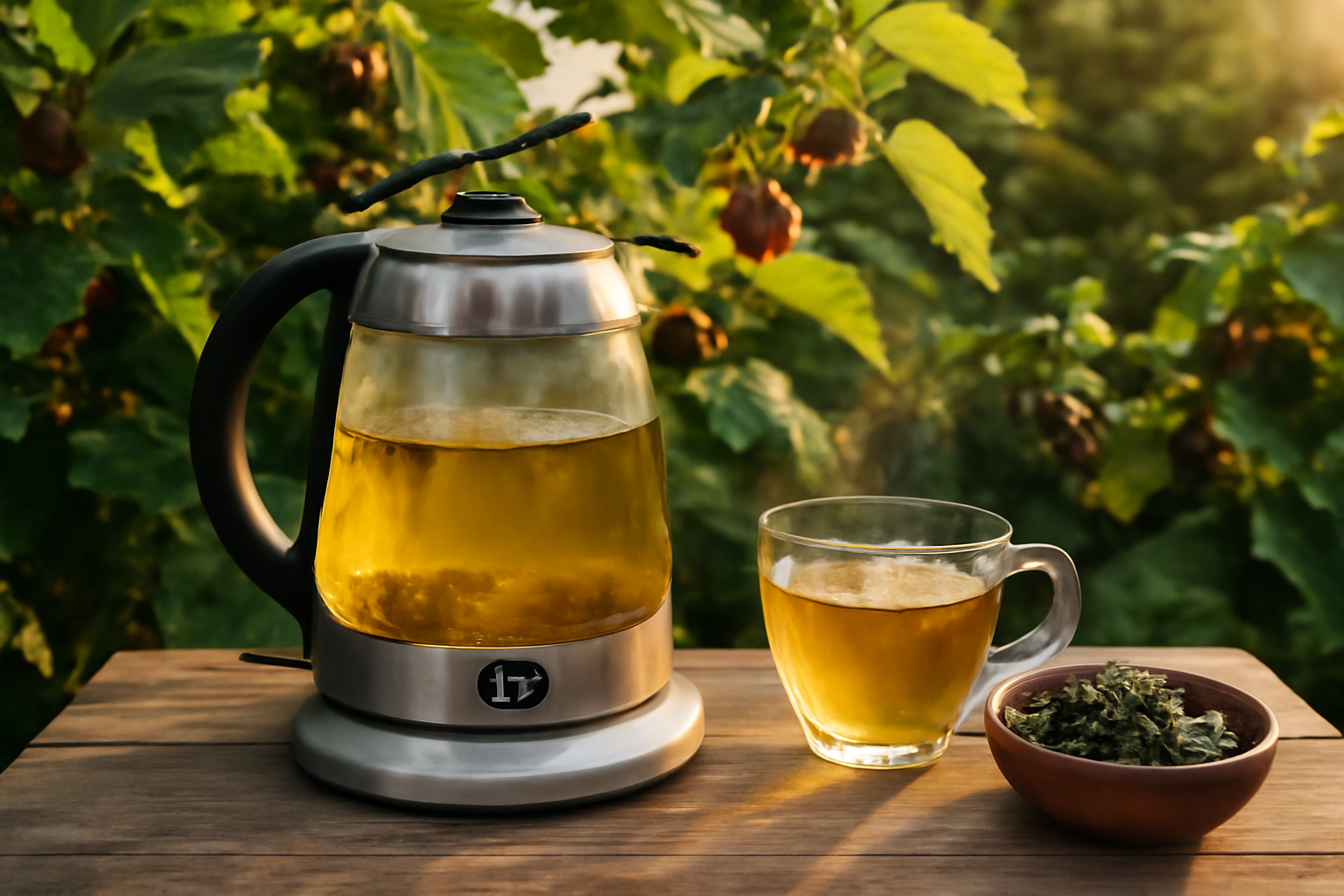
The Chefman Electric Kettle with Temperature Control, 5 Presets LED Indicator Lights, Removable Tea Infuser, Glass Tea Kettle & Hot Water Boiler, 360° Swivel Base, BPA Free, Stainless Steel, 1.8 Liters kept appearing at the top of every comparison I read. Several tea-focused forums specifically mentioned it for herbal teas and green teas. Those two categories are close cousins to mulberry leaf tea in terms of brewing temperature, so that felt encouraging.
The five preset temperatures were a major selling point. Most variable kettles I looked at were either cheaply made or priced well above $60. This one sat in a reasonable middle range. The glass body appealed to me because I hate not being able to see inside a kettle. Transparency — both literally and figuratively — matters to me in kitchen tools.
The removable tea infuser was honestly a bonus I almost dismissed. I figured it would be a cheap plastic strainer I’d ignore. That assumption turned out to be wrong, which I’ll get to shortly. The 360° swivel base and BPA-free construction sealed the decision. I clicked “add to cart” and waited.
First Impressions: Unboxing and Build Quality
The kettle arrived well-packaged. Everything was snug in molded cardboard, with no rattling parts. My first impression of the glass body was genuinely positive — it felt solid, not flimsy. The borosilicate-style glass has a satisfying weight to it. Tapping the side produces a clear, dense sound rather than a thin ping.
The stainless steel base and lid have a brushed finish that looks clean on my countertop. The LED indicator lights around the base glow blue during heating, then shift to indicate your selected temperature. It’s a subtle touch, but it feels intentional rather than gimmicky.
I was a little skeptical about the infuser basket at first. It’s stainless steel mesh, finer than I expected. It fits snugly into the kettle’s mouth and holds a reasonable amount of loose leaf material. My dried mulberry leaves are somewhat bulky, and the basket accommodated them without issue. The lid sits securely over the infuser, which I appreciated immediately.
One small note: the instruction manual is minimal. If you’re not already familiar with variable temperature kettles, you might spend a few minutes pressing buttons to figure out the sequence. It wasn’t a dealbreaker, but a slightly clearer guide would have helped on day one.
My Testing Protocol: Four Weeks of Daily Brewing
I tested this kettle every morning for four weeks. My routine stayed consistent: two tablespoons of dried mulberry leaves in the infuser basket, water filled to the 1.5-liter mark, and the 175°F preset selected. That temperature is close to what I’d read works well for delicate herbal leaves — hot enough to extract flavor, cool enough to avoid bitterness.
During week one, I also tried the 185°F and 195°F settings on alternating days. This gave me a direct comparison within the same batch of leaves. The differences were noticeable. Higher temperatures produced a slightly more astringent cup. The 175°F setting consistently delivered the smoothest result with my home-dried leaves.
I also tested the kettle for general kitchen use. Hot water for oatmeal, pour-over coffee, and the occasional cup of black tea. This helped me evaluate reliability beyond just my mulberry leaf focus. Over four weeks, I used it roughly 35 times total. No malfunctions, no leaks, and no inconsistencies in temperature performance that I could detect.
A Moment of Doubt
Around day ten, I had a genuine moment of doubt. The LED lights on the base started flickering slightly during one heating cycle. My heart sank — I was worried I’d bought a dud. Then I noticed I hadn’t seated the kettle fully on the swivel base. A firm press downward fixed it completely. The flickering never returned. Still, that moment reminded me that even a well-reviewed product can create a minor scare.
What Actually Changed: Honest Results
The most obvious improvement was flavor consistency. My mulberry leaf tea stopped tasting bitter. That was the primary goal, and it was achieved within the very first week. The 175°F setting extracts the subtle, slightly sweet grassy notes from the leaves without cooking away the more delicate compounds.
Here’s a quick breakdown of what changed across the four-week period:
- Week 1: Immediate flavor improvement. Less bitterness, cleaner finish on every cup.
- Week 2: Settled on 175°F as my ideal setting for dried mulberry leaves. Started using the infuser basket daily instead of a separate strainer.
- Week 3: Noticed the keep-warm function is genuinely useful. If I get distracted after brewing, the water holds its temperature for several minutes without re-boiling.
- Week 4: Consistent results every single morning. No variation I could attribute to the kettle.
The infuser basket also proved more useful than I expected. Using it directly in the kettle meant my leaves steeped during the pour, which infused the water more evenly than my old method of pouring boiling water into a separate teapot. The result felt more integrated, somehow.
The glass body also deserves a mention here. Being able to watch the water heat is surprisingly satisfying. You can see the small bubbles forming before the temperature reaches your preset, which gives you a visual cue even without checking the LEDs.
The Downsides: What I Didn’t Love
No product is perfect. After four weeks, I have a few honest criticisms worth mentioning.
The infuser basket is a bit shallow. If you load it with a generous amount of loose-leaf material, the leaves at the top don’t fully submerge during the brief contact time in the kettle. For my mulberry leaves, I compensated by using less leaf and steeping slightly longer in the cup. It works, but it requires a small adjustment.
The lid can be fiddly to remove when the infuser basket is inside. Both pieces come out together, and you need two hands to manage it cleanly. Over time I developed a habit, but early on I splashed water a couple of times.
The capacity is listed at 1.8 liters, which is generous. However, the minimum fill line is fairly high. If you only want to heat a small amount of water — say, for a single cup — you’ll be heating more than you need. That’s a minor inefficiency in terms of energy and time.
Finally, the exterior glass does show fingerprints. It wipes clean easily with a soft cloth, but if you’re particular about a spotless countertop presentation, be aware that it requires regular wiping.
Final Verdict: Who Should Buy This Variable Temperature Kettle for Mulberry Tea
After four weeks of consistent daily use, the Chefman Electric Kettle with Temperature Control, 5 Presets LED Indicator Lights, Removable Tea Infuser, Glass Tea Kettle & Hot Water Boiler, 360° Swivel Base, BPA Free, Stainless Steel, 1.8 Liters earns a clear recommendation from me. If you brew mulberry leaf tea regularly, a variable temperature kettle for mulberry tea is genuinely not optional — it’s essential. This product delivers that precision reliably and affordably.
Buy This If:
- You brew delicate herbal teas, green teas, or mulberry leaf tea regularly
- You want a glass kettle that lets you see the heating process
- You want a built-in infuser to simplify your loose-leaf routine
- You appreciate preset temperatures without fussing with dials
- You brew for multiple people and need a larger capacity
Skip This If:
- You only ever boil water for black tea or coffee and don’t need temperature precision
- You want a single-cup kettle with a very low minimum fill
- You prefer an opaque stainless steel exterior that won’t show fingerprints
A Word on the Alternative: Elite Gourmet 1.7L Electric Tea Kettle
If the Chefman is out of stock or you want a dual-wall option that stays cooler to the touch on the outside, consider the Elite Gourmet 1.7L Dual Wall Cool Touch Electric Tea Kettle. Its borosilicate glass and 304 stainless steel interior are solid credentials. The digital touchscreen and keep-warm function are convenient features. The dual-wall design is a genuine safety advantage if you have children around. It’s a worthy alternative, especially if the cool-touch exterior is a priority for your household.
For my specific needs — daily mulberry leaf tea with full temperature visibility — the Chefman edged it out. But your priorities may differ, and the Elite Gourmet is a strong second choice worth serious consideration.