
I Wrapped My Young Mulberry Trunks With Tree Guard Protectors: No More Deer Damage

This post contains affiliate links. As an Amazon Associate, I earn from qualifying purchases at no extra cost to you.


Last spring, I walked out to check on my young mulberry saplings and felt my stomach drop. Two of my most promising trees had been completely stripped of bark near the base. Deer had been at them overnight, and the damage was devastating. I’d spent two years nurturing those trees from bare-root stock, and in one night, I was looking at potential tree loss. That’s when I started seriously researching a tree guard protector for young mulberry trees — something sturdy enough to stop deer, but gentle enough not to damage the bark I was trying to protect.

Mulberry trees are surprisingly vulnerable in their first few years. The bark is thin, the trunks are slender, and deer find them irresistible — especially in late winter when food is scarce. I had six young trees in my yard, ranging from about one to three years old. Losing even one more wasn’t something I was willing to accept. So I went deep into research mode, reading reviews, watching YouTube videos, and asking around in mulberry grower forums.

Eventually, I landed on a product that seemed to check every box. I’ve now been using it for a full growing season, and I have a lot to share — including one moment where I genuinely wasn’t sure I’d made the right call.

Why I Chose the HOLANHING Metal Mesh Tree Trunk Protector

My first instinct was to go with plastic spiral wraps. They’re cheap and everywhere. However, after reading several gardening forums, I kept seeing the same warning: plastic wraps trap moisture, create hiding spots for insects, and can actually girdle young trees if you forget to expand them as the trunk grows. That ruled out plastic almost immediately.

Metal mesh kept coming up as the better long-term solution. It allows airflow, doesn’t trap pests, and holds its shape. After comparing several options, I settled on the HOLANHING 6/9/12 Pack Tree Trunk Protector, Metal Mesh Tree Bark Protector 5” Dia x 16-1/2” H with Zip Ties & Stakes. A few things pushed me toward this specific product.

  • It comes in a 6-pack, which matched my number of trees exactly
  • The 5-inch diameter felt generous enough for trees with some girth
  • The expandable design meant I wouldn’t have to replace them as the trunks grew
  • Stakes and zip ties were included — no separate hardware run needed
  • The reviews specifically mentioned deer protection, which was my primary concern

Honestly, the price point also felt reasonable for a metal product. I wasn’t expecting perfection. However, I was hopeful enough to hit “Buy Now” and wait for the box to arrive.

First Impressions: Unboxing and Build Quality

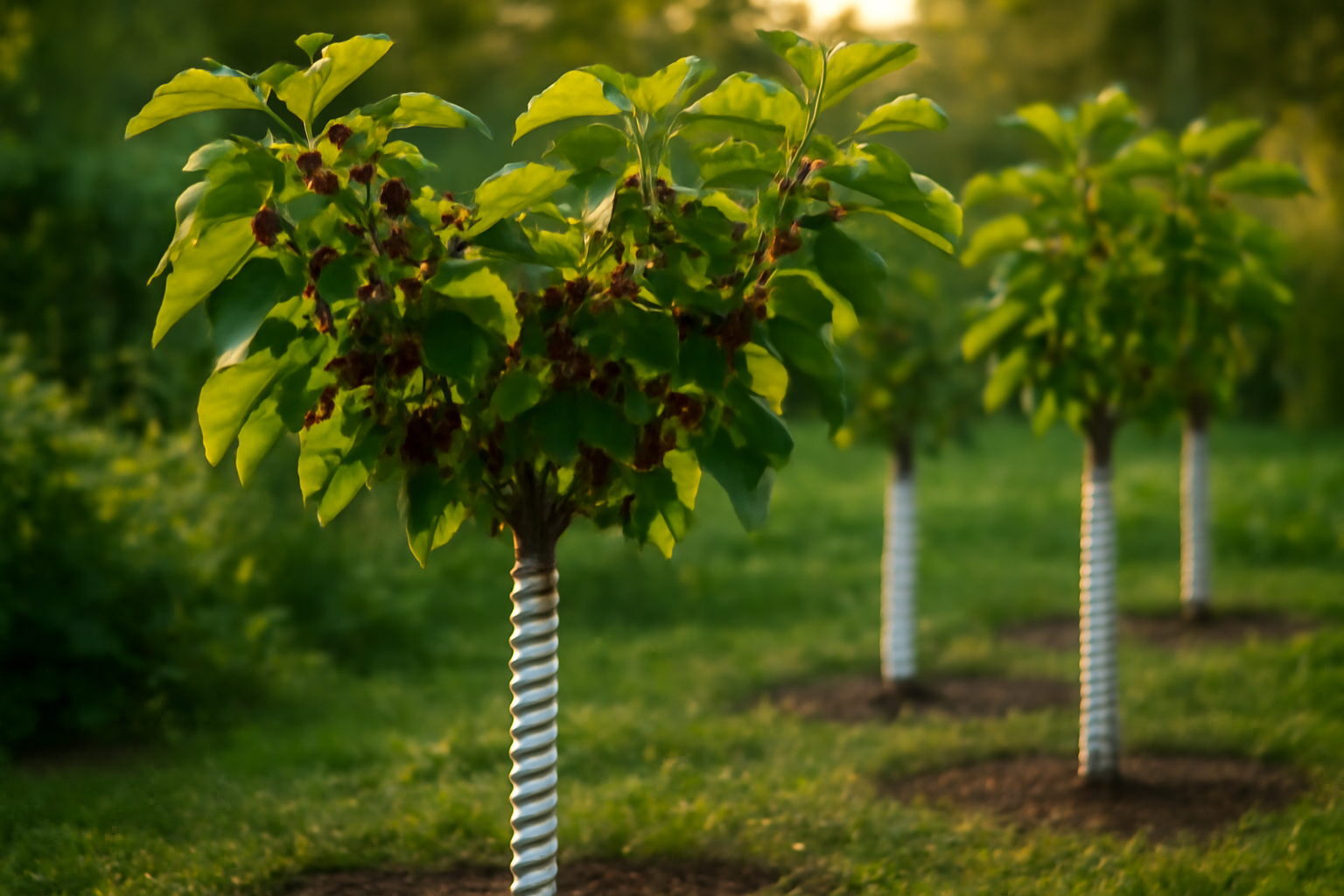
The package arrived in about three days. Opening it, my first reaction was relief — these felt genuinely solid. The metal mesh has a galvanized finish that looks like it can handle outdoor exposure without rusting immediately. Each guard comes rolled up, and they spring open into a cylinder with a satisfying snap.

The mesh openings are small enough that I couldn’t easily poke a finger through at an angle. That’s important — deer antlers and noses need to be kept away from the bark, not just their mouths. The wire gauge felt sturdy without being so rigid that shaping them was a struggle.

Each pack includes zip ties and metal stakes. The stakes are simple but functional — pointed ends make pushing them into the ground relatively easy, even in compacted soil. The zip ties are standard fare. Nothing fancy, but everything you need is there from the start.

My one small concern on unboxing was the height. At 16.5 inches tall, they protect roughly the bottom foot and a half of trunk. For deer damage specifically, that’s usually enough — deer tend to rub and browse low. Still, I made a mental note to keep an eye on whether deer tried to reach above the guards.

My Testing Protocol: How I Installed and Monitored Them

Installation was straightforward. I wrapped each guard around the base of a tree, made sure there was about an inch of clearance between the mesh and the bark, then secured the overlap with zip ties. Next, I pushed two stakes through the mesh openings on opposite sides and drove them into the ground. The whole process took about five minutes per tree once I got into a rhythm.

I installed all six guards in late April. My testing period has now run through one full growing season — roughly six months of active use through summer, into early fall, and through the first hard frost.

My monitoring routine was simple. Every week or two, I walked the tree line and checked each guard for:

  • Signs of deer activity (tracks, droppings, disturbed soil near the base)
  • Any damage to the guards themselves
  • Trunk growth that might require expanding the mesh
  • Moisture buildup or pest activity under the guards

I also removed the guards entirely once in midsummer — around the six-week mark — to inspect the bark directly and make sure nothing concerning was developing underneath. That inspection gave me some useful information, which I’ll get to shortly.

What Actually Changed: Honest Results With a Timeline

The headline result is simple: not a single one of my six protected trees showed deer damage after installation. That alone made the purchase worthwhile. Previously, I was finding evidence of deer browsing every few weeks. After the guards went on, that stopped entirely at the trunk level.

Around week three, I did find fresh deer tracks near two of the trees. My moment of doubt arrived right here. I crouched down to look closely and found light scratching on one of the guards — clearly a deer had investigated and pushed against it. However, the guard held its shape, and the bark underneath was completely untouched. That small test actually increased my confidence in the product significantly.

When I did my midsummer bark inspection, all six trunks looked healthy. The bark was smooth and undamaged. There was no trapped moisture issue, which I had genuinely worried about. The open mesh design really does allow adequate airflow. I also found no evidence of pest colonies forming under the guards — another concern that turned out to be unfounded.

By fall, two of my thicker-trunked trees had grown enough that I needed to expand the mesh slightly. The expandable design handled this without any fuss. I simply loosened the zip ties, widened the cylinder a touch, and re-secured. That adaptability is one of the features I appreciated most as the season progressed.

The Downsides: Being Honest About the Limitations

No product review is complete without a real look at the drawbacks. The HOLANHING 6/9/12 Pack Tree Trunk Protector, Metal Mesh Tree Bark Protector has a few limitations worth knowing before you buy.

First, the height. At 16.5 inches, these guards are not going to protect against deer that stand on their hind legs to browse higher branches. Fortunately, that behavior is less common with young mulberries, but it’s worth noting. If deer in your area are particularly bold or your trees have low lateral branching, you may need supplemental protection higher up.

Second, the stakes. They work well in average garden soil, but in my rocky back section, driving them in was a real struggle. I ended up using a rubber mallet on two of the installations. Not a dealbreaker, but worth being prepared for.

Third, aesthetics. These are purely functional. The silver galvanized mesh is visible and not exactly subtle. If your trees are in a formal garden or front yard setting, the industrial look may bother you. They blend better in a natural or orchard-style setting, which is where most of my mulberries live.

Finally, the zip ties that come included are basic and may degrade with extended UV exposure. After about five months, I noticed minor brittleness on two of them. Replacing them with UV-resistant zip ties is a simple and cheap fix, but it’s an extra step the packaging doesn’t mention.

Final Verdict: Who Should Buy a Tree Guard Protector for Young Mulberry Trees

After a full growing season, I’m genuinely glad I bought the HOLANHING 6/9/12 Pack Tree Trunk Protector, Metal Mesh Tree Bark Protector 5” Dia x 16-1/2” H with Zip Ties & Stakes. It did exactly what it promised. Every protected trunk came through the season undamaged, and the expandable design means I won’t need to replace these guards anytime soon.

Buy this if:

  • You have young mulberry trees with slender trunks vulnerable to deer rubbing or browsing
  • You want a breathable, metal option over plastic wraps
  • You’re protecting multiple trees and want a cost-effective multi-pack
  • You need protection against trimmers and mower damage as well

Skip this if:

  • Your deer pressure is extreme and you need full-height protection (consider full tree cages instead)
  • You’re working with very large-diameter mature trunks
  • You need something that blends invisibly into a decorative landscape

Using a tree guard protector for young mulberry trees changed my spring anxiety into genuine confidence. These trees are finally getting the start they deserve.

What About the Alternative Option?

If your mulberry trees are taller or you need more vertical coverage, take a look at the chicarry 48″ Metal Tree Trunk Protector, 4 Pack Mesh Tree Guards. At 48 inches tall, these guards offer significantly more height protection — a real advantage for trees that have already put on some growth or where deer browsing pressure reaches higher up the trunk. The trade-off is that you get four guards instead of six at a similar price point, and the taller profile means more material to manage during installation. For smaller, younger saplings, the HOLANHING is still my recommendation. However, for trees in their third or fourth year with more established height, the chicarry option is worth a serious look.