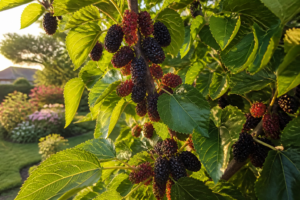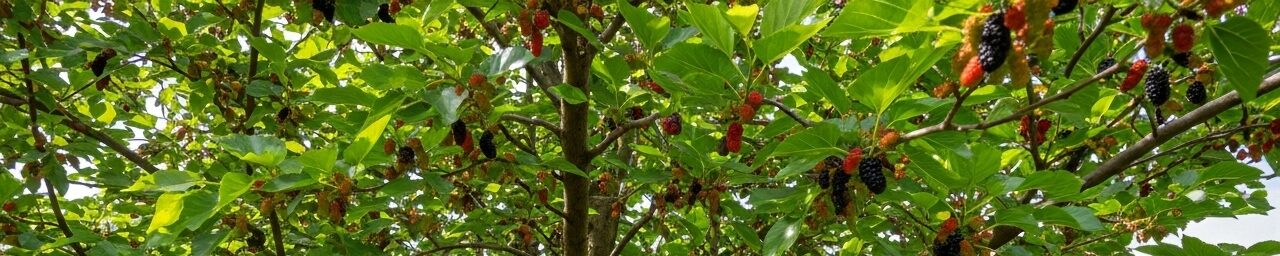
I’m kneeling in the mulch near my patio’s edge, pushing back the accumulated debris with my fingers to check on something that’s been bothering me for weeks. There—just under the surface—is a root, thicker than I expected, and I can trace it snaking toward the concrete. It’s the moment when all that fruit and shade I planted for suddenly feels like it came with a hidden cost.
Every spring brings me messages about this exact scenario: someone planted a mulberry in what seemed like the only viable spot, and now they’re watching damage accumulate on their hardscape and wondering if the whole tree has to go. Nobody walks into planting season thinking much about what happens three feet underground—but mulberries have a way of making you reckon with it.
The real story here isn’t nearly as dire as panic suggests. I want to walk you through what mulberry roots actually do, whether they’re genuinely the infrastructure threat they’re sometimes painted as, and—most importantly—the spacing and placement decisions that would have prevented the problem in the first place.
What Mulberry Root Systems Actually Look Like
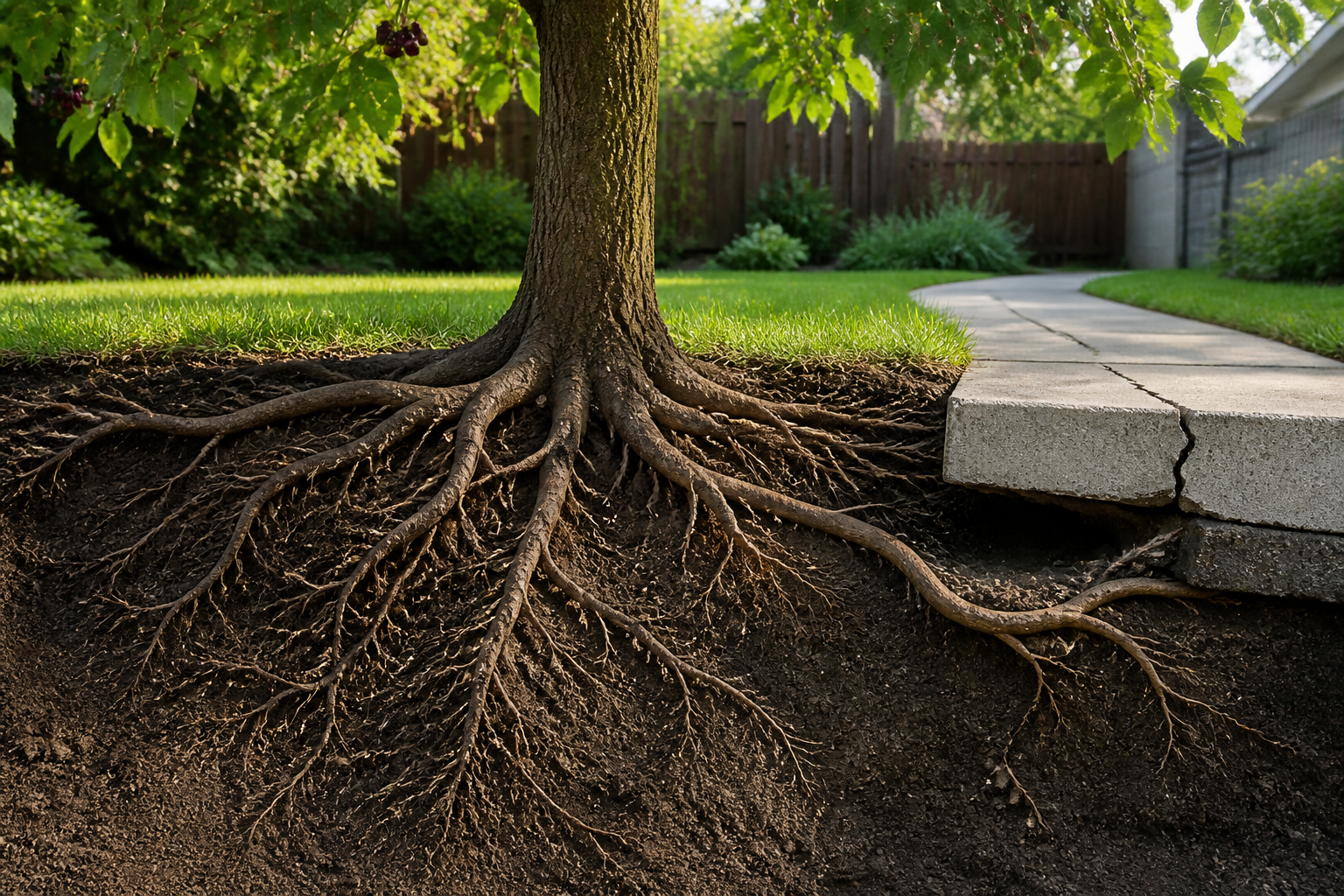
Before I planted my first tree, I didn’t understand that mulberries grow their root networks in a way entirely different from, say, a deep-rooted walnut or oak. The root mass spreads aggressively outward and stays shallow, especially when the soil beneath can’t easily supply what the tree needs down deeper—whether that’s oxygen, drainage, or both.
Across the mulberry family—Morus alba, Morus rubra, and their kin—you’ll find this same pattern: roots gravitate toward the upper soil profile where conditions favor their growth. This isn’t a character flaw in the tree; it’s the tree responding to the environment it’s in. Clay, compacted earth, poor drainage—these all push roots to spread sideways rather than down.
If you stack mulberries against the notorious reputation-holders like willows or silver maples, mulberries come out somewhat less destructive—but that’s a relative comparison. They’re still plenty vigorous, and “less bad than a willow” doesn’t get you off the hook when your own yard is the one at stake.
The Distance That Actually Protects Your Infrastructure
Here’s what matters when you’re deciding where to dig the hole.
You’ll want to position a full-size mulberry no fewer than 15 to 20 feet out from your home’s foundation, any paved surfaces, driveways, and utility lines—whether septic or sewer. For the larger seedling types, bumping that to 25 feet or beyond gives you genuine peace of mind.
The reasoning isn’t that mulberries are uniquely destructive. Rather, a mature tree’s root zone typically stretches one and a half to three times the distance of the canopy spread. If your mulberry shades a 30-foot swath of yard at full growth, figure its roots might reach roughly that far in all directions.
My earlier reader made the decision to place hers six feet from her patio. I mention that not as judgment—I’ve made equally questionable calls—but to show why measuring your distance before you plant beats troubleshooting years later.
Understanding How Roots Lift and Fracture Hardscape
I should explain the actual mechanism at work when roots begin breaking apart your pavement, because understanding it shifts how you approach the risk.
The root isn’t charging at concrete with any intention to damage it. What’s happening beneath the surface is that as roots expand and seek out moisture and oxygen, they find both accumulating just under paved areas—since water pools rather than percolates through stone or asphalt. The root pushes upward toward those resources, and over time, the expanding root mass exerts enough upward force to heave and break the pavement above it.
You’ll sometimes spot roots under walkways far from the main tree trunk because they’re attracted to that concentrated moisture and air gap. It’s not malice; it’s thermodynamics and water movement.
Septic Systems, Sewer Lines, and Root Intrusion
I want to clear up something important: roots don’t bore through pipes that are intact and undamaged. I realize this sounds too good to be true, yet it holds.
Instead, what occurs is that a leak, fracture, or separation already exists in the line. Roots detect the escaping moisture like a beacon and grow into that existing weak point rather than cutting through the pipe walls. Older systems—clay or cast iron—suffer this far more readily than sealed modern PVC because the older materials have abundant cracks, joints, and deterioration that give roots an entry.
This underscores why maintaining that 15-20 foot clearance from underground utilities is so valuable. The farther your tree stands from these systems, the lower your exposure to trouble, and knowing where sewer and septic lines run beneath your property before you plant is genuinely essential if you’re dealing with aging infrastructure.
Installing a Root Barrier When Space Is Tight
Plenty of yards don’t accommodate a 20-foot buffer. Your space might be small, the only full-sun patch sits near the foundation, or you’ve already fallen in love with a particular spot. I get it—I’ve been in those situations myself.
Root barriers solve this. Professionals and landscapers deploy them regularly as a proven intervention: a vertical panel installed in a trench on the side of the tree facing the structure you want to protect. The barrier doesn’t halt root growth; instead it channels roots downward. It’s not bulletproof, yet when installed correctly, it substantially cuts your risk of problems.
The DeepRoot Tree Root Barrier is a widely recommended system for root control. It comes in 20-panel packs that give you 40 linear feet, and it’s designed specifically for situations when you need to plant closer than ideal but want real protection for your hardscape or foundation.
Choosing a Dwarf Cultivar for Tight Quarters
If space is genuinely limited, there’s a simpler route: opt for a dwarf mulberry rather than a standard-size cultivar.
Container-grown dwarf and patio types—whether in pots or planted in defined, limited-root spaces—don’t pose the same structural threats at all. They produce equally good fruit, deliver meaningful shade, and belong naturally in compact yards. I spent a whole season experimenting with a dwarf mulberry in a raised bed kit, and it became one of my favorite growing experiments.
If you want to explore which cultivars suit different yard sizes and growing scenarios, my full rundown of mulberry varieties, care, and harvesting practices covers the landscape in detail.
What Happens When You Remove an Established Mulberry
I have to share something I’ve learned through experience: mulberries are extremely persistent about regenerating from the roots once you cut them down.
Felling the tree itself is only the start. The remaining root structure will generate sucker growth for several years unless you either excavate the stump and primary roots completely or apply herbicide to kill the dormant root system. It’s not the most pleasant undertaking, but knowing this beforehand beats being caught off guard by mulberry seedlings colonizing your yard years after you believed the tree was gone.
What I Use
For anyone planting closer than recommended, the DeepRoot Tree Root Barrier, 24″x24″, 20-Panel Pack, 40 Linear Ft is my recommendation. It’s effective, relatively straightforward to install, and it’s what I’d trust with my own mulberry plantings.
On a related note, staying on top of your mulch layer serves multiple purposes. The cypress mulch I used to manage my mulberry’s root temperature over a hot summer does more than moderate soil temperature—it also nudges the root system to penetrate more deeply and reduces the pressure on shallow roots to forage near the surface where your hard surfaces are.
Wrapping Up What You Need to Know
A mulberry’s root network is energetic and shallow-spreading, so treating it with foresight is warranted. Yet calling it “invasive” in the worst sense misses the mark—it’s far more accurate to say it’s vigorous and demands planning.
The encouraging part: you’ve got solutions. Plant it at recommended spacing, and roots become a non-issue. Install a root barrier in a tighter location, and you’ve neutralized the risk. Select a dwarf type, and you’ve sidestepped the whole situation.
That reader whose pavers were cracking? She opted to run a root barrier along her patio side and tolerates the minor heaving on the far edge where it doesn’t matter functionally. The tree lives on, still feeding the family, and her anxiety dissolved. That’s the payoff of thoughtful placement from the start.
Position your mulberry with intention, verify your measurements beforehand, and you become the person enjoying fruit and shelter while staying worry-free about what sprawls beneath the soil. I’m here if you need guidance on varieties or where to plant.
Frequently Asked Questions
How far should a mulberry tree be from my house foundation?
Position a full-size mulberry no fewer than 15 to 20 feet from your home’s foundation, paved surfaces, driveways, and utility lines. For larger seedling types, 25 feet or beyond gives genuine peace of mind. A mature tree’s root zone typically stretches one and a half to three times the distance of the canopy spread.
Can mulberry roots crack concrete patios and driveways?
Yes. As roots expand seeking moisture and oxygen, they find both pooling under pavement where water doesn’t percolate. The expanding root mass exerts upward force over time, heaving and breaking the surface. You’ll spot roots under walkways far from the trunk because they’re attracted to that concentrated moisture.
Do mulberry roots damage sewer and septic lines?
Roots don’t bore through intact, undamaged pipes. Instead, they detect escaping moisture from existing leaks, fractures, or separations and grow into those weak points. Older clay or cast iron systems suffer this far more than sealed modern PVC because they have abundant cracks and joints that give roots entry.
What is a root barrier and how does it work?
A root barrier is a vertical panel installed in a trench on the tree’s side facing the structure you want to protect. It doesn’t halt root growth but channels roots downward instead. When installed correctly, it substantially cuts your risk of problems. The DeepRoot Tree Root Barrier comes in 20-panel packs giving 40 linear feet.
Keep Reading
About This Article

Written by Ruth Nakamura. Ruth Nakamura is a backyard orchardist in the Pacific Northwest who has grown mulberries for fifteen years, cultivating twelve different varieties in her own backyard. Not a horticulturist by formal training - she shares what she has learned through hands-on growing, workshops, and connecting with nurseries and growers across the country. More about this site.
Scope and limits. Ruth is a backyard orchardist without formal horticultural training. Growing conditions vary enormously by region, so confirm variety, timing, and pest guidance with your local extension service.
Verify this against a primary source
Specifics change, and your situation may differ from the one described here. These are the authorities worth checking directly:
- USDA Plant Hardiness Zone Map — zone verification for your location
- Oregon State University Extension — fruit growing and pruning research
- USDA PLANTS Database — species range and identification