Can you actually grow a fruit tree when all you have is a small patio or apartment balcony? Absolutely — and dwarf mulberries are exactly why. Compact mulberries can produce surprisingly heavy crops in spaces that could never accommodate a standard tree.
But there’s a catch nobody mentions on the product page, and it cost me a tree to learn: most mulberries sold as “dwarf” are not genetically dwarf at all. They’re ordinary cultivars that tolerate hard pruning. Buy the wrong one and in four years you have a 25-foot tree where you wanted a patio shrub. This guide sorts the genuine dwarfs from the marketing.
What Actually Counts as a Dwarf Mulberry
There are two completely different things being sold under the word “dwarf,” and the distinction decides whether you get the tree you wanted.
Genetically dwarf cultivars stay small on their own. Left entirely alone they top out somewhere between three and eight feet. Gerardi Dwarf and Mojo Berry are the clearest examples. These are the ones that genuinely suit a balcony, because the plant is doing the work rather than your loppers.
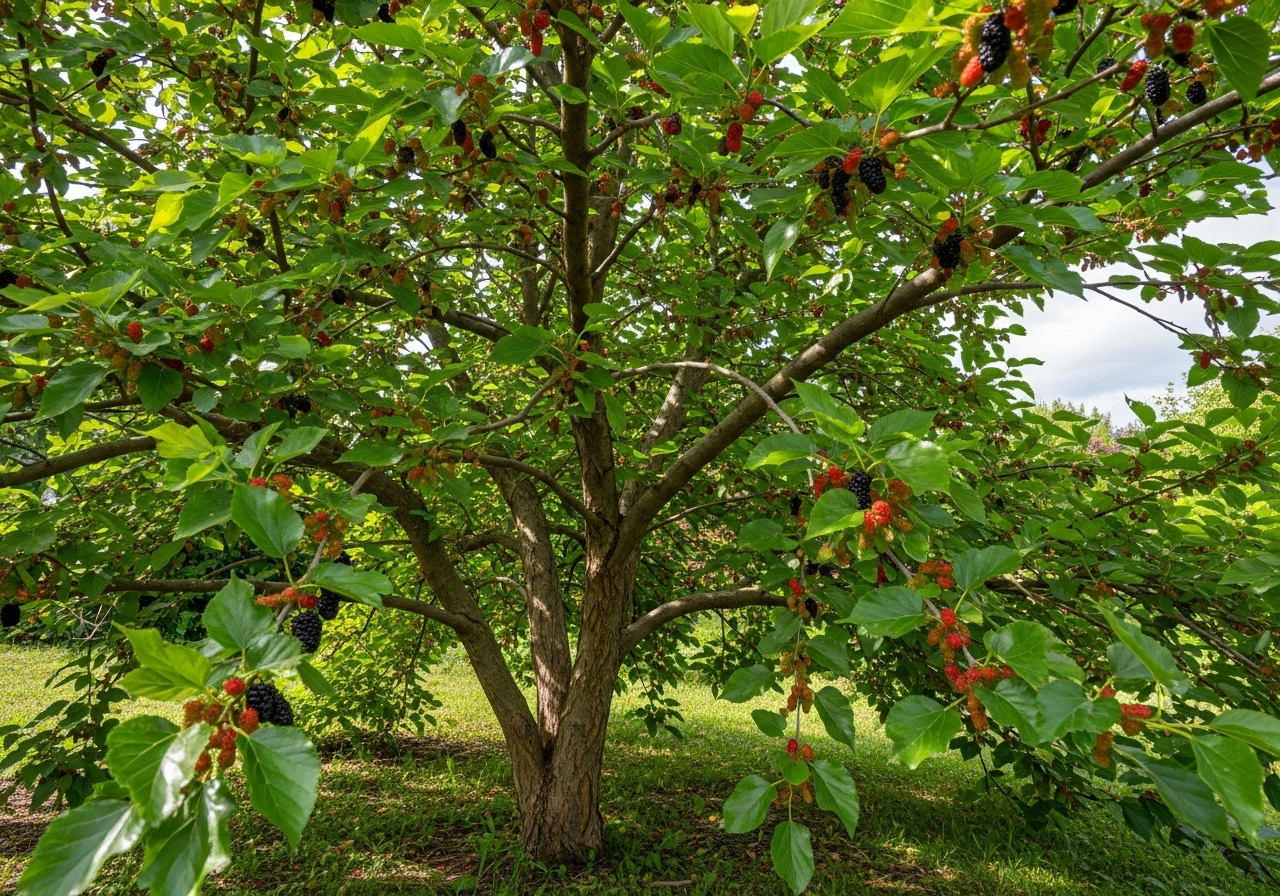
Pruned-to-size cultivars are standard trees kept small by you, every single year. Pakistan and Illinois Everbearing both show up on “best dwarf mulberry” lists constantly, and both will reach 25 to 35 feet if you stop cutting. They can absolutely work in a container — but as a permanent commitment to annual pruning, not as a compact plant.
Neither category is wrong. The mistake is buying the second while believing you bought the first. My first “dwarf” was a pruned-to-size variety, and I found out the year it outgrew the corner I had planned for it.
Dwarf Mulberry Varieties Compared
Nursery listings vary a lot on both height and hardiness, so treat these as typical ranges rather than guarantees, and check the specific listing before you buy.
| Cultivar | Truly dwarf? | Unpruned height | Zones | Fruit | Best for |
|---|---|---|---|---|---|
| Gerardi Dwarf | Yes | 6–8 ft | 5–9 | Sweet, heavy crops | Cold climates, small yards |
| Mojo Berry (M. rotundiloba) | Yes | 3–5 ft | 5–9 | Small, long season | Balconies, true containers |
| Dwarf Everbearing | Mostly | 6–10 ft | 7–11 (container colder) | Rich, bears all season | Patios, first-time buyers |
| Issai | Semi | 8–10 ft | 6–10 | Fruits in year one | Impatient growers |
| Illinois Everbearing | No | 25–35 ft | 4–9 | Excellent flavour | Cold zones, real space |
| Pakistan (M. macroura) | No | 30+ ft | 7–11 | Very long berries | Warm climates, pruners |
Dwarf Everbearing: The One Most People Should Buy First
If you want one recommendation without reading further, this is it. Dwarf Everbearing is the most widely available compact mulberry, it is self-fertile so a single plant fruits on its own, and it earns the “everbearing” name honestly — it ripens fruit in waves across the whole season instead of dumping everything in one frantic fortnight.
The berries are large, deeply coloured and rich enough to eat straight off the branch. Mine has never needed more than light annual shaping to hold around seven feet. In zones colder than about 7 it wants to be a container plant you shelter over winter, which is exactly how most people grow it anyway.
If you only want one plant rather than four, the single potted version is the cheaper way in and establishes just as readily.
Gerardi Dwarf: The Genuine Dwarf Worth Hunting For
Gerardi is the cultivar serious small-space growers talk about, and it is a real genetic dwarf — six to eight feet with no intervention at all. It also carries proper cold hardiness, which is what separates it from most compact mulberries: it handles zone 5 winters in the ground, where Dwarf Everbearing would need shelter.
Yields are disproportionate to its size; a mature Gerardi out-produces plenty of trees twice its height. The catch is availability — it sells out fast at the specialist nurseries that carry it, and you will rarely see it in a big-box garden centre. If you find one and you garden somewhere cold, buy it.
Mojo Berry: The One That Genuinely Suits a Balcony
Mojo Berry is a trade name for Morus rotundiloba, and it is the smallest thing in this guide — a three-to-five-foot shrub rather than a tree. If your growing space is a balcony, a fire escape or a single large pot, this is the realistic choice. It is self-fertile, fruits over a long season, and the berries are small but plentiful.
Do not expect preserving quantities. This is a graze-as-you-pass plant, not a jam-making one. Judged on that basis it is excellent; judged as a fruit tree it will disappoint you.
Issai: For Growers Who Do Not Want to Wait
Issai’s selling point is speed — it commonly sets fruit in its first year, which almost nothing else here does. Left alone it reaches eight to ten feet, so it is semi-dwarf rather than truly compact, but it responds well to being held lower.
Choose it if the appeal of a fruit tree is fruit soon. Choose something else if you want a plant that stays small without your involvement.
Illinois Everbearing: Excellent Tree, Not a Dwarf
Illinois Everbearing appears on nearly every “dwarf mulberry” roundup online, and it does not belong there. It is a full-size tree that reaches 25 to 35 feet. What it genuinely offers is flavour and cold hardiness — it fruits reliably down to zone 4, which very few mulberries manage.
If you have the room and a cold winter, it is arguably the better buy. Just go in knowing what you are planting. I have written a longer piece on whether Illinois Everbearing is actually dwarf, including how it behaves with deer.
Pakistan Mulberry: Spectacular Fruit, Serious Size
Pakistan produces the longest berries of any mulberry — three to four inches, closer to a blackberry stretched out, and the flavour lives up to the novelty. It is also a 30-foot tree in warm climates and it is not frost-tolerant, so zones 7 and warmer only.
People do grow it in large containers with aggressive annual pruning, and it works. But that is a maintenance relationship, not a compact plant.
How to Choose: Match the Plant to Your Actual Situation
Balcony or single pot: Mojo Berry. Nothing else stays genuinely small enough.
Patio, and you want real fruit volume: Dwarf Everbearing. Best availability, self-fertile, long season.
Small yard in a cold climate: Gerardi Dwarf if you can find it; Illinois Everbearing if you have the space after all.
You want fruit next year: Issai.
Warm climate, space, and you like a project: Pakistan.
One more thing worth knowing before you order: mulberries are self-fertile, so you never need a second tree for pollination. Multi-packs are about price and redundancy, not fertility.
Growing a Dwarf Mulberry Once It Arrives
Whichever cultivar you choose, drainage is what decides whether it lives. I killed two trees early on to root rot while being certain my watering routine was fine — the water was never leaving the pot. Containers need drainage holes that will not silt up as the medium settles, and a mix that moves water through rather than holding it.
I have written up the full container and soil setup for compact mulberry trees separately, including pot sizing, soil mix, repotting and overwintering. The short version: bigger pot than you think, gritty free-draining mix, and never let it sit in a saucer of water.
If your problem is the ground rather than the pot — compacted clay, poor drainage, an awkward slope — a raised bed solves it outright. I planted a dwarf mulberry in a cedar bed one spring and pulled forty-two pounds of fruit that first season, from a spot where clay would have suffocated the roots. Seventeen inches of depth proved to be the number that let the root ball establish without hitting the clay beneath.
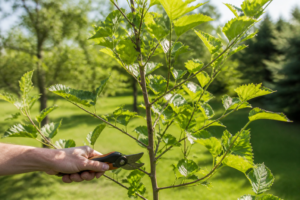
Beyond that, dwarf mulberries are undemanding. Water when the top inch of medium is dry — daily in summer heat, rarely in winter. Feed monthly through the growing season with a balanced slow-release fertiliser, and go light on nitrogen, which drives leaf growth at the expense of fruit. Shape the tree in late winter, clearing dead wood and opening the canopy; mulberries tolerate hard cuts and rebound fast, so you can be decisive.
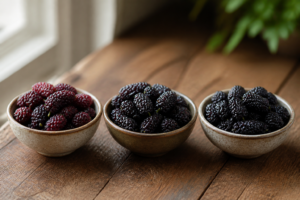
Then harvest when the berries are fully coloured and give slightly under gentle pressure — ripe fruit detaches with almost no effort. Depending on the cultivar that is either one concentrated picking or a steady trickle over weeks, which is the quiet argument for the everbearing types.
Frequently Asked Questions
How big does a dwarf mulberry actually get?
Genuine dwarfs stay three to eight feet unpruned — Mojo Berry at the small end, Gerardi at the larger. Cultivars merely marketed as dwarf reach 25 to 35 feet if you stop pruning them.
Do I need two trees to get fruit?
No. Mulberries are self-fertile, so a single plant fruits perfectly well on its own.
How long until it fruits?
Issai often fruits in its first year. Most dwarf cultivars begin bearing within one to two seasons of planting — far faster than most fruit trees.
Can a dwarf mulberry live indoors?
Not permanently. They need a genuine winter dormancy and full sun in the growing season. Move a container plant somewhere sheltered over winter, then back outside — do not treat it as a houseplant.
How much fruit will a dwarf tree produce?
A mature dwarf commonly yields five to ten pounds a year — enough for fresh eating, a batch of jam and some to give away. Mojo Berry produces considerably less.
Keep Reading
About This Article

Written by Ruth Nakamura. Ruth Nakamura is a backyard orchardist in the Pacific Northwest who has grown mulberries for fifteen years, cultivating twelve different varieties in her own backyard. Not a horticulturist by formal training - she shares what she has learned through hands-on growing, workshops, and connecting with nurseries and growers across the country. More about this site.
Scope and limits. Ruth is a backyard orchardist without formal horticultural training. Growing conditions vary enormously by region, so confirm variety, timing, and pest guidance with your local extension service.
Verify this against a primary source
Specifics change, and your situation may differ from the one described here. These are the authorities worth checking directly:
- USDA Plant Hardiness Zone Map — zone verification for your location
- Oregon State University Extension — fruit growing and pruning research
- USDA PLANTS Database — species range and identification