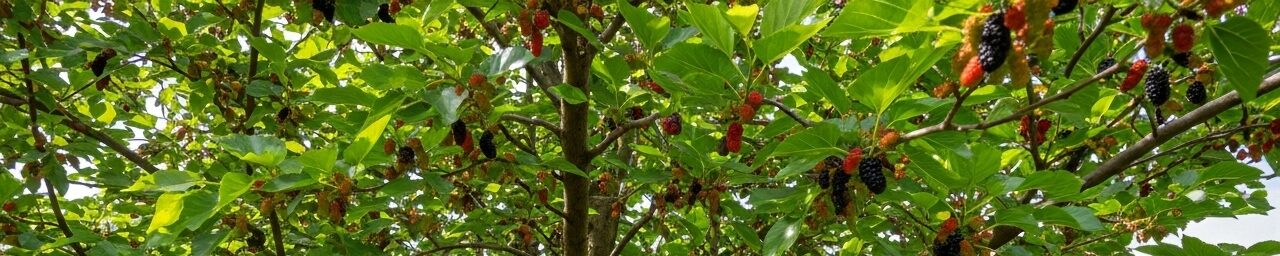
I want to tell you about the afternoon I showed up to my own backyard barbecue with what appeared to be a crime scene on the bottom of my sneakers. Purple streaks across the patio. Purple footprints through the kitchen. My mother-in-law staring at me like I’d tracked in something far worse than mulberry juice. I had no explanation except: the tree. And honestly? That moment was the turning point that finally made me take mulberry tree lawn management seriously. Before that day, I’d just been winging it — and my lawn (and my dignity) paid the price.
This post contains affiliate links. As an Amazon Associate, I earn from qualifying purchases. If you click through and buy something, I get a small commission at no extra cost to you — and it helps keep this little corner of the mulberry-loving internet running. I only recommend products I genuinely think are worth your time.
If you’ve got a mulberry tree (or you’re thinking about planting one), you already know the joy — the fruit, the shade, the birds going absolutely feral in the canopy every June. But you may also know the chaos. Berries drop. They stain. They attract every bee, bird, and barefoot toddler in a three-block radius. And if you don’t have a smart lawn strategy in place, you’ll spend your summer losing a slow, purple war. Let me share what I’ve learned — the hard way and then, eventually, the right way.
How the Great Berry Disaster Actually Unfolded
It started so innocently. I had let the grass grow a little long under my mature mulberry — partly because the mower kept slipping on fallen berries, and partly because I told myself the longer grass would “catch” the fruit and cushion it somehow. This is, I can now confirm, not how physics works. What actually happened was that the tall grass hid the berries completely, creating a lush, beautiful, absolutely treacherous carpet of fermented mulberry land mines. Peak drop season hit in late June, I forgot about the situation entirely, and then I walked straight through it on the way to light the grill. In sandals, no less. By the time I reached the patio, I had essentially tie-dyed myself from the ankle down.
My neighbor Dave — who has watched me make approximately forty-seven lawn-related mistakes since we moved in — leaned over the fence and said, with genuine concern, “You okay, man? You look like you lost a fight with a Sno-Cone machine.” He was not wrong. I was not okay. But something clicked that afternoon: I needed an actual plan.
Mulberry Tree Lawn Management: Building a Strategy That Actually Works
Here’s the thing about growing grass under and around a mulberry tree — it’s totally doable, but you have to work with the tree’s rhythms, not against them. Once I stopped treating it like a regular lawn situation and started thinking of it as its own microclimate, everything got easier. Here’s what my routine looks like now:
Mow More Frequently During Drop Season
From late May through early July (depending on your climate and variety), try to mow every four to five days under the canopy. This keeps the berry buildup minimal so you’re never dealing with a hidden purple swamp. Yes, it’s more frequent than your normal schedule, but it takes ten minutes and saves you from explaining mulberry stains to anyone.
Create a Clean Edge Around the Drip Line
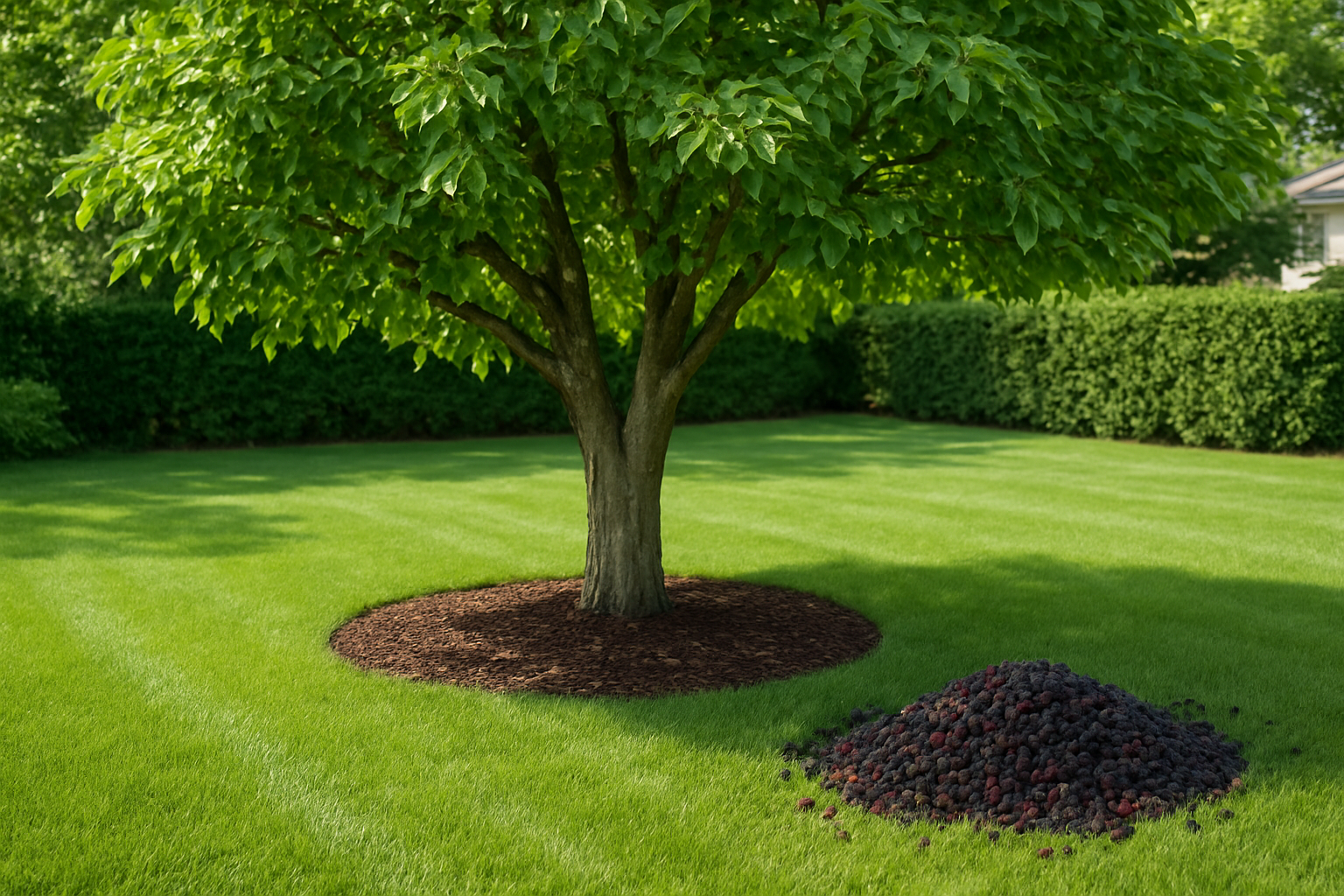
One of the best things I did was establish a defined edge around my mulberry tree — a clean border between the grass and a mulched ring beneath the canopy. This does three things: it limits where the berries land on grass, gives you a clear mowing boundary so you don’t accidentally shred berries into the turf, and it just looks sharp. A quality half-moon edger makes this job genuinely satisfying. I’ve tested a few and these are my favorites:
Tools That Help: My Recommended Edgers for Around Mulberry Trees
Getting a clean edge around a tree isn’t complicated — you just need the right tool. Manual half-moon edgers are ideal because they give you control, work in any soil, and don’t require fuel or charging. Here are three I’d genuinely recommend:
- CKLT Edger Lawn Tool 41in Border Edger — This one has a tempered spring steel blade and a wide footplate that makes stepping down through compacted soil under a tree root zone way easier. The 41-inch handle means less back strain, which matters when you’re edging a full circle around a mature tree.
- Colwelt Saw-Tooth Edger Lawn Tool — The saw-tooth blade is a standout feature here. It bites into the soil cleanly and is especially helpful if your mulberry’s surface roots have made the ground a little uneven and stubborn. The T-grip handle gives you great leverage.
- BlumeTrec Manual Edger with Adjustable Length — If you’re sharing tools with a spouse or family member of a different height (hello, every household ever), the 38–42 inch adjustable handle is a game changer. Solid manganese steel blade, wide footplate, and it handles both tree borders and bed edging beautifully.
Mulch the Zone Beneath the Canopy
Once you’ve edged your border, fill the ring under the tree with a 3-inch layer of wood chip mulch. This suppresses weeds, retains moisture for the tree, protects shallow roots from mower damage, and — here’s the kicker — fallen berries on mulch are a thousand times easier to rake or blow away than berries embedded in turf. This single change reduced my berry-related stress by about 80 percent. I am not exaggerating even slightly.
Compost the Dropped Berries Instead of Fighting Them
Here’s an unexpected discovery from my post-disaster research: mulberry fruit is actually excellent compost material. High in moisture and organic matter, it breaks down fast and enriches the pile. Instead of bagging and tossing all that dropped fruit, I started collecting it (with shoes on, lesson learned) and adding it to my compost bin. Now what felt like a curse is feeding my garden beds by fall.
For composting, I’ve used both a stationary bin and a tumbler, and honestly both have a place depending on your volume and patience level:
- Outsunny Garden Compost Bin 80 Gallon — If you’re dealing with significant berry drop (and let me tell you, a mature mulberry drops a LOT of fruit), this 80-gallon aerating bin gives you the capacity to handle it without running out of room mid-season. Easy to assemble and gets the job done quietly in a corner of the yard.