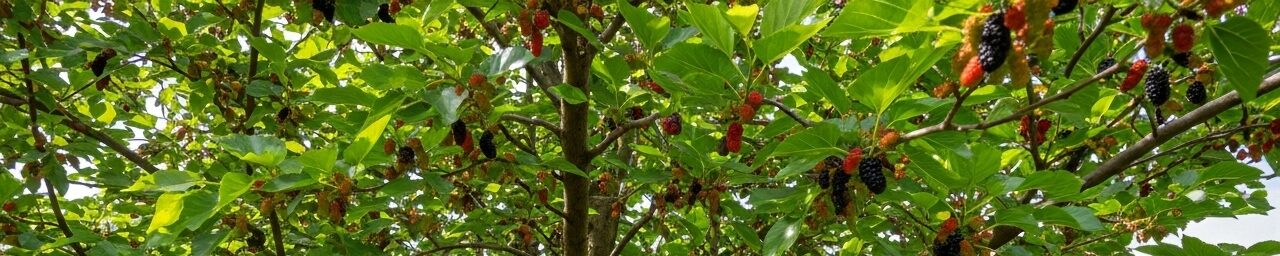
The pruning conversations I have with home growers are almost always the same: they’ve either done nothing for years and the tree is a tangled mess, or they’ve been too aggressive and shocked it into a non-productive sulk. Mulberries have their own timing and their own logic — once you understand the growth pattern, pruning stops being guesswork. What I’ve also noticed, after years of variety trials and more stained field clothes than I care to admit, is that how and when you prune directly shapes how cleanly you can harvest — branch architecture matters as much as any tarp or technique when it comes to keeping the juice off your deck and out of your grout lines. In this guide, I’ll walk you through the harvesting methods I actually use and recommend, grounded in what the research shows and refined by what the trees themselves have taught me.
Good news: there absolutely was a next time, and it went beautifully. I learned a lot between those two harvests, and I’m sharing everything here so you can skip the linen shirt catastrophe entirely.
Why Mulberries Are Gloriously, Ruthlessly Staining
First, let’s give the mulberry its due respect as a staining agent. Mulberries contain incredibly high concentrations of anthocyanins — the same deep pigments that give blueberries, blackberries, and red cabbage their rich color. But mulberries are juicier than most, with thin skins that burst at the slightest pressure. Ripe ones practically leap off the branch. That juice bonds fast to natural fibers like cotton and linen (hello, favorite shirt), and once it sets, it is genuinely one of the tougher fruit stains to remove. Heat makes it permanent. So if you absentmindedly toss that stained shirt in the dryer before treating it — well, that shirt now has a story to tell forever.
The deck situation is its own special problem. Wood is porous, and mulberry juice seeps right in. Composite decking fares a little better, but even that can discolor if berries are left sitting. And your hands? Plan on purple fingertips for at least a day or two unless you take precautions. None of this should scare you away from harvesting — the berries are absolutely worth it — but a little preparation goes a very long way.
Mulberry Stain Prevention Harvesting: Gear Up Before You Go Outside
The single biggest upgrade I made after my white-shirt incident was treating harvest day like the messy, joyful project it actually is. You wouldn’t repaint your fence in your Sunday best. Same energy applies here. Here’s how I gear up now.
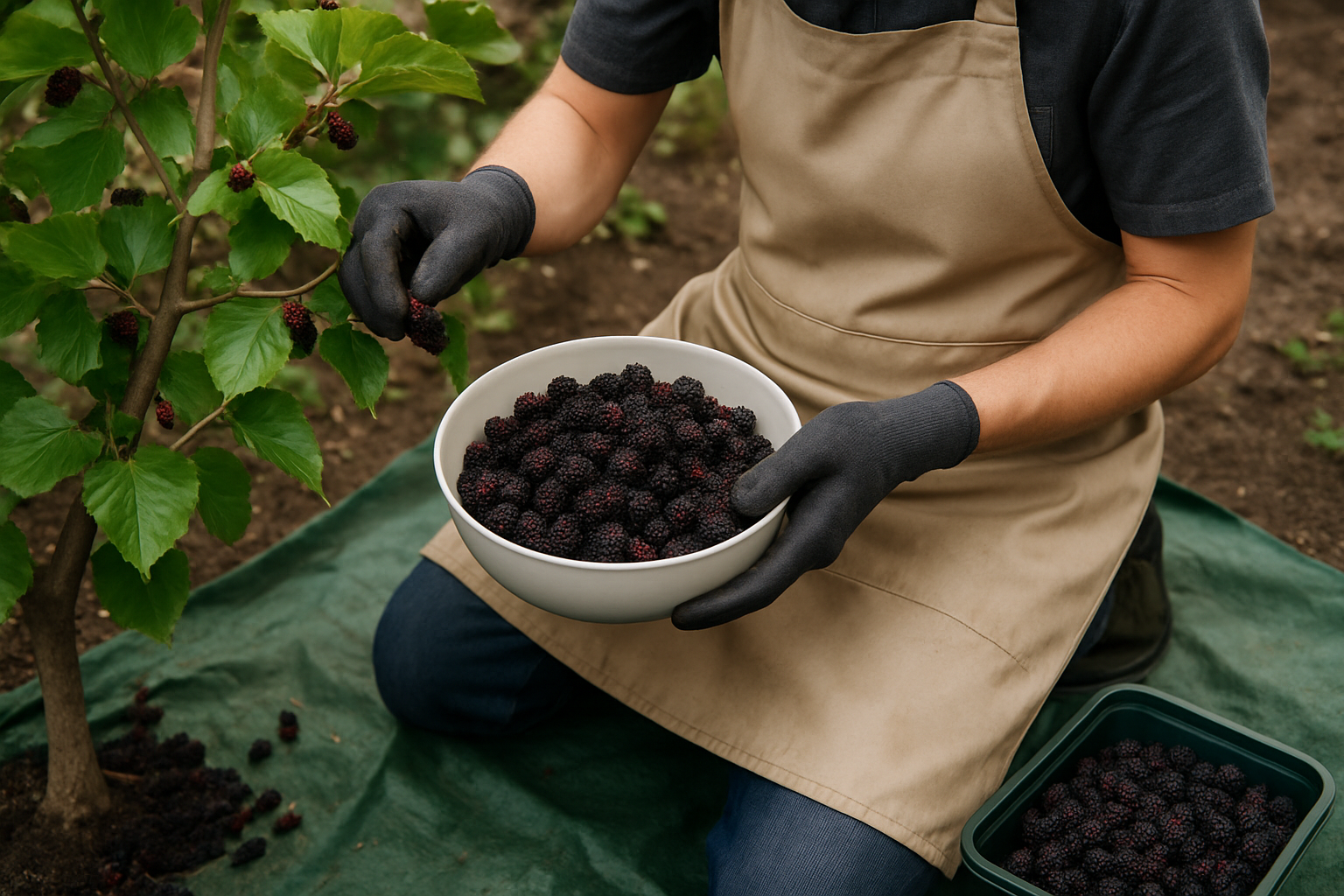
Wear a Dedicated Harvest Apron
An apron is a game-changer — not just for your torso, but because having pockets and a front barrier means you stop reflexively wiping your hands on your pants. Look for waterproof or water-resistant options so the juice beads rather than soaks through.
The Apron That Actually Survives Mulberry Stain Season
Mulberry juice doesn’t just stain skin and clothes—it sets fast and deep, turning harvest day into a laundry nightmare. I needed something with enough pocket space to keep my pruners and harvest containers close while protecting whatever I was wearing underneath.
What works
- The deep pockets actually hold a pair of bypass pruners, my harvest basket, and a folded cloth without dragging or shifting—no constant readjusting between branches.
- Multiple aprons in a set means I can rotate them through wash cycles during peak harvest week without running out of coverage, and the floral pattern hides juice splatter way better than solid colors.
- The fabric is dense enough that juice doesn’t soak straight through to skin or clothes underneath, though stains do settle into the material itself (which is the whole point).
What doesn’t
- The stains don’t come fully out even with pre-treating, so after a season of heavy harvesting you’re looking at permanently dyed aprons—which is fine if you accept them as disposable harvest gear, not something to keep pristine.
- The neck strap can dig a bit if you’re climbing into dense canopy for an hour straight, and the apron itself swings forward when you’re reaching overhead, which means you have to hitch it up occasionally.
I almost returned the first pack thinking three aprons wasn’t enough, then realized that was exactly the point—I could sacrifice them to the juice and not feel guilty about it. Grab the BOUMUSOE 3 Pack Floral Aprons with Pocket and stop pretending your good clothes will survive harvest.
This post contains affiliate links. As an Amazon Associate, I earn from qualifying purchases at no extra cost to you.