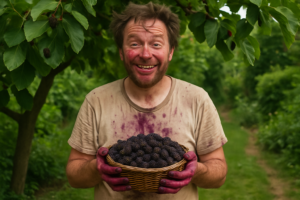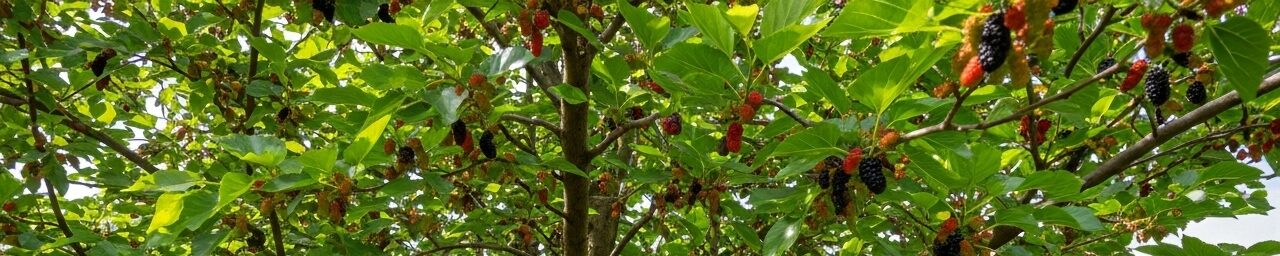
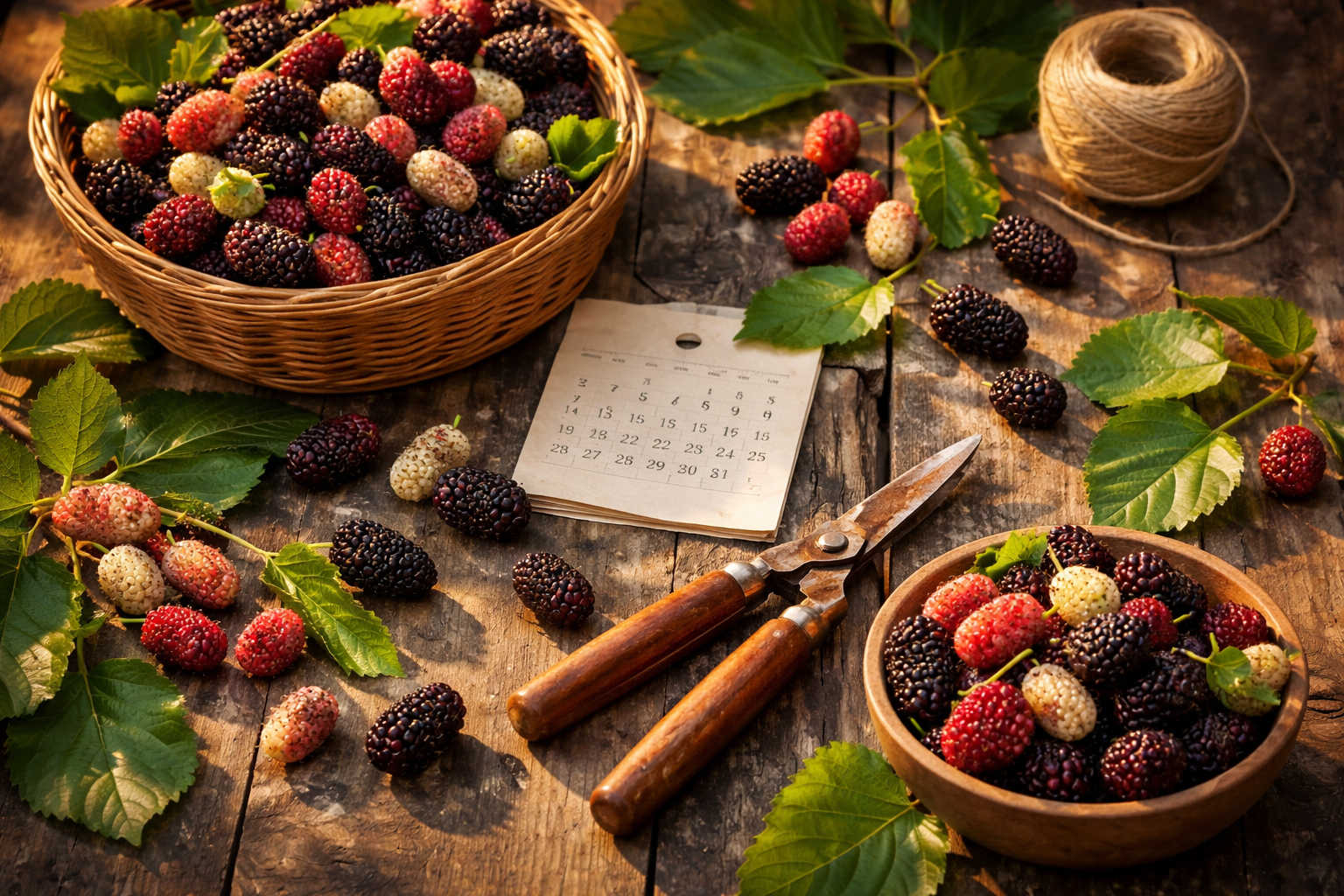
The story started simply enough: I tasted mulberries off my neighbor’s ancient tree during a casual neighborhood walk, and nothing else quite compared. Within half a year, I’d planted a sapling and had absolutely no strategy to show for it. Everything I know now emerged through trial, setback, correction, and repetition. The painful truth I learned the hard way — mulberry picking season moves on its own schedule: no advance warning system, no leisurely timeframe, just a rapid flush of mature fruit that vanishes in anywhere from a few days to a couple of weeks depending on your geographic location and which cultivar you’re tending. What follows is the calendar broken down by region and week that I needed desperately back then — constructed from my own yard’s detailed logs, connections with fellow backyard growers, and several seasons’ worth of careful observation — so you’ll actually be positioned to harvest when your tree reaches its moment.
Why Mulberry Harvest Season Catches So Many Gardeners Off Guard
Here’s something the average nursery tag glosses over: your mulberry tree operates on a schedule that won’t accommodate procrastination. In contrast to stone fruits or pomegranates that cling to branches for extended periods, mulberries color up rapidly and fall off just as fast. The full picking window for one tree spans just one to three weeks total, and a single distraction — a work trip, a sick day at home — wipes out the whole year. That’s precisely what befell me during my very first season.
The complexity deepens because harvest timing hinges on three unpredictable factors: your latitude and climate zone, the specific cultivar you’re working with, and whatever weather patterns spring delivered that year. Someone cultivating trees in South Carolina might be collecting fully mature berries by May while a grower five hundred miles north sits idle until July. People constantly ask me: when do mulberries mature where I live? The truthful response requires knowing your zone, your chosen variety, and your regional spring behavior — which explains why a detailed breakdown organized geographically proves infinitely more actionable than any single universal recommendation. That’s the real value of a location-specific mulberry harvest season timeline.
Breaking Down Your Mulberry Harvest Season Calendar by Geographic Region
I’ll organize this by zone so you can circle dates on your wall calendar and be positioned to pick when ripening begins. Remember: these are approximate ranges — your own microclimate, tree maturity stage, and cultivar selection will shift the dates a bit in either direction.
Southeast Territory (Zones 7b–9a): Georgia, Alabama, the Carolinas, Louisiana
This region is genuinely mulberry-friendly territory. The extended warm season accelerates the path from flower to ripe fruit.
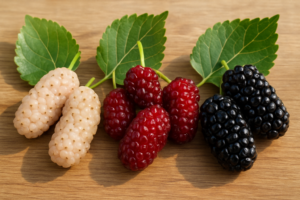
- Early May: Monitor for the shift in berry pigmentation — progression moves from pale cream through pink stages toward crimson or jet tones.
- Mid-May through early June: Optimal collection period. Position cloth beneath branches and shake vigorously each day when possible.
- Late June onward: Production tapers; monitor for spoiled berries that draw insects and critters.
Mid-Atlantic and Upper South Region (Zones 6b–7a): Virginia, Tennessee, Missouri, Kansas
- Late May: Initial maturation appears on limbs receiving direct afternoon sun.
- Early through mid-June: Main collection effort is happening — this marks your window of opportunity.
- Late June: Productivity decreases; rake or mow beneath canopy to deal with dropped fruit.
Midwest and Northeast Corridor (Zones 5b–6a): Ohio, Illinois, New York, Pennsylvania
- Early through mid-June: Pigmentation development begins; conduct visual inspections frequently.
- Late June to early July: Prime collection window. Program calendar alerts — postpone trips away from home if feasible.
- Mid-July: Activity concludes. Begin groundwork for the following year’s cycle.
Pacific Northwest and Mountain Elevations (Zones 6–8): Oregon, Washington, Colorado
- Late June: Maturation gets underway, notably in temperate interior areas.
- Throughout July: Central collection window — higher elevations and cooler conditions stretch the timeline somewhat.
- Early August onward: Final rounds of picking, particularly in raised or altitude-challenged spots.
Southwest Territories and California Regions (Zones 8–10): Texas, Arizona, Southern California
- Late April into early May: Among the earliest maturation windows across North America.
- Throughout mid-May: Prime collection — handle urgently amid climbing temperatures.
- By late May: Cycle concludes. Investigate repeat-bearing selections like Shangri-La to sustain harvesting longer.
Southern Hemisphere Harvest Timing: Australia, New Zealand and South Africa
Every date above assumes a Northern Hemisphere calendar. If you garden in Australia, New Zealand, South Africa or southern South America, shift the whole schedule roughly six months and your mulberries ripen in late spring to early summer — broadly October through December — not in May and June. The tree follows the same sequence; the calendar is simply offset.
This trips people up constantly, because most mulberry advice online is written for the US and quietly assumes it. If you have been waiting for a June harvest in Melbourne, you have already missed it by half a year.
Eastern Australia (Zones 9a–10): Melbourne, Sydney, Adelaide
- Late September into October: Watch for pigment change as berries move from pale green through pink toward deep red or black.
- November through mid-December: Peak picking. In Melbourne’s 9a conditions this is the reliable window most years.
- Late December: Production tapers off; clear fallen fruit before it draws fruit fly and birds.
Northern and Western Australia (Zones 10–11): Brisbane, Perth, Darwin
- September through October: Warmer conditions pull the whole window forward by several weeks compared with Melbourne.
- Everbearing cultivars: May fruit in repeated flushes well into autumn rather than finishing in one concentrated period.
New Zealand (Zones 8–10)
- November through January: The main harvest, running slightly later than eastern Australia thanks to cooler spring temperatures.
- South Island: Expect the late end of that range, and a shorter overall window.
South Africa and Southern South America (Zones 8–10)
- October through December: Broadly tracks eastern Australia across South Africa, southern Brazil, Uruguay and Argentina.
- Higher-altitude inland areas: Run two to three weeks behind coastal ones, the same pattern seen in mountain elevations further north.
One practical consequence worth planning around: because Southern Hemisphere fruit ripens across the Christmas and New Year period, peak picking regularly lands in the middle of holidays and travel. If you are going away in December, arrange for someone to pick — or accept that the birds will handle it for you.
Ensuring You Catch Your Harvest Window Before It Passes
After that first season’s letdown, I developed a tracking system that actually produces results. These strategies work because I’ve tested them:
- Begin observation 30 days before anticipated peak ripening. Hunt for the emergence of pale or chartreuse berries that follow flowering completion. This gives you your reference countdown.
- Evaluate both sweetness and appearance — appearance alone misleads. A mature mulberry delivers sweetness and separates effortlessly from its branch with minimal force. If separation requires pulling or twisting, hold off for 48 more hours.
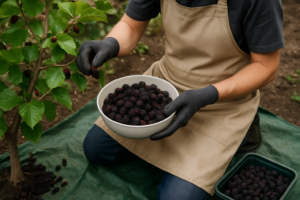
- Deploy the fabric-and-branch-shake technique. Position outdated fabric or drop cloth beneath the tree and shake limbs with restraint. Ripe fruit tumbles immediately; unripe specimens remain anchored. This approach transforms harvest efficiency for established trees.
- Inspect every single day throughout peak season. Truly — every 24 hours matters. Nighttime warmth can trigger full ripeness across an entire branch between visits.
- Monitor for bird activity. When crows and cedar waxwings become hyperactive around your canopy, ripeness has arrived. Animal behavior doesn’t lie.
- Maintain season-to-season documentation. Log the appearance date of your first harvest-ready berries, note when you reached maximum output, and record your final picking date. Within two to three growing seasons, your individual tree’s patterns will emerge with specificity that surpasses any generalized reference material.
One more thing worth mentioning on the practical side: what you carry your harvest in actually matters more than you’d think. I spent two seasons using old plastic containers and losing a surprising amount of fruit to crushing at the bottom of a pile. Now I rely on a pair of Cheardia 2 Pack Picnic Baskets, Metal Mesh Harvest Basket with Foldable Wooden Handle, Rectangle Garden Storage Basket Bin for Vegetable Fruit Garden Kitchen Cabinet Picking Gathering — the open mesh design lets airflow reach the berries so they don’t sweat and turn to mush, and the foldable wooden handle makes it easy to carry a full load without juggling. Having two baskets is genuinely useful during peak season when you’re filling one while the other goes inside to be processed.
Picking Containers Built to Preserve Delicate Fruit During Peak Season
Once those berries reach full maturity across the whole tree, you’re harvesting at frantic speed and depositing handfuls into whatever receptacle sits nearby—and then watching berries at the bottom compress beneath subsequent layers. A ventilated harvest container with a sturdy base genuinely matters when you’re moving fast against ripening heat and competing wildlife.
Advantages
- Perforated sidewalls encourage circulation of ambient air so berries avoid moisture condensation and fungal growth in storage—particularly important when gathering during warm afternoons and carrying directly into your processing area.
- The rigid bottom combined with rectangular proportions permits stable stacking of multiple containers on a dolly, preventing fruit from the upper basket pressing down and crushing the harvest in compartments below.
- The integrated carrying mechanism collapses flat against the sides during picking runs, enabling you to keep both hands on branches while working through upper portions, then hoist and relocate to the adjacent section without tangled grips.
Drawbacks
- The perforated design permits passage of extremely soft, heavily ripe berries through gaps in the weave, causing some loss to ground spillage throughout moving and transit.
- Two containers represents your baseline capacity until you’re actually confronting a tree absolutely burdened with simultaneous ripeness—then you understand you’ll need an expanded three or four-container arrangement.
I almost went back to using old colanders and bowls after my first harvest when I thought the mesh was too delicate, but then I realized I was actually bringing home intact fruit instead of jam. Grab the Cheardia 2 Pack Picnic Baskets, Metal Mesh Harvest Basket with Foldable Wooden Handle, Rectangle Garden Storage Basket Bin for Vegetable Fruit Garden Kitchen Cabinet Picking Gathering while you’re planning your harvest season.
Frequently Asked Questions
How do I know when a mulberry is actually ripe?
Judge by taste and release, not color alone, because appearance misleads. A mature mulberry tastes sweet and separates effortlessly from the branch with minimal force. If you have to pull or twist to get it off, I hold off for 48 more hours and check again. Bird activity helps too — hyperactive crows and cedar waxwings mean ripeness has arrived.
When should I start watching my mulberry tree for ripening?
Observation should begin about 30 days before the anticipated peak ripening date for your region. At that point, look for the emergence of pale or chartreuse berries that follow flowering completion, as these provide a reliable reference countdown. Once peak season starts, daily inspection is worthwhile, since nighttime warmth can ripen an entire branch between visits.
How does the cloth and branch shake method work for mulberries?
Position outdated fabric or a drop cloth beneath the tree, then shake the limbs with restraint. Ripe fruit tumbles immediately while unripe specimens stay anchored, so the tree sorts itself for you. I find this transforms harvest efficiency on established trees, and I use the same setup daily during the Southeast’s mid-May through early June peak.
Can I stretch out such a short mulberry picking window?
Repeat-bearing selections help. In the Southwest and California, where the cycle can conclude by late May, the article suggests investigating repeat-bearing selections like Shangri-La to sustain harvesting longer. In northern and western Australia, everbearing cultivars may fruit in repeated flushes well into autumn rather than finishing in one concentrated period. Cooler, higher elevations also stretch the timeline somewhat.
Keep Reading
About This Article
Written by Ruth Nakamura. Ruth Nakamura is a backyard orchardist in the Pacific Northwest who has grown mulberries for fifteen years, cultivating twelve different varieties in her own backyard. Not a horticulturist by formal training - she shares what she has learned through hands-on growing, workshops, and connecting with nurseries and growers across the country. More about this site.
Scope and limits. Ruth is a backyard orchardist without formal horticultural training. Growing conditions vary enormously by region, so confirm variety, timing, and pest guidance with your local extension service.
Verify this against a primary source
Specifics change, and your situation may differ from the one described here. These are the authorities worth checking directly:
- USDA Plant Hardiness Zone Map — zone verification for your location
- Oregon State University Extension — fruit growing and pruning research
- USDA PLANTS Database — species range and identification