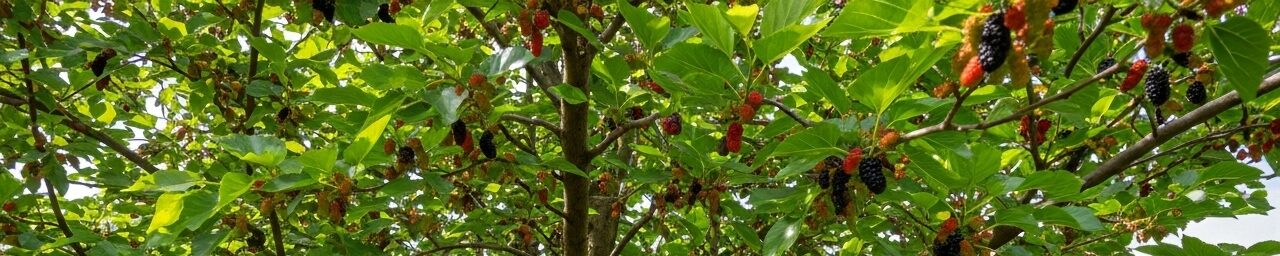
Most people picking up their first mulberry assume that color tells the whole story—white means white, red means red, black means black. Done. Except that’s exactly backwards. The real truth is far messier: a “white” mulberry might finish ripening deep purple. A “red” one might barely blush before it’s actually ready. And the window between “grab it now” and “the squirrels already won” compresses into just a few days, shifting dramatically depending on which of the three main species you’re growing. To harvest successfully, learn to read the actual ripeness cues that matter—the softness, the drop-test response, the flavor pop that tells you the berries have peaked. Skip the color guesswork, and you’ll actually harvest something worth eating before the wildlife decimates it.
Growing mulberry trees means operating inside a narrow band where fruit reaches its sweetest point, then vanishes into the beaks and paws of everything nearby that moves. Getting the timing right requires understanding that your three species—white, red, and black—follow completely separate ripeness schedules and send completely different signals when they’re actually ready to pick. Confusion between them costs harvests.
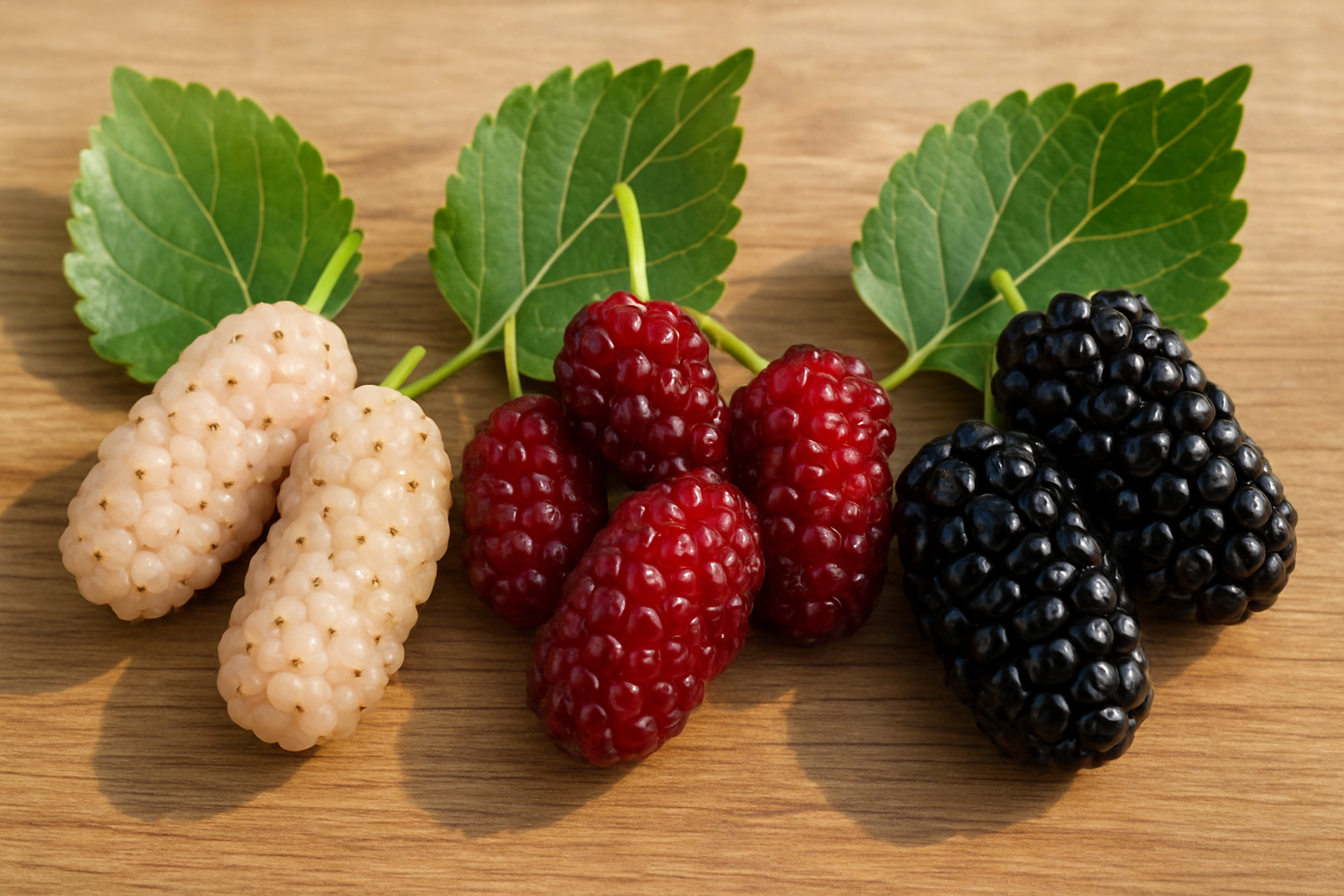
| Species | Harvest Timing | Ripeness Indicator | Flavor Profile |
|---|---|---|---|
| White (Morus alba) | Late spring to midsummer | Yields to thumb pressure, pulls free from stem | Pronounced sweetness with honey undertones |
| Red (Morus rubra) | Early to middle summer | Red deepens to burgundy, near-black at edges | Bright tartness balanced against sweetness |
| Black (Morus nigra) | Late summer to early autumn | Deep, glossy black coloration | Bold intensity, sweetness with complexity and tang |
Why the White Red Black Mulberry Harvest Timeline Is So Different
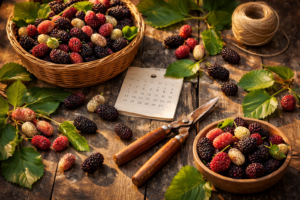
White (Morus alba), red (Morus rubra), and black (Morus nigra) mulberries carry the same common name but operate as distinct plants where harvest matters most. Each ripens on its own timeline, prefers different growing seasons, and signals readiness through entirely different physical markers. They’re not just color variants of the same tree.
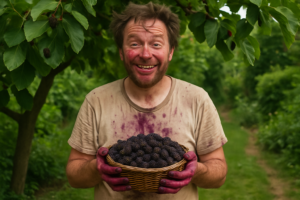
My own white mulberry taught me a brutal lesson about nomenclature. The species name has nothing to do with fruit color—it references the pale buds on the wood, not the berries themselves. My trees produce fruit that ranges from pale cream to muted pink to near-black purple when fully mature. I spent an entire season passing by perfectly ripe berries because I was standing there waiting for “white” berries, which in my mind meant milk-colored, and instead I got deep plum-colored orbs that tasted fantastic but that I’d dismissed as unripe. That mistake cost me several harvests before it sank in.
White Mulberries: Softness Matters More Than Shade
These ripen earliest in the sequence, typically appearing ready between late spring and midsummer depending on your location. The cultivar determines final color—some stay ivory or pale pink, others shift toward deep magenta or nearly black. Forget watching for a specific hue. Instead, you’re looking for a berry that yields instantly to gentle thumb pressure, that pulls free from its stem without requiring any tug whatsoever, and that delivers pronounced sweetness with undertones almost like honey. Bitterness, firmness, or that chalky mouth-feel? Not ready yet. Leave those for another seven to ten days and check back.
Red Mulberries: Peak Color Runs Deep, Not Bright
Native to North America, these typically come into full ripeness a couple weeks after white mulberries do, landing somewhere in early-to-middle summer depending on your specific region. Partial ripeness shows red, but patience matters here—you’re waiting for that red to deepen into burgundy, almost moving toward black at the edges. A mature red mulberry delivers layers—bright tartness balanced against genuine sweetness, excellent juice content. The shake-and-drop method holds true: shake a branch and let gravity do the work. Berries that cling? They’ve still got days ahead of them.
Black Mulberries: The Longest Wait, The Richest Reward
These mature latest of all, frequently not ready until late summer transitions into early autumn, and I genuinely believe they’re the superior fruit—completely biased opinion here. Ripeness shows as deep, almost glossy black coloration, and unlike the other two species, the color actually does straightforwardly indicate readiness with black mulberries. Texture should feel plump and give slightly when squeezed, never rock-hard. The staining potential is legendary—your hands, your shirt, apparently the neighbor’s patio furniture—but the flavor profile justifies everything: bold intensity, genuine sweetness layered with complexity and tang. I grow them specifically for this.
Harvesting Strategies That Deliver Results
Moving past the sour-berry phase of my learning, I built out practical picking methods that function dependably across multiple seasons. This is what I’ve settled into:
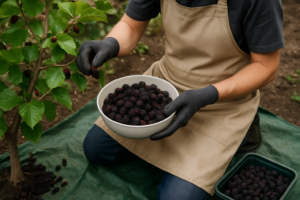
- The drop test works better than your eyes: Position an old sheet or lightweight tarp beneath your tree and shake branches with gentle deliberateness. Berries that deserve harvesting release and fall. Everything still clinging needs more time. This beats any visual assessment across all three species.
- Morning picking preserves quality: Cooler temperatures mean firmer fruit that tolerates handling without bruising. The picking window also extends storage life once they’re in the fridge.
- The three-day rhythm prevents losses: Fruit moves quickly at peak season. A branch showing nothing ripe on Tuesday transforms by the following weekend into berries past their prime. Regular monitoring eliminates waste.
- Taste as your verification system: Sample one berry before committing to a full harvest bucket. Your palate knows whether you’re hitting ripeness or jumping the gun.
- Protect during transport: Peak-season mulberries bruise under minimal pressure. Shallow containers prevent compression damage from the fruit’s own accumulated weight.
Reconsidering Layout: Why Distributed Dwarf Plantings Outperform Single Mature Trees
Fighting to keep wildlife away from one enormous tree across the property taught me that strategy loses. Planting multiple compact cultivars in different yard zones changed everything—you inherit staggered ripening windows, individual tree protection becomes manageable, and losing one tree to birds doesn’t mean losing your entire year’s work.
The advantages
- Dwarf selections fruit by their second growing season, so you discover whether your strategy actually succeeds without the five-year waiting period of standard sizes.
- Perpetual-production types deliver berries continuously through early-summer-into-autumn periods rather than one concentrated explosion that broadcasts “buffet open” to every creature within miles.
- Smaller tree canopies permit faster ripeness assessment and simpler netting or wildlife deterrent application—scanning a six-foot tree takes half the time of evaluating a twenty-foot giant.
The limitations
- Space demands are real if your property’s already packed—and honestly, the squirrels locate distributed trees just fine regardless of how spread out you position everything.
- Young dwarf trees demand steady irrigation and nutrient input through establishment, and a single skipped watering session during peak summer heat can derail progress by months—I learned this the difficult way.
I almost gave up on this approach after my first two dwarf trees got stunted in their first year, but that was my watering fail, not theirs. If you’re ready to stop losing harvests to wildlife, Dwarf Everbearing Mulberry Plants (4 Pack) gives you enough trees to actually experiment with placement and protection.
Frequently Asked Questions
Why is my white mulberry tree producing dark purple berries?
The species name refers to the pale buds on the wood, not to fruit color. My own white mulberry produces berries ranging from pale cream to muted pink to near-black purple when fully mature. I wasted an entire season walking past perfectly ripe fruit while waiting for milk-colored berries, so judge by softness and sweetness instead of shade.
What time of day is best for picking mulberries?
Morning is best, because cooler temperatures mean firmer fruit that tolerates handling without bruising, and that picking window also extends storage life once the berries reach the fridge. I carry them in shallow containers, since peak-season mulberries bruise under minimal pressure and deep containers let the fruit’s own accumulated weight cause compression damage.
How often should I check my mulberry trees during peak season?
I check on a three-day rhythm during peak season, because fruit moves fast. A branch showing nothing ripe on Tuesday can turn into berries past their prime by the following weekend. Regular monitoring eliminates waste, and I taste one berry before committing to a full harvest bucket to verify the timing.
How soon do dwarf mulberry trees start producing fruit?
Dwarf selections fruit by their second growing season, so you find out whether your placement and protection strategy works without the five-year waiting period of standard sizes. They do demand steady irrigation and nutrient input through establishment, though. A single skipped watering during peak summer heat stunted my first dwarf trees and set them back months.
Keep Reading
About This Article
Written by Ruth Nakamura. Ruth Nakamura is a backyard orchardist in the Pacific Northwest who has grown mulberries for fifteen years, cultivating twelve different varieties in her own backyard. Not a horticulturist by formal training - she shares what she has learned through hands-on growing, workshops, and connecting with nurseries and growers across the country. More about this site.
Scope and limits. Ruth is a backyard orchardist without formal horticultural training. Growing conditions vary enormously by region, so confirm variety, timing, and pest guidance with your local extension service.
Verify this against a primary source
Specifics change, and your situation may differ from the one described here. These are the authorities worth checking directly:
- USDA Plant Hardiness Zone Map — zone verification for your location
- Oregon State University Extension — fruit growing and pruning research
- USDA PLANTS Database — species range and identification