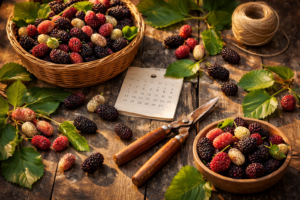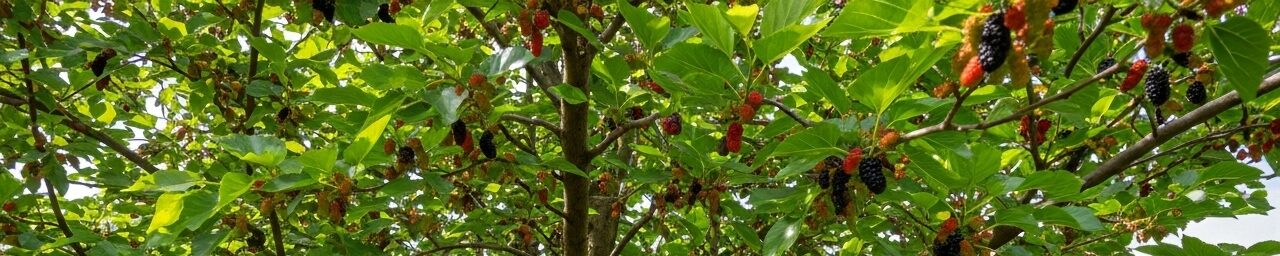
Timing a substantial mulberry harvest matters as much as technique. Efficiency disappears entirely if you’re harvesting at the wrong moment. Fruit picked too early tends to ferment unpredictably, dried berries can turn sour, and preserves require excessive sugar just to be bearable. Understanding exactly when mulberries reach their peak isn’t just a procedural note — it’s the cornerstone for every jar of preserves, fermented bottle, and dried batch you plan to enjoy through the winter. Ripeness depends on specific cultivar and local conditions, so recognizing the differences between almost ripe and ready to pick helps you move past guesswork and start harvesting with confidence.
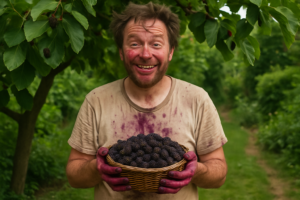
My journey began with a burst of enthusiasm that quickly turned into impatience. I remember my very first season with mulberries; I was so eager that I started sampling berries a full fourteen days before they were actually ripe. The result? I ruined a favorite shirt, wasted several handfuls of fruit, and my neighbor likely got an entertaining view of what must have looked like backyard chaos. However, that mortifying afternoon became my turning point — it launched me into a deep dive of research that completely transformed my harvesting strategy. Today, I pick mulberries at their absolute peak every time, and I’m here to share what I learned, so you can skip the stained clothing and enjoy the fruits of your labor at their best.
When Are Mulberries Ripe? The Signs You’re Actually Looking For
Mulberries can be a bit elusive when it comes to ripeness. Unlike stone fruits or pome fruits, they don’t always give clear signals that they’re ready to be picked based on color alone. The real challenge lies in understanding what full ripeness looks like for the specific type you’re cultivating, since visual cues can easily mislead you.
What Color Reveals (and Hides) by Type
While appearance serves as an initial indicator, it’s essential to recognize ripeness for your particular cultivar. Here’s how each main group distinguishes itself:
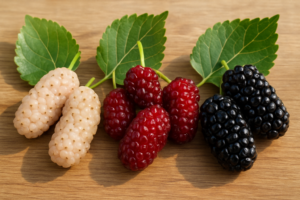
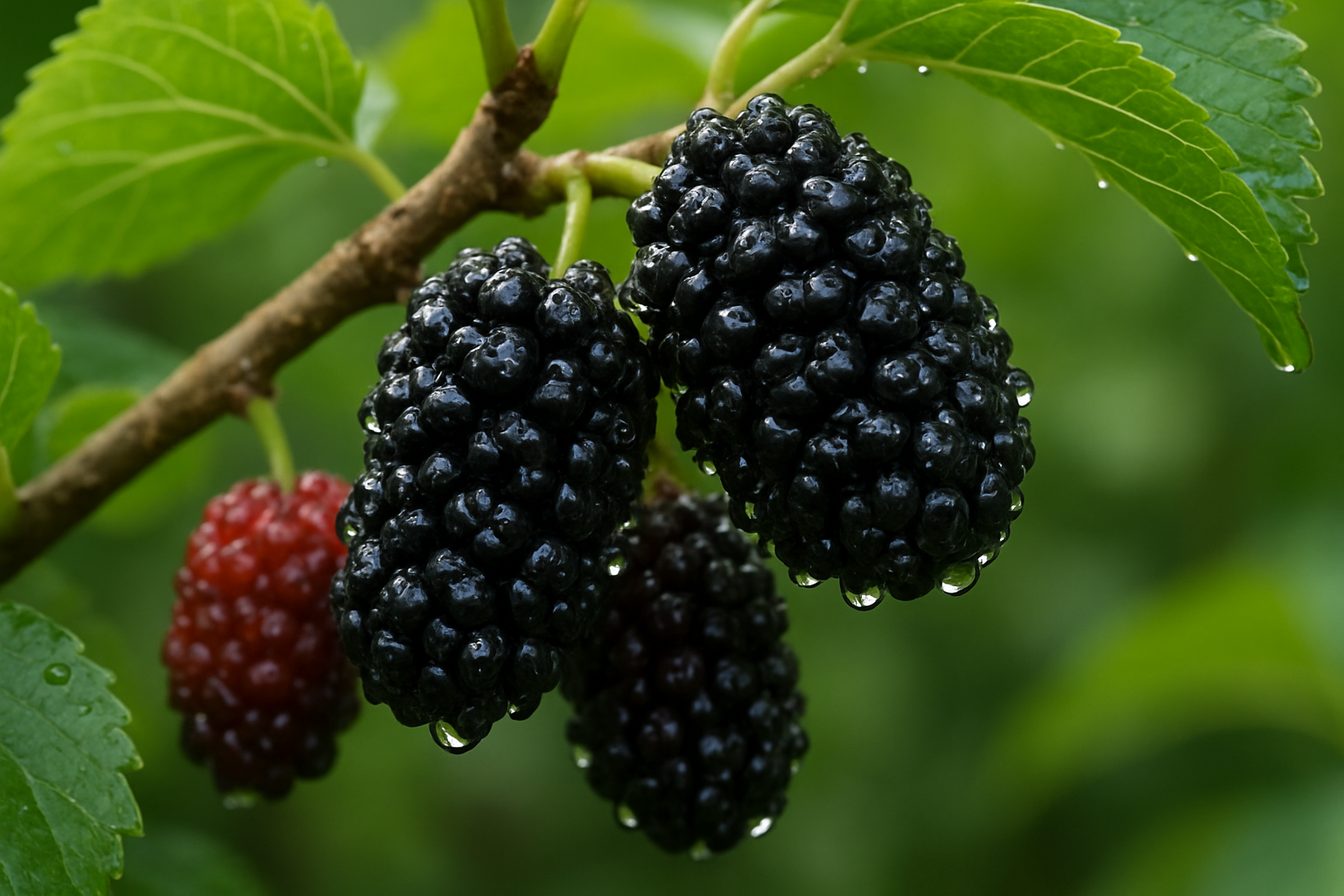
- Black mulberries (Morus nigra): These mature to a nearly black hue with deep purple undertones. Berries still showing vibrant scarlet tones need more time on the branch — the very mistake I made while sporting my favorite linen shirt.
- Red mulberries (Morus rubra): These evolve to a rich maroon or burgundy color. If you see lighter reds or those with orange tints, they’re not ready yet.
- White mulberries (Morus alba): This type can be the most confusing. White mulberries mature to a pale blush-pink or a soft lavender-white — they’re ready when they appear almost translucent in the light. If they’re still greenish or completely white, they haven’t developed fully.
Firmness and the Release Test
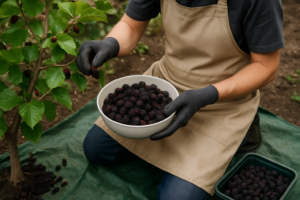
While color can guide you, texture and ease of detachment confirm actual readiness. A ripe mulberry yields to light finger pressure — it should be tender but not mushy. Unripe berries resist squeezing and hold their shape stubbornly. If you have to tug to separate a berry from the branch, it’s simply not finished ripening. A berry that’s ready for picking will practically roll off into your palm with the gentlest touch. A traditional method involves spreading cloth under the tree and gently tapping the branches — whatever falls is ripe, while anything still attached needs more days.
The Flavor Assessment — What My Early Disasters Revealed
Once you’ve checked appearance and texture, it’s time for a flavor test. A mature mulberry delivers a delightful balance of sweetness and subtle acidity — complex and deeply satisfying. Berries harvested too early can present a sharp sourness with an unpleasant astringent finish. Trust your palate on this one. And maybe do this test while wearing something dark, just in case.
Working Across the Whole Plant: Individual Ripeness Zones, Not Single Harvest Moments
Here’s where many people get surprised, even after mastering color, firmness, and taste signals: mulberry trees often present their fruit on staggered schedules. Berries on sun-exposed branch ends mature faster than those hidden in shaded areas. This difference can stretch several days from the earliest to the latest ripening berries. So, the ripeness question isn’t about the tree as a single entity — it’s about evaluating each individual cluster you encounter.
My current strategy involves scouting multiple locations on the tree — a sun-drenched upper cluster, a partially shaded mid-canopy section, a low-hanging branch, and one reaching high — before committing to a full harvest session. If the upper outer branches are dropping ripe fruit with minimal branch movement while the lower interior wood remains firm and pale, I know to prepare for multiple passes rather than trying to harvest everything in one go.
Combined Indicators for Each Variety
Given that colors read differently across cultivars, it’s essential to cross-reference all three dimensions — hue, texture, and ease of separation — rather than relying on just one:
- Black mulberries: Look for a nearly black, intensely purple exterior, which should feel noticeably soft with gentle squeezing and detach with minimal resistance. If a berry needs even slight traction to remove, it’s not yet ready.
- Red mulberries: These should transition to a deep burgundy hue, display comparable softness, and release cleanly from the branch. Berries still showing bright scarlet indicate immaturity, even if the texture seems right.
- White mulberries: This variety can be the trickiest due to subtle color changes — seek a translucent, creamy pale-pink quality instead of stark white, and rely more on the separation assessment since visual cues can be misleading.
One additional marker to note is the woody stem attachment point (the peduncle) that remains once a mature berry detaches. If the berry separates cleanly and leaves the connector on the branch, you’ve hit the right timing. If the stem pulls away attached to the fruit, or worse, if tearing occurs in the branch tissue itself, you’re picking too soon by forcing separation.
Selective Harvesting Equipment for Accessing Deep Berries Without Bruising
Finding those perfectly dark, fully ripe berries tucked within the interior canopy requires more than just hands — bare-handed picking often leads to damaged fruit and fatigue after processing a significant volume. A specialized picker allows for selective harvesting while protecting your hands from overuse.
Where it delivers
- The basket configuration gently catches berries, preventing the impact trauma that results from dropping harvested fruit into containers from above chest height — I’ve noticed my fermentation success rates improve significantly since I started using this method instead of hand-dropping.
- You can reach into challenging angles and access overhead positions without contorting your arms, which means you can maintain stamina during long harvest weekends and leave fewer berries behind on high limbs.
- The extended reach allows you to target individual ripe specimens within branches that show mixed maturity, helping you avoid stripping entire sections and ending up with batches containing unripe drupelets.
Where it falls short
- The basket capacity requires regular emptying intervals. Otherwise, accumulated berries compress down under stacked weight, creating extra steps in your process and disrupting your picking rhythm.
- On thornier cultivars, the handle can get caught on branches, pulling berries loose prematurely before they’ve fully separated, which undermines the whole selective harvesting concept.
I nearly gave up on mechanical pickers after my first thorny-variety mishap, but switching my technique to approach from below instead of raking through saved the tool entirely. If you’re serious about timing and quality, I highly recommend grabbing the GUGULUZA Berry Picker in Black and Red.
Frequently Asked Questions
What happens if I pick mulberries too early?
Picking too early ruins whatever you make with the fruit. Berries harvested before ripeness ferment unpredictably, dried batches can turn sour, and preserves need excessive sugar just to be bearable. Eaten fresh, early fruit tastes sharply sour with an unpleasant astringent finish. That is why I check color, softness, and ease of release before committing to a full harvest session.
Does the stem show whether a mulberry is ripe?
Yes, the woody stem attachment point, called the peduncle, is a useful marker. When a mature berry detaches, that connector should stay behind on the branch. If the berry separates cleanly and leaves the stem on the tree, your timing is right. If the stem pulls away with the fruit, or the branch tissue tears, you are picking too soon.
How do I test mulberry ripeness without staining my clothes?
Wear something dark when you taste-test. I ruined a favorite linen shirt my first season by sampling berries that were nowhere near ready. You can also avoid handling fruit entirely by spreading cloth under the tree and gently tapping the branches. Whatever drops is ripe, and anything still hanging on needs more days on the branch.
Do berry pickers work on thorny mulberry cultivars?
They can, but thornier cultivars cause problems. The handle snags on branches and pulls berries loose before they have fully separated, which undermines the whole point of selective harvesting. I nearly gave up on mechanical pickers after my first thorny-variety mishap, but changing my technique to approach from below instead of raking through the branches saved the tool.
Keep Reading
About This Article
Written by Ruth Nakamura. Ruth Nakamura is a backyard orchardist in the Pacific Northwest who has grown mulberries for fifteen years, cultivating twelve different varieties in her own backyard. Not a horticulturist by formal training - she shares what she has learned through hands-on growing, workshops, and connecting with nurseries and growers across the country. More about this site.
Scope and limits. Ruth is a backyard orchardist without formal horticultural training. Growing conditions vary enormously by region, so confirm variety, timing, and pest guidance with your local extension service.
Verify this against a primary source
Specifics change, and your situation may differ from the one described here. These are the authorities worth checking directly:
- USDA Plant Hardiness Zone Map — zone verification for your location
- Oregon State University Extension — fruit growing and pruning research
- USDA PLANTS Database — species range and identification