Why Harvesting a Tall Mulberry Tree Is Its Own Challenge
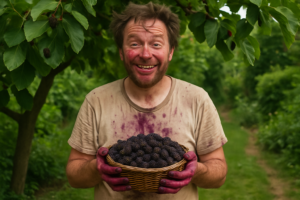
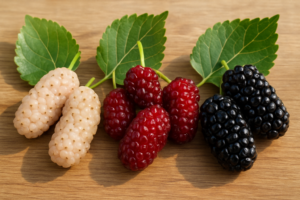
Unlike stone fruits or tree nuts, mulberries resist conventional harvesting techniques. Their flesh is delicate and gives way under pressure, so if you grab one too hard, you end up with nothing but a handful of purple mush. Plus, mulberries ripen staggered over weeks rather than all at once, meaning you’ll find yourself returning to the same tree repeatedly. And here’s a tip I learned the hard way: mulberries taste flat and tart until they’re fully ripe. So if you try to pick them early in hopes of saving them, you’ll just end up with a bucket full of mediocre berries.
Given all that, your harvesting strategy must balance several competing demands: it needs to be gentle on the delicate fruit, feasible enough to repeat every few days as new berries ripen, and practical so you don’t burn out before the season ends.
Shaking Fruit Onto Cloth: The Simplest Approach for High-Volume Picking
I wish someone had shared this technique with me years ago. It’s almost embarrassingly simple: fully ripe mulberries release from their branches with virtually no force. Forget the ladder and stretching—let physics do the work for you.
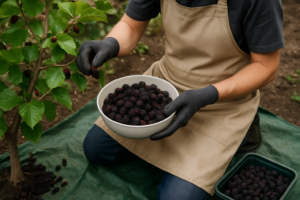
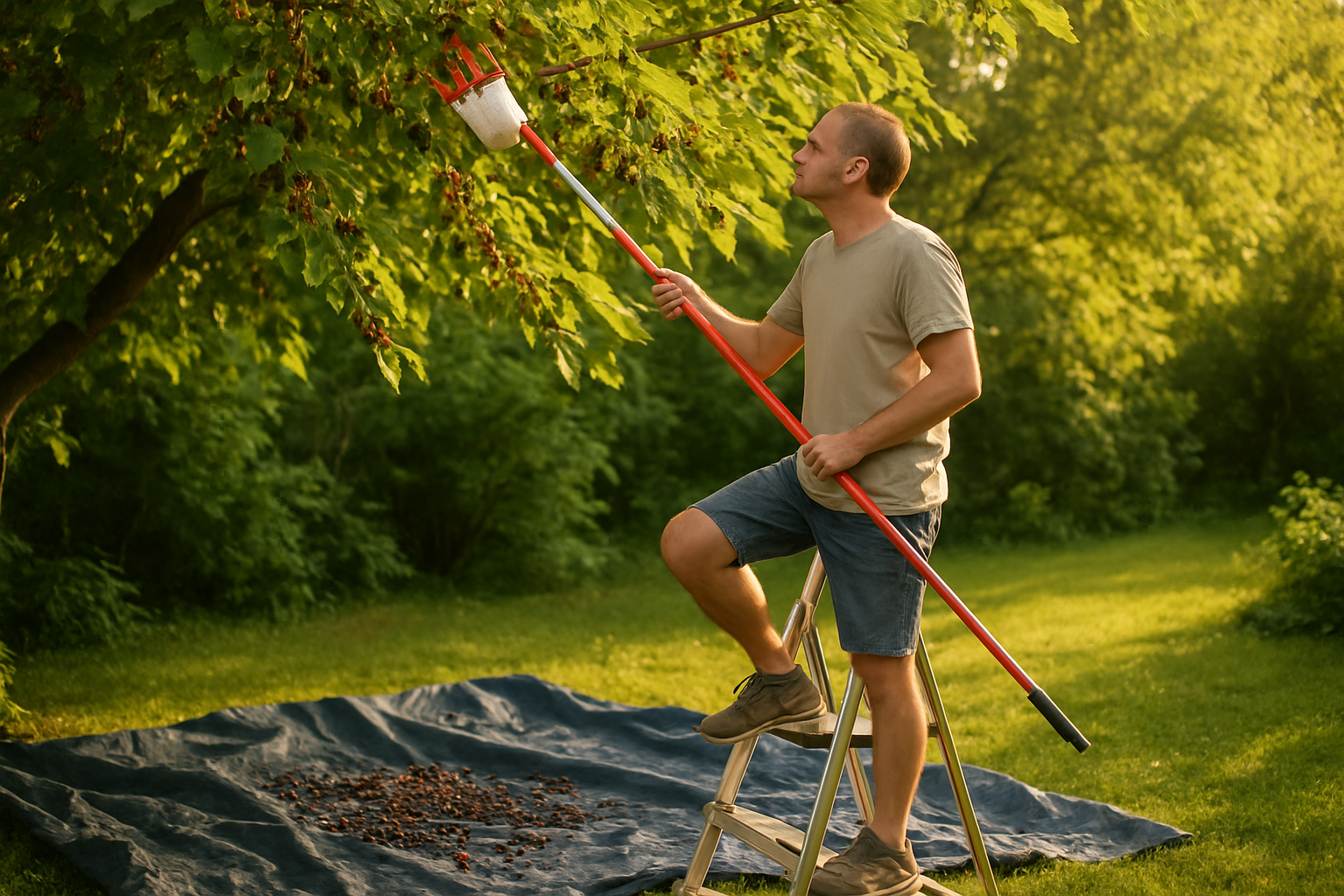
Here’s how it works: spread a large, clean cloth—anything from an old bedsheet to a canvas drop cloth—directly underneath the canopy of your tree. Then, gently vibrate the lower limbs or use a long bamboo pole to tap the higher branches. Berries that are truly mature will drop onto the cloth, while the unripe ones stay attached. Once you’ve collected enough, just bundle the corners of the cloth and slide your harvest into a bucket. Repeat this process every couple of days as the next batch finishes ripening.
To get the best results with this method, keep these tips in mind:
- Sustained overhead work can get tiring fast—after half an hour, my shoulder starts protesting. I’ve learned to break picking runs into shorter sessions spread over multiple days rather than trying to get it all done at once.
- Once fruit sits deep within thick branches, it can be hard to maintain precise control—sometimes the basket bumps ripe berries loose before you can catch them, especially with varieties where the fruit is loosely attached to the stem.
I nearly gave up on this tool after the first week when I seemed to be dropping more fruit than I was catching. But then I realized I was rushing it—slowing down and aiming properly made all the difference. If you’re serious about harvesting safely from a tall tree without risking a ladder fall, I highly recommend grabbing the DonSail Fruit Picker Pole Tool with Basket.
- The basket cup cradles fragile berries as you twist and extract them—I’ve found that a gentle scooping motion preserves the soft fruit intact across multiple picking sessions during the ripest weeks.
- A 12+ foot extension covers the productive zone on most mature trees without requiring you to climb or place yourself in awkward, risky spots where you lose visibility into the canopy.
- You operate with one hand on the pole, leaving your other hand free for balance or to hold branches out of your way, which means you’re never overreaching and can actually see the berries you’re targeting.
Extending Your Reach: Tools That Bridge the Gap Between Ground and Canopy
The cloth-and-shake technique does a great job of capturing fruit, but inevitably some choice branches remain just out of reach—those fully colored, perfectly soft clusters that seem to mock you from their lofty heights. The right equipment can help solve this part of the puzzle.
Long-Reach Fruit Pickers: Getting to Clusters Without a Ladder
I’ve learned that ladders can become genuinely unsafe when you’re working with an 18-foot canopy while juggling fruit and branches. A pole-mounted picker basket allows you to stay grounded while systematically harvesting from the upper fruit zone, speeding up the process and ensuring you capture those berries before they’re gone.
Advantages I’ve experienced
Limitations I’ve hit
I nearly gave up on this tool after the first week when I seemed to be dropping more fruit than I was catching. But then I realized I was rushing it—slowing down and aiming properly made all the difference. If you’re serious about harvesting safely from a tall tree without risking a ladder fall, I highly recommend grabbing the DonSail Fruit Picker Pole Tool with Basket.
Frequently Asked Questions
Can I pick mulberries early and let them ripen later?
No, picking early doesn’t help. Mulberries taste flat and tart until they’re fully ripe, so berries harvested in hopes of saving them just end up mediocre. I learned that the hard way. Ripe fruit also releases with virtually no force, while unripe berries stay firmly attached, so the tree tells you what’s ready.
What cloth should I spread under the tree for shaking?
Anything large and clean works. I use an old bedsheet or a canvas drop cloth spread directly beneath the canopy. After gently vibrating the lower limbs or tapping higher branches with a long bamboo pole, I bundle the corners of the cloth together and slide the whole harvest straight into a bucket.
Why do I drop more berries than I catch with a picker pole?
You’re probably rushing. I nearly gave up on my pole picker the first week for exactly that reason, then slowed down and aimed properly, which made all the difference. Deep fruit inside thick branches is hardest to control, and the basket can bump loosely attached berries free before you catch them.
How long should a single overhead picking session last?
Shorter than you’d think. Sustained overhead work tires me fast, and after half an hour my shoulder starts protesting. I break picking runs into shorter sessions spread over multiple days instead of trying to finish everything at once. That suits mulberries anyway, since they ripen staggered over weeks and need repeat visits.
Keep Reading
About This Article
Written by Ruth Nakamura. Ruth Nakamura is a backyard orchardist in the Pacific Northwest who has grown mulberries for fifteen years, cultivating twelve different varieties in her own backyard. Not a horticulturist by formal training - she shares what she has learned through hands-on growing, workshops, and connecting with nurseries and growers across the country. More about this site.
Scope and limits. Ruth is a backyard orchardist without formal horticultural training. Growing conditions vary enormously by region, so confirm variety, timing, and pest guidance with your local extension service.
Verify this against a primary source
Specifics change, and your situation may differ from the one described here. These are the authorities worth checking directly:
- USDA Plant Hardiness Zone Map — zone verification for your location
- Oregon State University Extension — fruit growing and pruning research
- USDA PLANTS Database — species range and identification