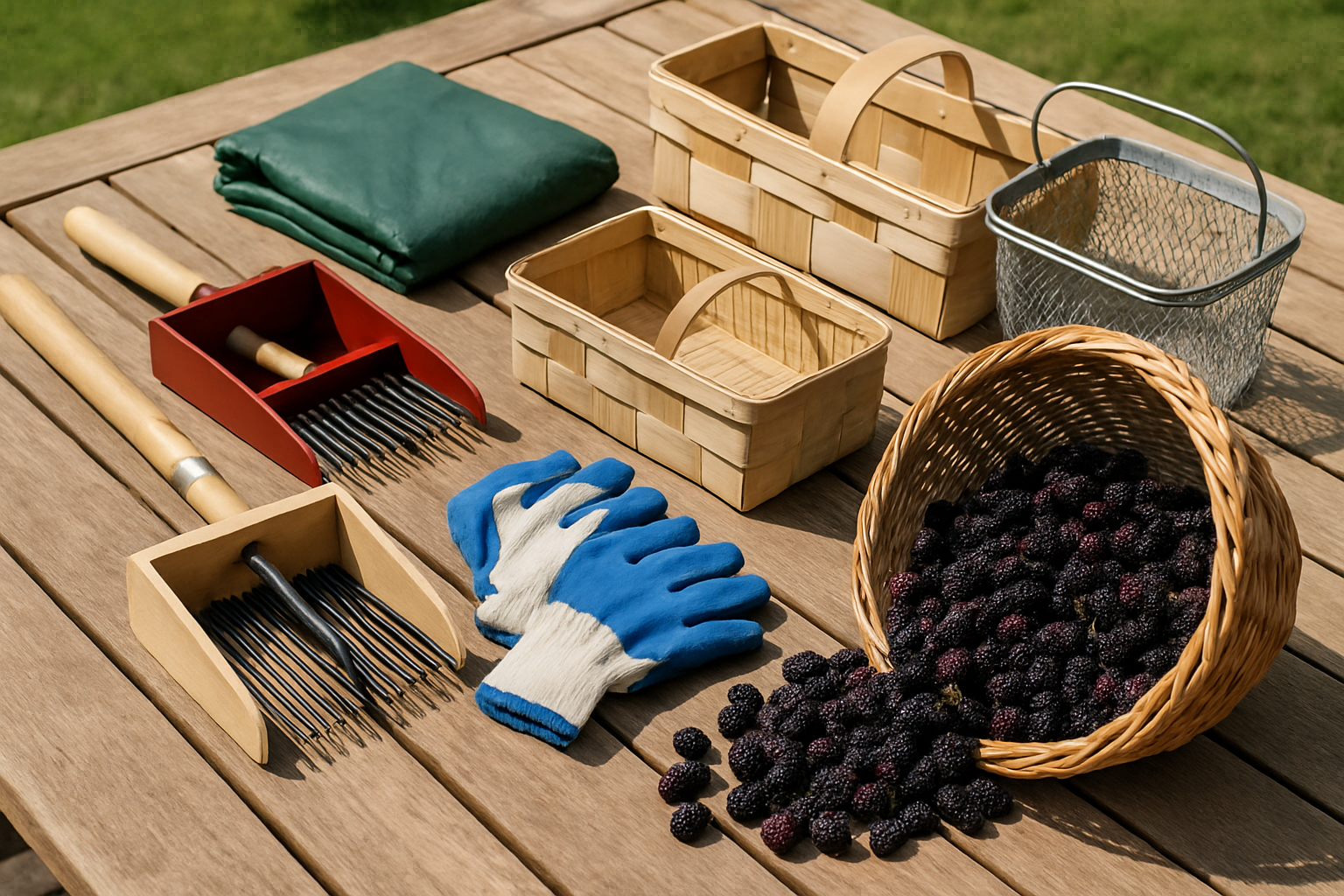
Mulberries thrive in the lush Pacific Northwest climate. Multiple cultivars are available for backyard growing, from the sweet and succulent Black Beauty to the unique Chinook and Illini Star. Learning to grow mulberries successfully involves understanding these different varieties, their characteristics, and the techniques that support healthy harvests. If you’re thinking about growing mulberries or simply want to know more about this incredible fruit, here are some practical insights for your own adventures.
Mulberries are a true treasure, and I can still remember my first encounter with them. I was captivated by their sweet, jammy flavor and the way they stained my fingers a deep purple. But I quickly learned that harvesting them isn’t as straightforward as it may seem. One particularly memorable July, I found myself covered head to toe in purple juice after a particularly enthusiastic picking session. My hands were sticky, my shirt was stained, and I had merely managed to collect a small fraction of what I’d hoped for. That day taught me an invaluable lesson about the importance of having the right tools for the job.
| Tool | Best For | Main Limitation |
|---|---|---|
| Berry Picker with Metallic Comb and Ergonomic Handle | Harvesting without crushing ripe fruit | Small pouch capacity; comb catches on thick foliage |
| GUGULUZA Berry Picker with Metallic Comb | Peak harvest in mid-July | Comb teeth slip past branches thinner than quarter-inch |
| DonSail Fruit Picker Pole Telescoping | Reaching berries 15+ feet high without ladder | Requires both hands and core engagement to control |
| Cheardia 2 Pack Mesh Harvest Baskets | Carrying up to 20 pounds without crushing | Berries can fall through large mesh gaps if placed carelessly |
| Ruolan Bird Netting for Garden 13x20ft | Protecting harvest from birds | Solo installation difficult; doesn’t stop squirrels completely |
Why Mulberry Harvesting Gets Messy (And Why It Doesn’t Have To)
Harvesting mulberries using just my hands and a bucket was a messy ordeal, one that I wouldn’t wish on anyone. These fruits are so soft when fully ripe that they burst with the slightest touch, leaving a trail of juice and pulp everywhere. After a particularly chaotic harvest, I realized I needed to rethink my approach. That’s when I discovered the beauty of specialized harvesting tools. With the right gear, I could make my mulberry picking experience not just manageable, but downright enjoyable.
It’s not just about being delicate when picking; it’s about using tools that do the job without crushing the fruit. I found that the right berry picker with a comb mechanism takes the pressure off my hands and allows me to collect ripe berries without the risk of destruction.
Tools That Transform Your Mulberry Harvest
A Berry Picker That Finally Lets You Harvest Without Crushing Ripe Fruit
When I first tried picking mulberries with my bare hands, I quickly realized how delicate they were. My fingers squished the ripe fruit before it even reached my bucket. That’s when I turned to a proper berry picker with a comb. This tool gently removes the ripe berries from the stem without bruising, allowing me to collect them in pristine condition.
Where this tool shines
- The comb structure selects only the berries that are genuinely ready to harvest, passing by fruit that still needs a few more days to mature—you’re putting energy only into picking what’s actually harvestable.
- The grip design is long enough that you can access branches high above your head without twisting your wrist at awkward angles or losing your grip mid-pick—essential when you’re working a tall, mature specimen.
- Fruit slides smoothly into the built-in pouch rather than getting crushed in transit, which preserves juice content and keeps your berries in harvest-ready condition all the way to your processing area.
Its actual limitations
- When fruit clusters are thick and tightly packed with foliage overlapping the berries, the comb can catch on adjacent leaves or unripe fruit, requiring you to stop and adjust your approach repeatedly.
- The attached collection pouch holds a surprisingly small volume, so during heavy production days you find yourself walking back to your main bucket every few minutes—which reduces the productivity gains you’re trying to achieve on a big tree.
At first, I was skeptical about how gentle the comb would be. I watched a few berries split during my initial attempts, but I quickly realized I was twisting instead of rolling. Once I adjusted my technique, bruising became almost nonexistent. If you want to enjoy your harvest instead of salvaging juice-stained fruit, I wholeheartedly recommend the Berry Picker with Metallic Comb and Ergonomic Handle.
The GUGULUZA Berry Picker That Keeps Up With Peak Mulberry Drop
As the season peaks in mid-July, the branches of my trees are often so heavy with ripe fruit that berries start dropping before I can pick them. This is when I realized a simple basket and my hands were no longer enough. After testing several different berry pickers, the GUGULUZA model stood out as the best for my needs.
What works
- The metal teeth actually comb ripe berries away from their branches without pulping them—berries drop whole into the basket rather than getting crushed between fingers like they do during hand-picking.
- The grip and handle design spare your forearm and wrist from the repetitive strain that kills you after a couple hours of squeezing individual berries; marathon picking sessions become noticeably less punishing.
- The basket attachment below the comb catches falling berries as they tumble loose, preventing them from rolling across dirt and grass—your harvest stays in one place and stays cleaner than hand-picked fruit dragged across ground.
What doesn’t
- Mulberry wood is notoriously gnarled and branches twist around each other constantly, which means the comb teeth get hung up on surrounding twigs—you end up wrestling the tool at awkward angles instead of pulling it smoothly through in one motion.
- Anything thinner than roughly a quarter-inch simply won’t stay in the comb’s grip; the teeth slip right past without catching fruit, so you’re still hand-plucking everything on the thinner outer growth.
After some initial struggles with the GUGULUZA, I found that adjusting my angle and technique made a world of difference. If you’re tired of purple-stained hands and missed harvests, I highly recommend grabbing the GUGULUZA Berry Picker with Metallic Comb, Plastic Blueberry.
The Telescoping Picker That Finally Reached Those Top-Cluster Berries
One of the challenges of growing tall mulberry trees is accessing those sweet clusters that seem to grow just out of reach. After losing countless berries to gravity, I invested in a telescoping fruit picker. This tool has been a game changer for me, allowing me to reach the highest branches without the hassle and danger of a ladder.
The strengths I’ve found
- Berries land safely in the basket thanks to its open lattice construction—you roll fruit into it from distances exceeding 15 feet, and the ground stays clean without flattened casualties.
- Extension happens without wobbling or slipping; the pole can be held fully stretched for longer than 10 minutes while working through thick fruit clusters, and the aluminum stays rigid throughout.
- A single person can manage the weight without struggling—arms fatigue around the half-hour mark during overhead reaching, yet this pales beside the exhaustion that comes from hauling a 12-foot ladder back and forth across the yard.
The limitations I’ve encountered
- Full extension creates noticeable imbalance and demands attention to body positioning—controlling the pole requires both hands and core engagement, and it’s easy to smack yourself on the handle while adjusting your stance if you’re not deliberate about it.
- Dumping the basket into your bucket takes longer than you might hope; the mechanism requires you to rotate the basket handle so its bottom flips open, which adds time if you’re gathering fruit rapidly.
My first attempt with the telescoping picker was a bit chaotic, but after a few tries, I found my rhythm. If you’re tired of losing precious berries, the DonSail Fruit Picker Pole with Basket Telescoping is a must-have for any mulberry grower.
The Mesh Baskets That Finally Let You Pick 20 Pounds Without Crushing
Picking mulberries can be a labor-intensive process, and the last thing you want is to see your hard work crushed under the weight of more fruit. I learned the hard way that container choice is crucial. A flimsy bucket can collapse under the weight of my harvest, crushing the berries inside. I found that mesh baskets with vertical walls are perfect for keeping berries safe while also allowing for proper ventilation.
What works
- Air moves freely through the latticed sides and bottom, which prevents the accumulation of condensation and keeps berries in better condition over extended picking sessions—the fruit at the lowest point maintains its firmness even after a five-hour day.
- The reinforced metal framework bears the load of a full twenty-pound fill without sagging inward or losing its shape, a durability advantage over fabric, woven, or collapsible designs that inevitably compress and press the contents together.
- The paired-basket arrangement allows you to keep filling one unit while transferring the other’s contents directly into your processing line, substantially reducing the window during which heat exposure and sitting time compromise quality during high-volume picking days.
What doesn’t
- The gaps between mesh sections run large enough that undersized berries or those with slight dehydration can escape downward through the openings if you don’t place them with intention—several ripe specimens can fall through when placement is careless.
- The wooden grip component, though built solidly, wicks moisture from humid air and occasionally swells during damp stretches, leaving the folding action somewhat sticky—not a deal-breaker, but an irritating resistance point once you’re partway through a long harvest day.
I was hesitant at first, worried that the mesh would allow my precious berries to slip through, but after careful loading, I found it worked beautifully. For anyone serious about their mulberry harvest, I recommend the Cheardia 2 Pack Picnic Baskets, Metal Mesh Harvest Basket.
Bird Netting That Actually Protected My Mulberry Harvest
One of the biggest challenges I faced was protecting my harvest from birds. Robins, starlings, and other birds would swoop in and strip my trees clean before I could even make it outside. I remember one season where I lost nearly all my ripe fruit in just a couple of days. After that, I knew I needed a solid defense plan.
After researching various options, I decided to invest in bird netting. The Bird Netting for Garden proved to be an excellent choice. It was large enough to cover my trees and durable enough to withstand the elements.
Installation and what to expect
Timing is everything with bird netting. I usually install it in late May, right when the first fruits are starting to ripen. The mesh is flexible enough to avoid tearing when caught on branches, and its dark green color blends well with the leaves, making it less noticeable from a distance.
One tip I learned the hard way: untangling the netting took longer than I expected! If you plan to install this on your own, set aside some time to get everything straightened out.
- Position the netting over the main trunk, then work it outward across the whole canopy.
- Anchor the lower edge with garden stakes and zip ties to seal gaps at ground level.
- Make daily rounds checking the perimeter for weak spots where birds might force through.
- Cut a small opening on one side for harvest access without taking the entire net down.
After setting it up, I was pleasantly surprised at how effective it was. I was able to gather over eight pounds of fruit across several harvest sessions, a huge improvement from previous years! The netting didn’t tear, and I was able to easily access the berries through a small opening I created.
That being said, I learned that bird netting requires regular checks. Birds are crafty! I had a mockingbird try to attack the mesh, but it didn’t give way. Maintaining vigilance ensures that your harvest stays safe.
What the protection delivered
By the end of the season, my netting had held up beautifully, and I was able to enjoy the fruits of my labor without losing them to feathered thieves. If you want to protect your mulberry harvest, I recommend the Ruolan Bird Netting for Garden.
Real limitations to weigh ahead of time
- Solo installation is a hassle. Hoisting this mesh over a 12-foot tree without help gets aggravating fast. The netting snags on every branch as you’re pulling it upward and outward. A second person makes it exponentially easier.
- Squirrels aren’t completely stopped. The netting reduces visits but doesn’t eliminate them. A clever squirrel finding branches above the netted zone can still access fruit up there. If squirrels represent your main threat rather than birds, you’ll need additional tactics.
- Sizing limits exist for larger specimens. These dimensions work well for standard backyard trees. Mulberries that have grown larger over many years or spread outward extensively might call for doubling up on pieces or picking a different product altogether. Measure your canopy carefully before committing.
This netting works best if your trees are medium-sized and you face challenges from birds rather than squirrels. It’s a smart investment for protecting your harvest without needing to replace it every year.
For those of you who have smaller trees, consider alternatives like smaller mesh nets that can be easier to manage. The key is finding the right solution that fits your specific needs and setup.
Frequently Asked Questions
Why do berries split when I use a comb berry picker?
You’re probably twisting the comb instead of rolling it. When I first tried a berry picker with a metallic comb, I watched a few berries split during my initial attempts, and I realized twisting was the cause. Once I adjusted my technique to a rolling motion, bruising became almost nonexistent and fruit slid cleanly into the pouch.
Will a comb picker work on thin outer mulberry branches?
No, not reliably. Anything thinner than roughly a quarter-inch simply won’t stay in the comb’s grip, so the teeth slip right past without catching fruit and you end up hand-plucking the thinner outer growth. Mulberry wood is gnarled and the branches twist around each other, so the comb teeth also snag on surrounding twigs.
When should I put bird netting on a mulberry tree?
I install mine in late May, right when the first fruits are starting to ripen. Untangling the netting took me longer than I expected, so set aside time. Position it over the main trunk, work outward across the canopy, anchor the lower edge with garden stakes and zip ties, and cut a small opening for harvest access.
Can a telescoping picker reach the top of a tall mulberry?
Aluminum harvest poles can reach heights of 20 feet or more and remain rigid when fully extended for extended work periods. Full extension does create noticeable imbalance, so controlling the pole takes both hands and deliberate body positioning.
Keep Reading
About This Article

Written by Ruth Nakamura. Ruth Nakamura is a backyard orchardist in the Pacific Northwest who has grown mulberries for fifteen years, cultivating twelve different varieties in her own backyard. Not a horticulturist by formal training - she shares what she has learned through hands-on growing, workshops, and connecting with nurseries and growers across the country. More about this site.
Scope and limits. Ruth is a backyard orchardist without formal horticultural training. Growing conditions vary enormously by region, so confirm variety, timing, and pest guidance with your local extension service.
Verify this against a primary source
Specifics change, and your situation may differ from the one described here. These are the authorities worth checking directly:
- USDA Plant Hardiness Zone Map — zone verification for your location
- Oregon State University Extension — fruit growing and pruning research
- USDA PLANTS Database — species range and identification