Why I Know This Subject
You know, my sister called me up one sunny mid-June, exasperated and asking how I managed to keep birds from decimating my mulberry harvest while she was losing entire branches to them. She’d done everything right—planted a promising tree, pruned diligently—and still watched as robins stripped it bare before the bulk of the fruit was even ripe. We chatted for twenty minutes, but it dawned on me that she didn’t have a real strategy, just a lot of frustration and maybe a few crossed fingers.
That conversation stuck with me because I remember being exactly where she was about a decade ago—frustrated and feeling helpless. The gap between getting your mulberry tree to fruit heavily and actually keeping that fruit for yourself is where many backyard growers hit a wall. I’ll never forget stepping outside one morning to find what looked like an avian convention in full swing on my Illinois Everbearing. The robins showed zero caution around me, and I felt like the outsider in my own orchard.
Over the years, I’ve pieced together a straightforward approach to protecting my berries without harming the birds themselves, who, after all, are essential to the ecosystem. This guide is a culmination of what I’ve learned through watching, experimenting, and at times, failing. So let’s dive in!
Why Mulberry Trees Are Basically a Bird Buffet
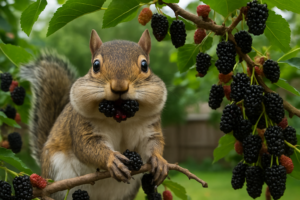
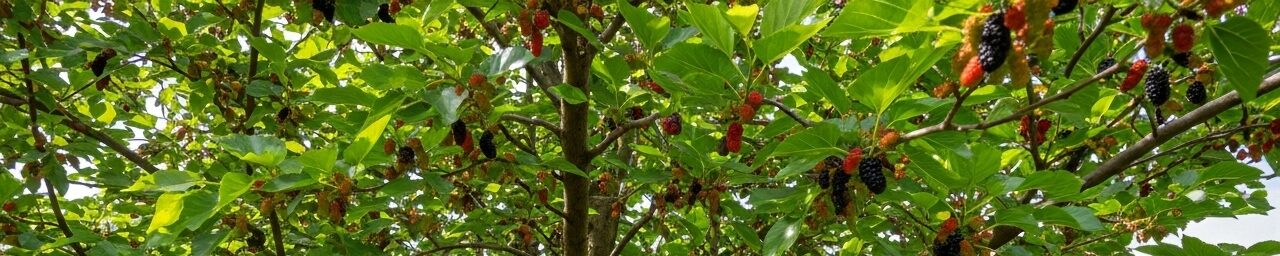
Mulberries don’t ripen all at once. Instead, they cascade over four to six weeks, with fresh ripe berries appearing constantly on different parts of the tree. This differs from blueberries, where netting for a few nights can protect the crop. Mulberry trees keep producing ripe fruit throughout the entire season, and birds quickly learn that a fruiting tree is a reliable food source. Once they’ve discovered the fruit, they’ll return multiple times a day. Managing bird pressure requires planning ahead—waiting to harvest “tomorrow when more are ready” often means finding that birds have already claimed the new ripening berries.
Which Birds Show Up First
Once I stopped treating the bird activity as a nuisance and started actually watching, I realized I had a front-row seat to some fascinating backyard wildlife. Here are the species that consistently show up at my trees:
The early scouts
- American Robins: These guys are always the first to show up. They treat mulberries like they’ve discovered hidden treasure, making multiple passes through the foliage in a single morning.
- European Starlings: They arrive in loud groups, completely unbothered by their reputation. They can strip a tree in what feels like minutes.
The committed regulars
- Cedar Waxwings: Sleek and coordinated, they’re among the most visually striking visitors. When they find a mulberry at peak ripeness, they work through it methodically at a breathtaking pace.
- Gray Catbirds: These birds seem borderline fanatical about mulberries! They work from dense branches, show up daily throughout the fruit cycle, and their cat-like meow makes them identifiable even before you see them.
- Northern Mockingbirds: Vocal and often combative over feeding territories, they’re devoted to defending their berry access.
The surprise visitors
- Baltimore Orioles: If you’re in eastern North America, these beauties are a sight to behold. The burnt-orange plumage against deep burgundy mulberries is one of the most striking combinations you’ll see in a backyard.
- Woodpeckers: Downy and red-bellied woodpeckers don’t usually prioritize fruit, but mulberries seem to break that pattern. Seeing them eat berries instead of suet is a delightful change!
- Thrushes: Brown thrashers, eastern towhees, and wood thrushes forage at ground level—they’ll eat fallen berries as readily as what’s on the branches.
Birds are naturally drawn to mulberry fruit. The key is ensuring that some of this bounty actually makes it to the harvest!
The Gear I Use for Bird Protection
Strategies That Actually Deliver Results
Two core approaches deliver real results: putting up barriers and using visual disruption. Your best shot comes from combining both. Here’s how each breaks down, based on what I’ve actually seen work.
Netting: Your Most Dependable Safeguard
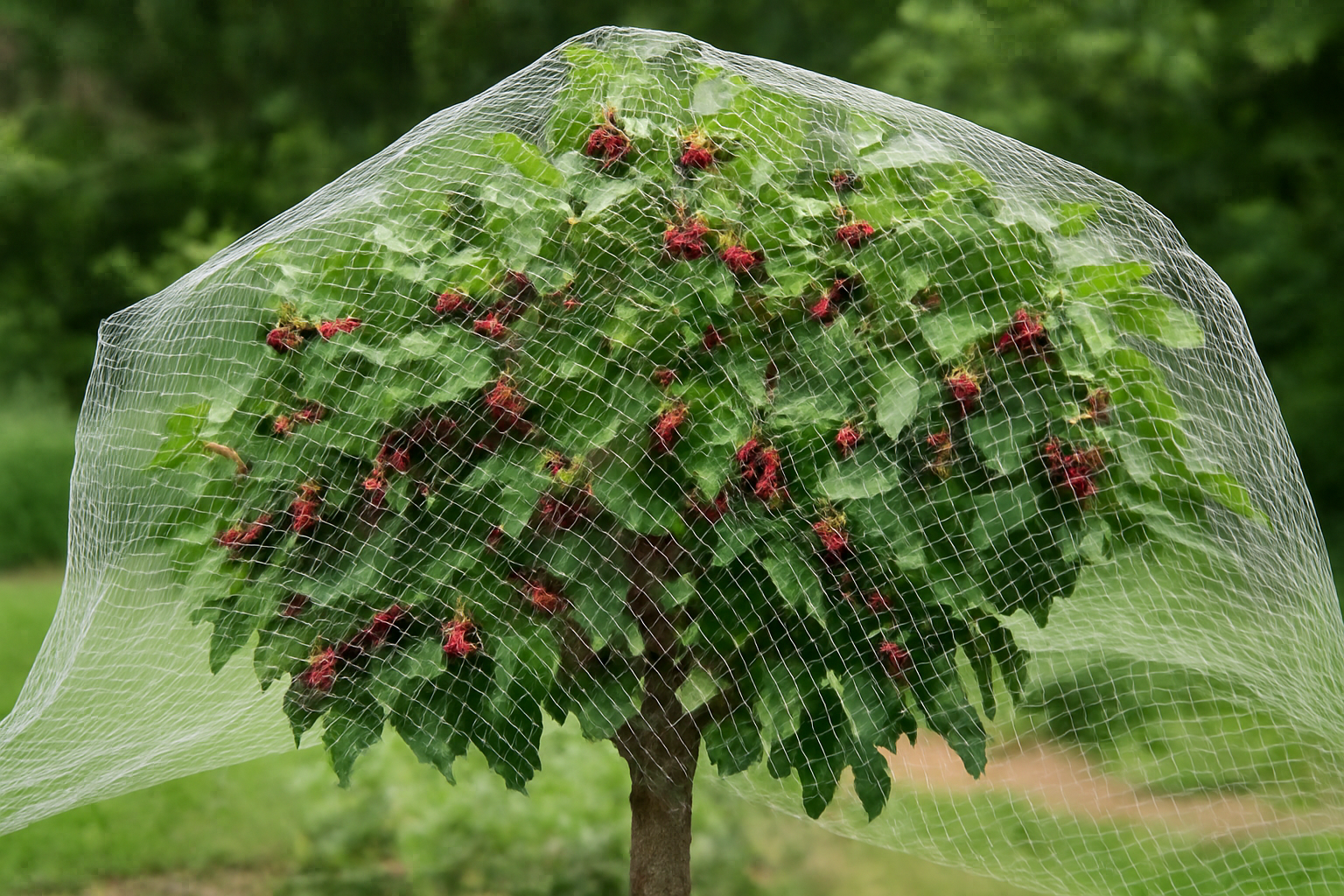
Let me tell you, netting consistently outperforms every other method I’ve tried. Getting it right means understanding which netting to buy and how to install it properly:
- Put netting in place while fruit is still immature. Waiting until berries start turning color means you’ve already missed the window. Lay it down while all the berries are still green.
- Fasten down all edges. Birds are resourceful. They’ll slip underneath loose edges or probe gaps along low-hanging branches. Staple the perimeter down or bundle edges securely.
- Keep mesh size at 1/2 inch or smaller. This prevents birds from pushing their heads through and getting caught while still allowing you to slip your hand through to harvest.
- Inspect morning and evening for trapped visitors. Even a carefully installed net occasionally catches a bird. Make it a habit of checking at dawn and dusk, and let any trapped birds out gently.
The Net That Actually Stays Put Through a Full Season
When your mulberry finally matures and those harvests arrive heavy with thick ripe clusters, birds move in fast. You’ve got roughly two weeks before they understand it’s an all-day buffet situation. Netting handles this job—but bargain-basement or undersized nets sag, tangle, and leave gaps that determined robins find within hours.
Where this net excels
- At 13×33 feet, it blankets a full-grown tree or handles two moderate ones without requiring you to splice panels together. It stays taut and stable through peak ripening without slumping into the canopy.
- The weave is tight enough that birds can’t peck their way through, yet open enough that you can thread your hands through to harvest without shredding the material.
- Stored carefully in a dry spot, it outlasts multiple seasons. I’m on year three with my original net, and it still holds firm without slipping at the edges.
What to watch for
- Getting it positioned right requires at least two hands and often an hour or more on a large tree. Trying solo, you’ll inevitably leave blind spots where birds slip underneath.
- Full removal becomes necessary when pruning or inspecting branches. If you pull it off after ripening has started, you’ll forfeit fruit while the net is down.
Bird netting protection works best when the bottom edge is secured tightly all the way around the perimeter—loose edges allow determined birds to work their way underneath. Sukh Garden Bird Netting (13x33ft)
PVC Frame: Solving Water Pooling and Branch Snags
The water-pooling frustration I faced during my first netting attempts pushed me to try something different. I constructed a basic frame using 3/4-inch PVC pipe and electrical conduit clamps, positioned to hold the netting several inches above the actual canopy instead of letting it drape directly onto the foliage.
Why the frame helps
- With netting suspended away from the branches, standing water stops accumulating entirely. Fruit never has to touch damp mesh during ripening—no more moisture-related rot or uneven maturation.
- The buffer zone between mesh and branches eliminates snagging during installation and removal. Setup time dropped from an hour of untangling to about twenty minutes once the frame was built.
- Harvesting becomes easier—you can open a section of the net without worrying about it collapsing onto branches when you reach in.
Trade-offs
- The frame is permanent infrastructure. If you move frequently or rent, this approach isn’t practical.
- Initial setup requires PVC, connectors, and a weekend of work. I spent about forty-five dollars on materials for a single tree.
I almost skipped the frame entirely after reading that most people just drape netting directly—but once I built it, the reduction in frustration during installation and removal made it worth the upfront effort. If you’ve got a mature tree you’re protecting every year, the frame pays for itself!
Shiny Tape and Reflective Methods
On their own, reflective and motion-based deterrents won’t stop birds that have already decided your tree is their primary food source. But used alongside netting, they genuinely reduce pressure—particularly early in the fruiting season before birds have fully committed.
I hang strips of reflective Mylar tape so they swing freely with any air movement. I also cycle through repositioning them every couple of weeks because birds acclimate to anything that stays in the same spot. I use these as an opening gambit while I’m getting netting ready, and leave some running through branches all year as added protection.
Making Your Mulberry More Bird-Friendly (Beyond the Fruit)
After a few seasons of watching the activity unfold, I realized something: if you’re willing to share some of the harvest, mulberry trees support more backyard wildlife than almost any other fruit tree you can grow. Here are some tips to extend those benefits:
- Leave fallen berries during fruiting. Species like thrushes depend on ground-level foraging. Tidying up during peak season works against what the birds need.
- Add a water source nearby. A low-profile birdbath in view of your mulberry gives visitors a spot to hydrate and extend their time in your yard.
- Position feeders away from the tree. Keep supplemental feeders ten to fifteen feet distant—right in the canopy creates territorial stress that drives away timid visitors.
- Go chemical-free. Birds eating from your mulberry also hunt insects there, and many are feeding nestlings. An untreated tree supports a richer ecosystem.
The Bottom Line
Protecting your mulberry harvest from birds isn’t complicated, but it does require acting early and committing to a real strategy. Netting installed before fruit ripens is your foundation. A PVC frame makes the whole process less painful over the long term. Reflective tape and companion tactics reduce pressure when used alongside, not instead of, barriers.
The mulberry that teaches you to protect your harvest is usually the one that starts teaching you about birds, about seasons, and about how your backyard fits into something larger. Make sure you get some of the fruit. Then let the rest of it go to the robins.
Frequently Asked Questions
What mesh size should I use for mulberry bird netting?
Keep the mesh at 1/2 inch or smaller. That size stops birds from pushing their heads through and getting caught, which is the outcome I most want to avoid, while still being open enough that I can slip my hand through the netting to pick berries without pulling the whole thing off the tree.
When should I put netting on my mulberry tree?
Put the netting up while the fruit is still immature and all the berries are green. Waiting until berries start turning color means you’ve already missed the window. I also fasten down every edge, since birds will slip underneath loose spots or probe gaps along low-hanging branches within hours.
What do I do if a bird gets trapped under my netting?
Let it out gently. Even a carefully installed net occasionally catches a bird, so I’ve made a habit of inspecting the netting at dawn and dusk, morning and evening, throughout the fruiting season. One year a cardinal worked its way under my bottom edge until I added landscape staples around the perimeter twice.
How much does a PVC netting frame cost to build?
I spent about forty-five dollars on materials for a single tree, using 3/4-inch PVC pipe and electrical conduit clamps, plus a weekend of work. The frame holds netting several inches above the canopy, which stopped water pooling and cut my setup time from an hour of untangling to about twenty minutes.
Keep Reading
About This Article
Written by Ruth Nakamura. Ruth Nakamura is a backyard orchardist in the Pacific Northwest who has grown mulberries for fifteen years, cultivating twelve different varieties in her own backyard. Not a horticulturist by formal training - she shares what she has learned through hands-on growing, workshops, and connecting with nurseries and growers across the country. More about this site.
Scope and limits. Ruth is a backyard orchardist without formal horticultural training. Growing conditions vary enormously by region, so confirm variety, timing, and pest guidance with your local extension service.
Verify this against a primary source
Specifics change, and your situation may differ from the one described here. These are the authorities worth checking directly:
- USDA Plant Hardiness Zone Map — zone verification for your location
- Oregon State University Extension — fruit growing and pruning research
- USDA PLANTS Database — species range and identification