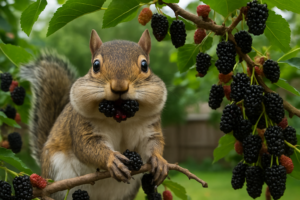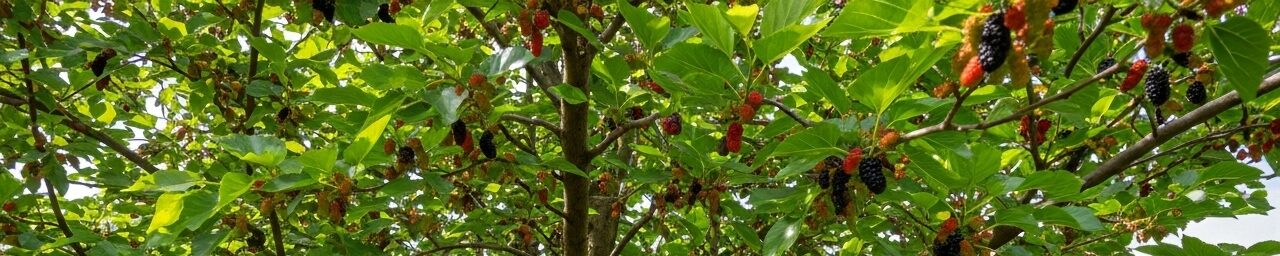
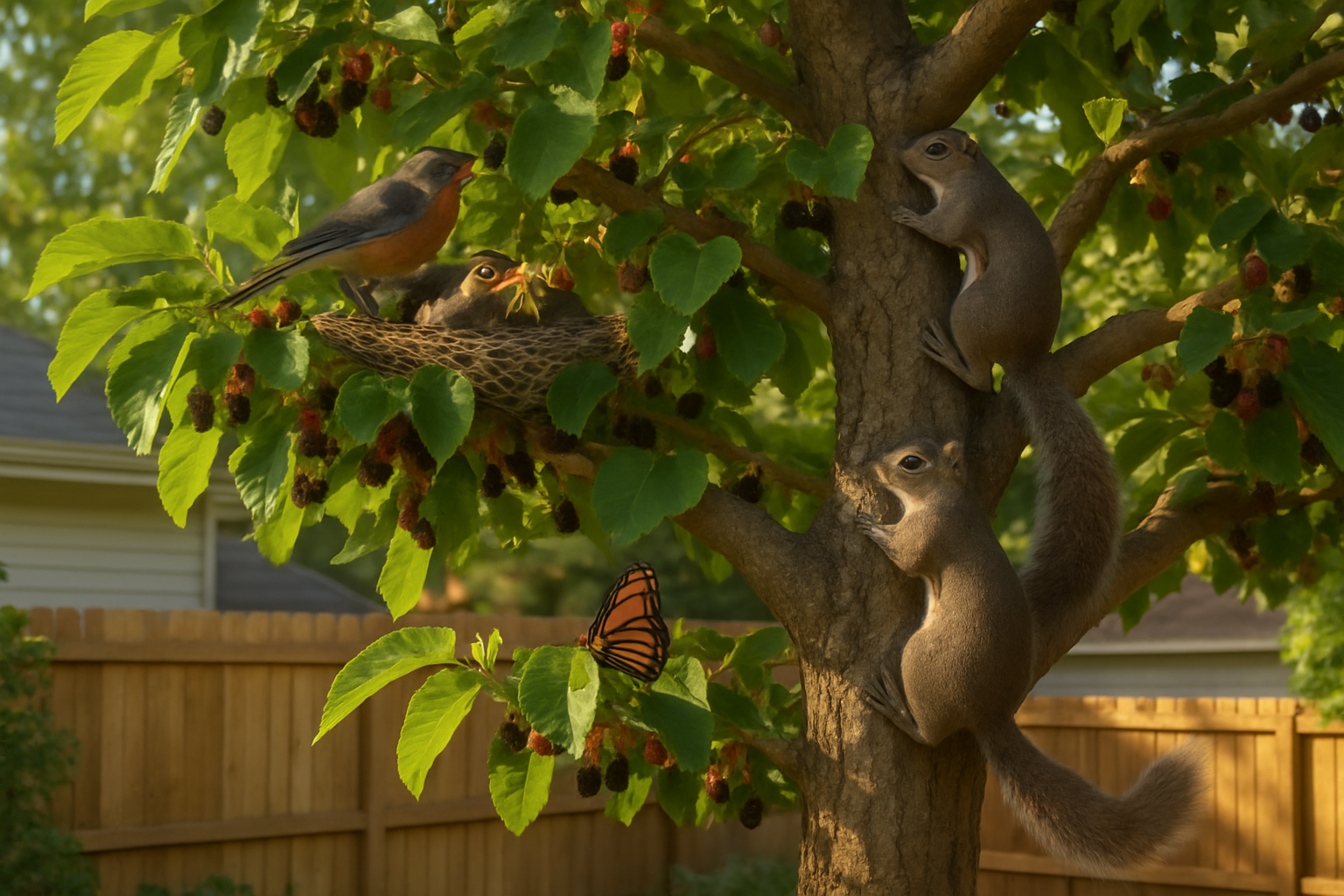
A mature mulberry tree becomes a focal point for wildlife. When growing mulberries for fermentation—wines, vinegars, lacto-fermented preserves that develop complexity beyond what jam can offer—the harvest often becomes shared with unexpected visitors. The fruit ends up serving as commons for a rotating roster of wildlife, from cedar waxwings that can demolish entire branches quickly, to nocturnal opossums and fox squirrels. Managing a productive mulberry harvest means learning to coexist with this ecological community and adjusting picking schedules accordingly. Different species present different challenges: some can be reasonably tolerated while others demand protective boundaries. Understanding what a mature mulberry genuinely attracts, which wildlife to accommodate and which to exclude, and how to reorganize harvest timing around the ecological assembly creates a garden that feels alive in unexpected ways.
My original plan was simple: plant mulberries for fresh fruit and create a shaded spot to read. Instead, I’d inadvertently constructed a destination for half the animals in a half-mile radius. After some friction involving a particularly stubborn raccoon, a possessive mockingbird, and a squirrel that defied all logic, I realized this wasn’t a mistake — it was an opportunity I’d overlooked.
How a Mulberry Tree Becomes a Wildlife Habitat (Whether You Plan It or Not)
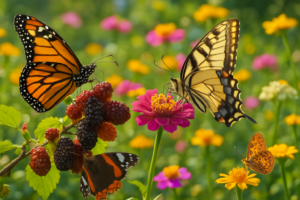
Nobody gives you the full story when you’re standing at the nursery looking at mulberry saplings. You’re not simply buying a tree — you’re installing a beacon that broadcasts “free food” to the entire local fauna. Mulberries rank among the highest-draw plants for wildlife in a backyard setting, and the mechanism is elegantly straightforward. They distribute their enormous fruit output across an extended window, sometimes six to eight weeks of ripening, creating a dependable buffet rather than a fleeting feast. Every bird, mammal, and insect within sensing distance learns this.
The architecture of a mature mulberry compounds this effect. My own red mulberry (Morus rubra), which I brought in eight years ago, spans a canopy roughly twenty feet across now. That volume of branching supplies genuine estate for nesting, daytime roosting, and — as I learned the hard way — raccoon accommodation. The thick summer leaves block sightlines for predators, the weathered bark harbors insects and lichen colonies, and even the berries landing on the ground sustain low-level visitors like towhees, robins, and the occasional opossum radiating supreme satisfaction.
Whenever someone asks what’s the quickest way to populate a garden with wildlife, my answer hasn’t shifted: install a mulberry tree, then brace yourself for what follows.
When a Raccoon Decides Your Tree is Home
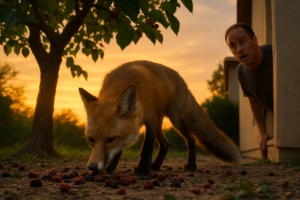
His name became Gerald. For approximately four days before I even registered his presence, he’d been establishing residency in my mulberry — a detail my neighbor Karen spotted long before I did. “Your raccoon is back,” she mentioned one afternoon across the fence, in that tone reserved for casual observations about garden fixtures. My raccoon. The phrase didn’t compute initially.
Danger wasn’t his thing. Gerald was pure pragmatist — he’d found a tree generating staggering amounts of ripe fruit, a branch fork shaped perfectly for lounging, and a homeowner visibly unconcerned with his presence. Three for three, in his assessment. He was right on each count.
The real tension materialized when Gerald’s occupation started antagonizing the mockingbird who’d claimed the upper canopy as his personal megaphone. Each morning became a scripted confrontation — swoops, shrieking, and a raccoon executing an extraordinarily slow, graceful withdrawal while being verbally assaulted from above. My reading area transformed into a nature documentary premiere I hadn’t auditioned for.
That’s when I actually invested time in reading about this. I discovered the core issue wasn’t eliminating wildlife — the thought unsettled me — but structuring the garden so separate species had distinct zones and resources. A handful of targeted changes transformed everything.
Building an Intentional Wildlife-Friendly Mulberry Garden
Shifting from passive observer to active participant unraveled the tension into genuine ecological beauty. These adjustments produced the most significant changes:
Establish Separate Nesting Zones for Birds
The mockingbird conflict quieted substantially once I mounted several nest boxes on fence posts and a nearby arch — deliberately positioned away from the mulberry to furnish smaller species with uncontested territory. Territory matters intensely to birds, and distributing habitat resources minimizes friction. Songbirds specifically gravitate toward boxes sited six to twelve feet above grade with an unobstructed flight path.
Install a Watering Station in Close Proximity
Positioning a shallow basin within roughly fifteen feet of the mulberry multiplied bird presence — birds lingered longer once they could accomplish both eating and drinking in one zone. Refresh the water every couple of days minimum to eliminate mosquito habitat and keep it fresh enough for consumption.
Allow Some Fruit to Decompose Where It Falls
My compulsive raking habit stemmed from worry about staining, but I’ve learned to tolerate leaving a section of dropped berries undisturbed for several days. Ground-level foragers — robins, thrushes, doves — depend on this resource. Keeping pathways navigable and accepting occasional fruit residue on boots became a reasonable compromise.
Build Habitat Layers With Native Plants Nearby
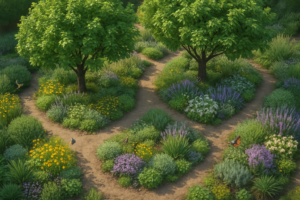
Inserting native shrubs and flowers in the space around and beneath the mulberry creates vertical diversity in habitat — insects multiply, which signals insect-hunting birds and draws them in. I introduced a section of coneflowers and wild bergamot at the mulberry’s base, and the species count roughly tripled within months.
Abandon Chemical Treatments Permanently
This is absolute. Every insect you see on your mulberry belongs to a food network that feeds birds and bats downstream. Eliminating those insects with spray chemicals breaks the whole chain. A genuine wildlife habitat around a mulberry means a pesticide-free garden full stop.
Books and References That Shaped My Understanding
Once Gerald proved to me that wildlife gardening was actually possible (and worthwhile), I dove into serious reading, and a few texts genuinely rewired how I approach the entire landscape. These deserve your attention:
- National Wildlife Federation: Attracting Birds, Butterflies, and Other Backyard Wildlife (Expanded Second Edition) — This is the book I wish I’d had before Gerald moved in. Seventeen practical projects, step-by-step instructions, and a genuinely accessible tone. It completely reframed how I think about my whole garden as a system.
- The New Gardening for Wildlife: A Guide for Nature Lovers — More comprehensive and plant-focused, this one helped me understand the layered habitat concept and how to choose companion plants that support the wildlife my mulberry was already attracting.
-
How One Book Reframed My Thinking About Habitat and Coexistence
When you’re managing a raccoon who’s sleeping in your tree and birds conducting dawn battles over airspace, you begin to grasp that wildlife requires actual systems — not hope or luck. This resource became my framework for treating the entire garden as layered, interconnected space rather than a series of discrete problems demanding isolation.
What clicked
- The stratification model — canopy tier, middle growth, forest floor — finally clarified why Gerald, the territorial mockingbirds, and the ground-feeding robins were battling over my single mulberry instead of naturally dividing it.
- The seventeen projects described are genuinely workable on a residential lot, not aspirational estate-garden fantasies; I actually constructed the specific birdhouse designs and they functioned.
- It recasts animals typically labeled as “pests” — raccoons, opossums particularly — as active contributors to the ecosystem rather than threats to eliminate, which fundamentally altered how I approach sharing my harvest.
What fell short
- Several plant selections carry region-specific implications without sufficient transparency about hardiness zones upfront, so cross-referencing multiple sections became necessary to identify what would thrive in my conditions.
- The untidy realities — decomposing berries, bird waste, expanding insect colonies — receive minimal treatment, meaning you’ll still need to personally work through those compromises.
For those new to wildlife gardening, National Wildlife Federation: Attracting Birds, Butterflies, and Other Backyard Wildlife (Expanded Second Edition) offers a structured approach—working through one project at a time rather than trying to absorb everything at once. The book’s seasonal framework helps transform a garden into functional habitat for both people and wildlife.
Frequently Asked Questions
How long does a mulberry’s fruit ripening window last?
My mulberries spread their fruit over an extended window, sometimes six to eight weeks of ripening, which is exactly why wildlife treats the tree as a dependable buffet rather than a fleeting feast. Every bird, mammal, and insect within sensing distance learns the schedule, so I plan my picking around that whole stretch instead of one big harvest day.
Should I let a raccoon sleep in my mulberry tree?
I let mine stay, and I named him Gerald. He was a pragmatist who found abundant ripe fruit, a branch fork shaped for lounging, and an unconcerned homeowner. The real friction came from the mockingbird claiming the upper canopy, not from the raccoon. Structuring the garden so species had separate zones and resources settled most of it.
How wide does a red mulberry canopy get in a backyard?
My red mulberry (Morus rubra), which I brought in eight years ago, now spans a canopy roughly twenty feet across. That volume of branching supplies real estate for nesting, daytime roosting, and raccoon accommodation. Thick summer leaves block predator sightlines, and the weathered bark harbors insects and lichen colonies that feed the birds.
Does planting flowers under a mulberry actually bring more wildlife?
Native plantings around mulberry trees can support habitat diversity. Adding coneflowers and wild bergamot at the tree’s base introduces layers of vegetation; native shrubs and flowers create vertical structure, insects proliferate, and insect-hunting birds follow. This layered approach outperforms leaving bare ground under the tree.
Keep Reading
About This Article
Written by Ruth Nakamura. Ruth Nakamura is a backyard orchardist in the Pacific Northwest who has grown mulberries for fifteen years, cultivating twelve different varieties in her own backyard. Not a horticulturist by formal training - she shares what she has learned through hands-on growing, workshops, and connecting with nurseries and growers across the country. More about this site.
Scope and limits. Ruth is a backyard orchardist without formal horticultural training. Growing conditions vary enormously by region, so confirm variety, timing, and pest guidance with your local extension service.
Verify this against a primary source
Specifics change, and your situation may differ from the one described here. These are the authorities worth checking directly:
- USDA Plant Hardiness Zone Map — zone verification for your location
- Oregon State University Extension — fruit growing and pruning research
- USDA PLANTS Database — species range and identification