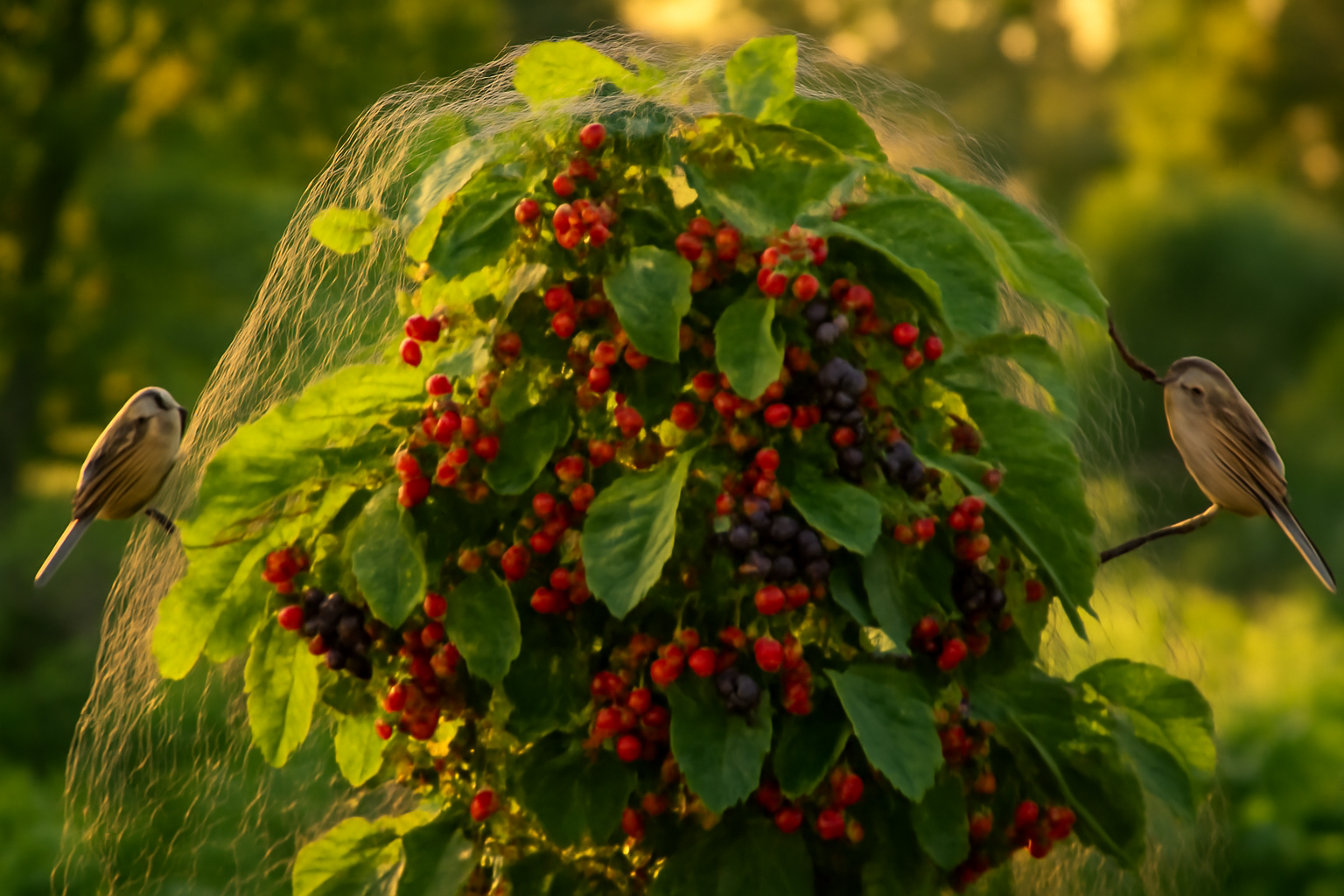
Last summer, I watched birds strip my mulberry tree bare in under three days. I’m not exaggerating. One morning I had a tree heavy with deep purple fruit. By Wednesday, the branches were picked clean. That loss pushed me to finally get serious about bird netting mulberry tree protection before this season started. I was not going to let that happen twice.
Mulberry trees are generous producers, but that generosity attracts every bird in the neighborhood. Robins, starlings, mockingbirds — they all know exactly when the fruit is at peak ripeness. Frankly, they often get there before I do. Protecting a mulberry harvest isn’t just a casual suggestion. It’s a genuine necessity if you want to actually eat the fruit you waited all year for.
After some research and a few conversations with other home growers, I decided to try the Bird Netting for Garden 13x33ft by Sukh. What followed was one of my most satisfying growing seasons yet — though the path there wasn’t completely smooth. Here’s exactly what happened.
Why I Chose the Sukh Bird Netting for Garden 13x33ft
Before buying anything, I spent a couple of evenings reading reviews on gardening forums and watching a few YouTube videos from other fruit tree growers. Several options kept coming up. Most people either praised or complained about the same few brands. I made a shortlist and started comparing.
My main concerns were straightforward. I needed something large enough to drape over my mulberry tree, which is about 12 feet tall and has a wide, spreading canopy. Size was non-negotiable. I also wanted a mesh fine enough to stop small birds, not just larger ones. Starlings and sparrows are small and clever. They will find gaps.
The Bird Netting for Garden 13x33ft – Sukh Garden Netting Mesh caught my attention for a few specific reasons. First, the dimensions were genuinely useful for a medium-sized tree. Second, reviewers consistently mentioned the mesh held up through multiple seasons without tearing easily. Third, the price point was reasonable compared to commercial-grade options that cost three or four times as much.
Honestly, I almost went with a cheaper option. There were nettings listed for half the price. But several reviewers of those cheaper products mentioned the mesh degraded quickly in UV exposure, leaving them buying replacements every year. Paying a bit more for durability made more financial sense over time.
First Impressions Out of the Box
When the package arrived, it was smaller than I expected. That’s pretty normal for netting — it compresses tightly into a bag. Opening it up, though, I could immediately feel the difference from flimsy netting I’d used years ago on smaller plants.
The mesh felt sturdy between my fingers. It wasn’t brittle or stiff. Instead, it had a slight give to it, which suggested it could handle snagging on branches without immediately tearing. The weave looked uniform across the whole piece. No obvious thin spots or loose threads that I could see.
The color is a dark green, which blends reasonably well with foliage. My tree doesn’t look like it’s been wrapped in a prison fence. From the street, it honestly isn’t that noticeable once the net settles over the canopy. That mattered to me. Aesthetics aren’t everything in a garden, but they’re not nothing either.
Unrolling the full 13×33 feet revealed one minor issue: the netting had quite a few tangles from being compressed in the bag. Untangling it alone took about fifteen minutes. Worth noting if you’re planning to install it quickly on a busy afternoon. Give yourself time for that step.
My Testing Protocol: How I Actually Used It
I installed the netting in late May, just as the first fruits were beginning to darken. Timing matters with mulberries. The birds seem to monitor the tree constantly. Once the fruit starts ripening, the window is short.
My installation process looked like this:
- Draped the netting over the central trunk first, then spread outward over the canopy
- Used garden stakes and zip ties around the base to close off the skirt of the netting at ground level
- Checked the perimeter daily for gaps where birds might push under
- Left a small access flap on one side so I could reach in for harvesting without removing the whole net
The tree stayed netted for about six weeks total. During that time, I harvested in three separate sessions, collecting fruit from the access flap I had left open. Closing it back up each time took only a minute or two. That routine worked well.
I did inspect the netting after every significant windstorm. We had a few gusty days in June. Each time, the net stayed in place with only minor repositioning needed around the base. Nothing dramatic.
A Moment of Doubt Mid-Season
About three weeks in, I noticed a mockingbird sitting directly on top of the netting. My stomach dropped. It was pecking persistently at the mesh, clearly trying to reach the fruit underneath. For a full day, I was convinced the netting was going to fail.
Fortunately, it didn’t. The mesh held firm. The bird eventually gave up and moved on. But that moment reminded me that no netting is completely passive. You do have to check in regularly and make sure there are no weak points being exploited. Bird persistence is real.
What Actually Changed: Honest Results
Here is the bottom line: I harvested significantly more mulberries this year than in any previous season. The difference was stark. Last year, I collected maybe a small bowlful before the birds cleaned everything out. This year, I harvested over eight pounds across three picking sessions. That is a meaningful, tangible result.
The netting worked as advertised for bird exclusion. Robins that usually dominated the tree were completely blocked out. Starlings didn’t manage to penetrate the mesh. Even the persistent mockingbird eventually moved to easier targets elsewhere in the yard.
Beyond birds, I also noticed fewer squirrel visits to the tree. Squirrels are agile climbers, but the netting around the lower canopy seemed to discourage casual foraging. They could still access higher branches, but the majority of my fruit is in the mid-canopy anyway, so losses were minimal.
The Bird Netting for Garden 13x33ft – Sukh Garden Netting Mesh for Garden Protection stayed structurally intact through the full six weeks. After removing it at the end of the season, I inspected the entire length. No tears. No major fraying. It folded back up cleanly and is now stored in my garden shed for next year.
The Downsides I Won’t Pretend Away
No product is perfect. This one has a few real limitations worth knowing before you buy.
Installation Takes Effort
Getting the netting over a 12-foot tree solo is genuinely awkward. Branches catch the mesh constantly as you’re pulling it up and over. Having a second person makes the job dramatically easier. If you’re working alone, budget extra time and expect some frustration.
The Tangling Issue
As I mentioned earlier, the netting comes out of the bag quite tangled. This is a common complaint across many netting products, so it isn’t unique to this brand. Still, it’s genuinely annoying. Spreading it across a flat lawn to untangle before installation helps significantly.
Not a Perfect Squirrel Solution
The product description mentions squirrel protection, and it does help. However, a determined squirrel on an unprotected upper branch can still access fruit there. If squirrels are your primary problem rather than birds, you may need additional deterrent strategies alongside the netting.
Size May Not Suit Very Large Trees
The 13x33ft dimensions worked well for my tree, which is a manageable home garden size. Larger, mature mulberry trees with wide canopies might need two pieces or a different sizing entirely. Measure carefully before purchasing.
Final Verdict: Bird Netting Mulberry Tree Protection Done Right
After one full season of use, I’m genuinely impressed with the results the Bird Netting for Garden 13x33ft – Sukh Garden Netting Mesh delivered. It solved the exact problem I bought it for. My mulberry harvest went from near-zero to genuinely abundant. The netting held up physically and remained reusable at the end of the season.
You should buy this if:
- You have a small to medium mulberry tree and birds are your main threat
- You want a reusable netting that lasts more than one season
- You’re willing to spend 30–45 minutes on proper installation
- You have someone who can help you drape it over the canopy
You should skip this if:
- Your mulberry tree is very large and would require multiple pieces
- Squirrels — not birds — are your dominant problem
- You want a completely hands-off solution that needs zero maintenance checks
For bird netting mulberry tree protection specifically, this product delivers real, measurable results. I’ll be using it again next season without hesitation. Check the current price on Amazon here.
This post contains affiliate links. As an Amazon Associate, I earn from qualifying purchases at no extra cost to you.
An Alternative Worth Considering
If the 13x33ft dimensions don’t quite fit your tree, the Ruolan Bird Netting for Garden 13X20Ft is a solid alternative. It’s a smaller piece, which suits compact trees or raised beds very well. The Ruolan netting uses a plastic trellis-style mesh that several growers report holds its shape nicely over a full season. The tradeoff is size — if your canopy needs full coverage, the shorter length may leave gaps. For smaller trees or targeted coverage of specific branches, though, it’s genuinely worth a look.
Ruolan Bird Netting for Garden 13X20Ft
I draped this over my mulberry and actually harvested fruit instead of watching birds take it all.
Check Price on Amazon →