Balancing a homestead where nothing goes to waste means my mulberry trees have shifted from decorative specimens into my workhorses — but only if I’m equipped to harvest them, process them, and get them preserved before that narrow window slams shut. What catches most growers off guard is that we’ve got company in our orchards. Foxes, raccoons, deer, birds, that one squirrel who’s somehow solved every puzzle I’ve set — they all keep their own harvest schedule, and unless I’m watching closely, the lower canopy will be stripped bare before my fermentation jars are even rinsed. I’ve watched a crop that should’ve filled my shelves disappear into the bellies of creatures I didn’t even realize were making nightly visits, and that wake-up call completely rewired how I approach picking season — from catching the fruit at the right moment to sorting my daily haul into ferments, canned goods, and dehydrator trays within hours of harvesting. If you’re serious about actually getting your mulberries instead of feeding the neighborhood fauna, here’s what I figured out through trial, error, and one very revealing photo from my neighbor.
The Great Mulberry Mystery (And My Very Wrong Conclusions)
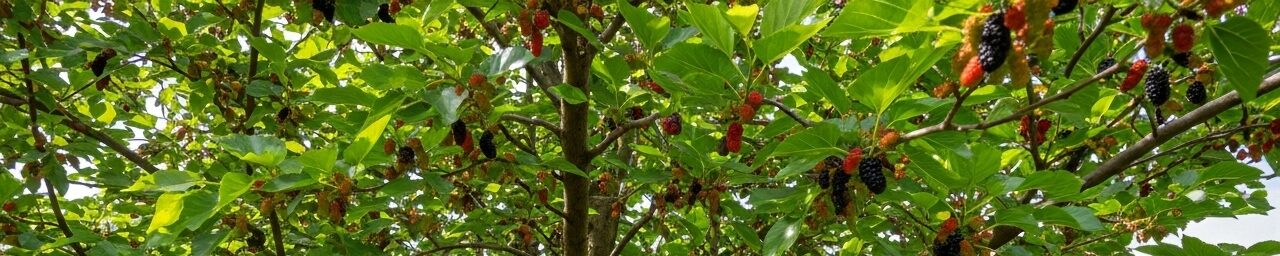
Picture this: late July, when an Illinois Everbearing is groaning under the weight of its crop — those dark purple berries hang thick on every reachable limb. Typical plans for a harvest like this include preserves, frozen smoothie packs, and a crisp. Yet anyone watching a productive mulberry tree will notice something troubling: the lower branches get progressively more barren with each passing day, well before the fruit can be harvested.
Birds, I figured. Had to be birds — robins, cedar waxwings, something with wings and a sweet tooth. I’d read all about them right here on this site. So I rigged up a homemade deterrent (aluminum pie plate tied to a branch, très rustic), and patted myself on the back for being resourceful. The berries vanished anyway. I added a second pie plate. Then a third. I started waking at 5:15 a.m., determined to catch the culprits mid-snack. All I found were bewildered squirrels and a sad, nearly empty tree.
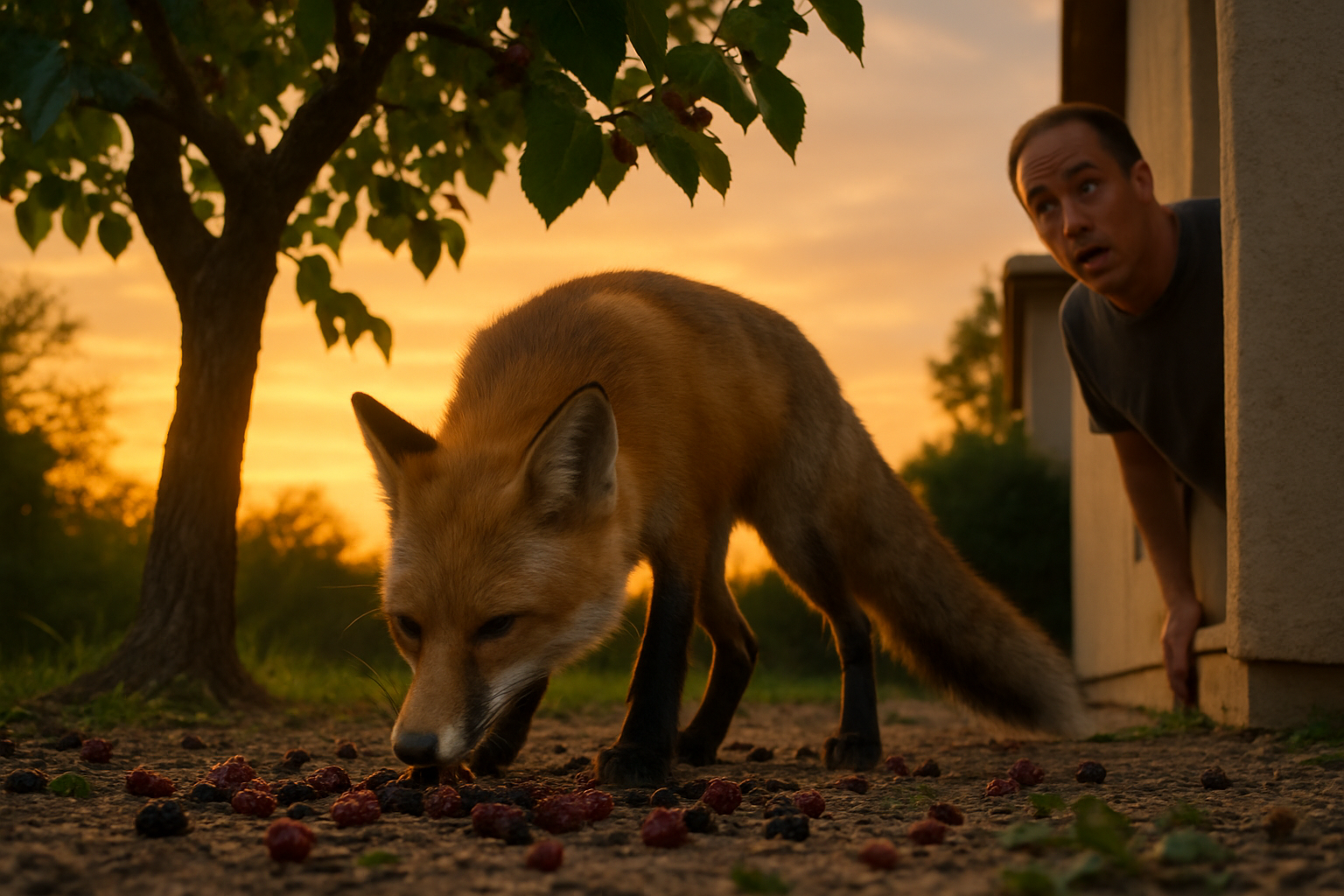
The breakthrough came through my neighbor’s text — a sunset photo snapped from her kitchen window that changed everything. In the frame sat the real thief: a stunning red fox, perched beneath my mulberry branches like he owned them, methodically picking berries off with the casual confidence of someone who’d figured out the lunch menu. Her text read: “Your bird situation has four legs and a magnificent tail.” I stared at that image for longer than I’d care to admit.
Which Animals Actually Raid Mulberry Trees (And It’s More Than You’d Think)
Mulberries are a highly attractive food source for wildlife. The fruit ripens gradually across weeks, drops constantly, and has enough natural sweetness to appeal to basically every creature within range. A mulberry planting effectively becomes a self-service buffet for local fauna, drawing visitors far more reliably than most ornamental plants.
The lineup of regular visitors goes way beyond your typical bird suspects:
- Foxes and coyotes — they’ll eat fruit when it’s abundant and easy, and mulberries check both boxes.
- Raccoons — climbers with serious dexterity who work through a tree with the efficiency of a professional thief.
- Opossums — the quiet ones, usually ghosting in after dark for dropped fruit underneath.
- White-tailed deer — depending on where you live, they’ll browse low branches and mop up every fallen berry.
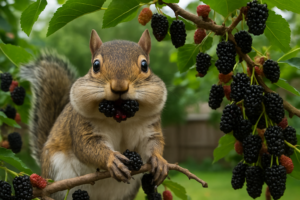
- Squirrels and chipmunks — obvious suspects who absolutely deliver on the crime.
- Wild turkeys — you’d be surprised how common they are in some areas, and they’re thorough about cleanup.
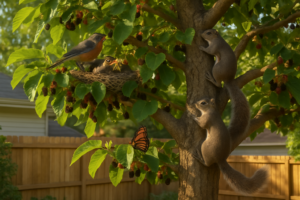
The evidence at your tree tells its own story. High canopy losses point to birds or squirrels working overhead. Low branches that are cleaned out overnight plus visible ground disturbance? That’s your raccoon, opossum, or — I can now testify — an elegant fox with good taste in fruit.
Choosing Your Strategy: Defend Your Harvest or Coexist?
After I got over the initial shock, I had to sit down and decide: was I going to fortify my tree like a medieval castle, or accept that I was now managing a wildlife garden? The honest answer turned out to be both — a hybrid approach that’s worked far better than choosing one extreme.
To Maximize Your Own Harvest
- Pick in waves rather than waiting for a perfect moment. As berries darken, grab them — don’t hold out for total ripeness across the whole canopy.
- Netting the lower third is worth the effort. A full-tree wrap is a nightmare on mature trees, but protecting the most accessible branches actually works.
- Lay cloth down and gently shake branches to get a fast bulk harvest. You can get a lot of ripe fruit in one go before nocturnal foragers show up.
- Motion-sensor lights or automated sprinklers deter the nighttime crowd. Raccoons and foxes prefer their meals uninterrupted.
To Welcome Wildlife While Still Getting Fruit
- Plant a second or third tree if you have the space. Abundance means plenty for your kitchen and plenty for the wildlife.
- Let fallen berries accumulate in one designated zone. Ground-feeding animals will concentrate there instead of climbing for hanging fruit.
- Mount a wildlife camera and observe who’s visiting. This step can reveal surprising patterns in yard use and wildlife activity.
What a Trail Camera Taught Me About My Actual Harvest Thieves
Speculation only gets you so far. You can theorize endlessly about which nocturnal visitor or daytime raider is doing the real damage, but without footage you’re just guessing and hoping your fixes happen to work.
What the footage showed me
- Documented two separate foxes plus a brazen raccoon on both day and night recordings — totally different from my bird-only assumption, which changed my whole approach.
- Battery endurance held steady across the entire 3-week ripening window despite hundreds of motion-triggered clips during peak harvest time.
- The 2K image quality let me spot actual damage patterns as they happened and pivot my netting placement and picking schedule based on real behavior rather than guesswork.
What didn’t perform as expected
- The bracket holding mechanism gets unreliable when wet — had to reinforce mine with weatherproof sealant after moisture loosened it partway through the season.
- SD card storage fills faster than promised when wildlife activity is constant; daily review clips burn through space quickly.
I almost returned mine after the first heavy rain shifted the angle and I missed two days of footage, but once I reinforced the mount, it became the single best investment I’ve made for understanding what actually happens to my harvest. Get a GardePro E5S Trail Camera and stop guessing.
Frequently Asked Questions
Do aluminum pie plates stop animals from eating mulberries?
They did nothing for me. I tied an aluminum pie plate to a branch, then added a second and a third, and the berries kept disappearing anyway. My thief turned out to be a red fox working the lower branches, not birds, so a shiny deterrent aimed at wings was never going to solve it.
Should I net my whole mulberry tree or just part of it?
I only net the lower third. A full-tree wrap is a nightmare on mature trees, but protecting the most accessible branches actually works, since that is where raccoons, opossums, deer and foxes feed. I pair netting with picking in waves, grabbing berries as they darken instead of holding out for total ripeness across the canopy.
What is the fastest way to harvest a lot of mulberries at once?
Lay cloth down under the tree and gently shake the branches. That gets me a lot of ripe fruit in one go, before the nocturnal foragers show up. I then sort the day’s haul into ferments, canned goods and dehydrator trays within hours of harvesting, because that narrow window slams shut fast.
How long did the trail camera battery last during mulberry season?
Mine held steady across the entire 3-week ripening window, even with hundreds of motion-triggered clips during peak harvest time. Storage was the real limit, since the SD card fills faster than promised when wildlife activity is constant. The bracket also got unreliable when wet, so I reinforced mine with weatherproof sealant.
Keep Reading
About This Article

Written by Ruth Nakamura. Ruth Nakamura is a backyard orchardist in the Pacific Northwest who has grown mulberries for fifteen years, cultivating twelve different varieties in her own backyard. Not a horticulturist by formal training - she shares what she has learned through hands-on growing, workshops, and connecting with nurseries and growers across the country. More about this site.
Scope and limits. Ruth is a backyard orchardist without formal horticultural training. Growing conditions vary enormously by region, so confirm variety, timing, and pest guidance with your local extension service.
Verify this against a primary source
Specifics change, and your situation may differ from the one described here. These are the authorities worth checking directly:
- USDA Plant Hardiness Zone Map — zone verification for your location
- Oregon State University Extension — fruit growing and pruning research
- USDA PLANTS Database — species range and identification