Most nursery care tags tell you how tall a mulberry grows and when to water it — but they skip over something crucial: how soil and siting choices made at planting time affect not just your harvest but how effectively that tree becomes a wildlife corridor anchor. Both native Morus species and named cultivars function as ecological infrastructure when layered with native plants around them. Building this intentionally turns a yard into a measurable habitat network rather than just growing a single tree that happens to attract birds.
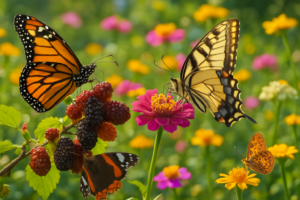
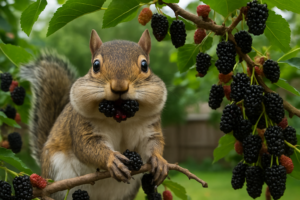
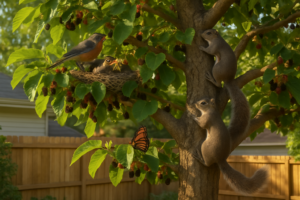
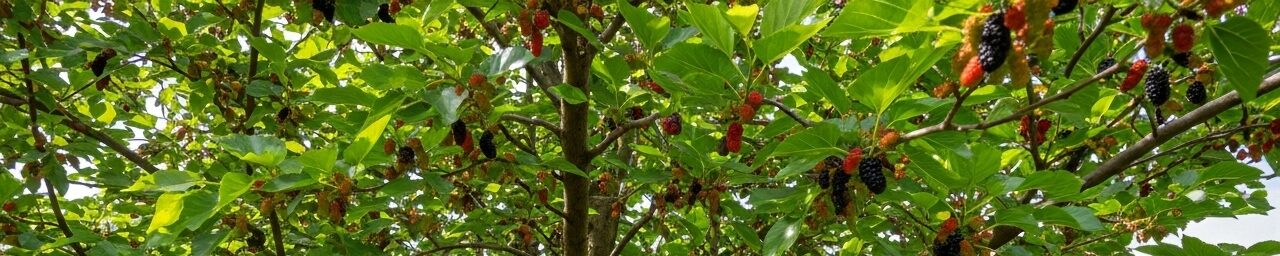
Illinois Everbearing mulberries are known for their ability to draw wildlife quickly. Mulberry trees attract a diverse range of animals: birds congregate in the canopy, butterflies work the air, squirrels commute through the branches, and felines often treat mulberry sites as hunting grounds. Planting one against a fence line can transform a yard into an active wildlife thoroughfare.
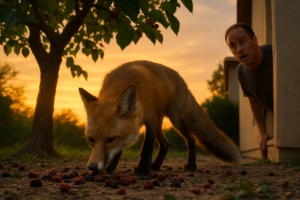
One afternoon, Mr. Wrinkles emerged from beneath that mulberry looking like he’d lost a fight with a bottle of wine. Purple-red stained his white fur. He was unsteady on his feet, moving with the careful deliberation of something that had made some poor life choices. I panicked. I searched “mulberry toxicity cats” on my phone with shaking hands, called Janet next door in a near-frenzy, and spent the next twenty minutes explaining that no, I had not poisoned her cat. Turns out mulberries carry no toxins for felines. Mr. Wrinkles had simply gorged himself on ripe fruit and was dealing with the very natural consequences. He recovered fine. My embarrassment lingered considerably longer.
But that ridiculous incident stuck with me for a real reason. My single tree had already begun operating as a wildlife hub without any deliberate design on my part. The question that followed was obvious: what happens if you do this strategically?
Why Your Yard Needs a Wildlife Corridor (And Why Mulberries Are the Secret Weapon)
At its core, a wildlife corridor functions as a linked series of habitats — a network that lets birds, insects, and smaller creatures navigate through divided landscapes without exposure or dead ends. Your suburban property can host a scaled-down version of this same concept. And mulberries happen to be among the strongest anchor species available to you. The fruit doesn’t all ripen at once; instead it cycles through over six to eight weeks, which keeps wildlife resources flowing across different seasons and migration windows instead of flooding the landscape with a single harvest glut and then offering nothing.
Another advantage: mulberries begin fruiting remarkably fast — often two or three years from planting — compared to how long many native fruit trees take to contribute. Their canopy grows thickly, giving nesting birds shelter and cover. Their limbs create landing pads. Their dropped fruit feeds everything from ground-dwelling birds to small mammals. You’re essentially building a multi-story ecosystem in a single tree.
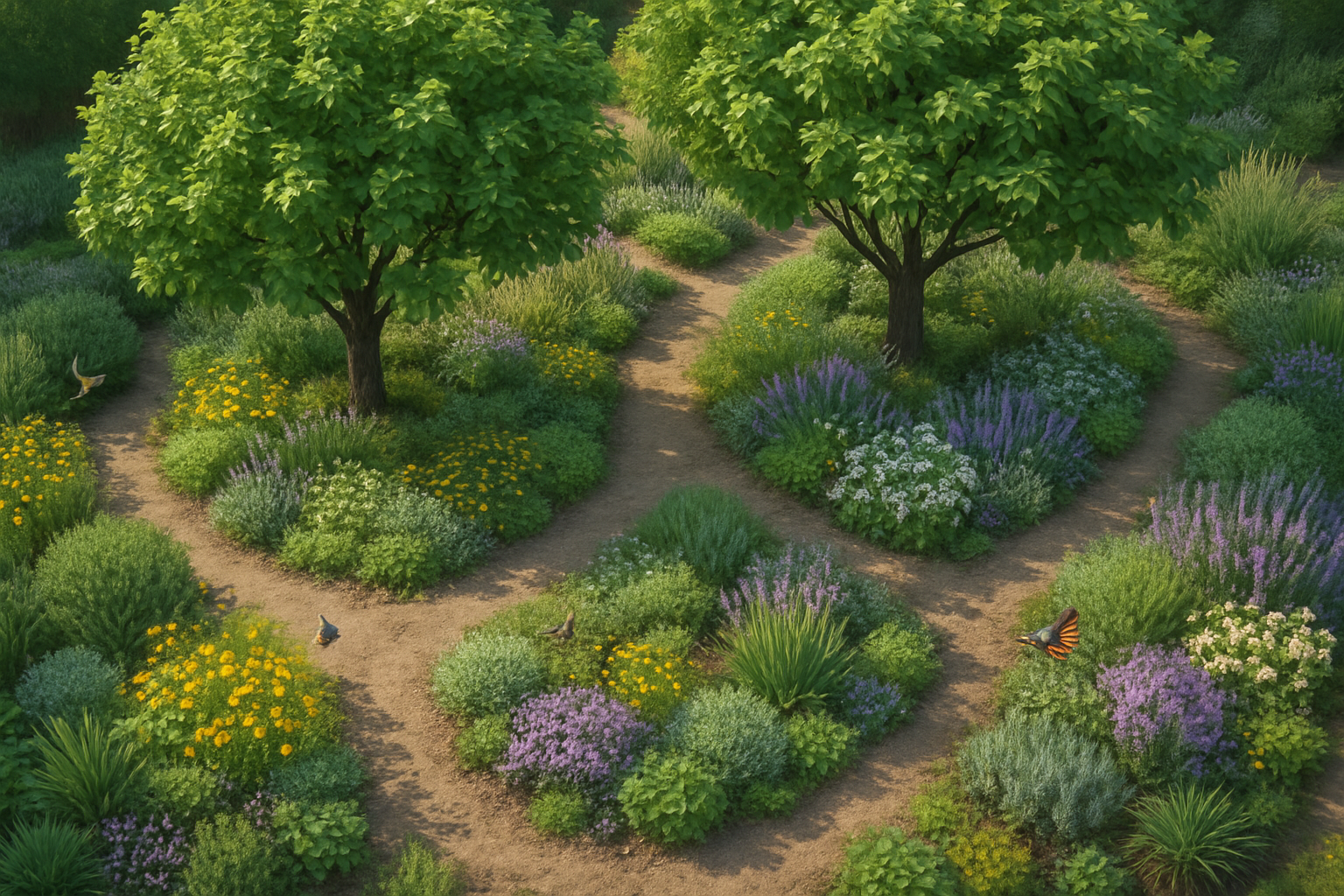
True corridors, though, demand more than just one anchor species. A solo tree becomes a destination point. For an actual corridor to function, you need vegetation at different vertical levels — the tall canopy layer, the mid-story shrubs, the ground-level cover — all woven together to link your mulberry into the broader surrounding habitat.
Designing Your Mulberry-Based Wildlife Corridor: Layering Plants for Movement and Shelter
Begin by Positioning Your Mulberry Anchor
Give your mulberry genuine breathing room during planting — these trees often exceed 30 feet as they mature, and they need distance from buildings, fences, and hardscaping. If your space runs tight, the Dwarf Everbearing Mulberry stays under 6 to 10 feet and thrives in containers or constrained areas. Locate it toward your property’s back or side boundary — this creates a natural transition zone, a soft edge where managed landscape shifts toward open habitat that benefits the wider neighborhood.
Build Your Mid-Canopy with Native Shrubs
Plant native shrubs like serviceberry, elderberry, and regional viburnums alongside your mulberry as intermediate-height partners. These species stack wildlife value by filling a vertical niche your tree’s canopy alone doesn’t occupy. Arrange them in loose, informal clusters rather than straight lines or rigid spacing — the messier, more naturalistic arrangement is what wildlife actually navigates and uses, regardless of what neighborhood aesthetics prefer.
Establishing Ground Cover Under Mulberry Shade: Native Seed Mixes for Wildlife Forage
Mulberries throw deep shade and shed fruit relentlessly throughout the season, making it genuinely difficult to get diverse native ground cover established underneath. The bare patches that result don’t feed ground-foraging birds or support pollinator habitat. A purpose-built native seed mix — one formulated for shade adaptation and wildlife forage — lets you fill those gaps faster than trying to fight the tree’s ecological dominance alone.
The advantages
- Species selected for shade tolerance actually germinate beneath my mulberry instead of stretching thin and failing the way generic wildflower packets inevitably do.
- Included species that flower in autumn extend the seed-bearing period well into late fall, supplying finches and sparrows with consistent foraging through the end of November.
- By year two the ground layer fills in completely — I stopped seeing bare earth at the drip line and the weeds never came back, creating genuine habitat where there was just dirt before.
The drawbacks
- First-year germination underwhelms compared to what the packaging implies — solid coverage only materializes in year two, so expecting instant results sets you up for disappointment.
- The seed count printed on the packet looks generous until you actually spread it; real coverage comes out thinner than advertising suggests, and you’ll likely need a second packet for any area larger than a compact understory zone.
I nearly gave up after that first sparse year and almost replanted with aggressive perennials, but holding off made all the difference. Try the Hale Habitat & Seed Native Grass & Wildflower Refuge, Wildlife & Pollinator Seed Mix if you’re in a region where it’s matched to your growing zone.
Frequently Asked Questions
Are mulberries toxic to cats that eat the fallen fruit?
Mulberries carry no toxins for felines, as I learned the hard way when my neighbor’s cat, Mr. Wrinkles, staggered out from under my Illinois Everbearing stained purple-red and unsteady. He had simply gorged himself on ripe fruit and was dealing with the natural consequences. He recovered fine; my embarrassment lasted considerably longer.
How soon does a new mulberry tree start feeding wildlife?
Mulberries begin fruiting remarkably fast, often two or three years from planting, which is quick compared to how long many native fruit trees take to contribute. The fruit also doesn’t ripen all at once; it cycles over six to eight weeks, so wildlife resources keep flowing across different seasons and migration windows instead of arriving as one glut.
What mulberry works for a small yard wildlife planting?
The Dwarf Everbearing Mulberry stays under 6 to 10 feet and thrives in containers or constrained areas, making it workable where space runs tight. Full-size mulberries often exceed 30 feet as they mature and need real distance from buildings, fences, and hardscaping, so they should be given genuine breathing room at planting time.
Why won’t native ground cover grow under my mulberry tree?
Mulberries throw deep shade and shed fruit relentlessly all season, which makes diverse native ground cover genuinely difficult to establish underneath. The resulting bare patches feed no ground-foraging birds and support no pollinators. A seed mix formulated for shade adaptation and wildlife forage fills those gaps faster than generic wildflower packets, which stretch thin and fail beneath my tree.
Keep Reading
About This Article
Written by Ruth Nakamura. Ruth Nakamura is a backyard orchardist in the Pacific Northwest who has grown mulberries for fifteen years, cultivating twelve different varieties in her own backyard. Not a horticulturist by formal training - she shares what she has learned through hands-on growing, workshops, and connecting with nurseries and growers across the country. More about this site.
Scope and limits. Ruth is a backyard orchardist without formal horticultural training. Growing conditions vary enormously by region, so confirm variety, timing, and pest guidance with your local extension service.
Verify this against a primary source
Specifics change, and your situation may differ from the one described here. These are the authorities worth checking directly:
- USDA Plant Hardiness Zone Map — zone verification for your location
- Oregon State University Extension — fruit growing and pruning research
- USDA PLANTS Database — species range and identification