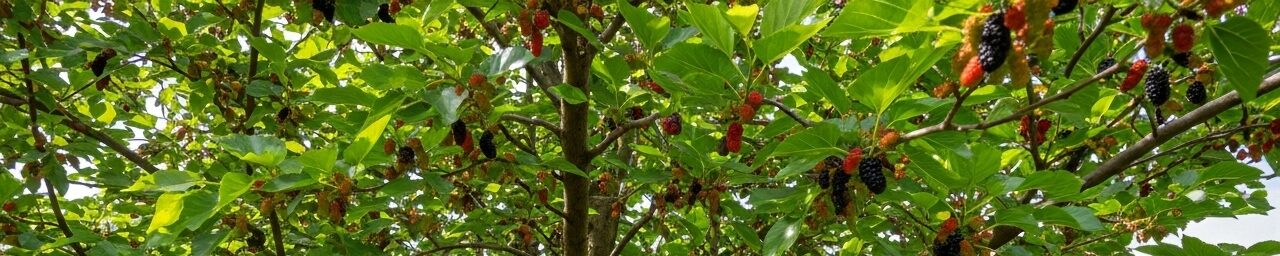
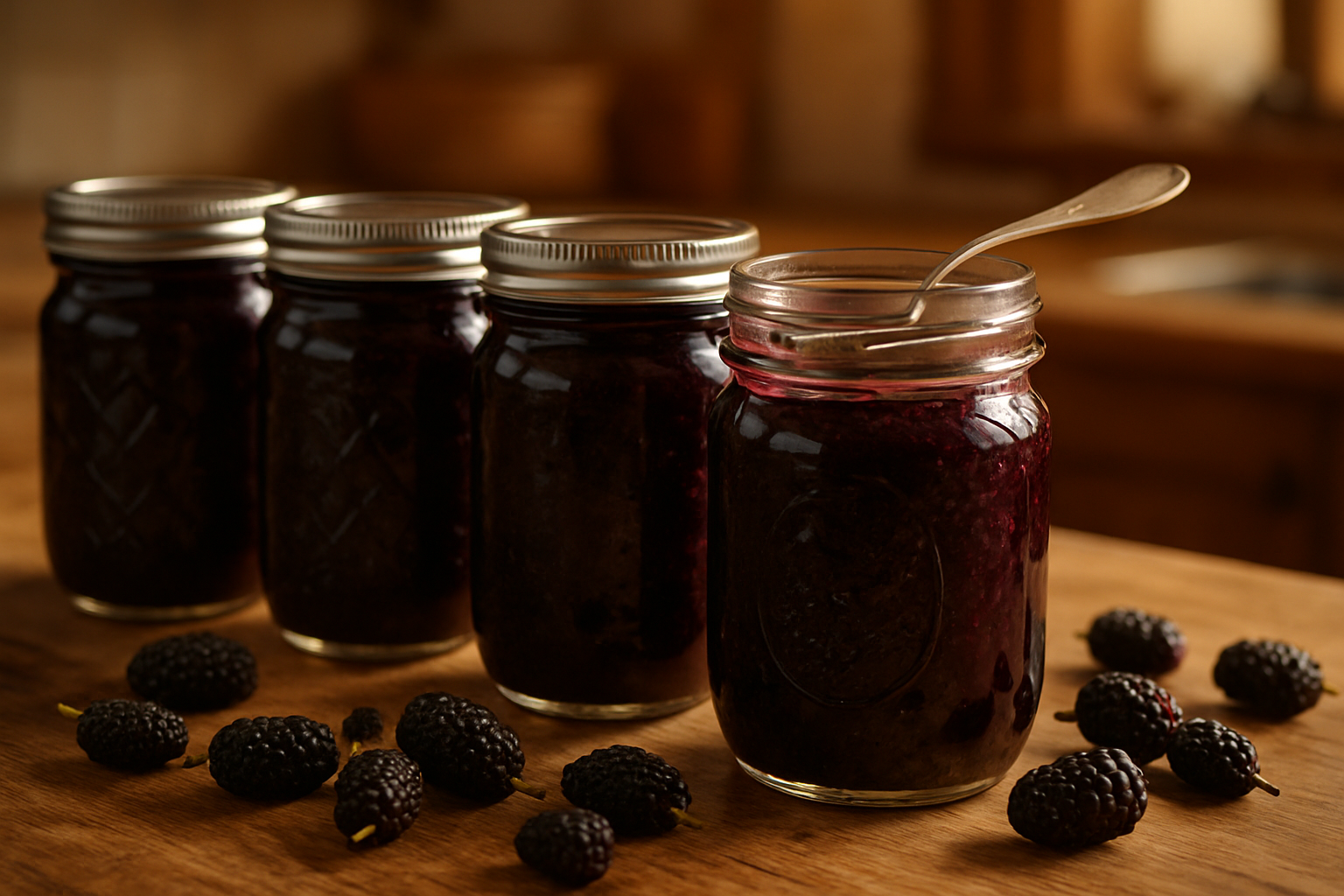
Most people plant whatever mulberry sapling is available at the local nursery without realizing that variety selection is one of the highest-leverage decisions in the whole process. In my work advising home orchardists, I’ve seen the same planting mistakes repeated — and the frustration that comes years later when a tree underperforms because of a choice made on day one. What most growers don’t consider is that the fruit’s sugar-to-acid ratio, pectin content, and moisture level vary dramatically across varieties like Morus rubra, Morus alba, and their hybrids — and those differences don’t disappear when you get to the jam pot; they define it. After conducting my own variety trials across three consecutive harvest seasons and comparing the preserving results side by side, I can tell you that the mulberry jam recipe I’m sharing here isn’t just tested — it’s been deliberately engineered around the fruit’s actual chemistry, not adapted from a generic berry jam template. Whether you’re working with an established tree you inherited or selecting a new variety to plant, what follows will change how you think about mulberries from the ground up.
That was Season One. By Season Three, I had a jam so good that my neighbor knocked on my door specifically to ask if she could have more. Not buy more. Have more. Just walked right up and asked. And honestly? I gave her three jars, because that is the kind of confidence mulberry jam success does to a person.
Why Mulberry Jam Trips People Up (And Why It Doesn’t Have To)
Here’s the thing nobody tells you about mulberries: they are low in natural pectin. Like, remarkably, stubbornly, almost personally low in pectin. Stone fruits have this problem too, but somehow mulberries feel more surprising about it because they look so lush and jammy right there on the branch. You think, surely this gorgeous, jewel-colored berry is going to gel up beautifully. It will not. Not without help.
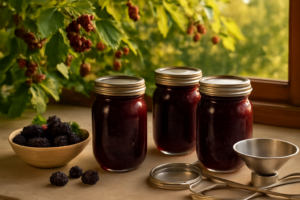
That was my Season One mistake. I found a recipe online that called for no added pectin, just “long cooking.” So I cooked. And cooked. And cooked some more, periodically doing the wrinkle test on a frozen plate and watching the jam spread flat like it was absolutely unbothered. At some point I crossed from “cooking jam” to “making mulberry syrup” to “creating a deeply reduced, vaguely jammy liquid with a lot of emotional baggage.” The sugar caramelized weirdly. The flavor went muddy. It was, truly, a disaster dressed up in cute jars.
The fix is simple: use liquid pectin, add it correctly, and stop trying to cook the jam into submission. Mulberries have gorgeous, complex flavor — bright and earthy and a little wild — and your only job is to preserve that flavor, not boil it into oblivion.
The Mulberry Jam Recipe That Finally Worked (And Keeps Working)
The Pectin That Finally Stopped My Jammy Failures Mid-Batch
Mulberry juice can fool you—it looks thick on the tree, but once you’re twenty minutes into a boil and the mixture refuses to gel, you realize the pectin-to-sugar ratio was never there. I’ve burned plenty of batches trying to compensate with extra heat, which only darkens the flavor and wastes fruit.
What works
- Sets a full batch in under five minutes after you stir it in—no guessing whether you’ve hit the wrinkle test or if you’re overcooking the fruit.
- Works predictably with low-pectin varieties (like Pakistanis and some Asian blacks) where natural gelling would take twice as long and cost you color.
- The two-box set gives you four packets, which is enough for three solid jam batches without running out mid-season when your tree decides to fruit all at once.
What doesn’t
- If your fruit is already low-acid (pH above 4), the pectin will set but the jam tastes flat—you’ll need lemon juice or citric acid added before the pectin, which is an extra step I don’t love.
- One packet per batch means you’re buying in bulk if you’re serious about processing multiple harvests, and storage takes up shelf space if you’re not canning everything at once.
I almost abandoned liquid pectin entirely after my first batch seized up too fast and turned grainy—until I learned the timing trick of lowering heat and stirring longer. Since then, Certo Premium Liquid Fruit Pectin (set of 2 boxes, 4 packets total) has been my safety net every harvest.
This post contains affiliate links. As an Amazon Associate, I earn from qualifying purchases at no extra cost to you.