From an ecological standpoint, mulberries are one of the most valuable trees you can add to a residential landscape. I cover them in every wildlife gardening workshop I teach — not because they’re low-maintenance (they require real attention) but because the return on investment for local wildlife populations is genuinely exceptional. What I’ve found through years of conducting variety trials in our county extension demonstration orchard, though, is that the single factor growers most consistently underestimate isn’t pruning, or irrigation, or even variety selection — it’s soil, and specifically the way mulberries interact with soil in ways that differ meaningfully from most fruiting trees. Get the soil wrong and you’ll end up with a tree that survives but never really performs: stunted fruiting, weak branch structure, and a root system that makes the tree vulnerable to the kind of opportunistic fungal problems that are genuinely difficult to reverse. In this guide I’m going to walk you through exactly what the science — and my own direct trial data — tells us about mulberry tree soil requirements, so you can make informed decisions at planting time rather than expensive corrections three seasons in.
The good news? Mulberry trees are genuinely forgiving once you understand what they actually want. And once I figured out where I went wrong — and fixed it — my tree bounced back beautifully. Let me save you from my particular flavor of gardening disaster.
Understanding Mulberry Tree Soil Requirements: The Basics First
Here’s the thing about mulberry trees that makes them so appealing: they’re considered adaptable, drought-tolerant, and tough. All of that is true. But “tough” doesn’t mean “will happily survive in concrete-adjacent clay.” There’s a difference between a tree that can tolerate lean conditions and one that will actually thrive and produce those gorgeous, juicy berries you planted it for in the first place.
Mulberries prefer loamy, well-draining soil with a pH that sits comfortably between 5.5 and 7.0. They like slightly acidic to neutral ground — nothing extreme in either direction. The single most important word in that sentence, though, is well-draining. Mulberry trees absolutely hate having their roots sitting in waterlogged soil. That’s what my gift of free fill dirt was doing: trapping moisture around the roots and slowly suffocating them. Free dirt, expensive lesson.
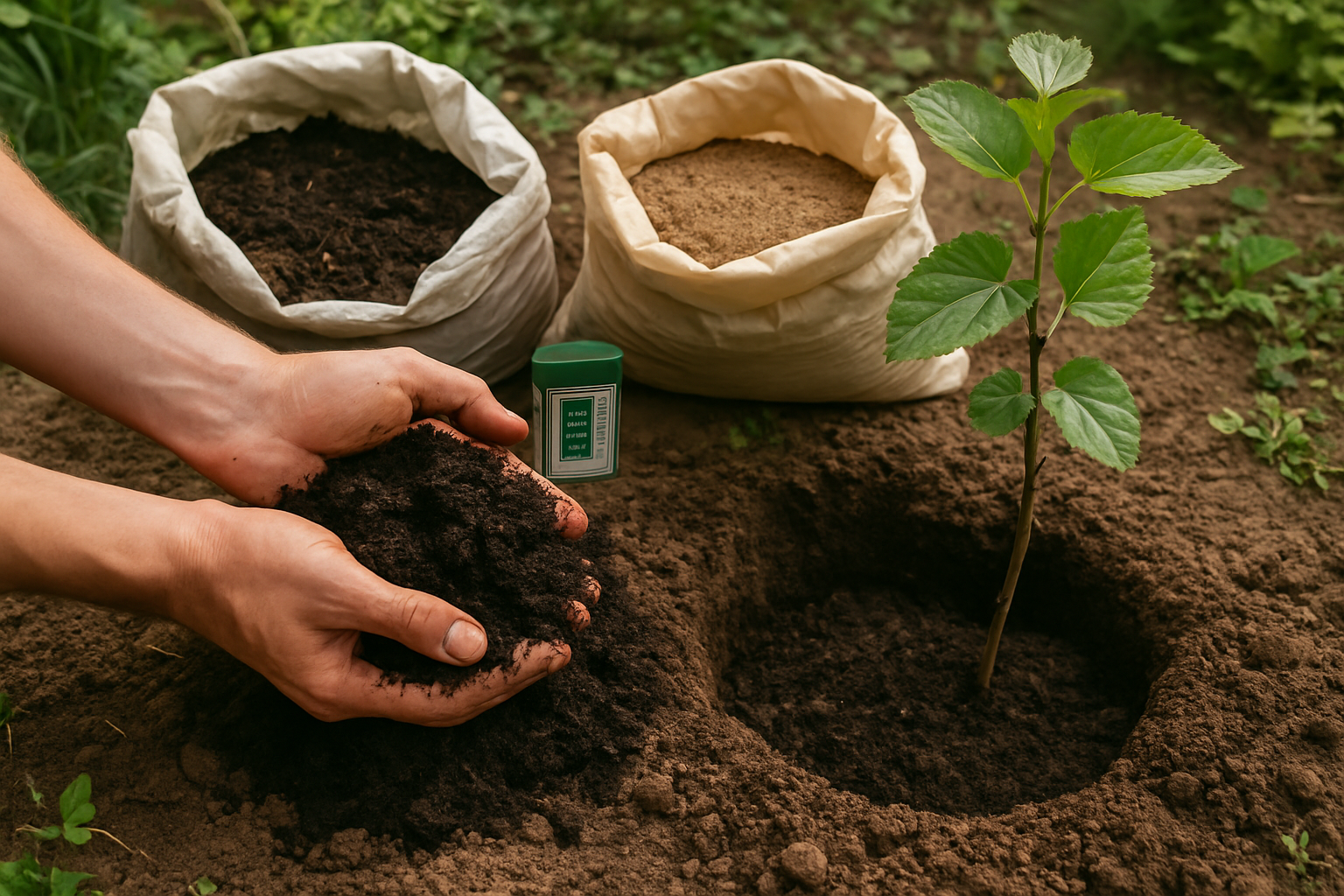
Good mulberry soil should also be reasonably fertile and rich in organic matter. These trees earn their reputation as heavy producers, and they need nutritional support in the soil to back that up. Think of it this way: a tree that’s going to pump out pounds of fruit every season needs a solid foundation to draw from.
The pH Meter That Finally Showed Me Why My Mulberries Were Struggling
I spent two seasons guessing at my soil chemistry before I realized my mulberry pH was creeping into alkaline territory—which locks up nutrients even when you’re amending correctly. A reliable soil pH meter cuts through that guesswork and tells you exactly what your trees are actually living in.
What works
- Readings stabilize within seconds, so you can spot-check different patches of the orchard and see actual variation (my north bed was 6.8, south bed was 7.4).
- The three-in-one function—pH, moisture, and light—means you can troubleshoot whether yellowing leaves are a watering problem or a chemistry problem without buying separate tools.
- Once you know your baseline pH, you stop wasting money on amendments that won’t work; I dropped my pH 0.6 points with sulfur and watched leaf color improve within six weeks.
What doesn’t
- The probe needs good contact with moist soil; if you stab it into compacted or dry ground, you’ll get unreliable readings that make you second-guess yourself.
- It’s a snapshot tool, not continuous monitoring—you have to remember to test before spring amendments and after you’ve added compost, or you’ll miss important shifts.
I almost returned mine after a week of confusing readings until I realized I was testing in the same spot every time instead of sampling across the bed. Pick up a SONKIR Soil pH Meter (MS02 3-in-1) and test in at least three locations before you assume anything about your soil.
This post contains affiliate links. As an Amazon Associate, I earn from qualifying purchases at no extra cost to you.