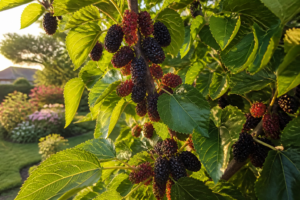

Mulberry leaf tea was the last thing I expected to become a daily ritual, but after reading the traditional use history and then trying a properly brewed cup, I understood immediately why this preparation has been part of East Asian wellness practices for centuries. It’s not just about the flavor — the functional properties are genuinely interesting. But here’s what nobody tells you when you start romanticizing the idea of a mulberry tree on your homestead: the moment you commit to planting one, you’re making a decision that goes deep into the ground, literally, and the root system will shape everything from where you can safely run irrigation lines to whether your raised beds and pathways survive the next decade intact. I learned this the hard way after years of zero-waste harvesting, fermenting gallons of berry wine, drying leaves for tea all winter, and canning enough jam to last through two apocalypses — only to realize I’d been so focused on what the tree gives above ground that I’d completely ignored what it was doing below. This guide is everything I wish I’d had before I planted, written by someone who has spent years getting the most out of every single part of this tree and who genuinely doesn’t want you to learn the root system lesson the expensive way.
If you’re here because you’re thinking about planting a mulberry tree — or maybe you already planted one and something feels off — I want to help you avoid the exact mess I went through. The good news? With a little knowledge and the right tools, you absolutely can grow a gorgeous, productive mulberry tree without letting its roots ruin everything around it. Let me share what I wish someone had told me.
Understanding the Mulberry Tree Root System Before You Dig That Hole
Here’s what most planting guides conveniently leave out: mulberry trees are aggressive growers, and that energy doesn’t stop above ground. The mulberry tree root system is wide-spreading and shallow, meaning the roots tend to travel outward horizontally rather than plunging straight down. In mature trees, roots can extend two to three times the width of the canopy — and the canopy on a healthy mulberry can easily reach 30 to 40 feet across.
Those shallow, far-reaching roots are exactly what makes mulberry trees both wonderful and problematic. They’re efficient at finding water and nutrients, which is part of why mulberries are such hardy, low-maintenance trees. But that same efficiency means they’ll eagerly grow toward any nearby moisture source — including pipes, irrigation lines, and the gaps beneath concrete or pavers.
My mistake was planting my tree about 12 feet from a raised garden bed and roughly 15 feet from a paved garden path. At the time, that felt like plenty of space. It wasn’t. By year three, roots had snaked under both, and I was looking at repairs I hadn’t budgeted for.
What to Watch Out For: Real Risks of Mulberry Roots Near Your Property
Before you pick your planting spot, it helps to think like a root. Where is the water? Where are the gaps and soft soil? That’s where your mulberry’s roots are going to travel over time. Here are the specific things you’ll want to keep a safe distance from:
- Underground water and sewer lines — Mulberry roots can infiltrate cracked or older pipes in search of moisture. Aim for at least 20 feet of clearance from any underground utility lines.
- Driveways, sidewalks, and patios — Shallow roots will lift and crack hardscape over time. Keep your mulberry at least 15 to 20 feet from any paved surfaces.
- Home foundations — While mulberry roots rarely cause direct foundation damage, they can exploit existing cracks and worsen them. A 20-foot minimum from your home’s foundation is a safe rule of thumb.
- Garden beds and raised planters — Roots will compete aggressively with vegetables and perennials. Give yourself more space than you think you need — at least 15 feet.
- Fences and retaining walls — Root pressure can shift posts and destabilize structures over several years.
How to Manage the Mulberry Tree Root System the Smart Way
Here’s where things get really practical. If you’ve already chosen your planting spot — or if you’re working with a tree that’s already in the ground — root barriers are your best friend. I discovered these a little late, but once I installed them, the difference was genuinely remarkable. They redirected roots downward and away from my garden bed, and within a season the soil around my raised beds was back to normal.
Root barriers are essentially deep, rigid panels that you sink vertically into the ground around the areas you want to protect. They guide roots downward instead of letting them spread sideways toward hardscape or structures. The key is depth — you want a barrier that’s at least 18 to 24 inches deep to be effective against a mature tree’s root spread.
The Root Barrier That Stopped My Mulberries From Invading the Driveway
Mulberry roots are aggressive foragers, and without containment, they’ll crack foundations, buckle pavement, and colonize every inch of your property within a few years. A quality root barrier isn’t optional if you’re planting near hardscape or your neighbor’s fence line.
What works
- The 60mil thickness actually stops lateral root spread—I installed this around my Pakistani and Issai trees three years ago and haven’t seen roots surface beyond the barrier zone.
- Easy to bury 12-18 inches deep without tearing; the material flexes enough to work around established trees without wrestling it into place for hours.
- The 17-inch width is tall enough to be effective but short enough that you don’t need to dig a trench deeper than necessary—my driveway edge stayed crack-free this spring.
What doesn’t
- It doesn’t stop roots from growing down—only outward—so you’ll still deal with deep roots if there’s a water main or septic field below. Plan your placement accordingly.
- Twenty feet of barrier goes faster than you’d think on a mature tree; if you’re containing something already 8+ years old, you’ll probably need two rolls.
I second-guessed whether the barrier would really hold up under real root pressure, but after watching roots actually stop at the edge instead of punching through cheaper plastic, I’m sold. Get the Convivium Tree Root Barrier 17in x 20ft x 60mil and install it before you regret not doing it.
This post contains affiliate links. As an Amazon Associate, I earn from qualifying purchases at no extra cost to you.