On a working homestead, every plant earns its space — ornamental value alone doesn’t cut it. Mulberries earn their space three times over: they produce food, they attract beneficial wildlife, and a well-sited tree provides meaningful summer shade for structures that would otherwise overheat. The design choices you make at planting determine how much of that value you actually capture. I’ve spent years dialing in my own placement strategy — learning which exposures push the longest harvest windows for fermentation and drying, which distances from outbuildings let me sheet-mulch beneath the canopy for a clean zero-waste drop zone, and which sight lines let me spot a flush of ripe fruit before the birds beat me to a full day’s canning haul. Get this one decision right and your mulberry tree practically runs your preservation calendar; get it wrong and you’ll spend every June chasing splattered fruit off surfaces you wish you’d protected, wondering why you didn’t just think it through before you put a shovel in the ground.
Here’s how the disaster unfolded: I was so excited about my new Illinois Everbearing mulberry sapling that I basically pointed at a random sunny spot, dug a hole, and called it a day. No measurements, no consideration of the mature canopy spread, no thought about where the fruit would fall. I was a man with a tree and a dream. Eighteen months later, my neighbor gently mentioned that my tree’s roots appeared to be “enthusiastically visiting” her raised garden bed. I had never once thought about root spread. I thought I was planting a charming little fruit tree. I had apparently planted an empire.
Why Mulberry Tree Placement in Your Yard Deserves Serious Thought
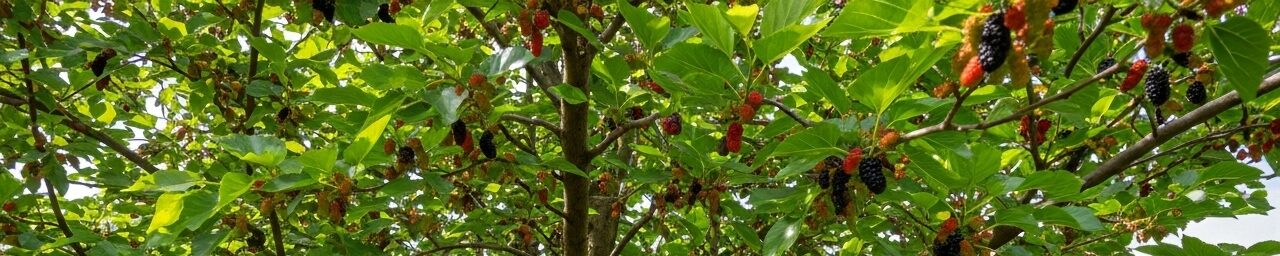
Mulberry trees are spectacular — fast-growing, wildly productive, and genuinely beautiful across all four seasons. But that vigor is exactly why placement matters so much. A mature mulberry can spread 30 to 40 feet wide and reach similar heights, depending on the variety. Plant one carelessly and you’re potentially shading out your vegetable garden, cracking your driveway with aggressive roots, or turning your favorite outdoor seating area into a purple slip-and-slide every June.
The good news? With a little intentional planning, those same traits — the big canopy, the fast growth, the abundant fruit drop — become genuine assets instead of headaches. Let’s walk through exactly how to think about placement so your tree earns its spot in the yard for decades to come.
The Big Three: Fruit Access, Shade Strategy, and Aesthetic Flow
Fruit Access and Harvest Zone
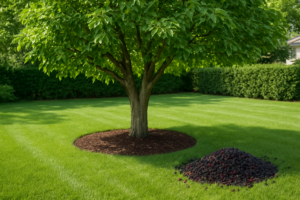
Think about where you actually want to harvest. Mulberries don’t keep long once ripe, and hand-picking is slow work — most experienced growers lay a tarp or old sheet under the tree and give the branches a gentle shake. That means you need enough open space around the trunk to maneuver comfortably. At least eight to ten feet of clearance in every direction from the trunk is a solid minimum for a mid-sized variety. Also consider what’s downhill from the tree. Fruit stains everything — concrete, decking, gravel paths, car hoods. Place the tree where fallen fruit lands on grass, a mulched area, or somewhere you simply don’t mind a seasonal purple makeover.
Shade Where You Actually Need It
A mulberry’s wide, dense canopy makes it one of the best shade trees available to home gardeners. But shade only helps if it falls in the right place at the right time of day. South and west-facing positions relative to your house or patio will intercept afternoon sun, which is the most intense and the most welcome to block during summer. If you’re hoping to cool your home, plant on the southwest side at a distance of roughly 15 to 20 feet from the foundation. Close enough to shade the wall, far enough to keep roots away from your plumbing and foundation.
Visual Anchoring and Landscape Flow
Mulberries are genuinely gorgeous landscape trees — gnarled, character-filled bark, lush summer foliage, and a graceful arching shape as they mature. Use that! A lone mulberry at the back corner of a yard can anchor the whole space and give the eye a natural focal point. Planted near a fence line, it softens hard edges. In a food forest design, it makes a superb canopy layer above berry bushes, herbs, and shade-tolerant ground covers.
What to avoid: planting too close to structures, septic systems, water lines, or paved surfaces. Root systems are wide and opportunistic. Give them room to roam in a direction that doesn’t cost you money in repairs later.
Practical Placement Tips by Yard Size and Shape
- Small yards (under 5,000 sq ft): Choose a naturally compact or dwarf variety like Dwarf Everbearing, and plant it in a corner to maximize usable space while still enjoying fruit and dappled shade.
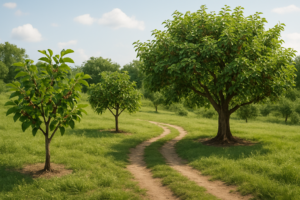
- Medium yards: Use the mulberry as a destination — plant it at the end of a garden path or near a seating area so it becomes a place you walk toward, not just past.
- Large properties: Consider planting at the edge of a lawn area where mowers can work freely underneath, or along a property boundary as a living privacy screen with serious fruit production benefits.
- Slopes: Mulberries have robust root systems that stabilize soil beautifully. A sloped area that’s hard to mow or plant can become a productive, low-maintenance mulberry zone.
- Near a chicken run or wildlife garden: Fallen mulberries are beloved by chickens, songbirds, and beneficial insects. Placing your tree where fruit drops into these zones is a win-win.
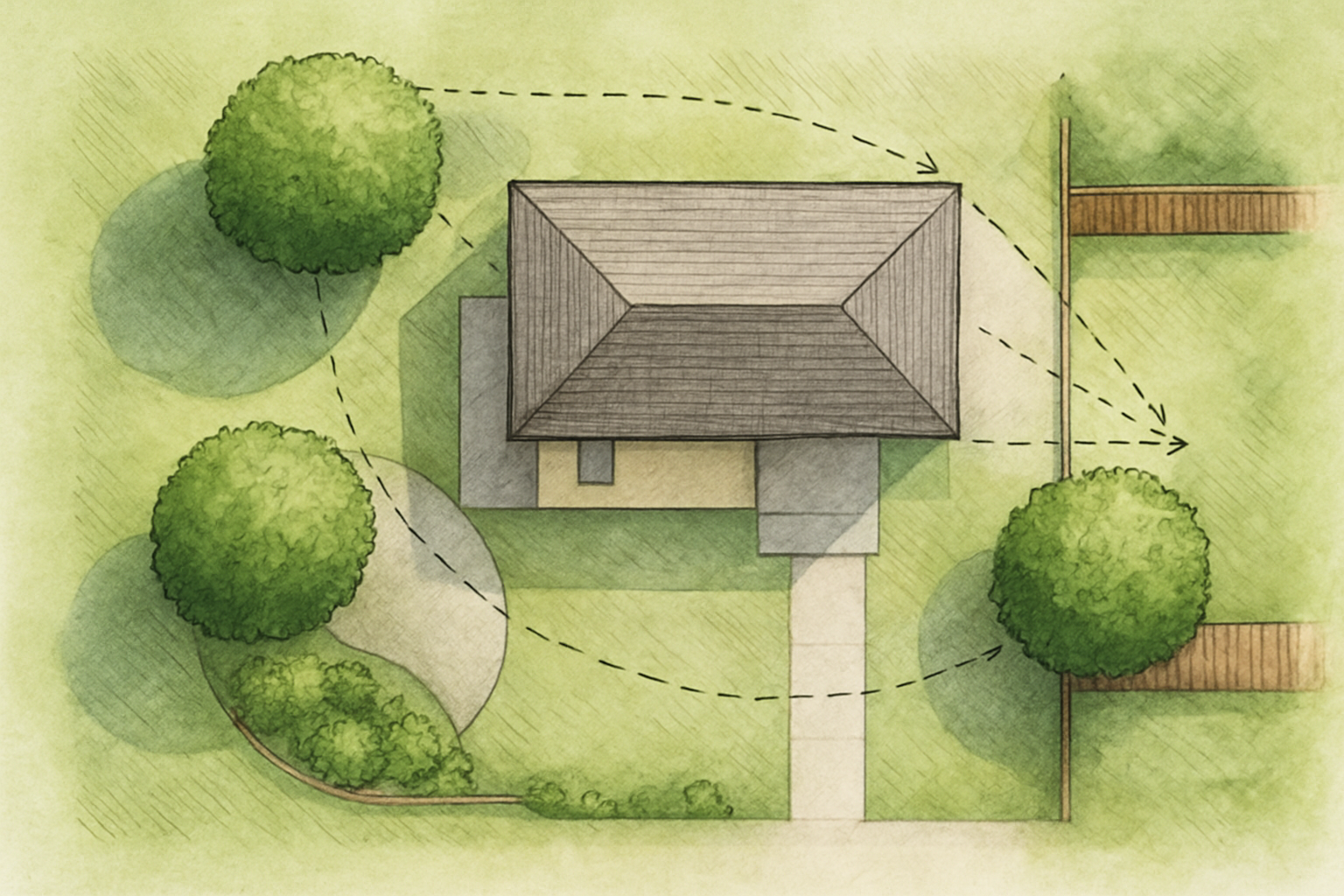
Sketching Your Mulberry Layout Before Planting: Why I Map Sight Lines and Summer Shade Zones Now
Mulberry placement requires thinking in three dimensions—fruit access, shade cast across your property, and bird interception angles. I learned this the hard way after planting two trees where I couldn’t actually see them from the kitchen window during peak ripening season, which meant I missed my harvest window by days while birds cleaned house.
What works
- Plotting trees to scale on graph paper forced me to notice that my morning sun exposure map didn’t match my gut feeling—I discovered a full-shade pocket I would have planted into blind.
- Drawing sight lines from the house revealed which tree positions kept fruit visible from the porch and driveway, cutting theft losses because I could monitor ripeness in real time.
- Overlaying shade patterns (especially late afternoon summer shade on structures) made it obvious which trees would actually reduce cooling costs versus just looking like they would.
What doesn’t
- Graph paper alone doesn’t account for how soil microclimates shift year to year—my winter drainage pattern changed after one wet season, and I had to adjust my mental map accordingly.
- It’s tedious enough that I almost skipped it for my third planting, and that corner tree still underperforms because I went on instinct instead of committing the 20 minutes to plan.
I almost threw away my first sketch because the tree spacing looked cramped on paper, but those tight plantings actually became my best pest management strategy once the canopies interlocked. Grab the Design-Your-Garden Toolkit and spend the afternoon plotting before you dig.
This post contains affiliate links. As an Amazon Associate, I earn from qualifying purchases at no extra cost to you.