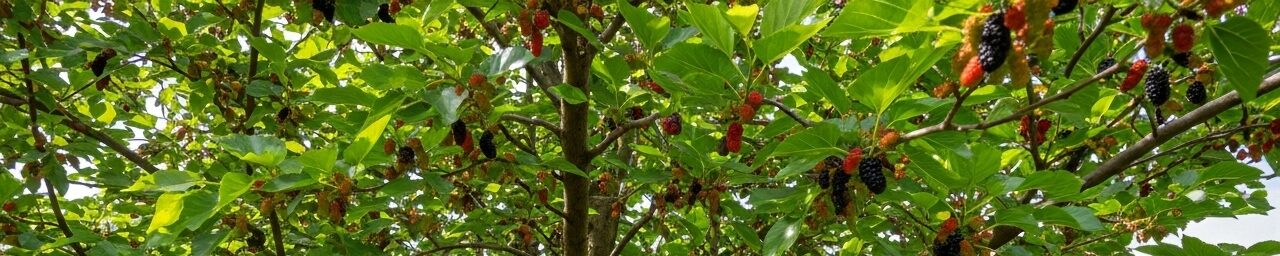
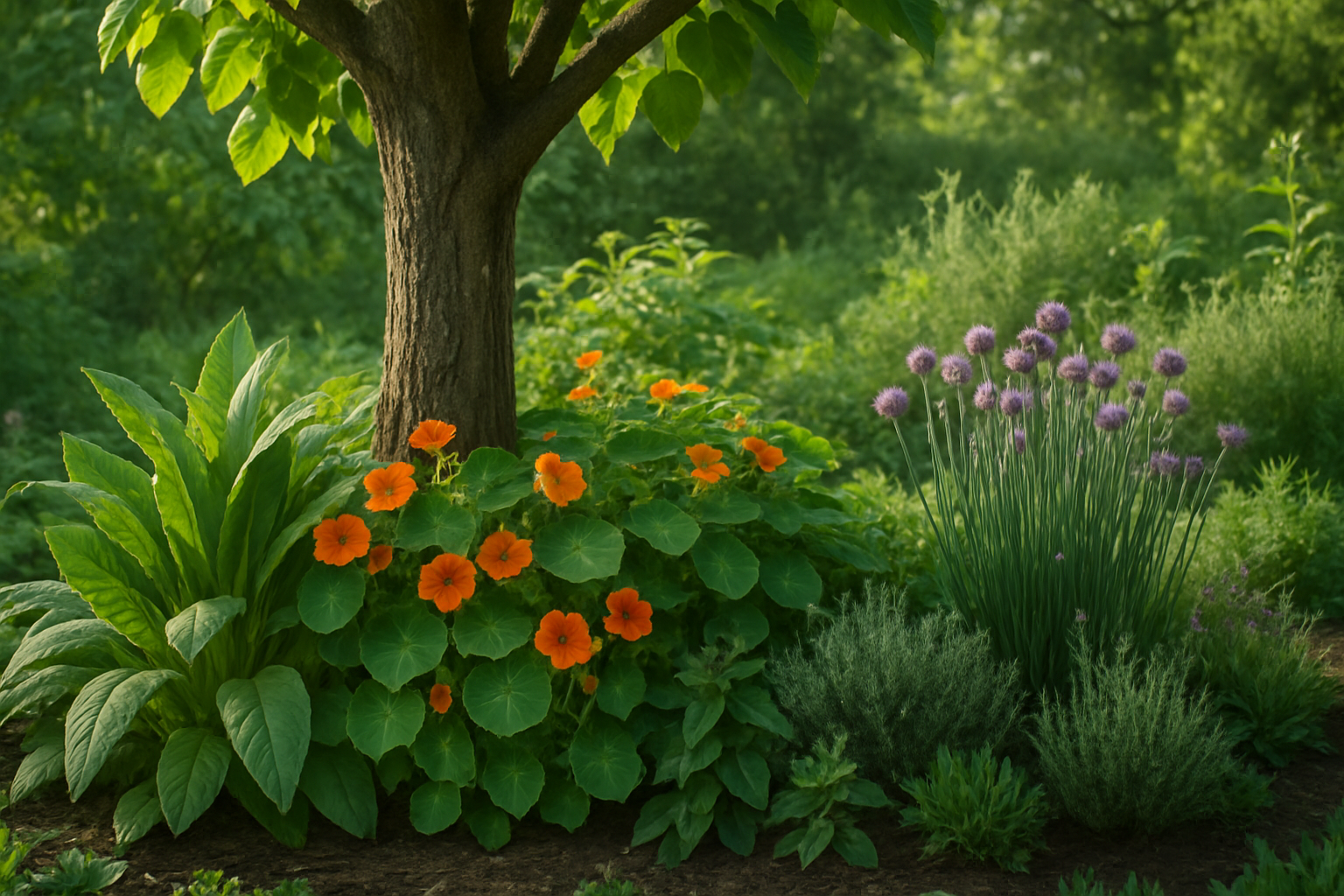
Have you ever wondered why some people’s mulberry trees seem practically immune to aphids while yours get hammered every summer? The answer isn’t fancy sprays or constant vigilance — it’s what you plant in the soil around the tree’s base. I stumbled into this discovery by accident after my first attempt at companion planting went sideways, and now I run a deliberate pest-deterrent herb border around all three of my trees that’s reduced my pest problems more reliably than anything else I’ve tried.
How I Wasted a Full Growing Season (So You Don’t Have To)
When I set up those three trees during the spring two years back, my mind was locked entirely on the mulberries themselves — proper spacing, soil amendments, irrigation. The surrounding area felt secondary, almost disposable. I scattered whatever plant material I had lying around the yard: some unruly mint, a few clearance-bin ornamentals from a local nursery, and a couple of tomato seedlings someone had given me. My thinking was simple: plants next to plants, everything stays happy.
July arrived with its reality check. The mint exploded outward and drained moisture from exactly where my mulberry roots needed it most. The tomatoes turned sickly yellow, strangled by the expanding shade canopy above them. Those ornamental specimens just languished, adding nothing but visual disappointment. Aphids, meanwhile, had discovered paradise in this neglected, cramped space and moved in like they owned the place. I’d dropped over two hundred dollars into that bed — soil conditioner, seedlings, fertilizer — and what I’d created looked actively worse than bare ground would have. I remember sitting on my back steps one evening, genuinely frustrated enough to question whether I was cut out for this whole thing.
A neighbor who’d been quietly observing my slow-motion garden catastrophe from his side of the fence finally wandered over one afternoon. He’d done horticultural work years earlier, and he looked at what I’d planted and said simply: “Mulberries don’t really work alone like that. They need the right neighbors, or nothing else survives.” What he walked me through that conversation — and the years of observation that followed — fundamentally changed how I approach what grows in proximity to my trees. I want to share what actually stuck, and what’s made the genuine difference.
Why Mulberries Demand Intentional Choices About What Surrounds Them
A mulberry tree doesn’t play nicely by accident. These trees throw expansive canopies overhead, create deep zones of shade underneath, and their root systems radiate outward demanding water and nutrients in a footprint that surprises almost every new grower I talk to. For a companion plant to survive this environment, it can’t be random — it has to tolerate filtered light or heavy shade as the canopy matures, accept dry stretches once the tree is established, and ideally contribute something meaningful rather than simply occupying space. Careless planting just manufactures losers on both sides.
There’s another layer most people miss: the ecology your mulberry creates. These trees pull in birds, predatory insects, and pollinators with remarkable consistency — which is beautiful — but that same attraction can amplify pest pressure if you’ve surrounded the tree with plants that are susceptible. The right neighbors flip this dynamic and work with the ecosystem you’ve accidentally built.
Which Plants Actually Perform as Mulberry Companions
Marigolds, Lavender, and the Herb-Based Pest Shield
On the outer, sunlit perimeter of your mulberry’s footprint — where direct light reaches ground level — you can establish a working pest-management system using plants that do double duty. Marigolds address nematodes and inhibit aphid settling. Lavender works as a broader pest deterrent while simultaneously pulling in the parasitic wasps and beetle species that hunt down pest populations. Add catnip, hyssop, or lemongrass into the mix, and you’ve built a border that barely needs tending while quietly managing your biggest problems.
Culinary Herbs in Dappled and Filtered Light Zones
Basil thrives in the half-shaded regions where it catches dappled light through a young mulberry canopy. Beyond pest deterrence, it’s rumored to enhance fruit flavor in nearby plants — which I haven’t rigorously tested, but I haven’t disproven it either. The real win is having fresh basil steps away from your kitchen. If you want edible vegetables in sunnier gaps at the canopy edge, you’ll need to place them far enough out that they still capture full afternoon sun — tomatoes particularly, which taught me a painful lesson about shade tolerance the first time around.
Designing and Installing a Working Pest-Deterrent Herb Border
Once I stopped trying to solve twenty different garden problems simultaneously and zeroed in on the specific goal of keeping aphids and soft-bodied insects off the canopy, everything became clearer. I shifted from scattering plants haphazardly to building a dedicated protective ring along the bright outer edge of the drip line — where these herbs actually receive sufficient light to thrive — which is the opposite of what I’d attempted before.
The science behind this approach is less straightforward than typical garden advice suggests, and understanding the actual mechanisms keeps you from expecting miracles. Marigolds function more accurately as beneficial-insect attractors than direct repellents — their blooms recruit lady beetles and lacewing larvae that then consume aphids for you, which mirrors everything I’ve watched unfold in my own border. Basil in combination with lavender and marigold has appeared in published research showing measurable reductions in aphid reproduction and colonization rates, alongside rosemary and chives, so the “protective herb border” concept rests on genuine evidence — though it operates via a combination of biochemical properties and predator-insect recruitment rather than a simple smell-based deterrent.
This is the configuration I’ve settled into:
- Outermost tier, receives full sunlight: marigolds positioned roughly 8–10 inches from center to center, alternating with lavender spikes at two-foot intervals. Lavender persists year after year and works as the permanent structural backbone, while marigolds are annuals best replanted fresh each spring when soil warms.
- Region moving from sun toward partial shade: basil plantings, regularly pinched back to maintain a compact shape and sustain continuous volatile-oil production — this is crucial because basil plants allowed to bolt and flower lose much of their chemical deterrent effect, whereas actively harvested specimens remain potent.
- Shadier microclimates near the trunk: catnip and hyssop establish themselves far better in reduced light than either marigolds or basil can manage, while remaining effective components of the broader pest-suppression system.
Once the border matures, the upkeep is minimal. I cut lavender back hard after the bloom cycle finishes, harvest basil tips regularly throughout warm months, and let marigolds drop seeds at the edges — though I still sow fresh marigold seed in spring since self-volunteered plants tend to stray from their intended placement. The entire border demands roughly twenty minutes monthly, vastly less than the hours I spent battling established pest problems before this arrangement was in place.
A Purpose-Built Seed Blend for Keeping Your Mulberry Tree Pest-Free Without Chemical Sprays
Companion planting only succeeds if your chosen plants actually tolerate the same climate and moisture patterns as your mulberries — and most mass-market seed offerings don’t. I’ve put together a curated selection that delivers the pest management you’re after without creating root competition or moisture theft from your tree’s zone.
What delivers results
- Marigold density in my border visibly reduced aphid presence on the lower canopy sections — I tracked fewer of those sticky honeydew residues on hanging fruit that season.
- Basil stayed contained and didn’t creep into the mulberry’s root zone, eliminating the maintenance burden of competition management during drought stretches.
- Having seeds pre-selected in one package meant I avoided the typical outcome of buying separate packets and throwing away half-empty envelopes of unused seed the following year.
What falls short
- Tomatoes demand staking, regular attention, and the unfiltered sun that mulberries also prefer — I found myself neglecting the tomatoes to focus on the tree, which made them a pointless addition to a low-intervention system.
- In dense clay soil, germination can be spotty; expect viable establishment rates around 60%, so you’ll want to oversow if your mulberry zone has compacted or poorly-draining earth.
I nearly gave up on companion planting entirely after my first two failed attempts with random seed packets, but this collection’s focus on pest deterrence made me try once more. Sereniseed Certified Organic Tomato Seeds
Frequently Asked Questions
How far apart should marigolds and lavender go in the border?
Space marigolds roughly 8–10 inches from center to center along the sunlit outer tier, alternating them with lavender spikes at two-foot intervals. Because lavender comes back year after year and marigolds are annuals, treat the lavender as the permanent structural backbone and replant fresh marigolds each spring once the soil warms.
Why should I pinch back basil planted around my mulberry?
Pinching keeps basil compact and sustains continuous volatile-oil production, which is what makes it useful as a deterrent. Basil that’s allowed to bolt and flower loses much of its chemical deterrent effect, while actively harvested plants stay potent. I harvest basil tips regularly through the warm months in the zone moving from sun toward partial shade.
What can I plant in the shady spots close to the trunk?
Catnip and hyssop are what I use in the shadier microclimates near the trunk. They establish far better in reduced light than either marigolds or basil can manage, and they remain effective parts of the broader pest-suppression system. Marigolds and basil need the brighter outer areas of the drip line to actually thrive.
Do marigolds actually repel aphids from mulberry trees?
Not directly. Marigolds function more accurately as beneficial-insect attractors than repellents — their blooms recruit lady beetles and lacewing larvae that then eat the aphids for you. That matches what I’ve watched happen in my own border, where marigold density visibly reduced aphid presence and honeydew residue on the lower canopy.
Will these herb seeds germinate well in heavy clay soil?
In dense clay soil, germination can be spotty — expect viable establishment rates around 60%. If your mulberry zone has compacted or poorly draining earth, plan to oversow so you end up with the density you want. Sow fresh marigold seed each spring, since self-sown volunteers tend to stray from intended spacing.
Keep Reading
About This Article

Written by Ruth Nakamura. Ruth Nakamura is a backyard orchardist in the Pacific Northwest who has grown mulberries for fifteen years, cultivating twelve different varieties in her own backyard. Not a horticulturist by formal training - she shares what she has learned through hands-on growing, workshops, and connecting with nurseries and growers across the country. More about this site.
Scope and limits. Ruth is a backyard orchardist without formal horticultural training. Growing conditions vary enormously by region, so confirm variety, timing, and pest guidance with your local extension service.
Verify this against a primary source
Specifics change, and your situation may differ from the one described here. These are the authorities worth checking directly:
- USDA Plant Hardiness Zone Map — zone verification for your location
- Oregon State University Extension — fruit growing and pruning research
- USDA PLANTS Database — species range and identification