Fallen mulberries will wreck your garden beds if you don’t stay on top of them. The staining, the fermentation, the pest explosion — it all compounds fast once those berries hit the ground, and by then you’re playing catch-up for weeks.
Ripe mulberries accumulate quickly under the canopy, and delayed cleanup leads to stained hardscaping, fruit flies, and persistent pest pressure. Accumulated fallen mulberries create a cascade of problems — not just visual staining, but soil-level rot, persistent insect pressure, and damage to foliage in garden beds. What begins as dropped fruit fast becomes an environment where pests thrive and fungal issues take root. Consistent management during fruiting season can prevent these issues entirely. Planned cleanup routines work far better than occasional intensive efforts.
Why Fallen Mulberries Are a Bigger Problem Than They Look
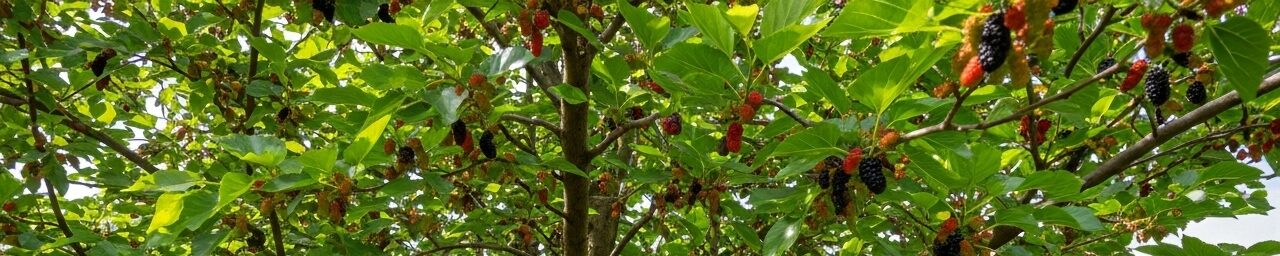
Let me be direct about what you’re dealing with when you grow mulberries. Dwarf Everbearing, Illinois Everbearing, weeping varieties, straight-up seedling trees — they all share the same trait: an almost aggressive abundance of fruit production. That’s the whole appeal, obviously. But crammed into that benefit is a reality most people don’t anticipate: a 4–6 week window where berries rain down relentlessly, day after day.
Ripe mulberry flesh is saturated with anthocyanins — those deep purple pigments responsible for the fruit’s nutritional punch — and they’re remarkably sticky to anything porous. Flagstone. Concrete. Wood mulch. Light gravel. Forty-eight hours of summer heat and you’ve got permanent marks. Simultaneously, fermenting piles attract fruit flies by the thousands, pull in wasps hunting protein, and create conditions that bring in nocturnal visitors like raccoons looking for an easy meal. Moisture-loving plants in your beds can face crown rot or fungal pressure when buried under decomposing fruit.
The upside: this is completely preventable with a simple framework and the right approach. Here’s what’s genuinely worked for me.
Building a Sustainable Cleanup Rhythm During Peak Drop Season
Step 1: Commit to Frequent, Manageable Clearing Sessions
The key is to reframe berry cleanup from “occasional weekend project” to “part of routine garden maintenance during fruiting.” A focused 10–15 minute window each morning — before the heat peaks and the berries begin breaking down — makes a real difference. Consistency beats intensity. Missing one day costs you more than you’d expect; missing three becomes a genuine problem.
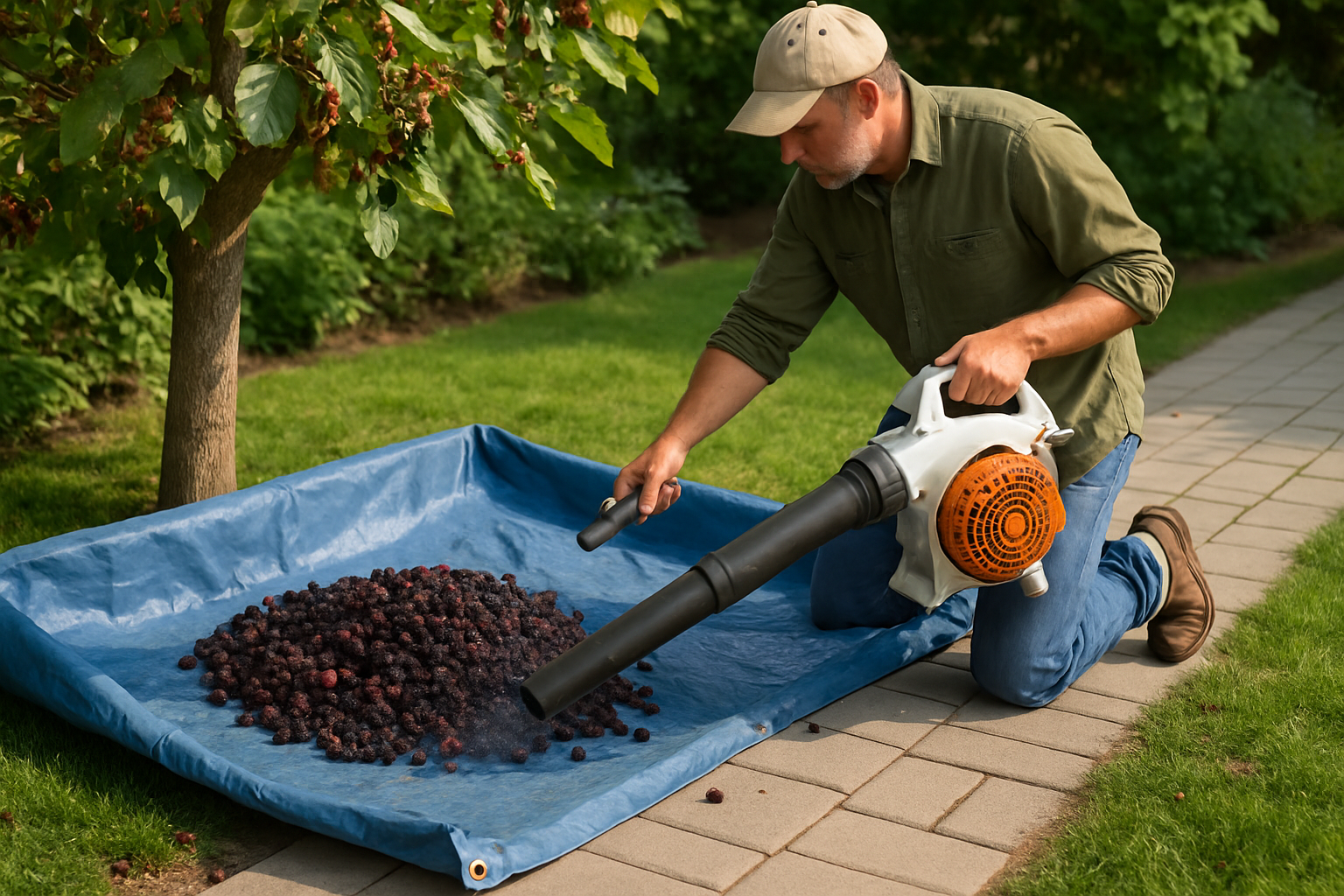
Step 2: Deploy a Leaf Blower to Move Fruit Quickly Off Planted Areas
Hand-collecting fallen mulberries from garden beds is patience-draining and incomplete. You’ll kneel there for an hour and still have missed berries nestled in the mulch or tucked against plant bases. A cordless leaf blower changes the equation entirely — you can move soft fruit off planted zones onto hard surfaces or a collection tarp in minutes flat. Look for one with variable speed so you’re not demolishing your perennials while you work.
Step 3: Gather and Remove to Compost or Waste Bin
Once blown onto a tarp at the bed’s edge, gather your berries and transport them to either your hot compost pile or municipal yard waste. Mulberries are excellent compost feedstock — they decompose rapidly and contribute moisture and carbon balance. Heat your pile above 130°F and any seeds inside will die, eliminating the risk of volunteer mulberry seedlings emerging months later. If seed management feels overwhelming, bag and dispose instead.
Step 4: Tackle Hardscape Stains Before They Set
When berries land on concrete, pavers, or flagstone, your window to prevent permanent staining is narrow. A scrub with white vinegar mixed with a touch of dish soap handles fresh marks admirably. Older, established stains respond better to oxygen-based bleach paste — OxiClean powder mixed with water works surprisingly well. Stay away from chlorine bleach on natural stone, which can leave its own discoloration. For wood surfaces and painted areas, a low-pressure rinse after the season winds down can restore considerable original color.
Step 5: Modify Your Mulch Strategy During Fruiting Weeks
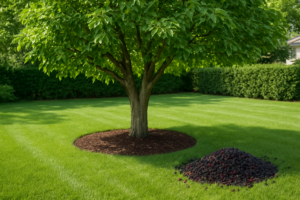
Garden beds directly underneath a mulberry canopy benefit from a shift to darker mulch varieties — deep charcoal or rich brown bark mulch effectively hides staining marks and accelerates cleanup visibility. Some growers I know lay down dark landscape cloth or tarps in the drop zone during the heaviest fruit weeks, pulling and clearing every couple of days before fermentation takes hold. It’s extra effort for peak season, but it saves the permanent damage that comes later.
Why Cordless Equipment Outperforms Everything Else for Berry Clearing
Once berries begin fermenting in your beds, you’ve got maybe 24–48 hours before pigments bind permanently to soil and hardscape, and before the smell triggers every fruit-eating pest in the neighborhood. A cordless leaf blower puts you in control, letting you clear accumulated fruit fast, before staining becomes irreversible and before wasps establish a feeding pattern.
What delivers real results
- Dual battery systems allow you to clear a complete canopy’s worth of fallen fruit and still have reserve power for tidying pathways and edging — essential when peak drop happens over 4–6 consecutive weeks and you’re running multiple sessions weekly.
- A compact 20V motor stays light enough for one-handed operation around tree trunks, between raised beds, and along tight plant spacing without shoulder strain accumulating over repeated 2–3 times weekly use sessions.
- Cordless operation eliminates tangled extension cords wrapping around branch canopies and removes gas engine fumes that can inadvertently attract additional insects to ripening fruit still hanging above.
Where limitations show up
- In loosely prepared or composted beds that haven’t been firmed, the blower’s airstream scatters mulch material and kicks up exposed soil underneath — you end up redistributing more than you’re collecting if your bed structure isn’t compact enough.
- 20V motors run quieter than gas equivalents but still generate enough decibel output to irritate neighbors during early mornings or dusk hours — proximity to property lines and local quiet-hours policies matter for timing your work.
I was skeptical that a battery blower would have enough sustained power for a full fallen-fruit cleanup, but the two-battery system proved me wrong. MZK Cordless Leaf Blower (20V, with 2 Batteries)
Frequently Asked Questions
How long does mulberry fruit drop last each season?
The heavy drop typically runs a 4–6 week window where berries rain down day after day, relentlessly. That’s why cleanup works best as routine garden maintenance during fruiting rather than a weekend project. Missing one day costs more than you’d expect, and missing three becomes a genuine problem.
Can I compost fallen mulberries without getting volunteer seedlings?
Yes, if your pile runs hot. Mulberries are excellent compost feedstock because they decompose rapidly and contribute moisture and carbon balance. Heat the pile above 130°F and the seeds inside will die, which eliminates volunteer mulberry seedlings emerging months later. If managing seed heat feels overwhelming, bag the fruit and dispose of it instead.
Does a cordless blower work in freshly composted garden beds?
Not well. In loosely prepared or composted beds that haven’t been firmed, the airstream scatters mulch material and kicks up the exposed soil underneath, so you redistribute more than you collect. Noise is the other limit — a 20V motor is quieter than gas but still loud enough to bother neighbors at early morning or dusk.
What pests do rotting mulberries attract under the tree?
Fermenting piles pull in fruit flies by the thousands, wasps hunting protein, and nocturnal visitors like raccoons looking for an easy meal. Once berries start fermenting you have maybe 24–48 hours before the smell triggers every fruit-eating pest nearby. My own worst season left fruit flies lingering into September.
Keep Reading
About This Article

Written by Ruth Nakamura. Ruth Nakamura is a backyard orchardist in the Pacific Northwest who has grown mulberries for fifteen years, cultivating twelve different varieties in her own backyard. Not a horticulturist by formal training - she shares what she has learned through hands-on growing, workshops, and connecting with nurseries and growers across the country. More about this site.
Scope and limits. Ruth is a backyard orchardist without formal horticultural training. Growing conditions vary enormously by region, so confirm variety, timing, and pest guidance with your local extension service.
Verify this against a primary source
Specifics change, and your situation may differ from the one described here. These are the authorities worth checking directly:
- USDA Plant Hardiness Zone Map — zone verification for your location
- Oregon State University Extension — fruit growing and pruning research
- USDA PLANTS Database — species range and identification