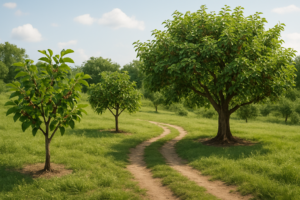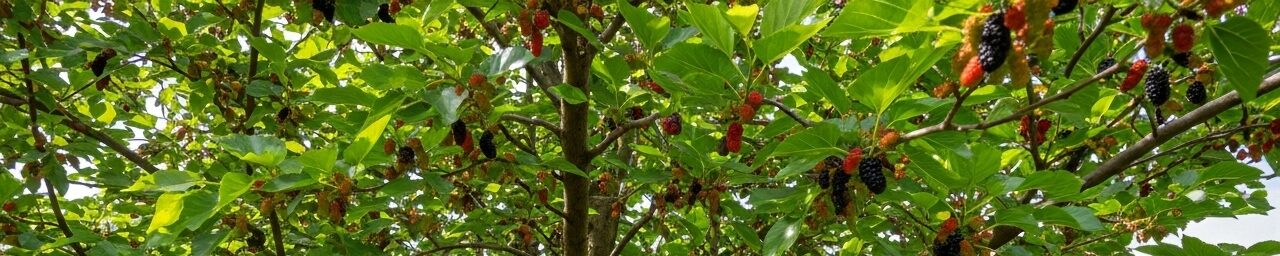
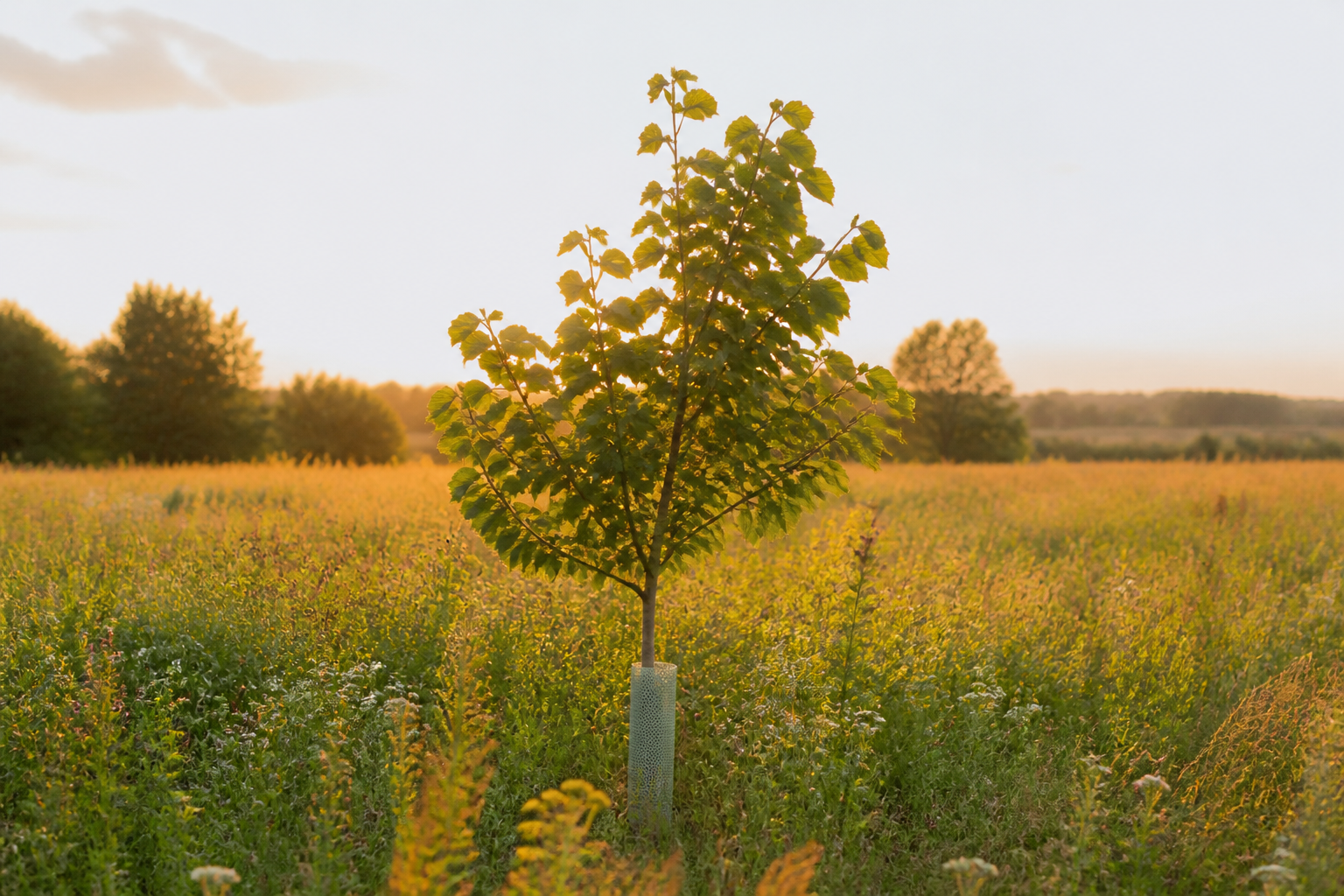
I got an email last spring from a reader with a couple of acres that made me pause. She had let a section of her property go wild — a proper meadow, thick with grasses and black-eyed Susans by midsummer — and she wanted to know if she could plant a mulberry tree right in the middle of it instead of finding it a spot in her cultivated garden beds. It was a question I hadn’t thought much about, since almost everything I’ve written here assumes a tree going into a lawn, a garden bed, or a defined orchard row. But naturalized plantings are their own thing, with their own advantages and their own risks, and once I actually worked through it, I realized that growing mulberry trees in a meadow is a genuinely good option for the right property. Here’s what I would tell her — and what I’d tell anyone else looking at a meadow instead of a mowed yard.
The Surprising Appeal of a Meadow Setting
When you plant a mulberry tree in a traditional garden or lawn setting, you’re making a very deliberate choice about where it lives. But there’s something romantic — and genuinely practical — about nestling a mulberry into a wilder corner of your property. A meadow setting removes one of the biggest headaches that comes with mulberries: the mess of fallen fruit staining patios, walkways, and mowed lawns. When your fruit drops, it falls into grasses and wildflowers instead of somewhere you’ll walk barefoot or see every morning. That alone solves a real problem.
Beyond that, there’s the habitat question. A meadow or naturalized mulberry planting tends to draw significantly more birds, pollinators, and other wildlife than one planted in a manicured, mowed setting, since the surrounding meadow itself already supports the food web the tree fits into. I once watched a flock of cedar waxwings descend on my Chinook mulberry, and it was a sight I won’t soon forget. Your mulberry becomes part of something larger than just your fruit harvest. If you’re interested in that bigger picture, I’d encourage you to explore how you can think about creating a wildlife corridor with mulberry trees and native plants — a meadow planting is really the beginning of that conversation.
The Real Challenges of Mulberry Trees in a Meadow
I want to be honest with you though: planting in a meadow introduces challenges that a garden bed doesn’t have. The biggest one is competition. Tall grasses and wildflowers growing right up against a young tree’s trunk compete hard — very hard — for water and nutrients during those critical first years when your mulberry is establishing. I learned this the hard way when I planted my Illini Star in a less than ideal space, and it struggled for those first few years. There’s something else that kept me thinking about this long after I read that first email: hidden damage. A meadow setting can hide vole and rodent damage to bark. You won’t spot it as easily as you would if you were walking past your tree every day. The grasses conceal what’s happening at ground level.
Young trees in less-supervised, naturalized plantings are also more vulnerable to browse and trunk damage from deer simply because they’re checked on less often. A tree tucked into the back forty won’t benefit from the casual daily oversight that a tree near your house gets. That’s not to say you shouldn’t plant in a meadow — it’s to say you need to go in with your eyes open. I’ve lost a few young trees to deer damage, and it’s heartbreaking to see a promising cultivar like Ozark Premier fall victim to something so avoidable.
How to Actually Plant a Mulberry Tree in Your Meadow
If you decide that a meadow planting is right for your property, here’s what I’d do, based on what’s worked for mulberries in less-manicured settings:
Step 1: Prepare a cleared ring around the base
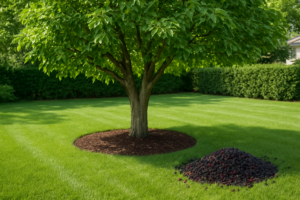
Before you even plant, clear away the grasses and wildflowers in a circle around where your tree will go — at least 3 to 4 feet in diameter, ideally more. You’re not scalping the earth; you’re just removing the competing plants. This is non-negotiable. Young mulberries cannot compete with an established meadow for their first three to four years. Once a tree is established and its roots have gone deep, it can hold its own, but those early years are critical.
Step 2: Mulch generously and maintain the clearing
After planting, mulch that cleared ring with 3 to 4 inches of wood chips or aged compost. This keeps competing plants from creeping back in and helps the soil retain moisture — crucial in a meadow where you’re not actively watering. Every spring, expand that cleared ring slightly if you need to, and maintain it as the tree grows. This sounds like extra work, and it is, but it’s the linchpin of success. Without it, you’re asking your tree to fight a battle it will lose.
Step 3: Guard against deer and rodent damage
This is where I’d invest in a good trunk guard. Young mulberry bark is tender and appealing to both deer and voles, and if your tree is out in a meadow where you’re not glancing at it every afternoon, damage can go unnoticed until it’s girdled the tree. A sturdy tree guard trunk protector is a small price for peace of mind. Leave it on for the first three to four years while the tree is vulnerable, then reassess as it matures. I’ve used them on all my young trees, and they’ve saved me from some near disasters.
Step 4: Monitor it regularly, even if it’s far away
This is the unsexy but essential part: walk out to your tree at least once a month during the growing season. Check for signs of browse, bark damage, pest issues, and general health. In a meadow setting, regular monitoring is your safety net. It’s the thing that catches problems before they become catastrophic. Don’t plant it and forget it. I’ve found that dedicating just a few minutes each month can save a lot of heartache down the road.
The Wildlife Benefit You’ll Actually See
Here’s what makes a meadow planting special: the wildlife. I’ve written before about mulberry trees as wildlife habitat, but there’s a qualitative difference when your tree sits in the middle of an established meadow rather than an isolated garden bed. The birds show up faster. The pollinators are more abundant. You’re not just growing fruit; you’re creating a hub in an existing ecosystem. That’s genuinely exciting if you care about the land you’re stewarding. I’ve had bees buzzing around my mulberries like they’re at a buffet, and it’s a joy to witness.
Is a Meadow Planting Right for Your Mulberry?
I’d recommend a meadow setting if you have the land, if you’re willing to maintain that cleared ring for several years, and if you can commit to regular monitoring. It’s not the low-maintenance option — it’s actually more hands-on in some ways than a garden bed planting. But if you’re drawn to the idea of your tree becoming part of a wilder landscape, if you’re interested in the wildlife dimensions, and if you’re done worrying about purple stains on your patio, it’s absolutely worth doing.
If you want more detailed thinking about where to plant, I have my guide to mulberry tree placement for fruit, shade, and beauty, which covers a wider range of settings. And if the fallen-fruit problem is what’s really driving your interest in a meadow setting, you might also find managing fallen mulberries without a staining nightmare helpful — sometimes the solution is as simple as a better location.
Back to That First Email
I never did hear back from the reader with the meadow, so I don’t know if she planted her mulberry. But thinking through her question made me realize something important: mulberry trees in a meadow work. They can work beautifully, actually — if you’re intentional about it. You can’t just toss a sapling into tall grass and hope for the best. But if you’re willing to clear a ring, maintain it, guard against wildlife damage, and check in regularly, you’ve got a real option for bringing mulberries into a more naturalized part of your property. That meadow setting that looked impossible at first glance? It might be exactly where your next mulberry should grow.
Frequently Asked Questions
How big should the cleared ring be around a mulberry tree in a meadow?
Clear away grasses and wildflowers in a circle at least 3 to 4 feet in diameter around where your tree will go, ideally larger. Your young mulberry cannot compete with an established meadow for its first three to four years, so this cleared space is non-negotiable for success.
What kind of mulch should I use for a meadow mulberry planting?
Apply 3 to 4 inches of wood chips or aged compost in the cleared ring after planting. This keeps competing plants from creeping back in and helps the soil retain moisture, which is crucial in a meadow where you’re not actively watering.
How long should I leave a trunk guard on a meadow mulberry?
Leave the trunk guard on for the first three to four years while the tree is vulnerable to deer and vole damage, then reassess as it matures. Young mulberry bark is tender and appealing to both deer and voles, and a meadow setting makes damage harder to spot.
How often should I check on a mulberry tree planted in a meadow?
Walk out to your tree at least once a month during the growing season to check for browse, bark damage, pest issues, and general health. Regular monitoring in a meadow setting is essential because damage can go unnoticed until it becomes catastrophic.
Keep Reading
About This Article
Written by Ruth Nakamura. Ruth Nakamura is a backyard orchardist in the Pacific Northwest who has grown mulberries for fifteen years, cultivating twelve different varieties in her own backyard. Not a horticulturist by formal training - she shares what she has learned through hands-on growing, workshops, and connecting with nurseries and growers across the country. More about this site.
Scope and limits. Ruth is a backyard orchardist without formal horticultural training. Growing conditions vary enormously by region, so confirm variety, timing, and pest guidance with your local extension service.
Verify this against a primary source
Specifics change, and your situation may differ from the one described here. These are the authorities worth checking directly:
- USDA Plant Hardiness Zone Map — zone verification for your location
- Oregon State University Extension — fruit growing and pruning research
- USDA PLANTS Database — species range and identification