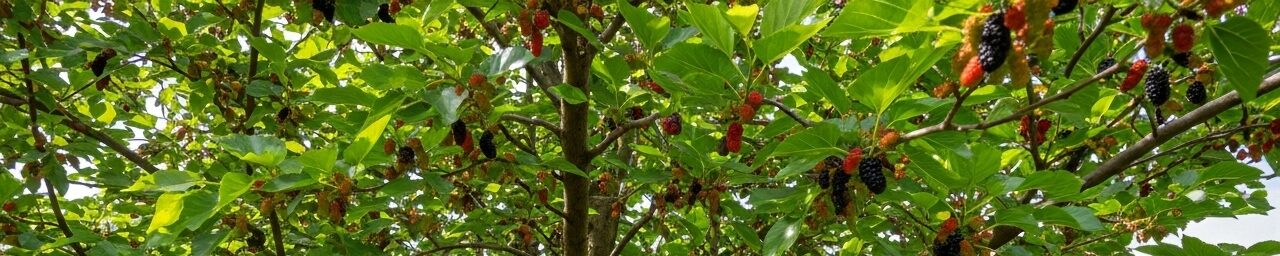
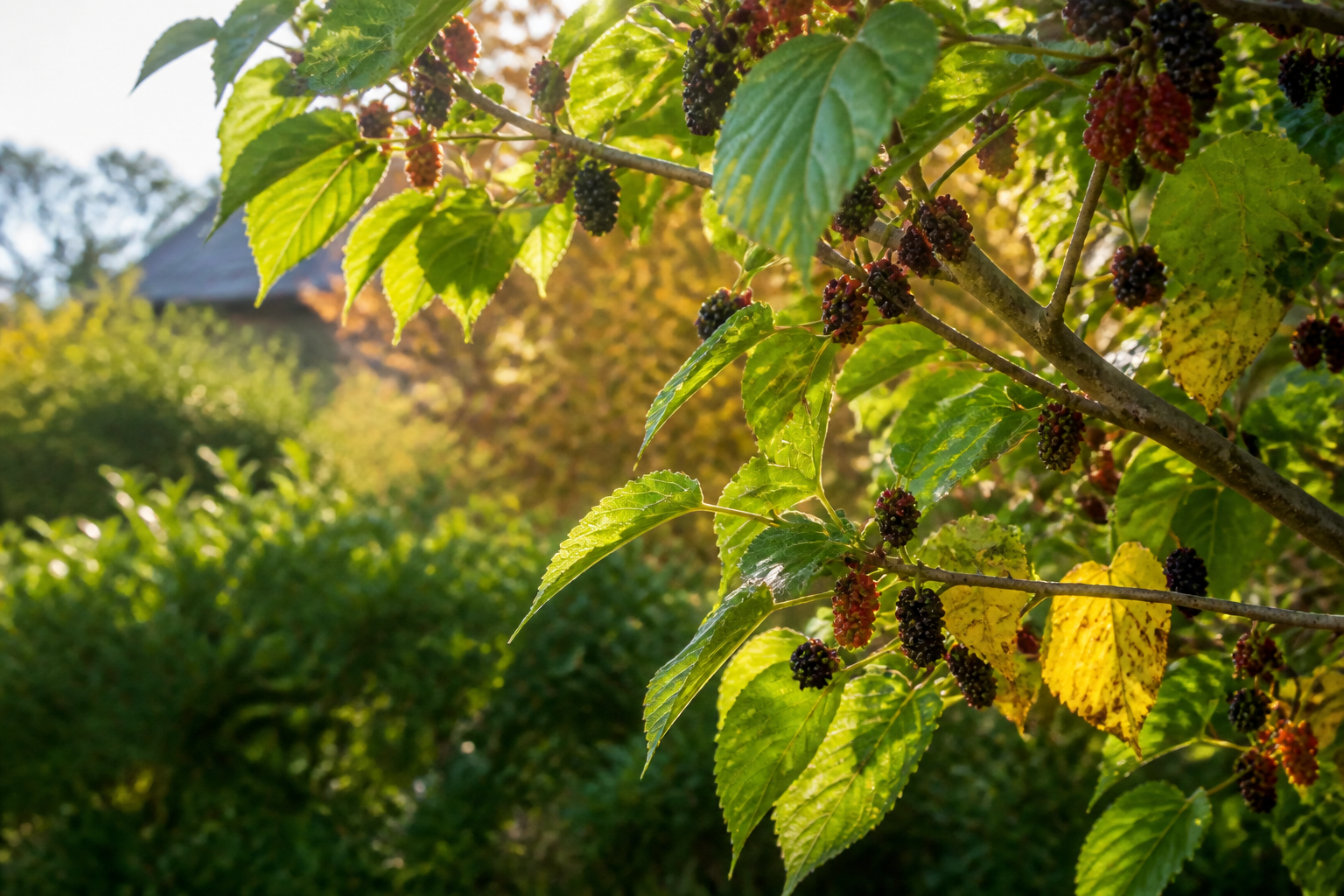
October is the month when mulberry growers face the biggest decision: do something, or do nothing? Most people guess wrong. They fertilize when they shouldn’t, prune at the wrong time, or panic and overwork their trees right when the trees need to rest.
The good news is that fall maintenance for mulberries is straightforward once you know what actually matters. This post walks through the tasks that protect your trees heading into winter and set them up for a strong spring harvest—and just as importantly, which common fall moves will actually set you back.
The October Timing Problem
Fall in the Pacific Northwest (and most temperate regions) creates a tricky window. Your mulberry trees are slowing down—growth is decelerating, leaves are starting to change color, and temperatures are dropping. But winter isn’t quite here yet. That gap between now and the hard freeze is when most of your decisions matter.
Here’s the core principle: anything you do in October should either protect the tree or prepare it for dormancy. If it pushes new growth, stop.
Don’t Fertilize in Fall
This is the single biggest mistake. Many growers see October as “one last chance” to feed their trees before winter. It isn’t.
When you fertilize a mulberry tree in fall—especially with nitrogen—you trigger new, tender growth. That new growth cannot harden off in time before frost arrives. The result is frost-damaged branch tips, dead back into the woody tissue, and a weaker tree in spring.
Mulberry trees don’t need fertilizer in fall. They’re already slowing down. If your soil is reasonably decent and you fertilized in late spring or early summer, your trees are set.
If you feel your trees are genuinely undernourished, wait until late winter or very early spring (February or early March, depending on your location) when growth is about to resume but frost danger is past.
Pruning: the Bigger Picture
Whether to prune in fall depends on why you’re pruning.
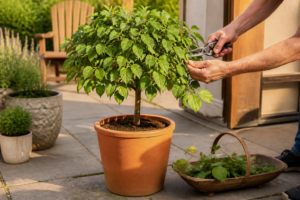
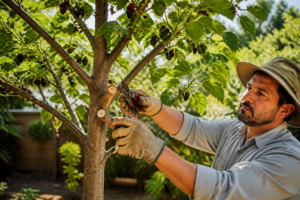
Prune now if you’re removing dead wood or diseased branches. Dead wood won’t magically heal, and disease spreads through winter in dead tissue. Remove branches that are obviously dead (brown, brittle, no green under the bark when you scratch it) or show signs of disease—cankers, oozing, discolored bark, or branches that failed to leaf out in spring.
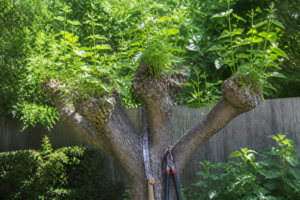
Don’t prune for shape, size, or vigor in October. Wait until late winter (January through early March). Here’s why: pruning stimulates the tree to compartmentalize the wound and can trigger late dormant buds to wake. In fall, you’re cutting into that window where the tree is losing the energy to heal well before frost, and any bud activity is wasted energy. In late winter, when you prune, the tree responds by putting all its energy into spring growth.
Hedging and heavy shaping should happen in late winter only. If you’re trying to control the size of a vigorous variety, or you’re training a young tree, save that work for February or March. The tree will have a full growing season to recover and respond.
| Task | October? | Better Timing | Why |
|---|---|---|---|
| Remove dead wood | Yes | Anytime | Prevents disease spread |
| Remove diseased branches | Yes | Anytime | Stops pathogen progression |
| Thin for air flow | No | Late winter | Stimulates spring growth at better time |
| Shape or reduce height | No | Late winter | Minimizes wasted dormant-season energy |
| Fertilize | No | Late winter/early spring | Avoids pushing tender fall growth |
Water Less, But Don’t Abandon Your Trees
As temperatures drop and rainfall typically increases in fall, most regions need less supplemental water. If you’ve been running drip irrigation or hand-watering through summer, dial it back significantly in October.
Mulberry roots are still active, though, so don’t stop watering entirely. If October stays dry where you are, water deeply once every two weeks or so—less frequently than summer, but enough to keep the soil from drying out completely. Mulberries don’t like wet feet going into winter, but they do need consistent moisture.
Stop any frequent, light watering. Switch to less-frequent, deeper soaking if needed. This encourages roots to grow deeper, which helps the tree withstand winter stress.
Clean Up Around the Base
Clear fallen mulberries, leaves, and branches from around the base of each tree. This isn’t just tidiness.
Fallen fruit can harbor pests and mold overwinter. Leaves piled directly against the trunk create moisture and can encourage disease. A clean zone around the base (at least 1–2 feet out, further if you can) lets the tree dry out between rains and reduces pest and disease pressure heading into dormancy.
You don’t need to remove all leaves from your property—that’s actually bad for soil health—but clear the zone immediately around the trunk.
Mulch Thoughtfully, or Don’t
If you use mulch around your trees, October is a reasonable time to refresh it. A 2–4 inch layer of wood chips or compost keeps soil temperature more stable through freeze-thaw cycles and protects roots.
Here’s the catch: keep mulch several inches away from the trunk itself. Mulch piled against the bark traps moisture, invites pests to nest against the tree, and can lead to rot or rodent damage. A “doughnut” of cleared space around the base is better than a “volcano” of mulch against the trunk.
If you don’t use mulch, that’s fine too. Mulberries are tough and don’t require it, though it can help in regions with extreme temperature swings.
Check for Pests and Disease Before Winter
October is a good month to do a final scout of your trees. Look for:
- Borers or scale insects on the trunk and branches
- Cankers or sunken, discolored bark
- Mummified fruit still hanging on branches (remove these)
- Dead branches or branches with no green under the bark
Catch pests and disease now, and you’ve prevented them from overwintering in huge numbers. Any branches that are obviously compromised should come off.
If you find pests or disease you’re unsure how to treat, a local cooperative extension office or a licensed arborist can advise. Don’t wait until spring to address something that’s clearly established.
What Your Mulberry Needs Most in October
More than anything else: rest, stability, and drainage.
Your trees will do most of their heavy winter damage prevention underground. Strong roots going into winter mean a stronger tree in spring. Stable temperatures (not wild swings between warm and freezing) help. Good drainage means roots aren’t rotting during wet winter months.
You can’t control temperature, but you can ensure your mulberries aren’t sitting in standing water and aren’t being pushed to grow when they should be slowing down.
Putting It Together
Here’s a practical October checklist:
- Stop fertilizing. Full stop.
- Remove dead wood and diseased branches only.
- Reduce watering, but don’t stop entirely.
- Clear fallen fruit and debris from around the base.
- Refresh mulch (if you use it), keeping it off the trunk.
- Scout for pests and disease and remove obviously affected branches.
- Hold off on shaping or heavy pruning until late winter.
October isn’t the time to overhaul your mulberry trees. It’s the time to close out the growing season, clean up what’s damaged, and let your trees slide into dormancy in good shape. The real growth work happens in late winter and spring.
Your trees will enter winter stronger, and they’ll reward you with a vigorous spring and a solid harvest.
About This Article
Written by Ruth Nakamura. Ruth Nakamura is a backyard orchardist in the Pacific Northwest who has grown mulberries for fifteen years, cultivating twelve different varieties in her own backyard. Not a horticulturist by formal training - she shares what she has learned through hands-on growing, workshops, and connecting with nurseries and growers across the country. More about this site.
Scope and limits. Ruth is a backyard orchardist without formal horticultural training. Growing conditions vary enormously by region, so confirm variety, timing, and pest guidance with your local extension service.
Verify this against a primary source
Specifics change, and your situation may differ from the one described here. These are the authorities worth checking directly:
- USDA Plant Hardiness Zone Map — zone verification for your location
- Oregon State University Extension — fruit growing and pruning research
- USDA PLANTS Database — species range and identification