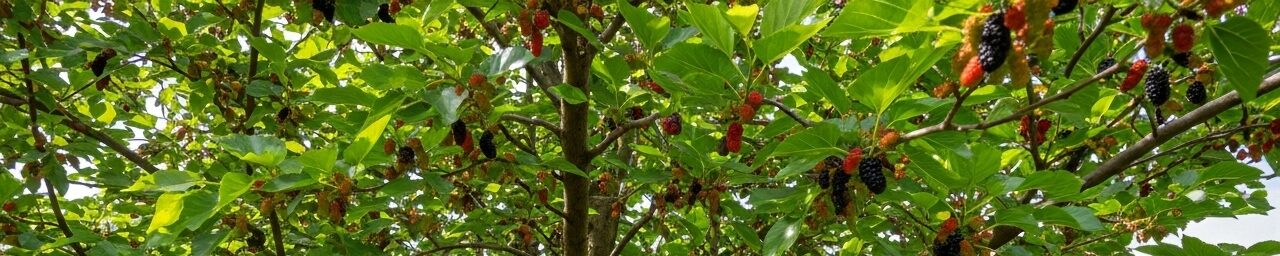
Most people assume that once you plant a mulberry tree, lawn management stays simple—mow it like you always have and call it done. That assumption is dead wrong. The competition playing out underground between tree roots and grass roots is relentless, and ignoring it means the tree suffers, the harvest suffers, and summer becomes an exercise in purple damage control. A mulberry and a lawn aren’t separate problems — they’re a single system that either works together or slowly falls apart. Managing that balance requires understanding how roots, water, and nutrients interact beneath the surface, backed by horticultural principles that apply across different cultivars and growing years.
The payoff isn’t trivial. A mulberry tree living in harmony with its turf produces more fruit, holds that fruit longer before drop, and gives you a harvest you can actually enjoy instead of one that turns your shoes purple and vanishes into the grass within forty-eight hours. You also spend far less time managing stains on your deck, garage, and driveway. But none of that happens by accident.
How the Great Berry Disaster Actually Unfolded
My education on this subject came courtesy of a single afternoon in late June when I made the decision to let the grass grow tall beneath one of my older trees. The logic seemed sound at the time—longer blades would theoretically catch falling berries and soften their landing. This is, I learned within hours, not actually how berries work. What I’d created instead was a dense, dark mat of grass that concealed thousands of fermenting mulberries at ground level. When I cut through that yard heading toward the patio to start dinner, I stepped directly into what I can only describe as a layer of biological purple concrete. By the time I made it to the grill, my bare feet had absorbed enough pigment to resemble a tie-dye experiment gone wrong.
Dave, my neighbor, watched the whole thing unfold from his side of the fence. He’s learned not to say anything when I’m testing theories that visibly aren’t working, but this time he couldn’t help himself: “Rough day in the berry zone?” He was being generous. What I needed wasn’t sympathy—it was a legitimate system.
Establishing a Workable Routine for Grass and Mulberry Trees Living Side by Side
The real breakthrough came when I stopped thinking about my mulberry setup as “a tree with a lawn around it” and started seeing it as its own distinct zone with its own seasonal demands. Once that shift happened, the actual management became straightforward. Here’s what I do now, and why each piece matters:
Increase Mowing Frequency During the Peak Fruit-Drop Window
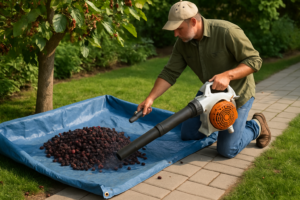
Between late May and the end of June (timing varies with your specific climate and which cultivar you’re growing), mow underneath the canopy every four to five days instead of your normal weekly or biweekly schedule. The goal is simple: never let fallen berries sit long enough to ferment into the grass and become invisible land mines. A quick ten-minute pass keeps the situation manageable and prevents the tie-dye effect I learned about the hard way.
Establish a Distinct Border Between the Mulched Zone and Surrounding Turf
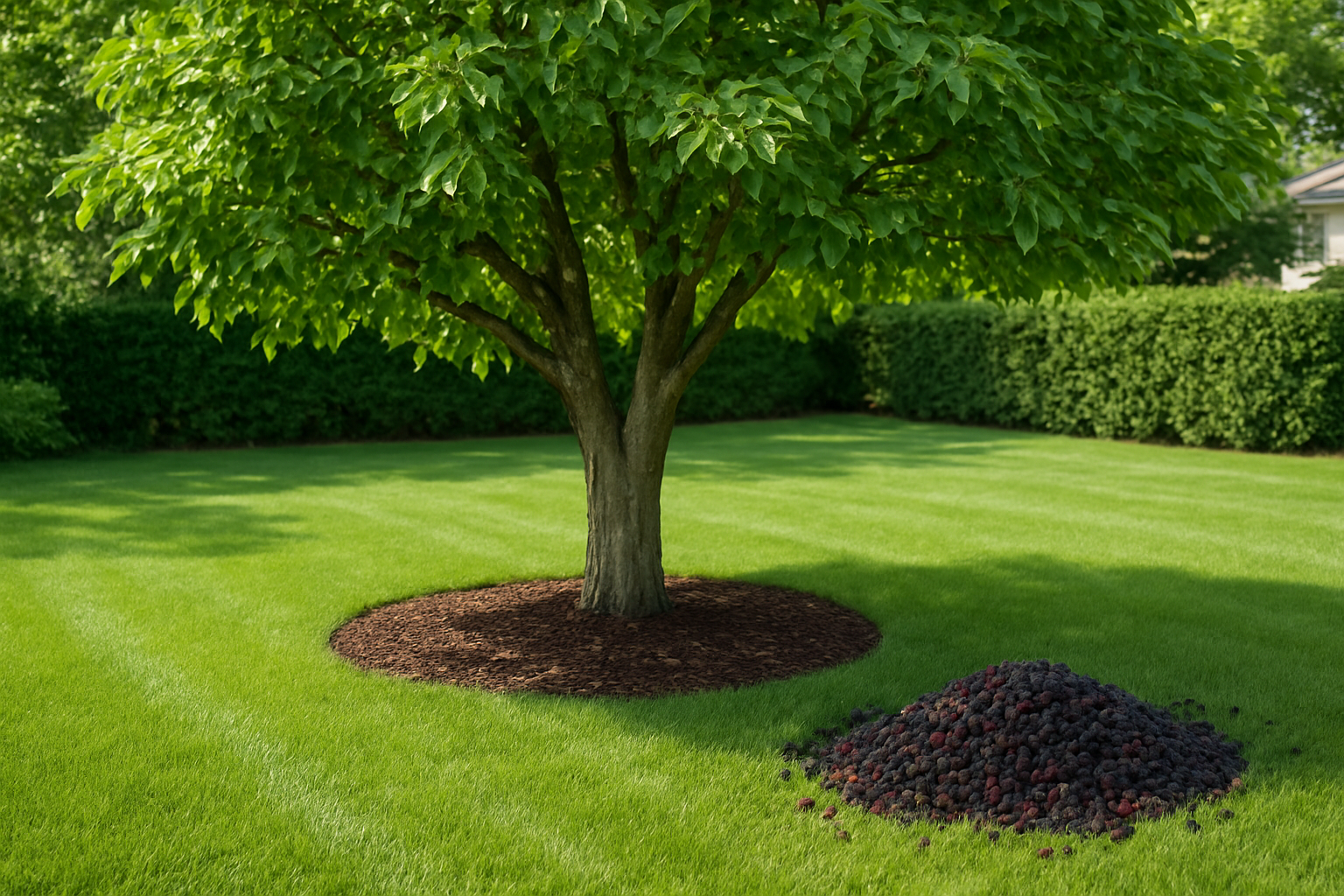
I cut a defined perimeter around my mulberry trees—a clear line that separates the turf from the mulched ring directly beneath the branches. This boundary accomplishes multiple things simultaneously: it narrows the zone where berries accumulate on grass, gives you a precise line to follow when mowing so you don’t accidentally mulch berries into the lawn, and honestly just makes the whole setup look intentional rather than accidental. A good edging tool transforms this from frustrating to almost meditative. I’ve tried several approaches and found what works best:
Keeping Lawn Grass From Invading the Root Zone: The Edge Tool That Changed My Approach
Grass encroaching into the space directly above your mulberry’s root system is a long, slow problem—one that looks minor in year one but genuinely weakens your tree by year three or four as competition for water and nutrients intensifies. A sharp, well-maintained edge keeps the root zone protected and makes the entire berry-season cleanup routine actually feasible.
Why this tool earned its place in my routine
- At 41 inches, the blade length means you can cut a complete border around a mature tree in a single session without stopping to reposition. A typical approach is to cut a line 2 to 3 feet out from the trunk to ensure the feeder roots have uncontested territory.
- A truly sharp blade slices through established sod and surface weed roots without tearing, which matters because ragged edges just regenerate thicker and tougher grass the next season.
- When you maintain this border consistently—hitting it again in mid-summer—berry debris stays corralled and sweepable, which means fewer stains migrating onto your concrete or attracting the full ecosystem of wasps and flies.
The real constraints you should know about
- This isn’t something you do once in April and forget about; you’re looking at maintenance every 4–6 weeks during the growing season if you want the boundary to actually stay intact and function.
- In heavy clay or rocky soil, the blade can slip and bounce rather than cutting cleanly, especially if you don’t apply real downward pressure; slower, more deliberate passes work better than trying to power through resistant ground.
I almost gave up on edging altogether after a summer of half-hearted attempts with a shovel, watching the grass just laugh and come back even stronger. That’s when I picked up the CKLT Edger Lawn Tool 41in Border Edger, and the consistency finally clicked—a proper tool makes the difference between a chore you’ll skip and one that actually happens.
Frequently Asked Questions
Does letting grass grow tall under a mulberry catch the berries?
No, and I learned that the hard way one afternoon in late June. Tall grass under my older tree created a dense, dark mat that hid thousands of fermenting mulberries at ground level instead of softening their landing. I walked through barefoot and my feet came out looking like a tie-dye experiment gone wrong.
How far out from the mulberry trunk should I cut the border?
A line cut 2 to 3 feet out from the trunk gives feeder roots uncontested territory. That distance also narrows the zone where berries land on grass and provides a precise line to follow when mowing, so fallen fruit doesn’t get accidentally mulched into the lawn.
Why does my edger bounce instead of cutting through the soil?
In heavy clay or rocky soil the blade slips and bounces rather than cutting cleanly, especially if you aren’t applying real downward pressure. I’ve found slower, more deliberate passes work far better than trying to power through resistant ground. A truly sharp blade also matters, since ragged edges just regenerate thicker, tougher grass the next season.
Does lawn grass really weaken a mulberry tree over time?
Yes, in my experience grass encroaching over the root system is a long, slow problem. It looks minor in year one but genuinely weakens the tree by year three or four as competition for water and nutrients intensifies. That’s why I keep a sharp, maintained edge protecting the root zone beneath the canopy.
Keep Reading
About This Article

Written by Ruth Nakamura. Ruth Nakamura is a backyard orchardist in the Pacific Northwest who has grown mulberries for fifteen years, cultivating twelve different varieties in her own backyard. Not a horticulturist by formal training - she shares what she has learned through hands-on growing, workshops, and connecting with nurseries and growers across the country. More about this site.
Scope and limits. Ruth is a backyard orchardist without formal horticultural training. Growing conditions vary enormously by region, so confirm variety, timing, and pest guidance with your local extension service.
Verify this against a primary source
Specifics change, and your situation may differ from the one described here. These are the authorities worth checking directly:
- USDA Plant Hardiness Zone Map — zone verification for your location
- Oregon State University Extension — fruit growing and pruning research
- USDA PLANTS Database — species range and identification