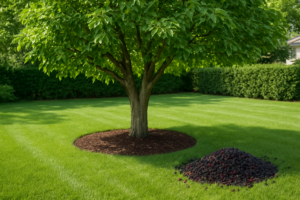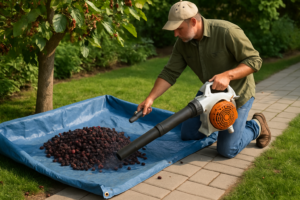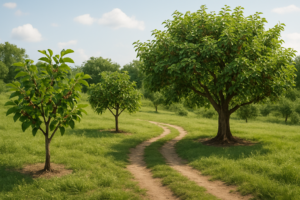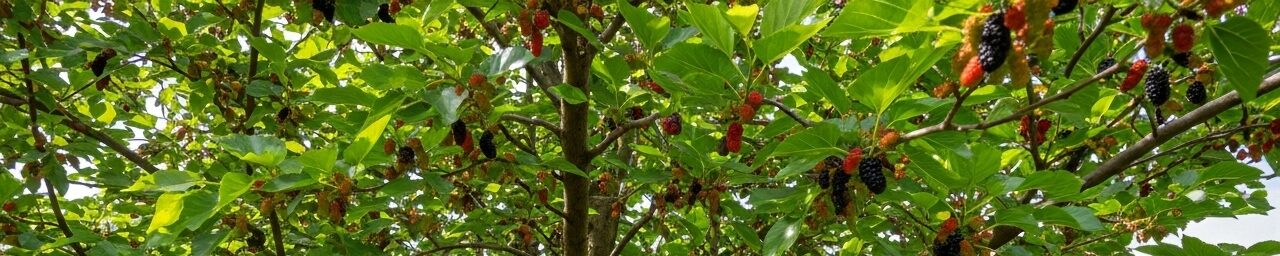
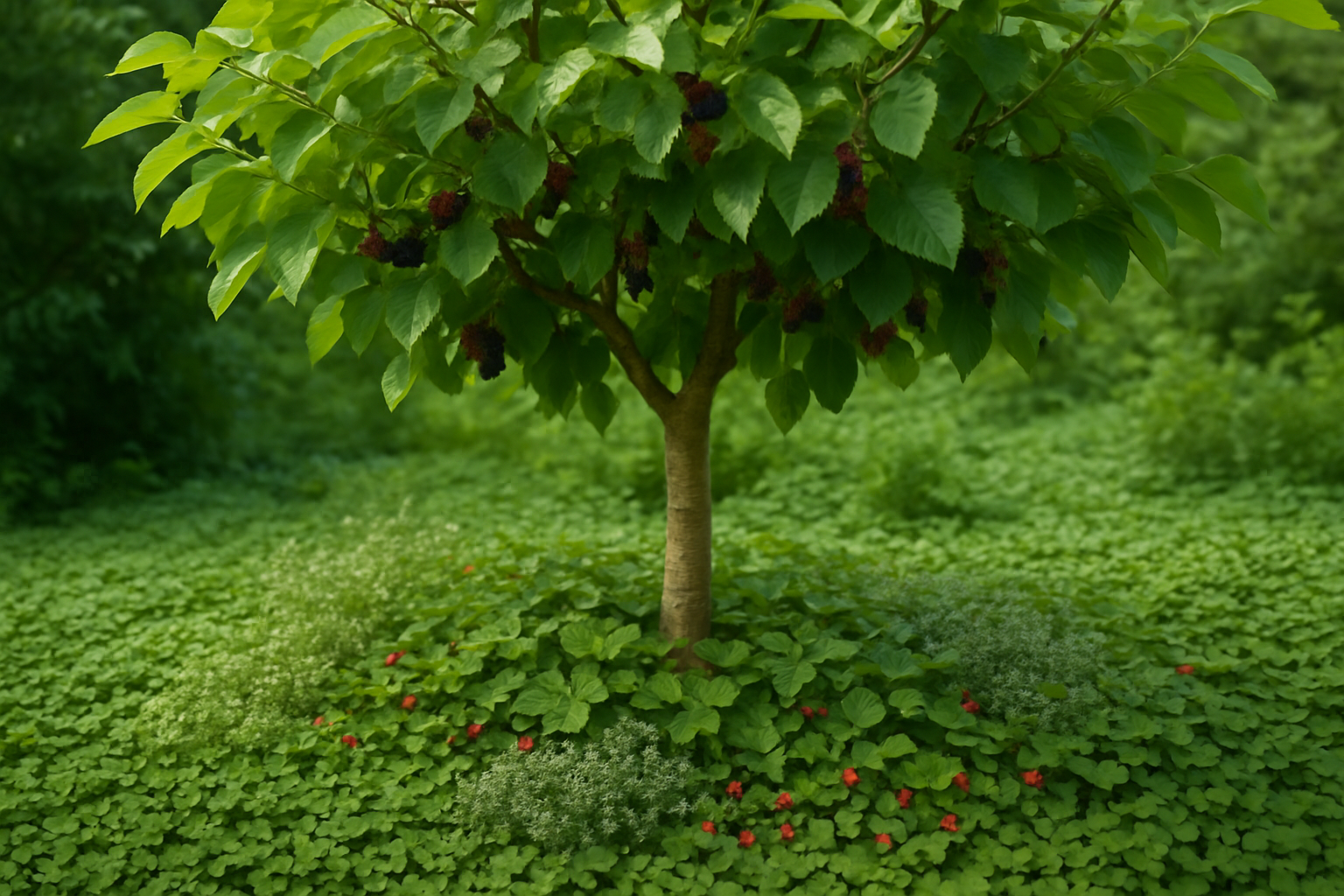
One of the principles I run my homestead on is maximizing productive use of every square foot. A dwarf mulberry in a compact space consistently outperforms what most people expect — but only if it’s sited, pruned, and managed specifically for yield rather than just planted and left to grow however it wants. That obsession with yield is exactly why the ground beneath my mulberry trees became something I couldn’t afford to ignore: between the drop zone for ripe fruit, the root competition, and the dense summer shade, that bare patch of dirt is either working for you or against your harvest — and when you’re trying to capture every single berry for fermenting, drying, or canning, losing fruit to dirt, mud splash, and rot is not an option. What I’ve learned after years of trialing everything from creeping thyme to wood chip mulch to intentional living mulches is that the right ground cover strategy doesn’t just solve the bare dirt problem — it actively improves your harvest efficiency and reduces the waste that quietly bleeds your preserving pantry dry. This guide covers what actually works under mulberries specifically, not just generic shade ground cover advice, and why the choices you make at ground level have a direct impact on how much usable fruit makes it from tree to jar.
If you’ve landed on this post, there’s a good chance you know exactly how I felt. That bare, dusty circle under a mulberry tree is one of the most frustrating landscaping problems in any garden. It looks neglected, it kicks up dirt every time the wind blows, and no matter what you plant there, nothing seems to survive. So let’s fix that — for real this time.
Why Is the Ground Under Mulberry Trees So Difficult?
Before we talk solutions, it helps to understand the problem. Mulberry trees are vigorous, fast-growing, and honestly a little aggressive when it comes to resources. Here’s what they’re doing to that bare patch of dirt beneath them:
- Surface root competition: Mulberry roots spread wide and shallow, aggressively soaking up moisture and nutrients right at the surface level where most plants need to establish.
- Dense canopy shade: A mature mulberry throws serious shade. Many plants that would otherwise thrive simply can’t get enough light to survive beneath one.
- Allelopathic tendencies: Some research suggests mulberry trees release compounds that can inhibit the germination and growth of competing plants nearby.
- Dry, compacted soil: Because the roots pull moisture so efficiently, the soil under the canopy can become bone dry and hard, making it nearly impossible for new plants to take hold.
When I lost those hostas, I had made the classic mistake of choosing shade-tolerant plants without accounting for the root competition and soil dryness. Shade tolerance alone isn’t enough. You need plants that are drought-tolerant and shade-tolerant and tough enough to compete with an established tree’s root system. It’s a short list — but it exists.
The Best Ground Cover Under Mulberry Tree Options That Actually Work
After my expensive failure, I did what I should have done from the beginning: I researched obsessively, talked to other mulberry growers, and started small before committing big. Here’s what I learned actually works.
Creeping Thyme — The Overachiever
Creeping thyme is genuinely one of the best ground covers for challenging spots under trees. It’s low-growing (usually just 2–3 inches tall), spreads gradually to fill gaps, handles dry soil like a champ, tolerates partial shade reasonably well, and produces pretty little purple blooms that pollinators love. It also smells wonderful when you brush against it. Once established, it’s nearly indestructible. I now have it growing happily in the driest section under my mulberry, and it has completely transformed that corner from dusty wasteland to a fragrant, living carpet.
Forget-Me-Nots — For the Shadier Spots
In the areas where my mulberry canopy is densest, I turned to forget-me-nots. These charming little blue flowers are genuinely shade-tolerant, self-seeding, and low-maintenance once they get going. They won’t handle the driest, most root-congested zone directly at the trunk — but in the outer ring of the canopy where there’s a bit more moisture and filtered light, they fill in beautifully. They’re also extremely affordable to grow from seed, which matters when you’ve already burned $200 on one failed attempt.
Irish Moss — For a Lush, Low Carpet Look
Irish moss is another excellent option, especially if you love that velvety, manicured look. It stays very low, forms a dense mat that suppresses weeds naturally, and handles both shade and light foot traffic. It’s a bit slower to establish than creeping thyme, so patience is required — but once it fills in, it looks like a proper garden rather than a place where plants go to die.
A Few Practical Tips Before You Plant
- Amend the soil before seeding. Work in a layer of compost — even just an inch — to give seeds a fighting chance against the compaction and dryness.
- Water consistently for the first 4–6 weeks. Even drought-tolerant plants need help establishing their roots. A soaker hose works beautifully here.
- Start from seed, not transplants. Transplants often struggle because their root systems were developed in ideal nursery conditions. Seeds that germinate in place adapt to the specific challenges of your tree’s environment from day one.
- Don’t plant right at the trunk. Leave a clear ring of a few inches around the base of the trunk to avoid moisture buildup and bark rot.
- Seed in fall or early spring when soil moisture is naturally higher and heat stress is lower — this dramatically improves germination success.
Purple Creeping Thyme: The Ground Cover That Actually Thrives Under Mulberry Shade
The bare dirt beneath mulberry canopies is a real problem—it compacts, weeds invade, and you’re constantly fighting erosion during heavy rain. I needed something that could handle partial shade, survived my neglect during peak harvest season, and wouldn’t compete with shallow mulberry roots.
What works
- Established plants spread fast enough to suppress weeds by year two without needing constant hand-weeding or mulch reapplication.
- The fragrance actually repels some of the smaller insects that climb the tree, and birds seem less attracted to nesting in branches directly above dense thyme.
- Drought tolerance held up during my dry summers—I literally watered it twice after germination and it filled in the gaps on its own.
What doesn’t
- Germination is slow and spotty (expect 4–6 weeks), so bare patches will stay bare for a while—you’ll need patience and consistent moisture during seedling stage.
- Heavy mulch or deep shade from mature trees can kill it off in patches, so you can’t just plant it and forget it if your trees are already fully established.
I almost ripped out the whole bed in month three because the germination looked so sparse I thought I’d wasted money, but the thyme exploded once temperatures stayed warm. 20000pcs Purple Creeping Thyme Seed for Planting — Perennial, Fragrant, Drought-Tolerant
This post contains affiliate links. As an Amazon Associate, I earn from qualifying purchases at no extra cost to you.