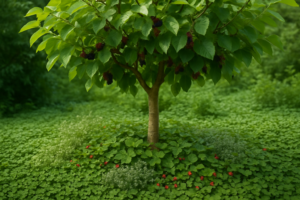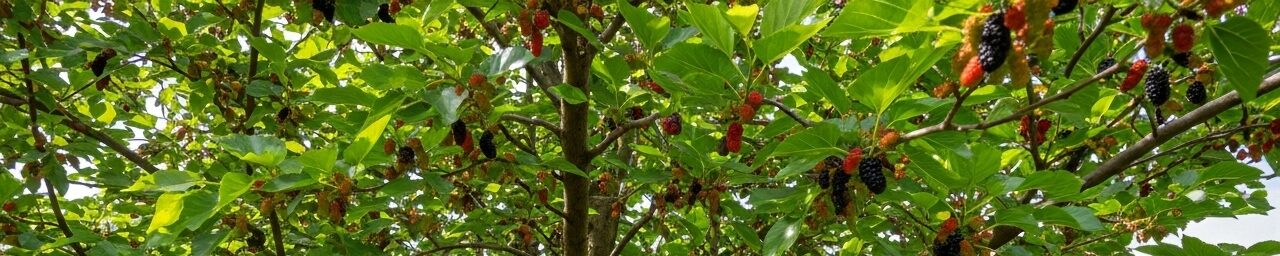
When my mulberry started looking rough in its second year — sparse leaves, slow growth, fruit that dropped before it ripened — I panicked and Googled everything. It turned out to be a straightforward fix once I understood what the tree was actually telling me. Now I know the warning signs and what they mean, and one of the biggest lessons I picked up along the way was that premature fruit drop isn’t just a tree health issue — it’s the beginning of a whole separate problem at ground level, especially if you’ve got garden beds anywhere near the drip line. Fallen mulberries in planted beds can go from minor annoyance to genuine chaos fast: staining foliage, fermenting in the soil, and attracting pests that stick around long after the fruiting season ends. In this guide I’m walking through what’s actually worked in my backyard — not a commercial orchard, not a landscaping textbook — just real trial-and-error solutions from someone who’s cleaned up more purple messes than they’d like to admit.
Why Fallen Mulberries Are a Bigger Problem Than They Look
If you’re new to growing mulberries, let me give you the honest talk I wish someone had given me. Mulberry trees — whether you’re growing a dwarf Everbearing, a stately Illinois Everbearing, or a beautiful weeping variety — are incredibly generous producers. That’s the magic of them. But that generosity comes with a price tag: a fruiting window that can last four to six weeks, during which ripe berries drop constantly. Every. Single. Day.
The juice from ripe mulberries contains deeply pigmented anthocyanins — the same compounds that make them so nutritious — and those pigments bond quickly to porous surfaces like flagstone, concrete, wood mulch, and light-colored gravel. Left to sit for even 48 hours, especially in summer heat, they can permanently stain. Fermenting berries also become a magnet for fruit flies, wasps, and even larger pests like raccoons and opossums. And if your garden bed has moisture-sensitive plants, a thick layer of rotting fruit can promote fungal issues at the crown level.
The good news? This is entirely manageable once you have a rhythm and the right tools in place. Let me walk you through what actually works.
Fallen Mulberries Garden Management: A Practical System That Works
Step 1: Establish a Daily or Every-Other-Day Clearing Routine
The single biggest thing that saved my garden — and my sanity — was accepting that berry cleanup during peak fruiting season isn’t a weekend chore. It’s a daily or every-other-day task, like watering. Once I stopped treating it as optional, everything got easier. I found that a quick 10-minute session each morning before the berries baked in the afternoon heat made a dramatic difference in staining and pest activity.
Step 2: Use a Leaf Blower to Corral Berries Efficiently
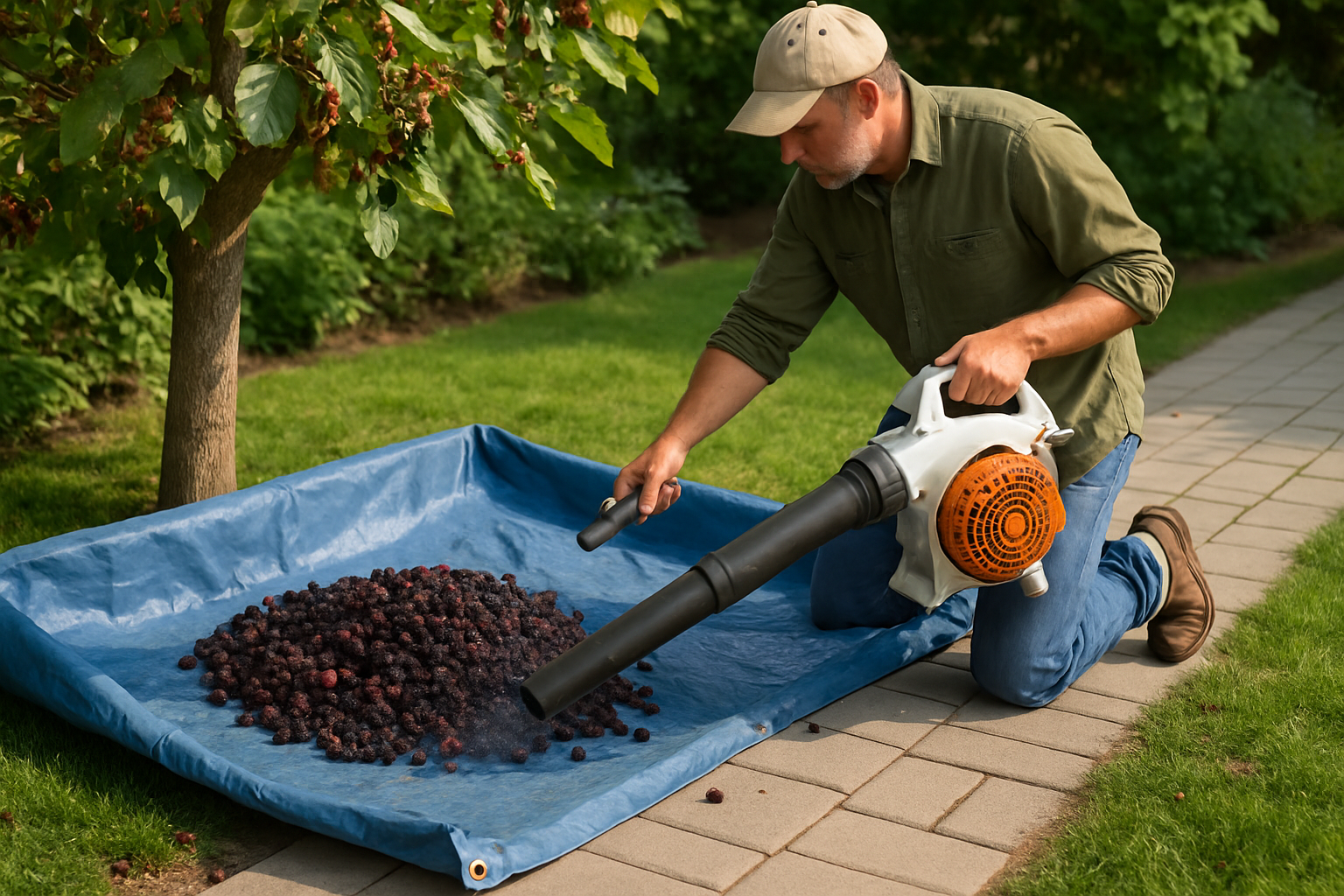
This is the game-changer tip I wish I’d had in week one. Don’t try to rake or hand-pick fallen mulberries from garden beds — you’ll spend an hour hunched over and still miss half of them. A cordless leaf blower lets you gently herd the berries off mulched beds and onto hard surfaces or a tarp in minutes. You want enough airflow to move ripe, soft fruit without blasting your perennials sideways, so a variable-speed model is ideal.
Step 3: Collect Onto a Tarp, Then Compost or Bag
Blow berries onto a lightweight tarp laid out at the edge of your garden bed, then gather and haul them to your compost pile or green waste bin. Mulberries are fantastic in a hot compost pile — they break down quickly and add moisture and nutrients. Just make sure your pile gets hot enough (above 130°F) to kill any seeds if you don’t want surprise mulberry seedlings popping up later. Alternatively, bag them in your municipal yard waste if you’d rather not deal with the seeds at all.
Step 4: Address Staining on Hardscape Immediately
For staining on flagstone, pavers, or concrete, act fast. A mixture of white vinegar and a few drops of dish soap scrubbed with a stiff brush works surprisingly well on fresh stains. For older set-in stains, an oxygen bleach cleaner (like OxiClean powder mixed into a paste) is your best friend. Avoid chlorine bleach on natural stone, as it can cause discoloration. For wood decks or painted surfaces, a pressure washer on a low setting right after the season ends can restore a lot of the original color.
Step 5: Use Ground Cover Strategically
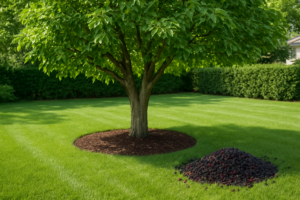
If you have a mulberry tree directly over a garden bed, consider shifting to a dark-colored or decorative bark mulch underneath during fruiting season. Deep brown or black bark mulch disguises berry staining beautifully and makes cleanup faster. Some gardeners also temporarily lay a dark-colored tarp or landscape fabric under the drip zone during peak drop, pulling it up every couple of days to clear berries before any fermentation begins.
The Leaf Blower That Finally Clears Fallen Mulberries Before the Staining Spreads
Once those fallen mulberries hit the ground, you’ve got maybe 24–48 hours before they start breaking down and staining everything—soil, hardscape, even your shoes. A cordless leaf blower lets you clear them fast, before the mess becomes permanent and attracts wasps and fruit flies to your garden beds.
What works
- Two batteries mean you can clear a full canopy drop and still have power left to tidy pathways without waiting for a recharge—critical during peak fruit-drop weeks.
- The compact 20V motor is light enough to use one-handed around tree trunks and between raised beds without shoulder fatigue, which matters when you’re doing this 2–3 times a week.
- Cordless means no extension cord tangling around the mulberry canopy or gas engine smell that attracts more insects to ripening fruit still on the branches.
What doesn’t
- On loose mulch or composted beds, the airflow will scatter organic material and expose soil underneath—you’ll be rearranging more than you’re clearing if your beds aren’t firmed down.
- 20V is quieter than gas but still loud enough to annoy neighbors early morning or evening, so timing matters if your mulberry is near property lines.
I was skeptical that a battery blower would have enough sustained power for a full fallen-fruit cleanup, but the two-battery system proved me wrong. MZK Cordless Leaf Blower (20V, with 2 Batteries)
This post contains affiliate links. As an Amazon Associate, I earn from qualifying purchases at no extra cost to you.