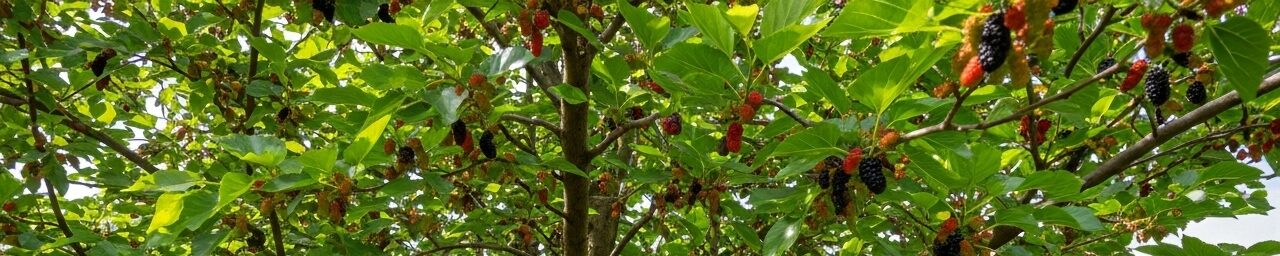
A mulberry tree on a homestead is a community asset — for you, for the birds, for the pollinators, and occasionally for every squirrel in a quarter-mile radius. Learning to manage that sharing relationship without losing your entire harvest to wildlife is one of the first real lessons the tree teaches you. But once you do get your hands on a serious harvest, you start asking a different kind of question: what do I do with all of this, especially the leaves and the fruit that aren’t quite perfect for jam or fermentation? That question is exactly what led me down a genuine research rabbit hole into mulberry leaf tea and its potential role in weight loss — because on a zero-waste homestead, the idea that something I was already trimming back and composting might actually be a functional, science-backed beverage felt almost too good to ignore. I’ve pulled together the actual studies, filtered out the hype, and connected it back to what mulberry growers specifically need to know about harvesting and preparing leaves the right way.
Why I Went Looking for Mulberry Tea Weight Loss Research in the First Place
Let me be fully transparent here: I came to this topic with very personal motivation. After a couple of winters of, shall we say, enthusiastic baking (mulberry hand pies are my downfall, and I regret nothing), I found myself wanting to make some gentle, sustainable changes. I was already drinking mulberry tea daily because I grow my own mulberry trees and genuinely love the stuff. When a reader emailed me asking whether it could help with weight, I figured this was the universe telling me to actually do the homework.
So I did. And here is what the science actually says — no hype, no exaggeration, just honest interpretation.
What the Research Really Shows About Mulberry Tea and Fat Loss
The Brown Fat Connection (This One Actually Blew My Mind)
Here is something I did not expect to find: a 2024 study published in Frontiers in Clinical Diabetes found that compounds in Morus alba — that is white mulberry, the same plant your tea comes from — can actually activate brown adipose tissue. If you are not familiar with brown fat, here is the quick version: unlike regular white fat, which just stores energy, brown fat burns energy to generate heat. Activating it increases your overall energy expenditure, which means your body is working harder to burn calories even at rest.
This is genuinely exciting biology. The researchers found that mulberry compounds supported fat reduction through this thermogenic pathway — not through appetite suppression or laxative effects or any of the sketchy mechanisms behind some weight loss supplements. This is your body’s own metabolic machinery being nudged in a helpful direction. Now, I want to be careful here: this study is relatively new and the research is still developing. But it is a real, peer-reviewed finding, and it gives mulberry tea a plausible mechanism that goes beyond wishful thinking.
The Carbohydrate Absorption Effect (Drink Your Tea With Meals)
This one I had actually heard whispers about before, but I wanted to see the evidence. Mulberry leaf polyphenols — the powerful plant compounds that give mulberry tea its health properties — have been shown to inhibit an enzyme called alpha-glucosidase. That enzyme is responsible for breaking down complex carbohydrates into sugars that your body absorbs. When it is inhibited, fewer of those carb-derived calories actually make it into your bloodstream.
In practical terms, this means that sipping mulberry tea with a starchy meal — think pasta, rice, bread, or, yes, mulberry hand pies — may reduce how many calories your body absorbs from that meal. This is the same general mechanism used by certain diabetes medications, which tells you researchers are taking it seriously. Does it mean you can eat a bowl of pasta with zero consequences? Absolutely not. But it is a real, documented effect that makes drinking mulberry tea at mealtimes a genuinely smart habit rather than just a hopeful ritual.
The Mouse Study We Should Talk About Honestly
A study published in Nutrients (you can find it at PMC9521161 if you want to nerd out with me) found that mulberry leaf polyphenols significantly reduced obesity in mice fed a high-fat diet. The results were striking — meaningful reductions in body weight, fat tissue, and metabolic markers of obesity.
Here is where I am going to be honest with you, because I think you deserve that: mouse studies are not human studies. They are an important early step in research, but a result in mice does not guarantee the same result in people. I would be doing you a disservice if I led with “mulberry tea cured obesity in a study!” without mentioning that the study subjects were, in fact, mice. What it does tell us is that the polyphenols in mulberry leaf have real, measurable biological effects on fat metabolism — enough to keep researchers interested and running more trials. That matters.
What Human Studies Actually Show (Spoiler: It Is Modest but Real)
Okay, here is the part where I put on my honest-friend hat and give it to you straight. Human studies on mulberry tea and weight loss exist, and they are promising — but the effects are modest. Most research in human subjects has shown weight loss in the range of 2 to 4 pounds over 8 to 12 weeks, and critically, those results appear when mulberry tea is combined with a calorie-controlled diet.
Two to four pounds does not sound like a miracle. And it is not. But here is how I choose to think about it: mulberry tea is not a magic potion, but it appears to be a genuinely supportive tool. If it helps you absorb fewer calories from carbs, nudges your metabolism through brown fat activation, and gives you a warm, satisfying ritual that replaces a higher-calorie beverage — those small effects compound over time. Four pounds in three months, every three months, is sixteen pounds in a year. That is meaningful.
The key word in all of this research is combined. Mulberry tea as part of a healthy lifestyle shows real promise. Mulberry tea while eating an entire pizza every night? The data does not back that up, and neither does basic arithmetic.
Processing Your Leaf Harvest: When You Finally Have More Than the Tea Strainer Can Handle
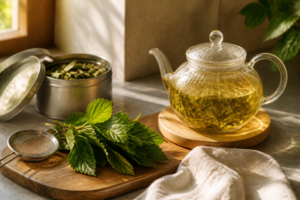
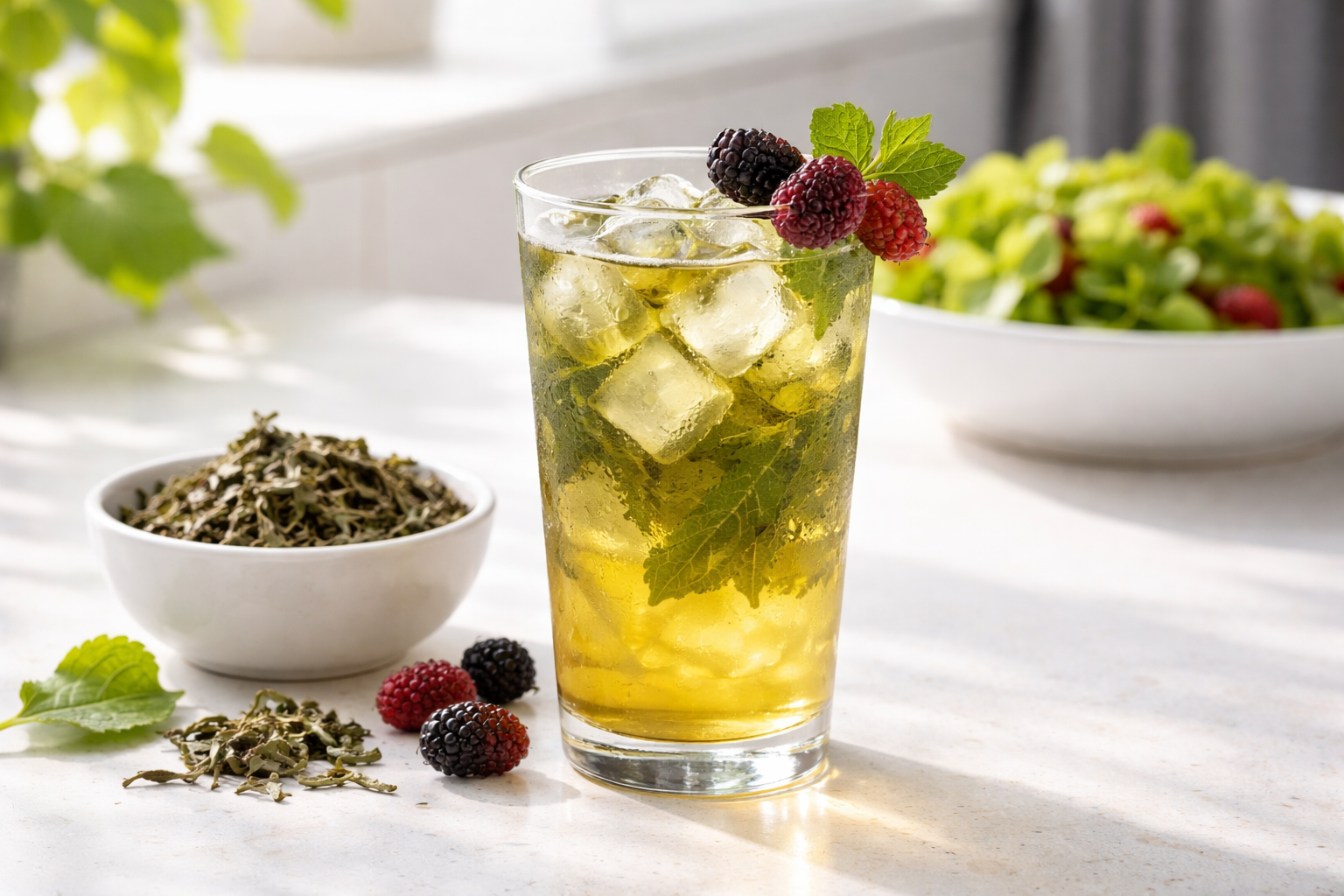
Once you get serious about harvesting mulberry leaves—either from your own trees or to use up that glut before they brown on the branch—you realize fresh-dried leaf tea is actually your most scalable option. Store-bought dried mulberry leaf tea lets you taste what you’re working with without spending hours with a dehydrator.
What works
- The organic certification means you can compare flavor and texture directly against your own dried leaves—useful for figuring out if your drying technique is actually working.
- Loose leaf format brews faster and more evenly than bags, which matters when you’re testing whether a batch of your own leaves is worth processing in volume.
- White mulberry leaf (versus red or black fruit varieties) is milder and less astringent, so it’s a good reference point if you’re growing a cultivar you’re unfamiliar with.
What doesn’t
- Loose leaf means you’ll want a small mesh strainer or infuser ball—not a deal-breaker, but one more thing to hunt down if you’re just starting to experiment with leaf tea.
- A package won’t teach you much about timing or technique for your own harvest, especially if your trees produce leaves with different flavor profiles depending on season and rain.
I was skeptical that store-bought would actually help me dial in my own drying process—I kept thinking it would just taste “off” compared to fresh—but having a reliable baseline to compare against actually saved me from wasting half a summer’s leaf harvest on an over-dried batch. FullChea USDA Organic White Mulberry Tea
This post contains affiliate links. As an Amazon Associate, I earn from qualifying purchases at no extra cost to you.