
This post contains affiliate links. As an Amazon Associate, I earn from qualifying purchases at no extra cost to you.
Every summer, my mulberry trees go absolutely berserk. Within two weeks, I have more fruit than my family, my neighbors, and honestly my entire street could ever eat fresh. Last year I lost nearly three pounds of berries to mold before I could process them. That frustrating waste pushed me down a research rabbit hole that eventually led me to write this food dehydrator mulberries COSORI review — because a machine changed everything about how I handle harvest season.
I had tried sun-drying mulberries the old-fashioned way. Spread them on a screen, leave them outside, pray it doesn’t rain. The results were inconsistent at best. Some batches dried beautifully. Others turned into sticky, almost fermented messes that attracted every insect within a half-mile radius. I needed a better system — something reliable, repeatable, and big enough to handle a serious harvest.
After three summers of failed sun-drying attempts, I finally committed to buying a food dehydrator. What I didn’t expect was how much I’d have to say about it afterward. This post covers everything: why I chose this specific model, what the setup was like, how it performed with fresh mulberries, and whether it was genuinely worth the investment.
Why I Chose the COSORI Food Dehydrator Over Other Models
My first instinct was to grab whatever was cheapest. Plenty of budget dehydrators exist in the $40–$60 range, and I almost pulled the trigger on one. Then I started reading reviews from people who actually dried fruit in bulk. The recurring complaint? Uneven drying. Trays near the heating element finishing hours before trays at the top. That inconsistency sounded exactly like my sun-drying problems — just indoors.
Several mulberry and homesteading forums kept pointing toward COSORI. Specifically, people praised the rear-mounted horizontal airflow system, which circulates heat evenly across every tray simultaneously. That detail mattered to me. With mulberries, you’re working with a soft, moisture-dense fruit. Uneven drying means some pieces go leathery while others stay sticky and spoil.
I ultimately chose the Cosori Food Dehydrator, Bigger Than 7 Trays with Large 6.5 ft² Drying Space, Stainless Steel Trays, 600W Faster Drying, 165°F Dehydrated Dryer for Jerky, Dog Treats, Herbs, Meat, Fruit, Yogurt, Silver. The 6.5 square feet of drying space was a deciding factor. During peak harvest, I can pull two to three pounds of mulberries per tree per day. A small five-tray unit simply wouldn’t keep up.
First Impressions: Unboxing and Build Quality
The box arrived heavier than I expected. Right away, that felt like a good sign. Lightweight dehydrators often mean lightweight construction, and I wanted something durable enough to run for eight or ten hours at a stretch throughout berry season.
Opening the packaging revealed a clean, brushed stainless steel exterior. The unit looked genuinely premium — not plasticky or toy-like. Each tray slid out smoothly and felt substantial in hand. No sharp edges, no cheap stamping marks. The mesh on the trays is fine enough to support small fruits like mulberries without them falling through, which I was specifically worried about.
The control panel sits on the front door. It’s a simple digital display with touch controls for temperature, time, and a start/stop function. Everything was intuitive without reading the manual first. Setup took me roughly fifteen minutes, including washing all the trays before first use. One minor note: the unit is large. Measure your counter space before ordering. It takes up a meaningful footprint.
What Comes in the Box
- The main dehydrator unit with door
- Multiple stainless steel mesh trays
- A recipe book with suggested temperature and time guides
- A drip tray for the bottom
- Basic instruction manual
Nothing felt missing. Everything felt purposeful. That initial impression held up through actual use.
My Testing Protocol: How I Actually Used This Machine
I ran the Cosori Food Dehydrator, Bigger Than 7 Trays with Large 6.5 ft² Drying Space, Stainless Steel Trays, 600W Faster Drying, 165°F Dehydrated Dryer for Jerky, Dog Treats, Herbs, Meat, Fruit, Yogurt, Silver through six separate drying sessions over four weeks during peak mulberry season. Here’s exactly how I tested it.
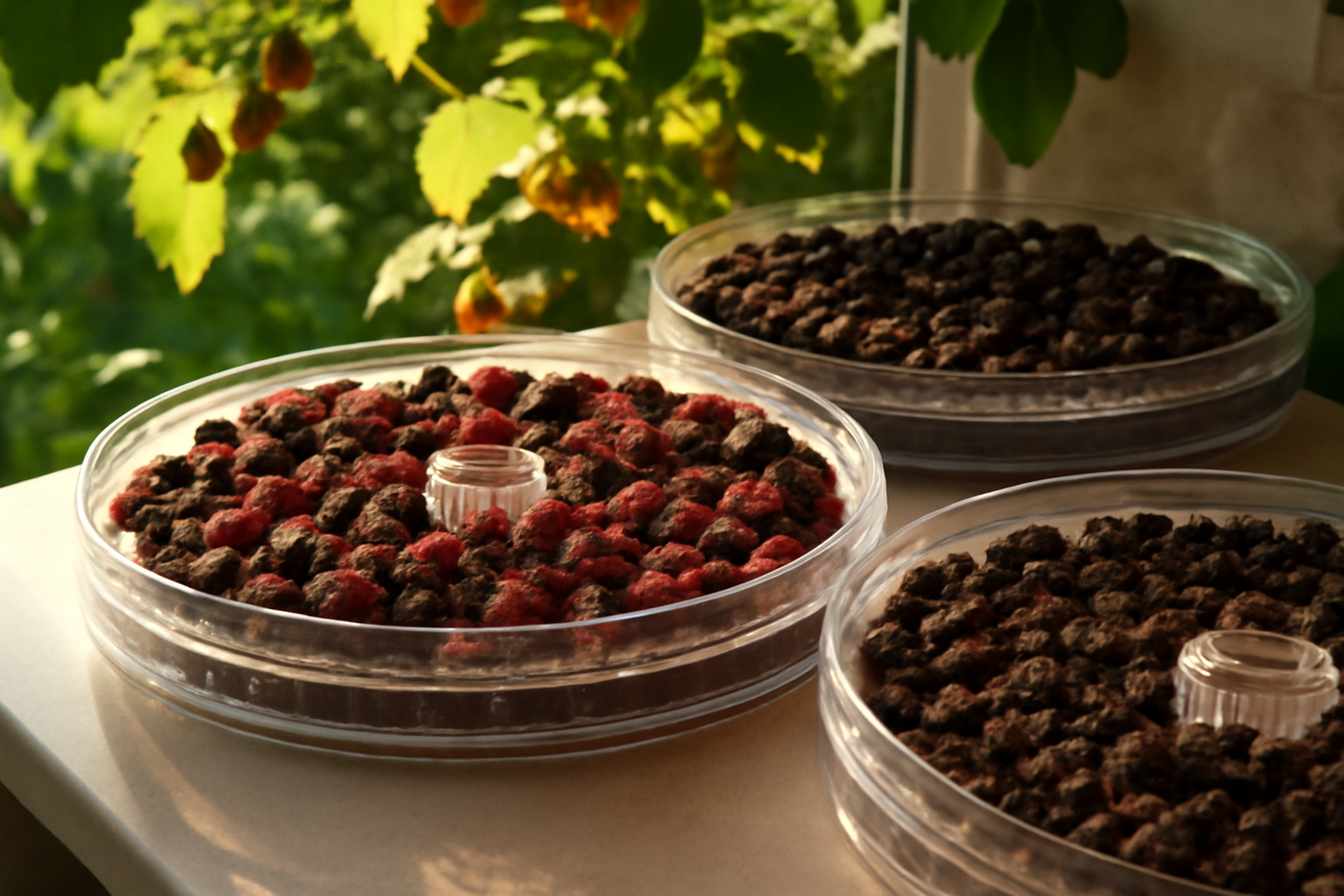
For each session, I rinsed fresh-picked mulberries and patted them dry with a clean towel. Excess surface moisture extends drying time significantly, so that step mattered. Next, I spread berries in a single layer across each tray, keeping them from touching where possible. Mulberries release a lot of juice as they dry, so I also lined the bottom drip tray with parchment paper for easier cleanup.
Temperature and Time Settings I Used
After some experimentation, I settled on 135°F for most sessions. At that temperature, mulberries dried fully in roughly eight to ten hours depending on berry size and initial moisture content. I ran one session at 145°F to compare speed. Drying time dropped to about seven hours, but the texture was slightly tougher — less plump and chewy, more brittle. For snacking purposes, the lower temperature produced a better result.
I checked the trays at the four-hour mark and again at the six-hour mark each time. Honestly, the even airflow meant I didn’t need to rotate trays — which was a pleasant surprise after reading about rotation requirements on other brands. Every tray dried at roughly the same rate throughout all six sessions.
Alongside mulberries, I also tested the machine with fresh herbs from my garden and a batch of banana chips. Both turned out well. The herbs dried crisp and aromatic within three hours. The banana chips were golden and snappy by hour six. That versatility was a genuine bonus I hadn’t prioritized when buying.
What Actually Changed: Honest Results From Six Sessions
Here’s the part I care most about when reading any review: did it actually solve the problem?
Yes. Emphatically yes. My dried mulberry success rate went from roughly 60% with sun-drying to 100% with this machine. Every single batch came out fully dried, shelf-stable, and genuinely delicious. The texture was consistently chewy and concentrated — almost raisin-like but with a distinct mulberry sweetness. My kids started asking for them as snacks, which felt like the ultimate endorsement.
Beyond consistency, the volume capacity was a game-changer. During one heavy harvest day, I loaded all trays with approximately two and a half pounds of fresh mulberries. By the next morning, I had a jar of beautifully dried berries ready for storage. That output would have taken three or four days of sun-drying — weather permitting — and would never have been as uniform.
A Moment of Doubt
I’ll be honest: after my second session, I got nervous. The berries at the eight-hour mark still felt slightly tacky on the outside. My first instinct was that something was wrong — maybe the temperature was too low, or I’d overloaded the trays. I nearly pulled everything out early.
Fortunately, I waited another ninety minutes. That tackiness completely disappeared. Mulberries have a higher sugar content than many fruits, and that residual stickiness was just concentrated surface sugar — not underdried fruit. Once I understood that, I stopped second-guessing the process. Lesson learned: trust the machine, and do the pinch test before pulling trays.
The Downsides: What I Wish I’d Known
No honest review skips the negatives. Here’s what I found genuinely limiting about this unit.
It’s loud. The fan runs continuously, and the noise level is noticeable. Running an overnight batch in a small kitchen meant I could hear it from the bedroom with the door closed. It’s not unbearable, but worth knowing if you have an open floor plan or light sleepers in the house.
Cleanup takes effort. The stainless steel trays are dishwasher-safe, which helps. However, mulberry juice stains stubbornly. After several sessions, some trays developed faint purple discoloration even after washing. It doesn’t affect performance, but it does affect aesthetics if that matters to you.
Counter space is a real requirement. This unit is not compact. If your kitchen already feels crowded, storage between uses becomes a consideration. I ended up keeping mine on a utility shelf in the garage during the off-season.
The price point is real. This is not a budget purchase. For occasional or casual dehydrating, the investment might feel steep. But for anyone processing serious harvest volumes — mulberries, other fruits, vegetables, herbs — the capacity and consistency justify the cost fairly quickly.
Final Verdict: My Food Dehydrator Mulberries COSORI Review Conclusion
After four weeks of real-world use, the Cosori Food Dehydrator, Bigger Than 7 Trays with Large 6.5 ft² Drying Space, Stainless Steel Trays, 600W Faster Drying, 165°F Dehydrated Dryer for Jerky, Dog Treats, Herbs, Meat, Fruit, Yogurt, Silver is genuinely the best solution I’ve found for processing a large mulberry harvest. It solves the exact problems that made sun-drying so frustrating — inconsistency, weather dependence, slow output, and spoilage risk.
Buy This If:
- You have multiple mulberry trees and a serious volume problem during harvest season
- You want reliable, consistent results without babysitting a drying screen
- You plan to dehydrate other produce, herbs, or proteins beyond just mulberries
- You’re comfortable with a larger countertop footprint and a higher upfront cost
Skip This If:
- You only have one small tree and process berries infrequently
- Counter or storage space is genuinely limited in your home
- Background appliance noise bothers you or others in your household
- Your budget doesn’t stretch to a premium dehydrator right now
Consider the Smaller COSORI Alternative
If the large-format model feels like more machine than you need, there’s a solid middle-ground option worth knowing about. The Cosori Food Dehydrator for Jerky, 176°F Temperature Control, 5 Stainless Steel Trays with 3.1 ft² Drying Space, 4 Presets, 48H Timer, for Dog Treats, Meat, Fruit, Veggies, Snacks, Bright-Silver offers a more compact footprint with 3.1 square feet of drying space and a 48-hour timer.
The smaller unit also reaches 176°F, which gives it a broader temperature range than the larger model. For someone with a single mulberry tree — or anyone who wants a capable dehydrator without committing to the full-size unit — this alternative