This post contains affiliate links. As an Amazon Associate, I earn from qualifying purchases at no extra cost to you.
Last spring, I stood in my backyard staring up at my mulberry tree and quietly dreading the next few hours. My hands were already sore from gripping my old bypass pruners, and I hadn’t even started yet. Every year, the same story: cramped fingers, half-cut branches, and a whole lot of frustrated grunting. That’s when I started seriously researching Fiskars PowerGear2 loppers for mulberry pruning, and honestly, I wish I’d found them two seasons earlier.
Mulberry trees are vigorous growers. Mine pushes out thick new shoots every single season, and many of those branches creep well past the one-inch mark. Standard hand pruners just weren’t cutting it — literally. I needed something with real reach and serious cutting power, but I also didn’t want to lug out a pole saw for every maintenance session.
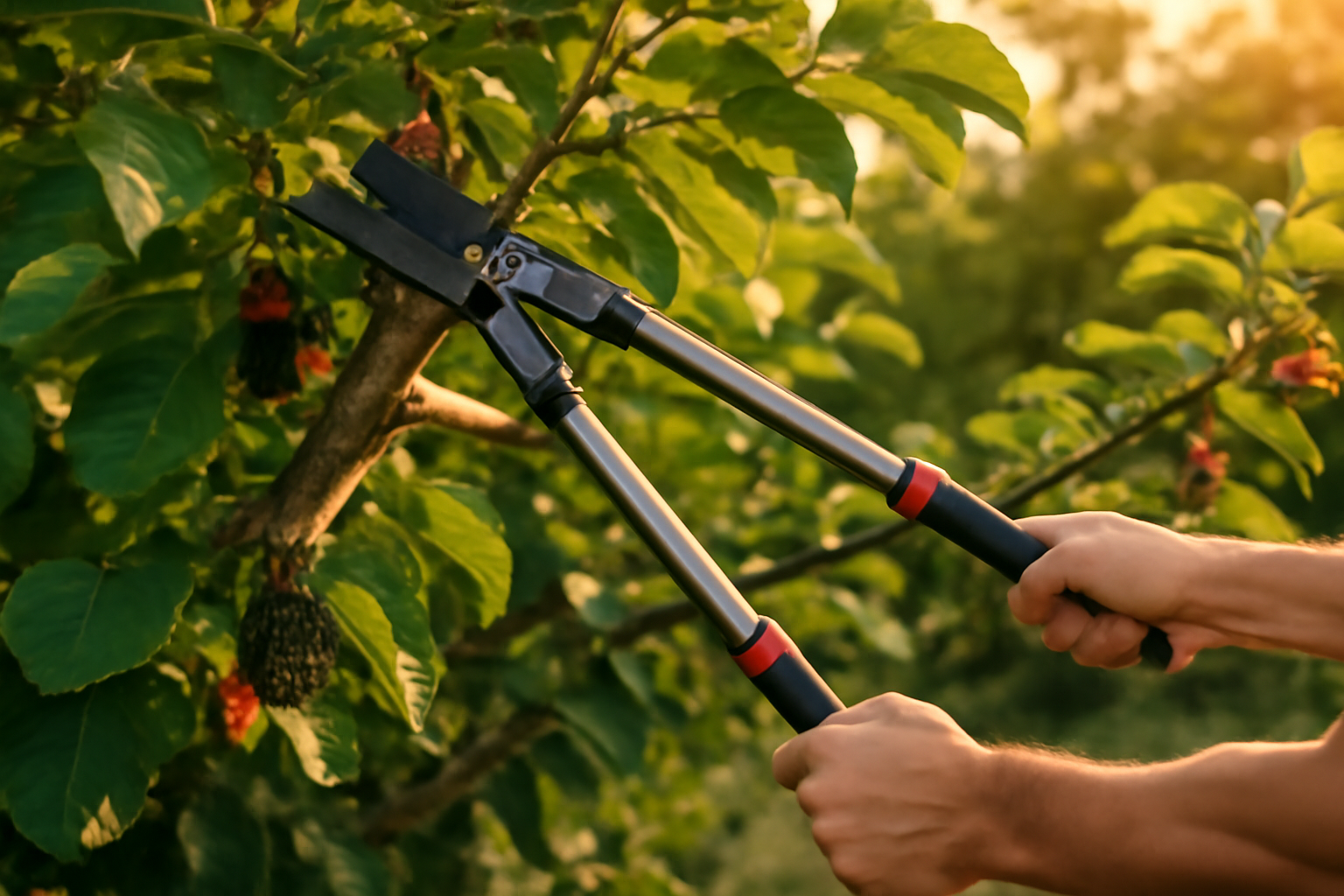
After a frustrating afternoon where I actually had to saw through one stubborn branch by hand, I decided enough was enough. I sat down that evening, pulled up my browser, and started comparing loppers. What I found eventually led me to the Fiskars 32-Inch Loppers for Tree Trimming, Heavy Duty, Low-Friction Sharp Steel Blade, Branch Cutter up to 2-Inch Diameter Cut Capacity, PowerGear2 Technology that Multiplies Power for Less Effort.
Why I Chose the Fiskars PowerGear2 Loppers for Mulberry Pruning
I’ll be honest — I almost went with something cheaper. There are plenty of loppers in the $20–$30 range, and part of me thought, “How different can they really be?” Then I started reading reviews more carefully, and a pattern emerged quickly.
Gardeners who pruned thick-stemmed trees consistently pointed to the gear mechanism as a game-changer. The PowerGear2 technology uses a compound gear system inside the handle to multiply the force you apply. In practical terms, Fiskars claims it provides up to 3x more power than single-pivot loppers. That’s not a minor upgrade — that’s a different tool category entirely.
The 32-inch handle length also appealed to me. Mulberry branches grow in tight clusters, and I needed reach to get into the canopy without dragging out a ladder every time. Plus, longer handles mean more leverage, which compounds the benefit of the gear mechanism even further.
Several gardening forums I frequent mentioned this model specifically for fruit trees with tough wood. Mulberry wood is notoriously dense, so that mattered. Finally, the price point — usually around $40–$50 — felt reasonable for a tool I’d use multiple times a year for years to come.
First Impressions: Unboxing and Build Quality
The loppers arrived well-packaged and required zero assembly. I appreciated that immediately. Sometimes garden tools show up with loose parts rattling around — not here. Everything felt solid right out of the box.
The handles are a lightweight but sturdy aluminum, coated in Fiskars’ signature orange. They don’t feel flimsy at all. At the same time, they’re noticeably lighter than the steel-handled loppers I’d used before. Over a long pruning session, that weight difference genuinely matters.
The blade itself impressed me most. It’s a precision-ground steel bypass blade with a low-friction coating. Running my thumb carefully along the edge (not against it — I learned that lesson years ago), it felt properly sharp. The lower blade is hooked to capture branches rather than letting them slide away mid-cut. That’s a small design detail, but a thoughtful one.
The gear mechanism housing is plastic, which gave me one moment of pause. My immediate thought was: that’s going to crack eventually. It looked a little exposed. I made a mental note to watch it closely during testing. Overall though, the first impression was genuinely positive — this felt like a quality tool built with purpose.
My Testing Protocol: How I Actually Used These Loppers
I’ve now used these loppers across three full pruning sessions spanning roughly eight months. My mulberry tree is a mature specimen, probably twelve feet tall, with a canopy spread of about fifteen feet. It produces a mix of new growth and established branches up to two inches in diameter.
Each session ran between ninety minutes and two hours. I worked across different areas of the tree, including:
- Removing water sprouts (fast-growing vertical shoots) from the main scaffold branches
- Cutting back crossing branches to open the canopy
- Removing dead wood from the previous season
- Trimming branches that were overhanging my fence line
Branch diameters ranged from about a quarter-inch all the way up to the stated two-inch maximum. I deliberately tested near that upper limit to see how the tool held up under real stress. I also tested it in both dry conditions and after rain, when wood tends to be slightly more pliable but the grip situation changes.
Between sessions, I wiped the blade clean and applied a light coat of oil. That’s basic maintenance, and I’d do that with any loppers. I didn’t do anything special to baby these — I wanted to see how they performed under normal working conditions.
What Actually Changed: Honest Results
The difference was noticeable from the very first cut. Branches that used to require multiple squeezes and significant hand strain went through cleanly in one or two motions. That’s not exaggeration — it genuinely felt like a different experience.
My hand fatigue dropped significantly. After my first session with these, I expected the usual soreness in my forearms and grip muscles. It was noticeably milder. By the second session, I was working through the entire pruning job without stopping to rest my hands, which I’d never managed before with loppers.
Cutting Performance on Mulberry Wood
Mulberry wood is dense and somewhat stringy, which makes clean cuts tricky. The low-friction blade coating made a real difference here. Branches didn’t grab and bind on the blade the way they often do with uncoated steel. Cuts came out clean, which matters for tree health — ragged cuts invite disease and slow healing.
At the two-inch limit, I did have to apply meaningful effort. It wasn’t effortless, but it was absolutely manageable with one hand on each handle and a firm, steady squeeze. Without the PowerGear2 mechanism, I genuinely don’t think I could have made those cuts repeatedly without exhausting myself.
The bypass design also meant cleaner cuts on living wood compared to an anvil-style lopper, which can crush stems. For a fruit tree, that distinction matters for the tree’s recovery.
Reach and Maneuverability
The 32-inch handle gave me access to branches I’d previously needed a step ladder for. That saved me time and reduced the safety risk of climbing while holding a sharp tool. Tight canopy areas were still occasionally awkward, but overall the reach was a genuine advantage.
The Downsides: Being Honest About the Limitations
No tool is perfect, and these loppers have a few real limitations worth knowing about before you buy.
The gear housing concern was valid. After several sessions, the plastic housing around the gear mechanism shows minor scuff marks. It hasn’t cracked or malfunctioned, but I do treat it with some care. If you’re rough on your tools or store them carelessly, that could become an issue over time.
The two-inch limit is a real limit. I tried pushing slightly beyond it on one particularly stubborn branch — not wise. The blade did not want to close fully, and I ended up having to use a pruning saw instead. Know the tool’s boundaries and respect them.
The handles aren’t cushioned. For shorter sessions, the hard grips are fine. However, during my longer two-hour sessions, I did notice some discomfort by the end — particularly in my palms. Wearing light garden gloves helped considerably.
Weight distribution feels slightly head-heavy. With a 32-inch reach, most of the mass sits toward the blade end. Reaching overhead for extended periods became tiring in my shoulders, not my hands. This is fairly common with longer loppers, but worth noting if you have any shoulder issues.
Not ideal for very fine work. Branches under about half an inch are technically within this tool’s range, but the precision isn’t there for delicate shaping. A pair of hand pruners handles that work better.
Final Verdict: Fiskars PowerGear2 Loppers for Mulberry Pruning
After three sessions and roughly six hours of hands-on use, my verdict is clear. The Fiskars 32-Inch Loppers for Tree Trimming, Heavy Duty, Low-Friction Sharp Steel Blade, Branch Cutter up to 2-Inch Diameter Cut Capacity, PowerGear2 Technology that Multiplies Power for Less Effort genuinely delivers on its core promise. Cutting is easier, cleaner, and less exhausting than anything I’d used before on my mulberry tree.
These loppers made a real, measurable difference to my pruning routine. That’s ultimately what I needed — and what I’d hope anyone buying these would find too.
Buy These If:
- You prune fruit trees with branches up to two inches thick
- Hand fatigue or reduced grip strength is a concern for you
- You want cleaner cuts than an anvil lopper provides
- You’re pruning regularly and need a durable, reliable workhorse
- You want more reach without resorting to a ladder constantly
Skip These If:
- You regularly cut branches over two inches — you’ll need a pruning saw or chainsaw
- You have significant shoulder problems that make overhead work difficult
- Your pruning needs are very light and a basic hand pruner already handles everything
For most mulberry growers managing a mature tree, this is the tool I’d recommend without hesitation. Check the current price on Amazon here.
What About the Alternative? Fiskars PowerGear Bypass Loppers
During my research, I also came across the Fiskars 32″ PowerGear Bypass Loppers with Patented Mechanism and Precision-Ground Steel Blade. This is the earlier-generation model and is often available at a lower price point. The core bypass design and reach are similar, but the PowerGear2 model I tested features an updated gear mechanism and the low-friction blade coating — both meaningful improvements for tough mulberry wood. If budget is tight, the original PowerGear is still a solid option. However, for frequent use on dense-wooded fruit trees, I believe the PowerGear2 upgrade is worth the modest price difference.
—