
This post contains affiliate links. As an Amazon Associate, I earn from qualifying purchases at no extra cost to you.
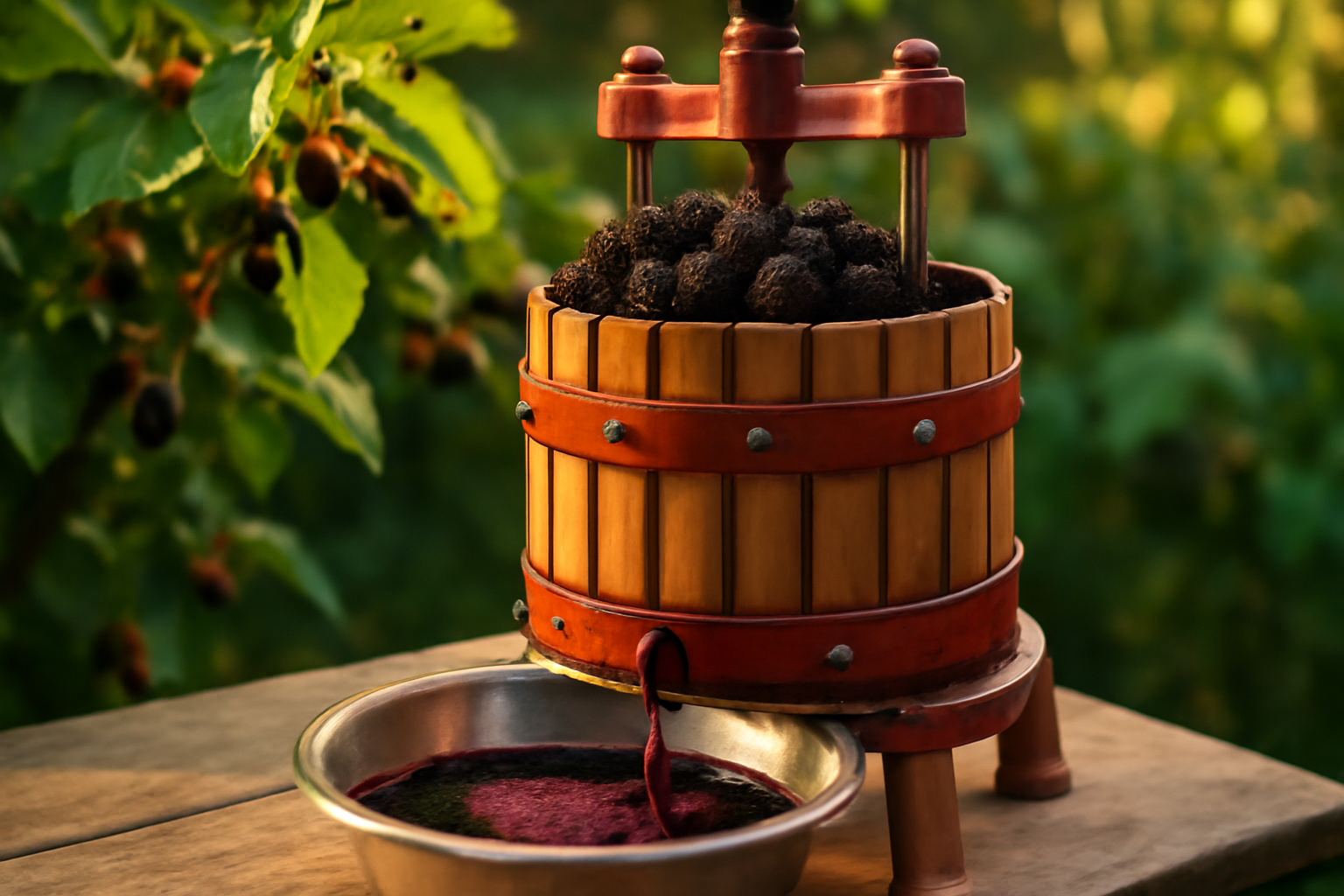
Every summer, my mulberry trees absolutely bury me in fruit. Last season, I picked close to 30 pounds in a single week. I had smoothies, jam, and frozen bags coming out of my ears. What I really wanted, though, was juice — clean, dark, rich mulberry juice I could bottle and drink all winter. Hand-squeezing mulberries is a nightmare. They stain everything, the yield is terrible, and my hands cramped after about ten minutes. That frustration pushed me deep into a rabbit hole of fruit press mulberry juice reviews, and eventually led me to the SQUEEZE Master Cheese Tincture Herb Fruit Wine Manual Press.
I want to be upfront: I am not a commercial cider maker or a winemaking hobbyist with a fancy setup. I am a home gardener with way too many mulberries and a genuine need to process them efficiently. My goal was simple. Press enough juice each batch to make the effort worthwhile, without spending hundreds of dollars on equipment I’d use twice a year.
After two full mulberry seasons of using this press, I have a lot to share. Some things genuinely surprised me. Others frustrated me. Here is the full, honest story.
Why I Chose the SQUEEZE Master Manual Press
My research started on YouTube and a few homesteading forums. Most people pressing mulberries at home were using one of two approaches: a simple potato ricer (laughably small) or a big 20-liter hydraulic press designed for apple orchards. Neither felt right for my situation.
The 20-liter hydraulic version — the SQUEEZE Master Hydraulic Fruit Wine Apple Press in 5.3 Gallon/20L — looked impressive. Several reviewers loved it for large apple harvests. However, it was significantly more expensive, much heavier, and honestly more press than I needed for a home mulberry operation. Storage space in my garage is limited, too.
The 2-liter manual model hit a sweet spot. The price was reasonable. The footprint was small. Reviews mentioned it worked well for soft fruits, which mulberries definitely are. A few commenters specifically mentioned berries, which gave me confidence. So I ordered it.
First Impressions Out of the Box
The press arrived in a compact box. Assembly was required, but the instructions were clear enough. Everything went together in about fifteen minutes without any tools beyond what was included.
Build quality was better than I expected at this price point. The pressing cylinder is stainless steel, which matters a lot when you are working with acidic berry juice. The base and frame are iron, painted black. It feels sturdy on a flat surface. Nothing wobbles or flexes when you apply pressure.
The power ball handle — that rounded knob you use to tighten the press down — gave me a moment of pause. It looked a little plasticky compared to the metal body. I genuinely wondered if it would hold up under serious pressure. That concern turned out to be mostly unfounded, but I will come back to it.
One thing I noticed immediately: the pressing plate fits snugly inside the cylinder. There is not much slop or wobble in the mechanism. That is a good sign for even pressure distribution, which matters for juice yield.
My Testing Protocol: How I Actually Used It
I ran this press through two full mulberry seasons. In the first season, I pressed approximately 18 pounds of mulberries across six separate sessions. The second season, I pushed it harder — about 25 pounds total, sometimes pressing two or three batches in a single afternoon.
My process looked like this every time:
- Rinse freshly picked mulberries and remove any stems
- Lightly crush the berries by hand in a bowl first — about 30 seconds of work
- Line the pressing cylinder with a fine mesh straining bag (I used nut milk bags)
- Fill the cylinder to the top, fold the bag over, and set the pressing plate
- Slowly tighten the power ball handle, pausing every few turns to let juice run
- Collect juice in a wide-mouth mason jar placed under the press
Each batch took me roughly 10 to 15 minutes from loading to cleanup. Because the cylinder holds about 2 liters, I typically ran 6 to 8 batches per pressing session to fill a gallon jug. Over a long afternoon, I could comfortably press 3 gallons of juice before fatigue set in.
A Few Technique Notes That Helped
Do not skip the pre-crush step. Whole mulberries do not release juice efficiently under the press alone. A quick hand-crush first makes a noticeable difference in yield. Also, press slowly. Rushing causes the bag to blow out sideways and you lose pulp into your juice.
Using a nut milk bag as a liner was a game-changer. The built-in perforations in the cylinder work fine, but they let through more sediment than I wanted. The extra bag layer gave me cleaner juice with almost no effort.
My Honest Fruit Press Mulberry Juice Review: What Actually Changed
The results honestly exceeded my expectations for juice yield. Before this press, hand-squeezing a pound of mulberries might give me half a cup of juice. With the SQUEEZE Master Cheese Tincture Herb Fruit Wine Manual Press, I was consistently pulling three-quarters of a cup or more from the same quantity. The cake left behind was noticeably drier, too — a good sign that I was extracting most of the available juice.
The juice quality was excellent. Because mulberries are so soft, this style of press is actually ideal for them. There is no heat involved, so the flavor stays bright and fresh. The color is a gorgeous deep purple-black that looks almost unreal in a glass jar.
My wrist and hand fatigue dropped dramatically compared to hand-squeezing. That might sound like a small thing. After an hour of processing, it does not feel small at all. The leverage provided by the screw mechanism does most of the work for you.
Cleanup is also faster than I expected. The stainless cylinder rinses clean easily. Mulberry juice stains are notoriously stubborn on fabric and plastic, but they do not seem to adhere permanently to the stainless steel surface. A quick rinse and a pass with a sponge is usually all it takes.
The Downsides I Cannot Ignore
This press is not perfect. I want to be straightforward about that.
The biggest limitation is batch size. At 2 liters, you are running a lot of batches to produce serious volume. If you have a 50-pound harvest to get through, this will feel tedious. The repetitive load-press-empty-repeat cycle is manageable for me, but I can see it wearing thin for someone with a much larger operation.
That power ball handle I mentioned earlier? It holds up fine under normal use. However, I noticed it can be slightly awkward to grip when your hands are wet and stained with berry juice — which they always are. A knurled metal knob would feel more secure. This is a minor complaint, but worth mentioning.
The juice collection situation requires some improvisation. The press does not come with a dedicated drip tray or collection vessel. Juice runs off the base in multiple directions if you are not careful. I solved this by setting the whole press inside a large rimmed baking sheet. Without that workaround, cleanup gets messy quickly.
Additionally, the iron base does show minor surface rust on the underside after extended exposure to juice moisture. I now dry it thoroughly after each session and apply a light coat of food-safe mineral oil to the iron parts at the end of the season. That has kept things in good shape, but it is an extra maintenance step to be aware of.
That Moment of Real Doubt
Midway through my first season, I had a genuinely frustrating afternoon. I was rushing, skipped the pre-crush step, and tried to press whole berries directly. The cylinder clogged, the bag shifted sideways, and I ended up with a pulpy mess and maybe half my expected juice yield. I actually sat there for a moment wondering if I had wasted my money.
Turns out the press was fine. My technique was the problem. Once I slowed down, pre-crushed properly, and used the right liner bag, everything worked exactly as it should. That experience taught me this is a tool that rewards patience and proper prep — not a magic machine that does all the thinking for you.
Final Verdict: Who Should Buy This Fruit Press for Mulberry Juice
After two seasons and dozens of pressing sessions, my final fruit press mulberry juice review verdict is genuinely positive — with some important caveats about who this press is right for.
Buy the SQUEEZE Master Cheese Tincture Herb Fruit Wine Manual Press if you:
- Have a home mulberry tree or small berry harvest to process each season
- Want clean, cold-pressed juice without expensive equipment
- Have limited storage space and need a compact tool
- Are making juice, wine, or cider in small to moderate batches (1 to 5 gallons per session)
- Also press other soft fruits like grapes, elderberries, or raspberries
Skip it and consider a larger option if you:
- Regularly process more than 50 pounds of fruit per session
- Are pressing hard fruits like apples or pears frequently — a hydraulic press handles those better
- Want a completely hands-off experience with minimal batch repetition
For larger harvests or harder fruits, the SQUEEZE Master Hydraulic Fruit Wine Apple Press in 5.3 Gallon/20L is the logical step up. It holds ten times the volume, uses hydraulic pressure instead of a manual screw, and comes with a filter bag and splash guard. If your operation has grown beyond what the 2-liter model can handle comfortably, that larger press is worth the investment.
For my backyard mulberry setup, though, the smaller manual press hits exactly the right balance of price, performance, and practicality. Three gallons of gorgeous dark mulberry juice per afternoon session is more than enough to keep me happy all winter long. I would buy it again without hesitation.