- Companion Plants Seeds Collection (Tomato, Marigold & Basil) — A great starting trio for the sunny borders of your mulberry zone. Marigolds for pest deterrence, basil for fragrant ground-level coverage, and tomatoes for the outermost sunny edge. Find it on Amazon here.
- Sow Right Seeds Insect & Pest Repellent Seed Collection — Lavender, catnip, marigold, hyssop, and lemongrass in one packet. This is almost exactly the pest-deterrent border I now plant every spring. It’s practical, affordable, and non-GMO. Check it out on Amazon.
- Lush & Dew Zone 9 Seed Bank (32 Varieties) — If you’re in a warmer climate and want to experiment more broadly with companions, this heirloom seed bank gives you a wonderful variety of vegetables, herbs, and fruits to test in the spaces your mulberry creates. Perfect for exploratory gardeners. See it on Amazon.
- Sow Right Seeds Comfrey Seeds for Planting — Start your comfrey from seed with this reliable non-GMO heirloom packet. Comfrey is slow from seed but well worth the patience. The instructions included are beginner-friendly. Find it on Amazon.
- Survival Garden Seeds Comfrey (Symphytum Officinale) — Another excellent comfrey option, this
I lost an entire season’s worth of work in one afternoon. Three mulberry trees, a backyard I’d spent months preparing, and what I thought was a brilliantly planned garden — all struggling, yellowing, and barely producing by midsummer. If you’ve ever stared at a garden that cost you real money and real weekends and thought, “What did I do wrong?” — this one’s for you. What I eventually discovered about companion plants for mulberry trees changed everything, and I want to save you the heartbreak I went through before I figured it out.
This post contains affiliate links. As an Amazon Associate, I earn from qualifying purchases. This means if you click a link and make a purchase, I may earn a small commission at no extra cost to you. I only recommend products I genuinely find useful for the garden.
How I Wasted a Full Growing Season (So You Don’t Have To)
When I planted my three mulberry trees two springs ago, I was so focused on the trees themselves — spacing, soil pH, watering schedules — that I treated everything around them as an afterthought. I filled the surrounding beds with whatever seedlings I had leftover: some mint, a few random ornamentals from the discount bin, and a couple of tomato starts I’d been gifted. I figured plants were plants. They’d coexist just fine.
By July, the mint had spread aggressively and was competing heavily for moisture right at the root zones. The tomatoes were yellowing — probably from the dense shade the mulberry canopies were throwing by then. The ornamentals had done nothing useful and honestly just looked sad. Meanwhile, aphids had found a very comfortable home in the whole messy situation. I’d spent over two hundred dollars on amendments, seedlings, and supplies, and I had a garden that looked worse than when I’d started. I sat on my back steps one evening genuinely close to crying.
That’s when a neighbor — a retired horticulturalist who had been watching my slow-motion disaster from over the fence — finally walked over and said, “You know mulberries have a way they like to live, right?” What followed was a long conversation that completely rewired how I think about mulberry guilds and companion planting. Let me share what I learned.
Why Companion Planting Around Mulberries Is Uniquely Challenging
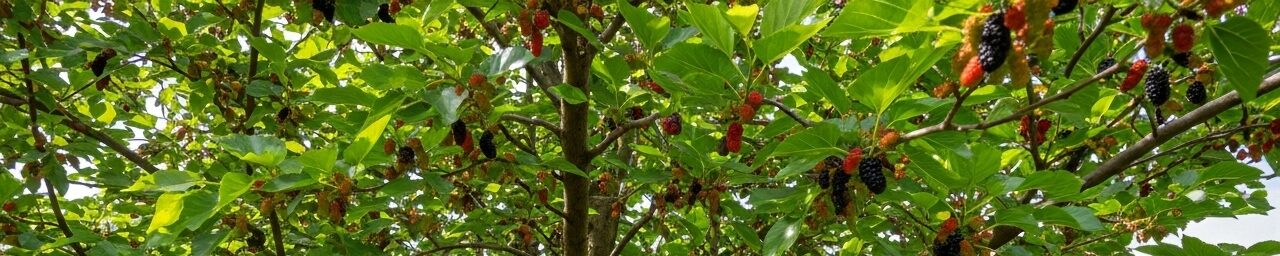
Mulberry trees are generous but also dominant. They grow fast, develop wide canopies that create significant shade, and their surface roots compete for moisture in a radius that surprises most people. This means companions need to be chosen with real intention — plants that tolerate partial to full shade in maturity, don’t mind occasional dry spells once the tree is established, and ideally offer something back to the system. Random planting, as I discovered, just creates a competition nobody wins.
There’s also the wildlife factor. Mulberries attract birds, beneficial insects, and pollinators in wonderful numbers — but that same energy can attract pest pressure if your surrounding plants are vulnerable. The right companions actually work with that ecosystem rather than against it.
The Best Companion Plants for Mulberry Trees
Comfrey — The Mulberry’s Best Friend
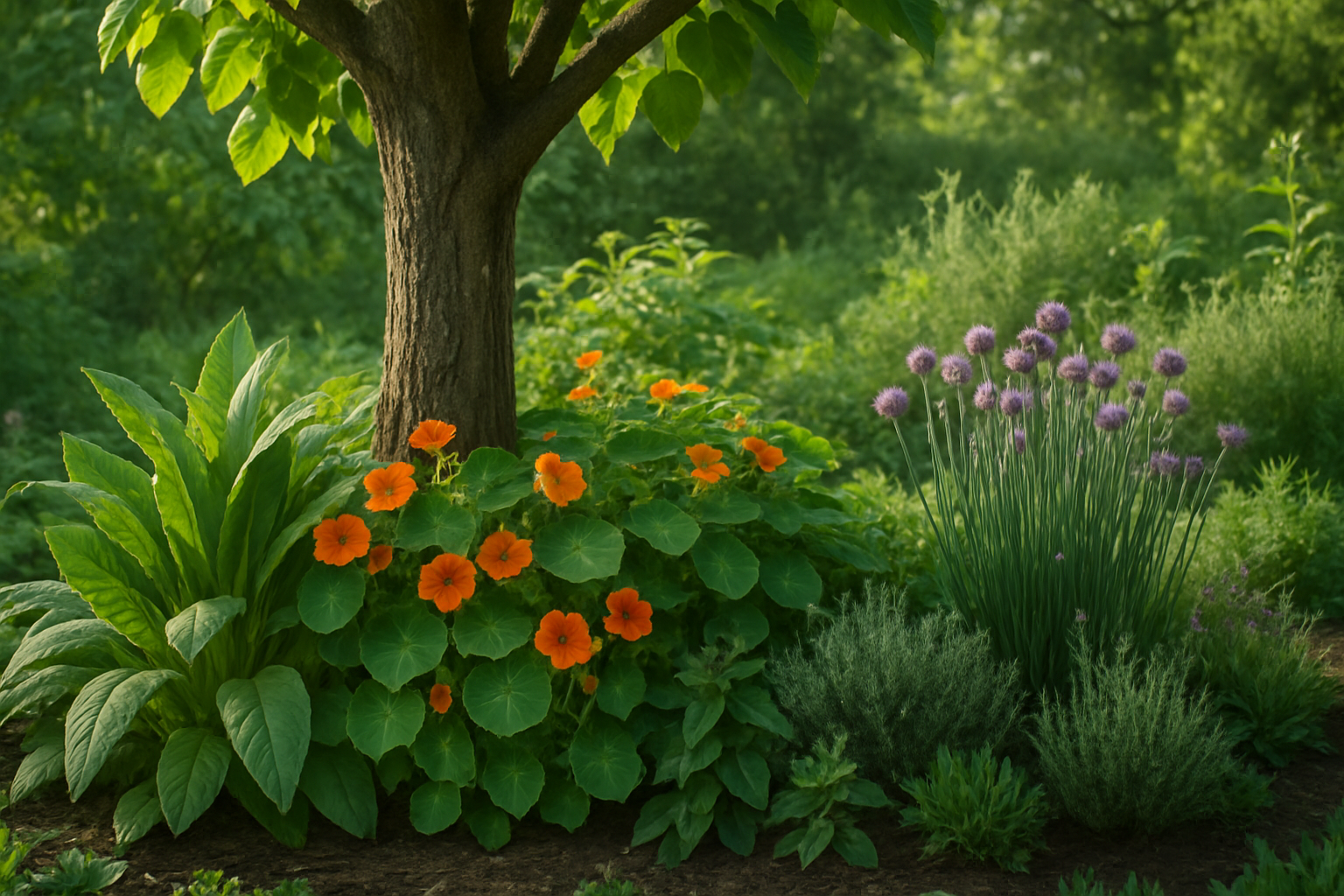
If I could only plant one companion under my mulberry trees, it would be comfrey without hesitation. Comfrey’s deep taproots mine nutrients from far below the soil surface and bring them up into leaves that, when cut and dropped, create an incredibly rich mulch right where the tree needs it. It tolerates shade beautifully, handles the competition from surface roots, and its flowers are absolute magnets for pollinators. Comfrey essentially acts as a living fertilizer factory for your mulberry. I now have it growing in rings around all three of my trees, and the difference in leaf health and fruit production has been remarkable.
Marigolds, Lavender, and Pest-Deterring Herbs
Along the sunny outer edges of your mulberry’s canopy, where light still reaches, pest-deterring plants earn their keep year after year. Marigolds repel nematodes and aphids — the very aphids that had colonized my chaotic first attempt. Lavender deters a range of common pests while attracting beneficial predatory insects that help keep populations balanced. Catnip, hyssop, and lemongrass round out a powerful natural pest-management border that requires almost no maintenance once established.
Herbs and Edibles That Work in Dappled Light
Basil is a wonderful companion in the partially shaded zones and actually does fine with the filtered light beneath a young mulberry canopy. It repels certain flying insects and is said to improve the flavor of nearby fruiting plants — and honestly, having fresh basil steps from your back door is never a bad idea. In sunnier pockets at the tree’s edge, you can tuck in productive vegetables. Tomatoes, however — and this is what I did wrong — need to be planted well outside the canopy drip line where they can still get full afternoon sun.
Products I Recommend for Building Your Mulberry Guild
These are the actual seeds and products I’ve used or would use to build a productive companion planting guild around mulberry trees. Each one earns its place.
- Companion Plants Seeds Collection (Tomato, Marigold & Basil) — A great starting trio for the sunny borders of your mulberry zone. Marigolds for pest deterrence, basil for fragrant ground-level coverage, and tomatoes for the outermost sunny edge. Find it on Amazon here.
- Sow Right Seeds Insect & Pest Repellent Seed Collection — Lavender, catnip, marigold, hyssop, and lemongrass in one packet. This is almost exactly the pest-deterrent border I now plant every spring. It’s practical, affordable, and non-GMO. Check it out on Amazon.
- Lush & Dew Zone 9 Seed Bank (32 Varieties) — If you’re in a warmer climate and want to experiment more broadly with companions, this heirloom seed bank gives you a wonderful variety of vegetables, herbs, and fruits to test in the spaces your mulberry creates. Perfect for exploratory gardeners. See it on Amazon.
- Sow Right Seeds Comfrey Seeds for Planting — Start your comfrey from seed with this reliable non-GMO heirloom packet. Comfrey is slow from seed but well worth the patience. The instructions included are beginner-friendly. Find it on Amazon.
- Survival Garden Seeds Comfrey (Symphytum Officinale) — Another excellent comfrey option, this