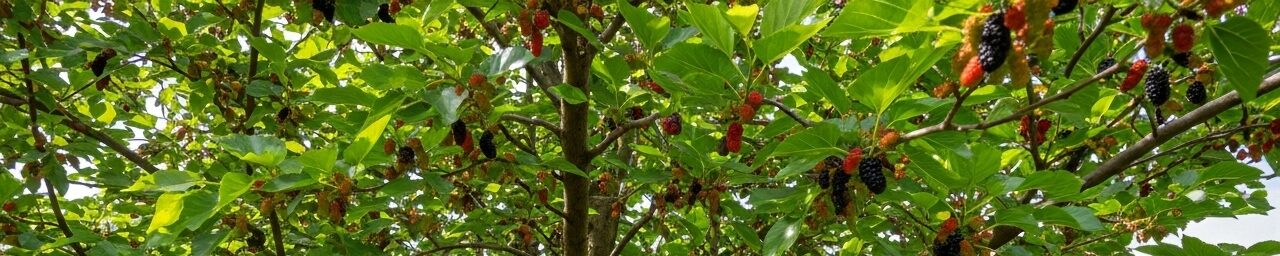
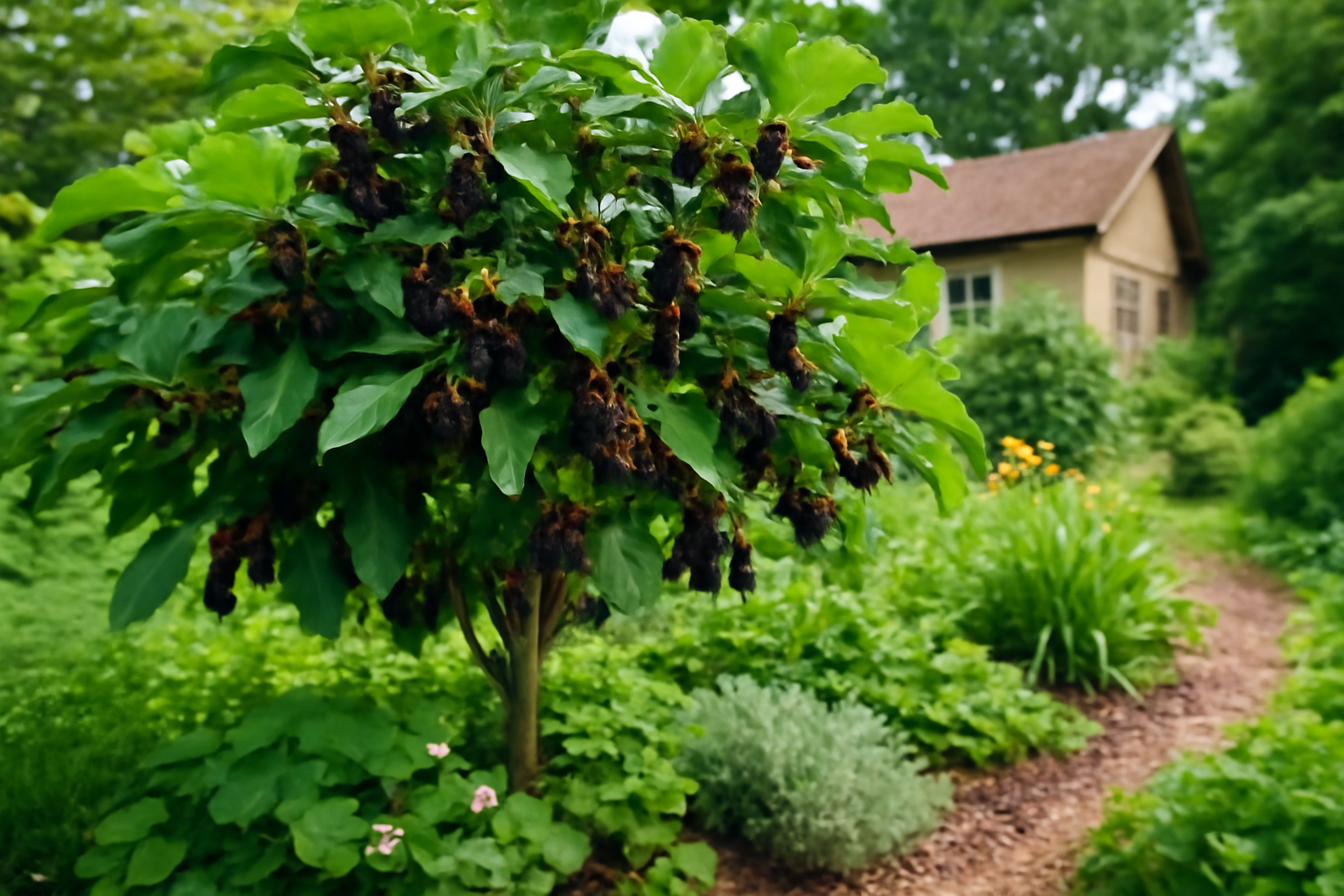
Should you really be bothering to plant anything underneath your mulberry trees, or is bare soil just fine? That’s the question I asked myself for years, and the honest answer is: you’re leaving genuine productivity on the table if you don’t. My first decade with mulberries, I kept the ground stripped bare and mowed. The trees grew. The fruit came. But then a garlic failure in year four forced me to reconsider, and an accidental clover takeover in year six sealed it — the space beneath those trees could become something far more useful. Now, across my seven mulberry plantings, the soil zone is one of the most resilient and productive corners of my homestead. Here’s what I’ve learned by actually testing it out.
Companion Planting for Mulberries Operates Under Its Own Rules
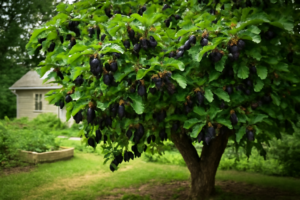
Mulberries reshape everything around them. A full-grown Morus rubra or Morus alba spreads itself 30 to 40 feet in width and creates shadow cover that persists through much of the day. The root structure is grabby, the crown throws substantial weight, and when fruit season hits — typically mid-May into early July — the zone directly below becomes a chaotic carpet of fallen berries, foot traffic, and raiding birds. Any approach to companion planting has to contend with these realities, not just chase textbook nutrient pairing or theoretical pest dynamics.
Generic companion planting material gets written for people growing vegetable beds. Mulberry trees exist in their own universe. You’re dealing with a long-lived woody plant that will stick around longer than almost any other organism you introduce. The plants you settle on need to live with deep shade or dappled light, manage the constant rain of fruit debris, and coexist peacefully with root systems that sit close to the surface and pull hard for water and nutrients.
What Flourishes Directly Beneath the Canopy
White Clover — Stumbled Into Gold
My top choice, and it arrived through pure accident. By year six, I stopped cutting one section under my biggest tree and white clover just colonized it within twelve months on its own. So I took that hint and seeded it intentionally under all seven. What makes it work: white clover forms a partnership with Rhizobium bacteria that pulls nitrogen straight from the air and makes it available to shallow-rooted plants — the mulberry captures this directly. I haven’t put down commercial nitrogen under any of those trees in years now. Beyond the soil nutrition, the clover sits low enough that I can actually spot fallen fruit easily, and its cushion-like texture means dropped berries don’t get as bruised when they land.
Comfrey — Deep Miner of Underground Nutrients
Around mulberry tree trunks, roughly four feet out from the bark, Russian comfrey (Symphytum x uplandicum, Bocking 14 cultivar) thrives as a companion plant. This species functions as a nutrient concentrator — its long, searching roots descend deep where mulberry roots don’t venture and return with calcium, potassium, and phosphorus, depositing them back at soil level when leaves break down in place. Foliage can be cut and dropped three times across the growing season. A key consideration: comfrey doesn’t forget where it’s planted. One root cutting left behind and it will persist. Site it deliberately from day one to avoid the challenge of managing established comfrey in unintended locations.
Nasturtiums — Aphid Magnet and Pollinator Bait
Every spring I tuck nasturtium seeds around the outer fringe of my mulberry canopies. Two benefits arrive from this. They’re a known target for aphid populations, pulling pest pressure *away* from the mulberry — something I’ve watched happen consistently in my own yard. They also flower precisely when mulberries are ripening, which keeps a steady stream of pollinators moving through the space. The nasturtium leaves and blooms are edible as well, which means this layer of planting generates its own harvest alongside everything else.
Useful Plantings at the Canopy Border
Yarrow — Benefit With Almost Zero Fuss
At the edge where full shade gives way to open light, I’ve got yarrow established under three of my trees. This plant doesn’t complain about partial shadow or thin, dry soil. It pulls in parasitic wasps and other helpful predatory insects that hunt down caterpillars and manage aphid pressure on the mulberry canopy itself. A single hard cutback in mid-July and it’s already regenerating by fall. Low input, real output.
Chives and Garlic Chives — Allium Power in the Transition Zone
I already mentioned the garlic disaster — bulbs just can’t muscle through the shade and root density right against the trunk. Chives work in ways that garlic doesn’t. Both standard chives and garlic chives adapt to partial light and the sulfur compounds in their tissues allegedly interfere with certain wood-boring pests. I cluster them out where the canopy is thinning. They’ve also become a secondary crop in their own right — garlic chives make it onto our dinner table from June straight through October.
Lemon Balm — Insect Highway and Weed Blocker
Lemon balm pulls bees and other pollinators in like a magnet and spreads aggressively enough to suppress unwanted volunteers in the transition band without much intervention from me. Regular pruning keeps it from self-seeding across the whole property, but as a weed fighter and pollinator draw during fruiting season, it pays its own way. University of Minnesota Extension research actually documents lemon balm’s track record in orchard settings for bringing in beneficial insects, which matches exactly what I see happening in my own space.
The Experiments That Fizzled
Spearmint landed in my mulberry zone during year three with high hopes for weed control and pest suppression. It delivered on neither and just became another aggressive competitor for root moisture and nutrients. The spearmint held its ground better than anything else, and I spent half of year four excavating it out.
Borage seemed reasonable in theory. The problem? It reproduces itself so relentlessly that managing it becomes a job in itself rather than a solution. If you’ve got the bandwidth to police it constantly, you might have different luck. I don’t, and I let it go.
High-volume crops like tomatoes and winter squash under a dense canopy turn into optical illusions — you think they’ll work until you’re looking at stunted fruit and chlorotic foliage. I planted zucchini in year two out of desperation for space. The result was two walnut-sized squash and leaves that looked like they’d been bleached.
Mulch Holds the Entire System Together
These companion plants cannot perform their best without a foundation of sound mulch practice beneath them. I maintain a three-inch depth of wood chip mulch or aged organic material year-round under every tree. It manages soil moisture, buffers temperature swings, cuts down weed invasion, and feeds the microbial community that powers everything else. Spring and fall both get a refresh. Think of mulch not as optional decoration but as the structural base that makes the whole companion network function.
Resources That Shifted How I Approach This
If you are just getting started with companion planting strategy and want a solid reference, Companion Planting for Beginners: Pair Your Plants for a Bountiful, Chemical-Free Vegetable Garden is the most practical guide I’ve found. It’s written for vegetable gardens but the underlying principles — nitrogen fixing, pest deterrence, beneficial insect attraction — apply directly to the edge and transition zones around orchard trees.
When I’m seeding clover or nasturtiums in the spaces between established companions, even spacing makes a measurable difference in how well the plants fill in. The Seeding Square – Patented Seed and Seedling Spacer Tool for Bigger Harvests, Organized Plants & Fewer Weeds takes the guesswork out of it and I’ve used mine for four seasons running.
For the mulch layer I mentioned above, Back to the Roots 25.7qt (1 Cubic ft) Organic Premium Mulch is a reliable option when I need to supplement what I produce from my own wood chips. It breaks down well and doesn’t compact the way some bagged mulches do.
After More Than A Decade of Tinkering, Here’s What I Know
Companion planting around mulberries isn’t rocket science once you stop resisting the shade, the root hunger, and the crowding — once you accept those facts and find plants that actually want to live inside them. White clover, comfrey, nasturtiums, yarrow, and chives have anchored my approach for years running. My trees perform better, the earth itself is richer, pest populations stay manageable, and the companion plants themselves generate additional harvests. The learning curve cost me seasons of dead ends and bad guesses. This summary should cut that in half.
The Resource That Helped Me Move Beyond Guesswork
It wasn’t until my fourth or fifth year of trial-and-error that I grabbed a book specifically about why certain plant combinations actually function together instead of just a list of pairings to attempt blindly. Something clicked when I could actually read about nitrogen-fixing, root structure, and shade adaptation instead of just hoping.
What clicked
- Actual explanations of nitrogen-fixing mechanics — suddenly my accidental clover success had a reason behind it, which reframed how I thought about everything else planted under those trees.
- Specific shade-tolerance guidance that let me make choices with confidence rather than guessing which plants could handle the dense overhead coverage from an established mulberry canopy.
- A whole framework around building living soil instead of chemical dependency, connecting that philosophy directly back to companion planting strategies and what works in long-term perennial systems.
What fell short
- Several recommendations assumed you controlled the sun and water entirely, which becomes messy when a fruit tree’s shadow pattern shifts with the seasons and your control is always partial.
- Heavy emphasis on vegetables meant fewer examples if you want to prioritize pollinators or flowers in your mulberry understory, though the underlying principles are portable if you adapt them to your actual goals.
I almost shelved the book after the first chapter because I thought I already knew enough from my own failures, but those charts and explanations turned my accidental clover success into an intentional system. If you’re ready to move beyond bare soil under your mulberries, grab Companion Planting for Beginners: Pair Your Plants for a Bountiful, Chemical-Free Vegetable Garden.
Frequently Asked Questions
How deep should mulch be under a mulberry tree?
I maintain a three-inch depth of wood chip mulch or aged organic material year-round under every one of my trees, refreshing it in spring and fall. It manages soil moisture, buffers temperature swings, cuts down weed invasion, and feeds the microbial community. I treat mulch as the structural base that makes the whole companion network function, not optional decoration.
Can I grow tomatoes or squash under a mulberry canopy?
In my experience, no. High-volume crops like tomatoes and winter squash under a dense canopy turn into optical illusions — you think they will work until you are looking at stunted fruit and chlorotic foliage. I planted zucchini in year two out of desperation for space and harvested two walnut-sized squash with bleached-looking leaves.
How far from the trunk should I plant comfrey around a mulberry?
I set Russian comfrey (Symphytum x uplandicum, Bocking 14 cultivar) roughly four feet out from the bark around each trunk, and I cut and drop the foliage three times across the growing season. Site it deliberately from day one — one root cutting and you have comfrey tenure. I spent two full years removing it from one section.
Does white clover under a mulberry replace nitrogen fertilizer?
It has for me. White clover forms a partnership with Rhizobium bacteria that pulls nitrogen from the air and makes it available to shallow-rooted plants, and the mulberry captures this directly. I have not put down commercial nitrogen under any of those seven trees in years. The low clover also cushions dropped berries and makes fallen fruit easy to spot.
Keep Reading
About This Article
Written by Ruth Nakamura. Ruth Nakamura is a backyard orchardist in the Pacific Northwest who has grown mulberries for fifteen years, cultivating twelve different varieties in her own backyard. Not a horticulturist by formal training - she shares what she has learned through hands-on growing, workshops, and connecting with nurseries and growers across the country. More about this site.
Scope and limits. Ruth is a backyard orchardist without formal horticultural training. Growing conditions vary enormously by region, so confirm variety, timing, and pest guidance with your local extension service.
Verify this against a primary source
Specifics change, and your situation may differ from the one described here. These are the authorities worth checking directly:
- USDA Plant Hardiness Zone Map — zone verification for your location
- Oregon State University Extension — fruit growing and pruning research
- USDA PLANTS Database — species range and identification