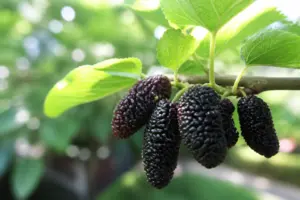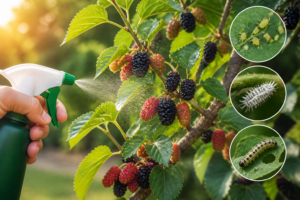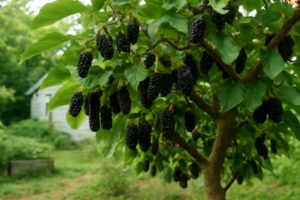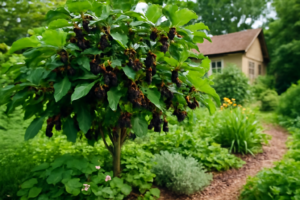
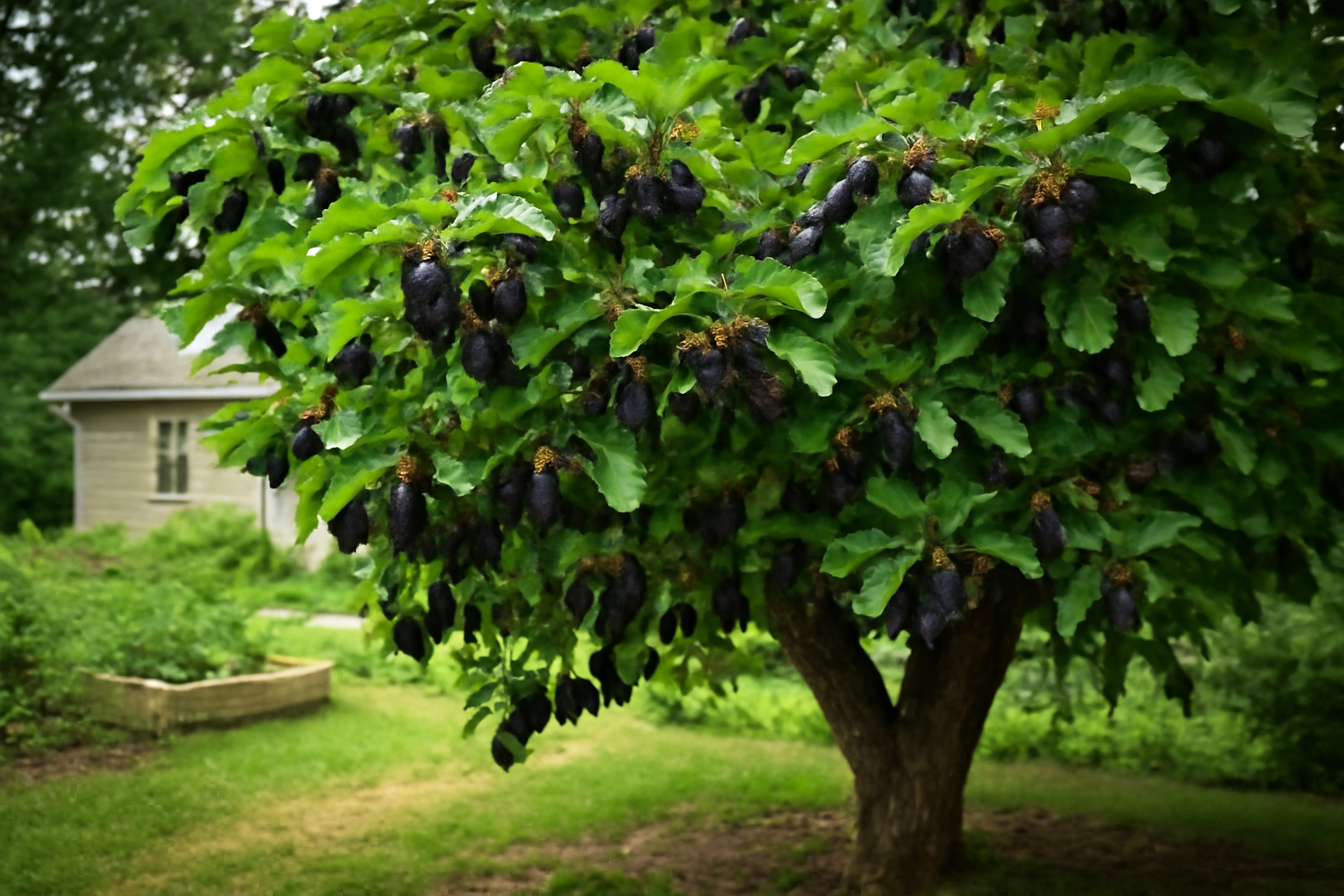
Large mulberry harvests—forty pounds or more in a single week—present a preservation challenge. Without a framework for what to do next, significant losses can occur through spoilage. Across multiple growing seasons, a repeatable workflow can move 100 to 150 pounds through preservation methods without waste. Here’s how to approach it effectively.
Why Processing Mulberries Demands Speed and Planning
Unlike most stone fruits, mulberries deteriorate rapidly once they reach full ripeness. At room temperature in warm months, you’re looking at a 24- to 48-hour window before the fruit begins to break down structurally. This fragility is precisely why commercial grocery chains don’t stock them—they spoil before they leave the farm gate. For backyard growers, it means processing isn’t optional; it’s foundational to the whole operation.
Mature Morus rubra trees and cultivars like ‘Illinois Everbearing‘ can produce between 30 and 50 pounds of fruit annually per tree. A small home planting easily exceeds what a household can consume fresh. Without a structured preservation plan, abundance becomes a spoilage problem in hours.
Once I internalized that mulberries function as a same-day processing fruit, everything shifted. My entire harvest strategy now starts before I step outside with buckets.
Starting With Decisions: Plan Your Preservation Before Picking Begins
An effective approach is to decide on preservation methods before harvest begins, rather than bringing in fruit and deciding later. Planning ahead prevents the common scenario of standing in the kitchen with ripe berries and no clear path forward. Mapping out which preservation method each batch will follow streamlines the entire process.
The moment fruit lands in my workspace, I sort it into three distinct tracks:
- Fresh consumption (eat today): The unblemished, perfectly firm berries belong on the table or in a neighbor’s hands within hours. This slice typically makes up 10 to 15 percent of any single day’s harvest.
- Wet preservation (syrups, jams, reductions): Berries showing softness but with no rot or degradation go straight into a sink colander and begin their journey toward cooking.
- Freezer stock or freeze-drying: Fruit that’s heavily ripe but structurally intact gets transferred onto sheet pans and into the freezer chamber within 60 minutes of picking.
Sorting at the moment of harvest—not later—eliminates the catastrophic “I’ll handle this tomorrow” mentality that breeds mold and regret.
Rinsing and Destemming: The Time-Intensive Foundation
Rinsing doesn’t take technical skill, but it takes longer than newcomers anticipate when you’re working with volume. I employ a wide stainless steel colander positioned in my sink basin and let cold water cascade over three- to four-pound batches. I never submerge them—mulberries absorb water like a sponge, and waterlogged specimens decay even faster than dry ones.
Destemming is the grind. I’ve tested workarounds and none beat manual removal. My fastest technique involves cradling the stem between thumbnail and index finger, then flicking it away with a quick upward motion. Operating at a steady clip, I clear approximately one pound every eight to ten minutes while stationed at the sink—often with a podcast running to keep my mind occupied. When volume swells, I’ve enlisted my kids as a summer tradition; it’s turned into our household’s late-June ritual for five years running.
Real talk: once you cross the 20-pound threshold in a single session, destemming transforms into serious labor. But here’s a shortcut that genuinely works: if your end product is jam, sauce, or syrup, feed the whole berries (stems included) into a food mill after cooking. The mill’s mesh discs will strip away stems and seeds entirely, erasing the need for hand-destemming. This one discovery cut my prep time substantially over recent seasons.
Cooking and Reduction: Converting Raw Fruit Into Shelf-Stable Preserves
For large volumes, wet preservation methods are reliable. Combine berries in a large stockpot with minimal liquid—roughly a quarter cup water per five pounds of fruit—and let everything collapse over medium heat for roughly 15 to 20 minutes. The result is a dark, viscous, aromatic paste.
A food mill then becomes indispensable. Passing that cooked mass through it strips away seeds, stems, and fibrous matter, leaving behind a smooth, luxurious pulp-and-juice combination. That foundation becomes the template for everything downstream: jams, syrups, leather, drizzles, glazes. I rotate between two different mills based on batch size, and the specifics live in the resources section below.
For jam-making, a pectin-forward formula works well since mulberries naturally lack the gelling compounds other fruits bring. Commercial pectin combined with a 3:2 weight ratio of fruit to sugar produces good results. Water-bath canning gives jars that stay shelf-stable for 12 to 18 months.
Freezing: Your Emergency Preservation Option
Freezing functions as both my contingency plan and my insurance policy. When harvest yields outpace what I can cook and can in a single day—a regular occurrence across the season—I flash-freeze first. Berries get arranged in single layers across parchment-lined sheet trays, blasted until solid (two to three hours), then moved into dated freezer bags. This technique prevents the brick-of-ice problem and lets me extract just the quantity I need months down the road.
In a chest freezer, mulberries maintain quality for 10 to 12 months. Winter smoothies, quick jams tossed together in January, baked goods through spring—frozen stock handles all of it. The berries lose structural integrity once thawed, so they’re not suitable for fresh-eating applications, but they perform identically to fresh in any context involving heat or blending.
Freeze Drying: Long-Term Storage at Scale
Freeze-dried mulberries stay viable for 20 to 25 years when sealed in mylar bags with oxygen absorbers, and they rehydrate with almost no flavor or textural loss, making them a practical option for long-term storage.
The learning curve is steeper and the equipment investment is real, but if you’re working at high volumes and thinking about food resilience beyond a single winter, the technique rewards study.
Essential Equipment: The Specific Tools I Actually Use
Generic recommendations like “grab a food mill” miss the mark. A dedicated equipment list designed for mulberry processing is more useful.
For large batch processing — anything over ten pounds — I use a Stainless Steel Food Mill with 3 Discs – Ergonomic Rotary Hand Crank for Tomato Sauce, Applesauce, Baby Food, Mashed Potatoes, Puree & Canning. The three-disc system means I can adjust the fineness of my output — coarser for jam base, finer for syrup or fruit leather. The ergonomic crank matters more than you’d think after you’ve been standing at the stove for three hours.
For smaller batches and more precise work — particularly when I’m making something where texture really matters — I reach for the Stainless Steel Food Mill With 3 Milling Discs. It’s the tool I’d recommend to someone just starting out. Stable, easy to clean, and built to last.
If you want to go deeper on freeze drying specifically — the science, the technique, and the storage protocols — Discover Home Freeze Drying is the resource I started with. It’s thorough without being overwhelming, and the sections on fruit specifically translated well to what I was doing with mulberries.
Building a System That Matches Reality, Not Convenience
The entire framework rests on a single principle: align your preservation strategy to what the fruit actually is on harvest day, not around what fits your schedule. Mulberries refuse to wait for a convenient moment. They demand a commitment on the same calendar day they ripen.
Across twelve years and countless pounds of fruit wasted in those early seasons, I finally stopped resisting the ripening timeline and started organizing my life around it instead. My location’s peak production window spans late May into mid-June, though the exact dates shift annually. I block off my calendar. My equipment is ready before the first berries darken. I know the destination of every pound before shears ever touch a branch.
That’s not obsessive—it’s the bare minimum for processing a mulberry harvest responsibly. Lock your system into place before the berries ripen, and the season transforms from something you endure into something you genuinely anticipate.
The Food Mill That Transforms Deteriorating Berries Into Usable Preserves Before Spoilage Wins
When processing triple-digit mulberry quantities, you’ll inevitably confront soft, compromised, or borderline-fermented specimens that aren’t fit for eating raw but absolutely qualify for preservation. A hand-crank food mill becomes the pivotal tool for moving that fruit into sauces, jams, and freezer reserves before decomposition takes over.
Where it shines
- The cranking apparatus processes soft mulberries without obliterating them into thin juice the way high-speed equipment would—you end up with textured sauce, not berry extract.
- You can feed it unprocessed, unstemmed berries directly if you’ve already cooked them down, eliminating an entire labor phase when dozens of pounds arrive simultaneously.
- The perforated steel screen separates seeds and fibers with sufficient efficiency that you’re not straining berry mash for hours afterward—a genuine efficiency gain if you’re chasing seedless results.
Where friction shows up
I nearly returned mine after the first season because I underestimated how much arm strength I’d need, but that first summer I processed 80 pounds of soft berries in five days instead of watching them rot. Stainless Steel Food Mill with 3 Discs – Ergonomic Rotary Hand Crank for Tomato Sauce, Applesauce, Baby Food, Mashed Potatoes, Puree & Canning
- Your shoulder and forearm register the effort substantially after cranking through 20+ pounds in succession—this is manual equipment, not motorized, and mulberry density creates actual physical demand.
- The screen assembly traps pulp and seed fragments after every batch; you’ll need a stiff brush and flowing water to get it genuinely clean between runs.
Frequently Asked Questions
Why do mulberry jams need added pectin?
Mulberries naturally lack the gelling compounds other fruits bring, so commercial pectin is essential for jam-making. A 3:2 weight ratio of fruit to sugar produces good results, and water-bath canning yields jars that stay shelf-stable for 12 to 18 months.
Can I eat thawed frozen mulberries as fresh fruit?
Thawed mulberries aren’t suitable for fresh-eating applications because the berries lose structural integrity once frozen. They perform well in any context involving heat or blending, making them ideal for smoothies, quick jams, and baked goods. In a chest freezer they hold quality for 10 to 12 months.
Should I soak mulberries in water to wash them?
Never submerge mulberries. I set a wide stainless steel colander in my sink basin and let cold water cascade over three- to four-pound batches instead. Mulberries absorb water like a sponge, and waterlogged specimens decay even faster than dry ones, which defeats the whole point when you’re racing spoilage during a heavy harvest week.
Why don’t grocery stores sell fresh mulberries?
Mulberries deteriorate rapidly once they reach full ripeness. At room temperature in warm months, you’re looking at a 24- to 48-hour window before the fruit begins to break down structurally, so commercial grocery chains don’t stock them because they spoil before they leave the farm gate. For backyard growers, that means same-day processing isn’t optional.
Keep Reading
About This Article

Written by Ruth Nakamura. Ruth Nakamura is a backyard orchardist in the Pacific Northwest who has grown mulberries for fifteen years, cultivating twelve different varieties in her own backyard. Not a horticulturist by formal training - she shares what she has learned through hands-on growing, workshops, and connecting with nurseries and growers across the country. More about this site.
Scope and limits. Ruth is a backyard orchardist without formal horticultural training. Growing conditions vary enormously by region, so confirm variety, timing, and pest guidance with your local extension service.
Verify this against a primary source
Specifics change, and your situation may differ from the one described here. These are the authorities worth checking directly:
- USDA Plant Hardiness Zone Map — zone verification for your location
- Oregon State University Extension — fruit growing and pruning research
- USDA PLANTS Database — species range and identification