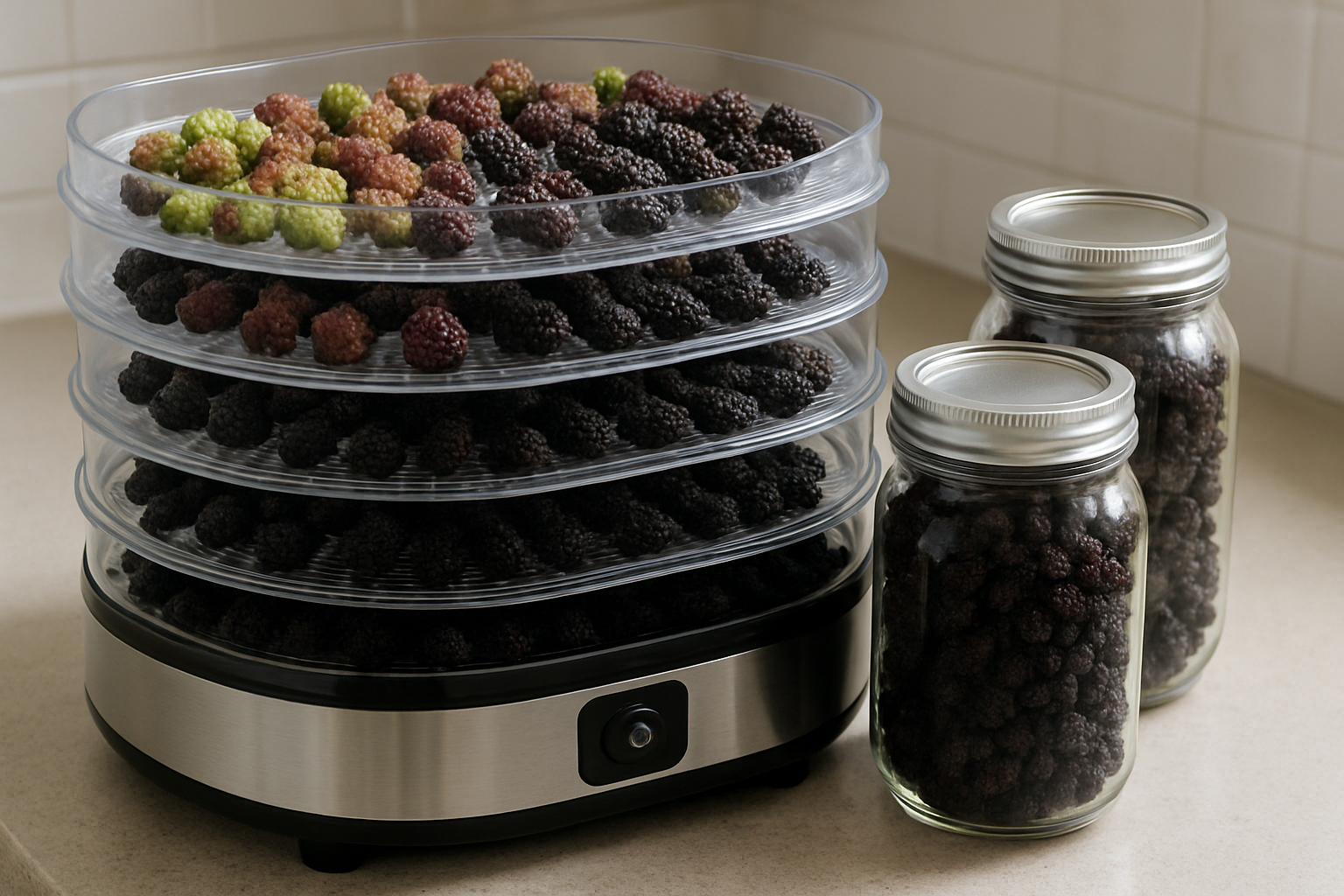
- COSORI Food Dehydrator — This is the machine sitting on my counter right now. The 5.1 square feet of drying space handles a big mulberry harvest without needing to run multiple batches, and the 176°F maximum temperature with precise controls means I can trust it to hold a steady 135°F all night long. The 48-hour timer means I can load it before bed and wake up to perfectly dried berries.
- Elite Gourmet EFD319 Food Dehydrator — A great budget-friendly option with five BPA-free trays and adjustable temperature control. If you’re just starting out and want to try dehydrating before committing to a bigger machine, this one delivers solid results at an approachable price point.
- Magic Mill Food Dehydrator — Another excellent mid-range option with stainless steel trays, a 48-hour timer, and digital temperature
I want to tell you about the summer I cried over a colander. It was late June, my white mulberry tree had gone absolutely wild, and I’d spent three full mornings picking berries before work — fingers stained purple, arms scratched, back aching — only to watch the whole gorgeous pile turn into a bubbling, fermenting mess on my kitchen counter. I hadn’t moved fast enough. Two pounds of effort, completely lost. That disaster is exactly what pushed me to finally get serious about dehydrating mulberries, and honestly, it changed everything about how I enjoy my harvest.
Affiliate disclosure: This post contains affiliate links. As an Amazon Associate, I earn from qualifying purchases. I only recommend products I genuinely use and trust.
If you’ve grown mulberries for any length of time, you already know the cruel joke of the harvest window. The berries ripen fast, fall faster, and give you maybe a week — two if you’re lucky — before the whole situation spirals out of control. Freezing helps, but freezer space runs out. Jam is wonderful, but it requires babysitting a hot stove when it’s already 90 degrees outside. Dehydrating? That’s the quiet, forgiving method I wish someone had walked me through years ago. So let me be that person for you.
Why Dehydrating Mulberries Is a Game-Changer for Home Growers
Dried mulberries are genuinely shelf-stable for up to a year when stored properly — no freezer required, no canning equipment, no pectin math. They shrink down dramatically, which means a full tray of fresh berries becomes a small jar of intensely sweet, chewy morsels perfect for trail mix, oatmeal, baking, or just snacking straight from the bag. The flavor actually concentrates when you dry them, so the mild sweetness you get fresh becomes something almost caramel-like and complex. If you’ve only ever eaten fresh mulberries, your first dried one is going to surprise you in the best way.
There’s also a practical urgency argument here. Mulberries have one of the shortest shelf lives of any fresh fruit — we’re talking 2 to 3 days in the fridge before quality starts dropping. When your tree drops a pound of berries overnight, dehydrating is often the only realistic way to keep up without losing the harvest. I learned that lesson the hard way, standing over my fermenting colander, calculating exactly how many early mornings I’d wasted.
How to Prepare Mulberries for the Dehydrator
Good prep work makes the difference between dried mulberries that are chewy and delicious versus ones that are sticky, uneven, or take forever to dry. Here’s exactly how I do it.
Step 1: Sort and Rinse
Pick through your berries and remove any that are overripe, mushy, or show signs of mold. Rinse them gently in a colander under cool water and spread them out on a clean kitchen towel or paper towels. Let them air dry for 20 to 30 minutes — surface moisture will significantly slow down your drying time, so this step is worth the patience.
Step 2: Remove the Stems (Or Don’t)
Those little stem ends — called peduncles — are harmless and edible, but some people find the texture annoying in the finished product. I usually do a quick pinch-and-pull on any long stems before loading my trays. For small batches it takes maybe five minutes. For massive harvests, I skip it entirely and nobody has ever complained.
Step 3: Optional Lemon Juice Soak
Toss your berries in a light spritz of fresh lemon juice before dehydrating if you want to help preserve their color and add a subtle brightness to the flavor. It’s not mandatory, but it does make a noticeable difference in the final appearance, especially with red or white mulberry varieties.
Step 4: Spread and Load
Spread berries in a single layer on your dehydrator trays — don’t pile them. Mulberries are juicy and they need airflow all the way around. I leave at least a half-inch of space between berries when I can manage it. Silicone liner sheets are a lifesaver here because mulberries release a lot of juice as they shrink and the sugar gets sticky fast on bare mesh trays.
Temperature, Timing, and Knowing When They’re Done
Set your dehydrator to 135°F for mulberries. This is the sweet spot — hot enough to drive out moisture efficiently without cooking the fruit or destroying its natural flavor compounds. At this temperature, expect a drying time of 18 to 24 hours, depending on how juicy your berries are, how thick they are, and the humidity in your kitchen.
Check them at the 16-hour mark. A properly dehydrated mulberry should feel leathery and slightly tacky — not wet, not crunchy. When you squeeze one, no moisture should bead up on the surface. If they’re still squishy in the center, keep going in two-hour increments. Don’t rush this part. Underdried berries will mold in storage and that is a heartbreak I would not wish on anyone.
Let finished berries cool completely on the trays — at least 30 minutes — before you pack them away. Sealing warm berries into a jar traps condensation and undoes all your work. Store in airtight glass jars or vacuum-sealed bags in a cool, dark pantry. They’ll keep beautifully for 10 to 12 months.
Tools That Help: My Recommended Dehydrators and Accessories
You don’t need anything fancy to get started, but having the right equipment makes the whole process so much more consistent and enjoyable. These are the tools I actually use and trust.
Dehydrators
- COSORI Food Dehydrator — This is the machine sitting on my counter right now. The 5.1 square feet of drying space handles a big mulberry harvest without needing to run multiple batches, and the 176°F maximum temperature with precise controls means I can trust it to hold a steady 135°F all night long. The 48-hour timer means I can load it before bed and wake up to perfectly dried berries.
- Elite Gourmet EFD319 Food Dehydrator — A great budget-friendly option with five BPA-free trays and adjustable temperature control. If you’re just starting out and want to try dehydrating before committing to a bigger machine, this one delivers solid results at an approachable price point.
- Magic Mill Food Dehydrator — Another excellent mid-range option with stainless steel trays, a 48-hour timer, and digital temperature