
I stood in my kitchen staring at a colander overflowing with fresh mulberries — and then I looked at the counter, and the table, and the two bowls I’d already filled that morning. It was peak harvest week, and my tree had absolutely lost its mind. I was thrilled, right up until I realized I had no real plan. I’d heard about freezing mulberries before, but I’d never actually done it properly. So I just… tossed them all into a single zip-top bag, shoved it in the freezer, and told myself I’d figure it out later. Spoiler: later was a disaster.
This post contains affiliate links. As an Amazon Associate, I earn from qualifying purchases. If you click a link and make a purchase, I may earn a small commission at no extra cost to you. I only recommend products I genuinely use and trust.
A few weeks later, I pulled that bag out to make a smoothie. What I found was one enormous, rock-solid mulberry brick — a fused, purple, icy mass that was completely impossible to portion. I tried to chip a cup out of it with a spoon. The bag split. Berry juice went everywhere. I cried a little, honestly. Hours of harvesting, a gorgeous haul from a tree I’d been tending for three years, and it was essentially ruined. Not unsafe to eat, sure, but completely unusable in any practical way. That experience taught me everything I now know about doing this right.
Why Freezing Mulberries Goes Wrong (And Why It Doesn’t Have To)
Mulberries are not like blueberries or strawberries. They’re softer, juicier, and far more fragile. Their high moisture content means they stick together aggressively if you just dump them into a bag while they’re still damp or warm. Once they freeze as a clump, you’ve essentially made a mulberry popsicle — and not the fun kind. The good news is that avoiding this entirely takes only about thirty extra minutes and zero special skills. You just need to know the steps, and I’m going to walk you through every single one.
The Right Way to Freeze Mulberries: A Step-by-Step Guide
Step 1: Harvest and Sort Carefully
Before anything goes near your freezer, take the time to sort your berries. Remove any that are underripe (still red or pale), overripe (mushy, leaking heavily), or damaged. You want fully ripe, firm-ish berries with deep color — black mulberries should be a rich dark purple-black, and white mulberries should be creamy or pale pink depending on the variety. Stems are fine to leave on or pull off; I remove them for convenience later, but it truly doesn’t matter much.
Step 2: Rinse Gently and Dry Thoroughly
Rinse your mulberries in a colander under cool, gentle water. Don’t soak them — they’ll absorb water and get even more fragile. After rinsing, spread them out on a clean kitchen towel or a layer of paper towels and let them air dry for at least 20 to 30 minutes. This step is non-negotiable. Wet berries are the number one reason for clumping and freezer burn. Pat them gently if you’re in a hurry, but get them genuinely dry before moving on.
Step 3: Flash Freeze on a Sheet Pan
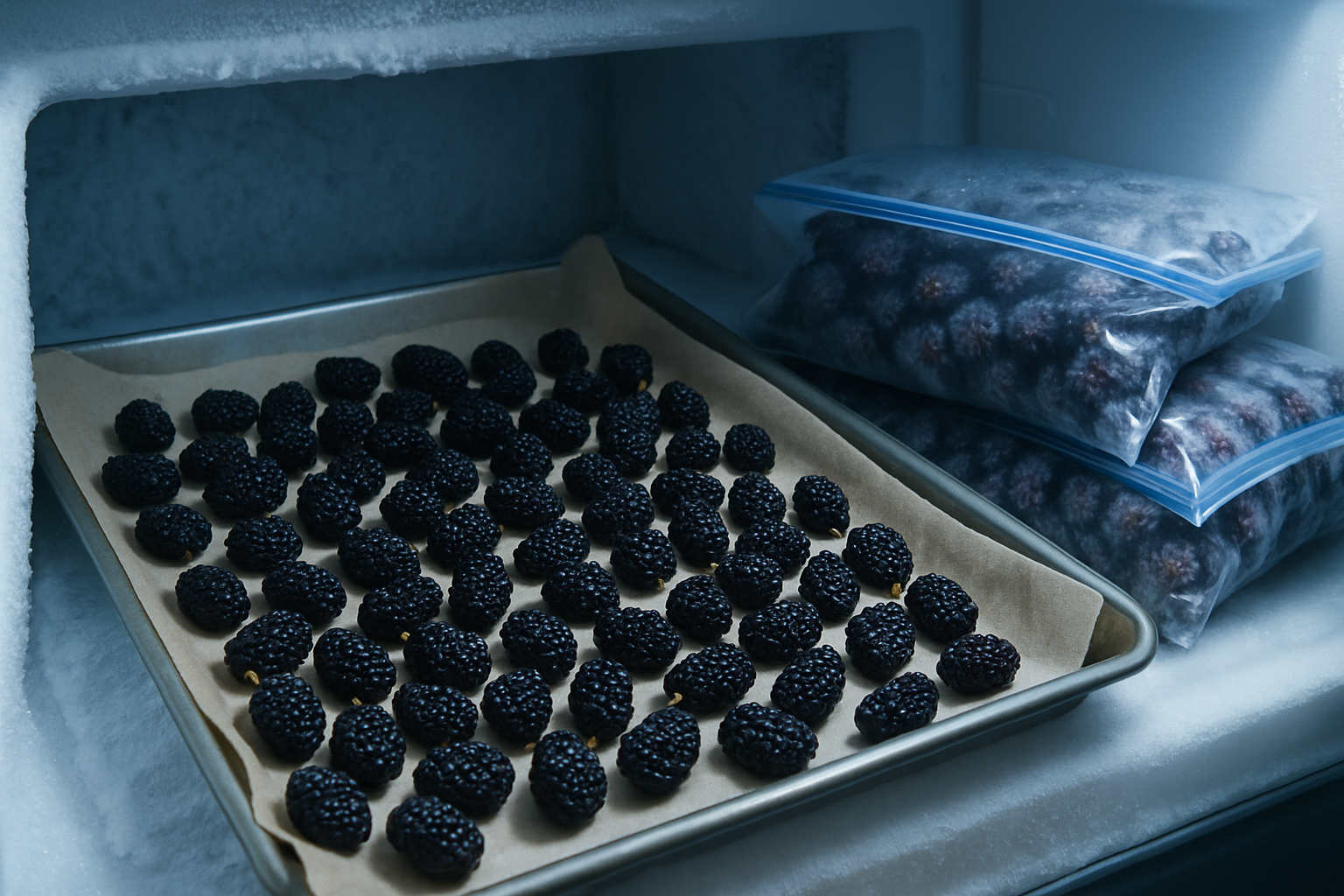
This is the step I skipped the first time, and it makes all the difference. Spread your dry berries in a single layer on a rimmed baking sheet — not touching each other if you can manage it. Slide the pan into your freezer and leave it for two to four hours, or overnight if you prefer. This “flash freeze” method lets each berry freeze individually so they stay separate and scoopable forever after. I now use a pair of Nordic Ware Naturals Half Sheet pans (2-Pack) specifically for this. They’re made in the USA, heavy-duty aluminum, and they don’t warp in the freezer — which cheaper pans absolutely will. If you only need one to start, the single-pack version works just as well and is a great entry point.
Step 4: Transfer and Seal for Long-Term Storage
Once your berries are individually frozen solid, transfer them quickly into your storage bags. Work fast here — you don’t want them to start thawing and clumping together now. For best results and longest freezer life, vacuum-sealed bags are the way to go. They remove the air that causes freezer burn and keep your mulberries tasting fresh for up to twelve months. I’ve tested a few brands and have three I can honestly recommend depending on what you’re looking for.
Tools That Help: My Recommended Products
Good equipment doesn’t have to be expensive, but it does make a real difference with something as delicate as mulberries. Here’s what I actually use and reach for every harvest season:
- Sheet Pans for Flash Freezing: The Nordic Ware Naturals Half Sheet 2-Pack is my go-to. Commercial quality, warp-resistant, and the right size to handle a big harvest in batches. The single-pack is perfect if you have a smaller tree or just want to try the method first.
- O2frepak Vacuum Sealer Bags (100 Count, Gallon): These BPA-free, puncture-resistant bags are great for high-volume harvests. The 11×16 gallon size gives you room to portion generously, and I love that they’re thick enough to handle without worry.
- Syntus Vacuum Sealer Bags (100 Count, Gallon): Another solid option, these commercial-grade Syntus bags are compatible with most major vacuum sealer brands and hold up beautifully in the deep freeze.
- Wevac Vacuum Sealer Bags (100 Count, Gallon): If you do a lot of sous vide cooking in addition to preserving, Wevac’s heavy-duty bags are a great dual-purpose choice. BPA-free and compatible with Food Saver, Seal a Meal, and Weston machines.