I once grafted what I was absolutely convinced was a premium Morus alba scion onto a healthy rootstock — wrapped it beautifully, labeled it proudly, and waited. What grew back was the most enthusiastic, untamed wild mulberry sprout you have ever seen in your life, shooting up from below the graft union like it had something to prove. Turns out I had grafted mulberry trees in the most technically correct and practically useless way possible: I’d let the rootstock take over completely because I forgot to remove the suckers. Every single one. For six weeks. My neighbor, bless him, said it looked “vigorous.” I said it looked like my ego.
This post contains affiliate links. As an Amazon Associate, I earn from qualifying purchases. If you click a product link and make a purchase, I may earn a small commission at no extra cost to you. I only recommend tools I’ve actually used or thoroughly researched for mulberry growing.
But here’s the thing — even that spectacular failure taught me more about grafting than any YouTube video ever could. And once I got it right? Oh, it was worth every embarrassing moment. So let’s talk honestly about whether grafting mulberry trees is actually worth your time, your money, and your dignity as a home gardener.
Why Bother Grafting Mulberry Trees in the First Place?
Fair question. Mulberries are famously easy to propagate from cuttings, so why would anyone go through the fuss of grafting? A few very good reasons, actually.
First, grafting lets you clone a specific cultivar with certainty. If you’ve got your hands on a scion from a known variety — say, a ‘Illinois Everbearing,’ ‘Pakistan,’ or ‘Oscar’ — grafting is the most reliable way to reproduce those exact genetics. Cuttings work well for many mulberries, but some cultivars root reluctantly or inconsistently. Grafting sidesteps that problem entirely.
Second, you can use a vigorous, cold-hardy rootstock to give a more finicky but delicious variety a fighting chance in your climate. Grafting onto a hardy Morus alba rootstock, for instance, can dramatically improve the cold tolerance of a Morus nigra scion — which matters a great deal if you’re in a zone where black mulberries would otherwise struggle.
Third — and this is the fun one — you can graft multiple varieties onto a single tree. One tree, several flavors. It’s basically the mulberry equivalent of a charcuterie board, and I will not apologize for that comparison.
The Basics of Grafting Mulberry Trees: What Actually Works
Let me save you from recreating my sucker disaster. Here’s what you genuinely need to know before you make your first cut.
Best Grafting Methods for Mulberries
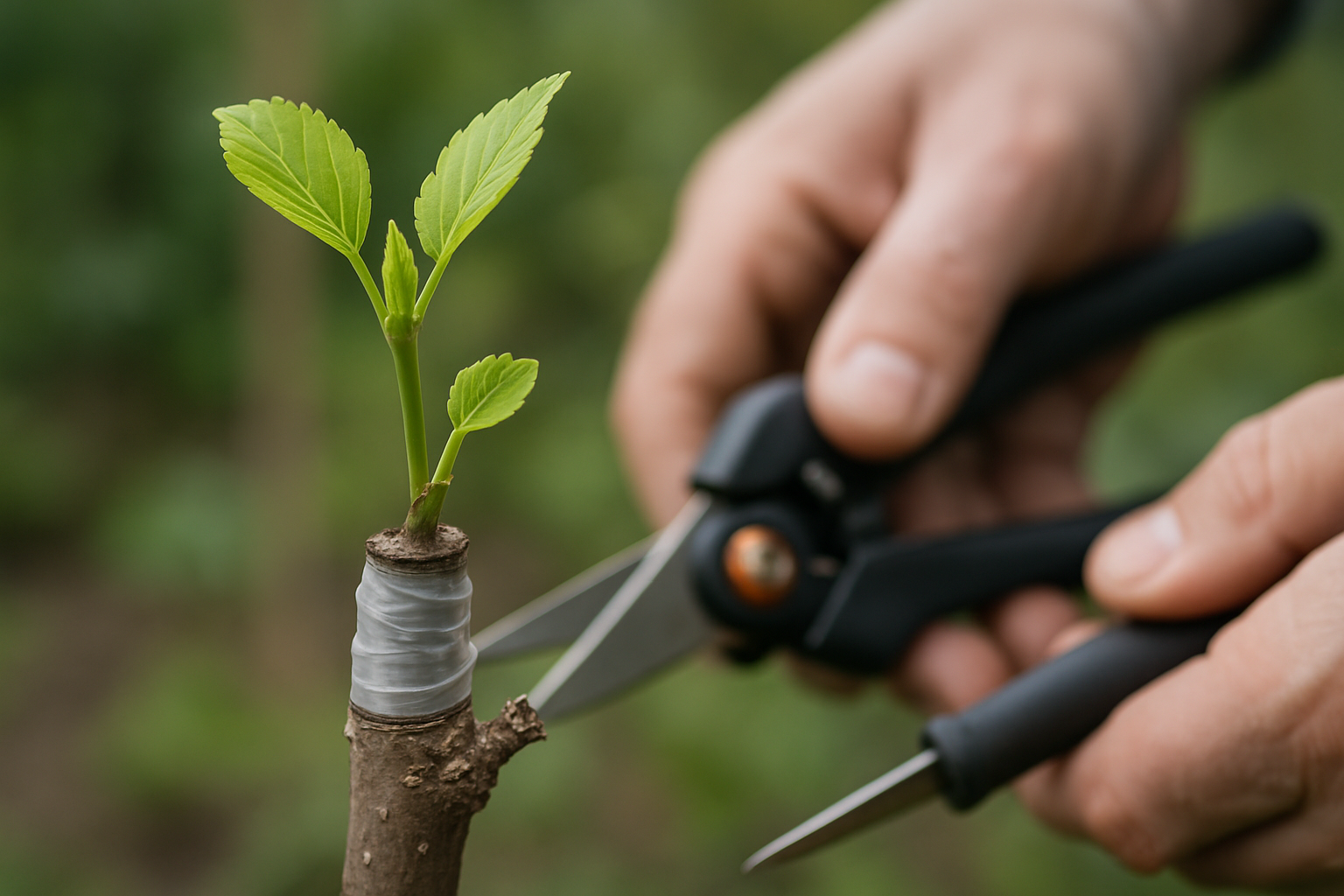
The two methods that tend to work best for home gardeners are cleft grafting and whip-and-tongue grafting. Cleft grafting is more forgiving for beginners — you split the rootstock, insert two scions, and wrap it up. Whip-and-tongue creates a stronger union but requires matching diameters and more knife precision. Either way, the cambium layers of the rootstock and scion must align. This is non-negotiable. The cambium is that thin green layer just under the bark, and it’s where all the magic (and all the frustration) happens.
Timing Is Everything
Graft in late winter to early spring, just as the buds are beginning to swell on your rootstock but before full leaf-out. Mulberries bleed sap aggressively once they wake up, so getting in just ahead of that surge gives your graft the best chance of taking before the tree throws a sap tantrum all over your union. Collect your scion wood in late winter while it’s still dormant, wrap it in a damp paper towel, seal it in a plastic bag, and refrigerate it until grafting day.
The One Thing I Forgot (Don’t Be Me)
Once your graft is wrapped and waiting, check it every single week and remove any shoots that sprout from below the graft union. Those are rootstock suckers, and they are sneaky, energetic, and absolutely determined to take over your tree if you look away. I looked away. For six weeks. You know how this ends. Remove them promptly, every time, without mercy.
Tools That Help: What to Have Before You Start
You don’t need a lot of gear, but what you do need should be sharp, clean, and purpose-built. Here are the tools I actually recommend for grafting mulberry trees at home.
- Grafting Knife + Tape Combo: The Grafting Gardening Knife with Double Blades and Repair Tapes is a solid all-in-one starter kit. Two blade styles and grafting tape included — exactly what you need when you’re just getting started and don’t want to over-invest before you know if you love it.
- Full Grafting Kit: If you want a bit more in one box, the ZALALOVA 2-in-1 Garden Grafting Tool Kit includes a grafting knife, replacement blades, grafting tape, rubber bands, and labels. The labels alone are worth it — trust me, you will not remember which scion is which in three weeks.
- Flexible Grafting Knife Kit: The QWORK Flexible Grafting Kit is another excellent option with double blades and repair tapes, particularly nice if you prefer a slightly more flexible blade for detailed work around the cambium.
- Extra Grafting Tape: You’ll use more tape than you think. The Liaogo Stretchable Grafting Tape 2-Pack is stretchy, self-degrading, and works beautifully for wrapping mulberry unions snugly without constricting growth.
- Parafilm for Precision Wrapping: For smaller, more delicate grafts or budding work, Parafilm Nursery Grafting Tape is incredibly useful. It stretches tight, seals well against moisture, and breaks down naturally — no removal needed.
Whatever you buy, keep your blade sterile between cuts. A quick wipe with isopropyl alcohol prevents passing disease from one plant to another. Mulberries are generally tough, but there’s no reason to be careless about it.