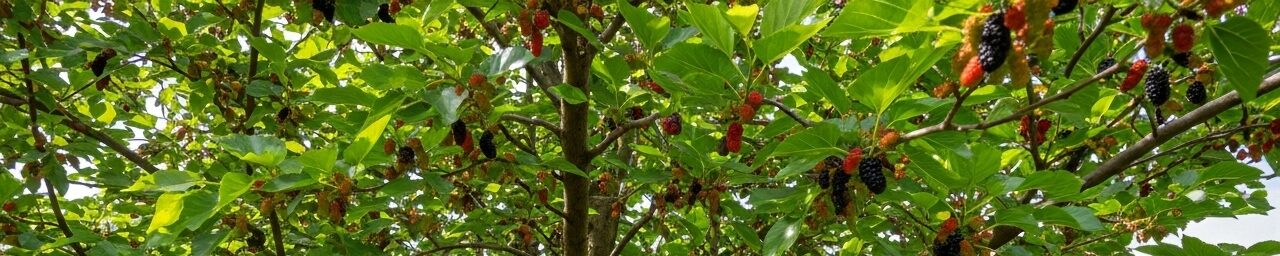
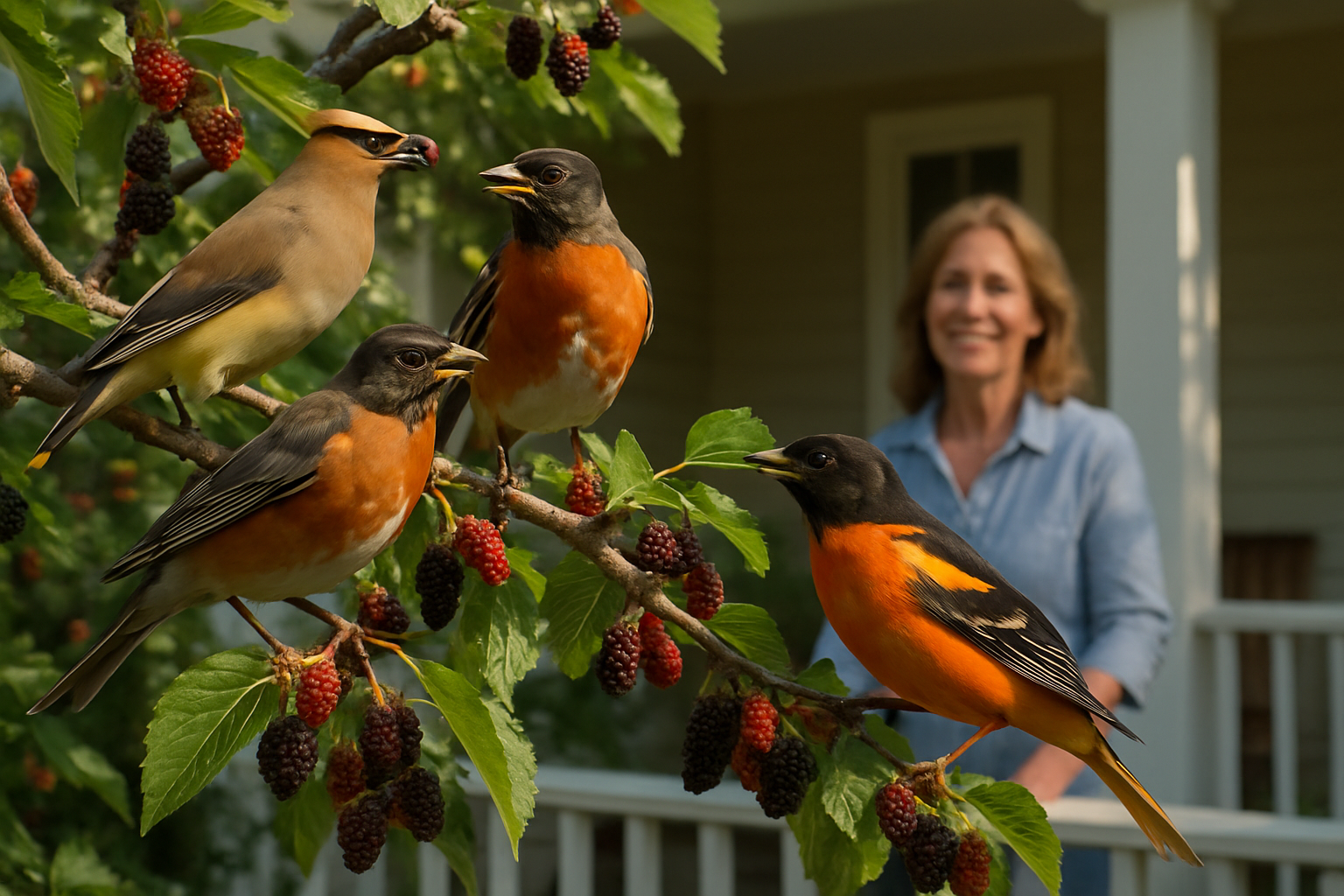
A mulberry tree on a homestead is a community asset — for you, for the birds, for the pollinators, and occasionally for every squirrel in a quarter-mile radius. Learning to manage that sharing relationship without losing your entire harvest to wildlife is one of the first real lessons the tree teaches you. What makes mulberries so magnetically irresistible to birds isn’t random — it’s biology, timing, and sheer caloric abundance all colliding at once, and once you understand why your tree turns into a wildlife vortex every June, you can start working with that pattern instead of white-knuckling a garden hose against it. I’ve spent years timing my harvests around bird behavior, rigging low-tech deterrents, and learning which mornings the robins sleep in — knowledge that has meant the difference between a full dehydrator and a picked-clean tree by 9 a.m. In this guide, I’ll walk you through the science behind birds’ obsession with mulberries, the practical strategies that actually protect your harvest, and how understanding this one ecological relationship can help you fill your pantry with fermented mulberry preserves, dried fruit, and canned syrup — without declaring war on every cedar waxwing in the neighborhood.
Why Birds and Mulberry Trees Are an Unstoppable Pair
Let me back up. That chaotic morning started because I had done exactly zero research before planting my first mulberry tree. I picked up a bare-root Illinois Everbearing at a local nursery because the tag said “fast growing, heavy fruiting.” I thought — great, I’ll get some fruit, maybe make a pie. Adorable, right? What the tag did NOT say was: “Warning: this tree will become the most popular address in your zip code once birds discover it.”
By midsummer of year two, my tree was producing ripe berries, and the birds found it before I even knew the fruit was ready. I walked outside to find what looked like an avian town hall meeting in progress. They weren’t scared of me. They barely looked at me. I was the intruder. That’s when I realized I needed to either fight this situation or lean into it — and leaning in turned out to be one of the best gardening decisions I’ve ever made.
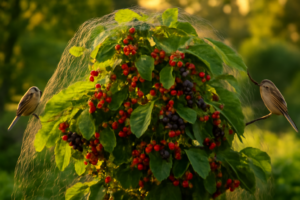
So why do birds go so completely wild for mulberries? It comes down to timing, nutrition, and sheer abundance. Mulberry trees fruit in early to midsummer — a window that falls right between spring’s fleeting wild berries and late summer’s more substantial fruit crops. For birds, this is a critical feeding season when they’re raising fledglings and fueling up after migration. Mulberries are soft, sweet, and perfectly sized for most songbirds to gulp whole. A single mature mulberry tree can produce tens of pounds of fruit over several weeks, which is basically the bird equivalent of a never-ending pasta bar.
Which Birds Show Up to the Mulberry Party?
Once I stopped panicking and started paying attention, I realized my chaotic mulberry tree had turned my yard into an incredible wildlife observatory. Here’s a snapshot of who regularly visits during peak ripening:
- American Robins — the bold first-arrivals who act like they own the place (they do)
- Cedar Waxwings — arguably the most beautiful visitor, arriving in silky, efficient flocks
- Northern Mockingbirds — loud, territorial, and absolutely committed to their berry claim
- Gray Catbirds — quieter than mockingbirds but equally enthusiastic about mulberries
- Baltimore Orioles — a jaw-dropping visitor if you’re lucky enough to be in their range
- Downy Woodpeckers and Red-bellied Woodpeckers — less expected but definitely showing up for the fruit
- European Starlings — showing up in noisy gangs, unapologetically
Spotting Bird Damage Before It Strips Your Entire Harvest
You can’t protect what you can’t see coming. By the time birds have decimated half your crop, it’s too late — but catching the early scouts and understanding which species are actually hitting your trees lets you intervene before the flock moves in.
What works
- Low-light performance means you can actually ID birds during dawn feeding runs when most damage happens, not just midday scouting.
- The waterproof build survives morning dew and unexpected rain while you’re standing under the tree with wet grass around your boots.
- Compact enough to keep hanging on a fence post or in a back-pocket for quick-check identification, so you’re actually using it instead of leaving it in a drawer.
What doesn’t
- Close focus can be finicky for ID work on branches directly above your head — you’ll need a few feet of distance to lock in details clearly.
- The compact size means the eye relief is tight, especially if you wear glasses, and extended morning observation sessions get uncomfortable fast.
I almost shelved this after the first week when I couldn’t get a clear bead on cedar waxwings in overhead branches, but once I started scanning from 15 feet out instead of directly underneath, the field of view and clarity made actual species identification possible. You can grab Occer 12×25 Compact Binoculars for your own dawn patrols.
This post contains affiliate links. As an Amazon Associate, I earn from qualifying purchases at no extra cost to you.