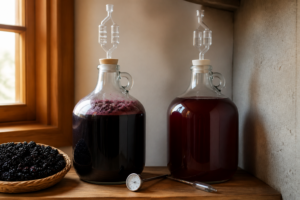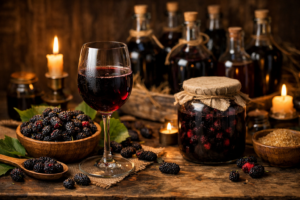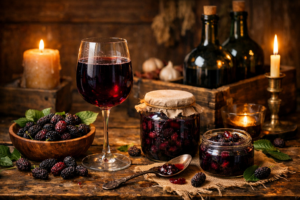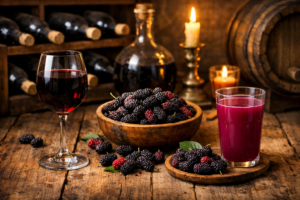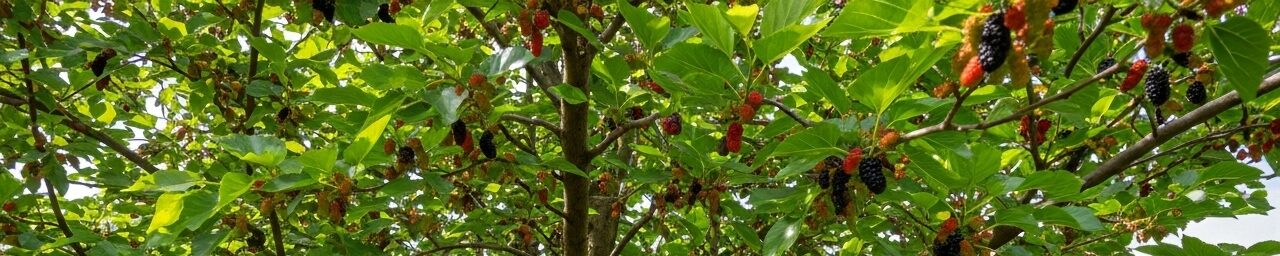
On my patio right now sits a wine bottle with a label dated three summers ago—the glass still shows the faint purple stain where I set it down after bottling, a ghost-mark of the work that went into it. That bottle is proof of what happens when you take the mountain of mulberries dropping from your trees in July and turn them into something that actually improves with time instead of rotting on the ground or sitting in your freezer for years. Wine does that. It’s the preservation method that captures the most fruit in the shortest window, and it tastes like the whole season condensed into something you can pour into a glass months later. I’ve made six batches now—some that tasted rough enough to make you wince, and some I’d genuinely put on a table for people whose opinion I care about. The difference between those two outcomes isn’t luck or special equipment. It’s knowing exactly where the failures happen and building a process that sidesteps them. Everything that follows is what I’ve learned from doing this six times over, with all the mistakes catalogued and the method refined down to the parts that actually matter.
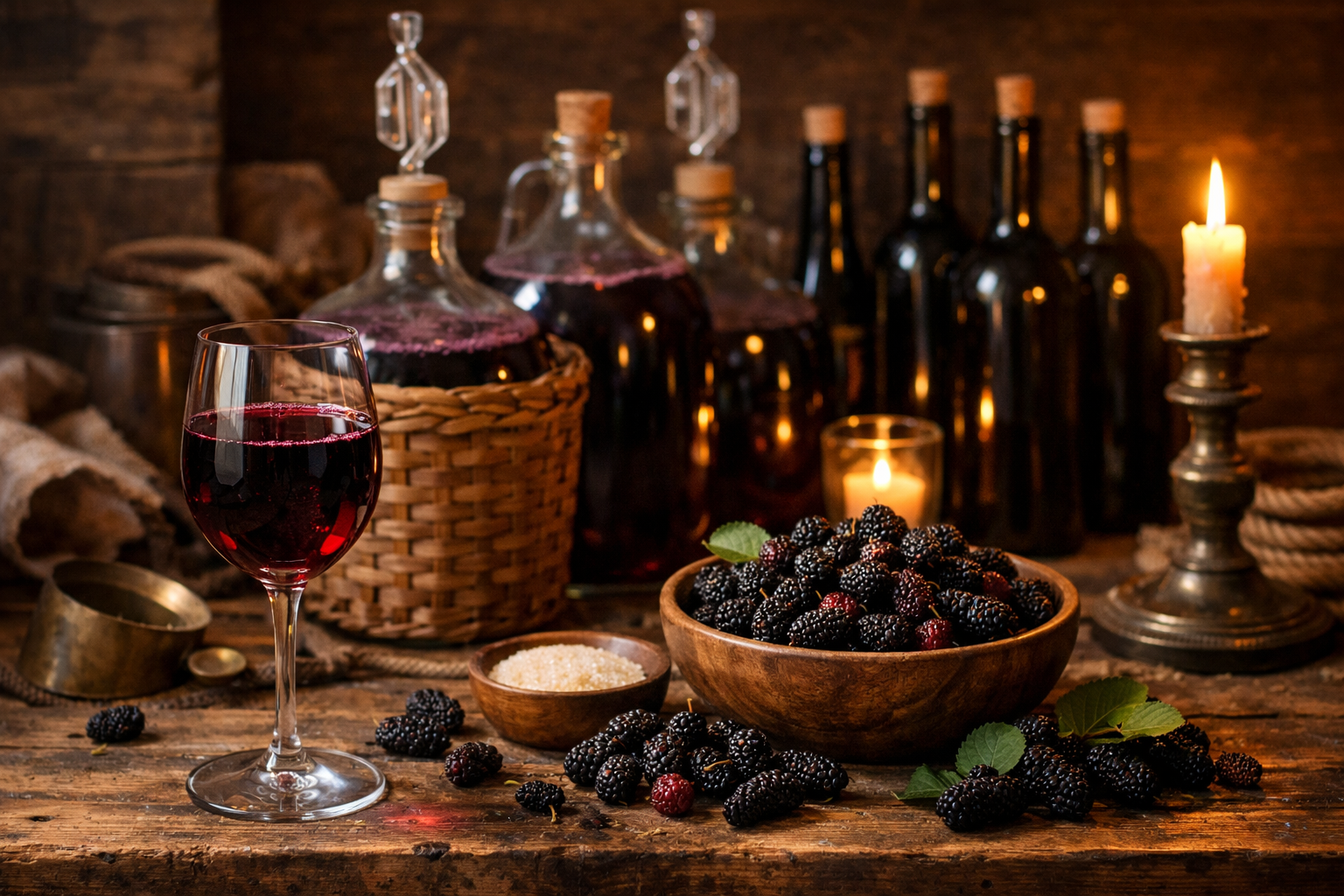
What You’ll Need: Ingredients and Ratios for a One-Gallon Batch
The foundation of every successful batch I’ve produced comes down to a proportional mix that stays more or less constant, adjusted only for whatever volume you’re working with that harvest. For producing a single gallon of wine:
- 4 lbs (roughly 10–12 cups) of freshly harvested, completely ripe mulberries with stems removed
- 2 lbs of white granulated sugar (approximately 4 1/2 cups), with the option to add more if your hydrometer indicates you need additional fermentable sugars
- Water as needed to reach a final volume of 1 gallon
- A single packet of wine yeast—specifically a Lalvin variety such as EC-1118 or Côtes des Blancs; I deliberately avoid baker’s yeast because it underperforms at higher alcohol levels and introduces unpleasant flavors into the finished product
- 1 teaspoon of yeast nutrient powder
- 1/2 teaspoon of pectic enzyme, which breaks apart the cell walls of the fruit and supports clarity development in the final product
- 1/2 teaspoon of acid blend—mulberries naturally skew toward lower acidity, particularly when they’re fully mature, and insufficient acid in the finished wine produces a dull, one-dimensional taste
- 1/4 teaspoon of ground grape tannin—mulberries contain virtually no tannin naturally, and without it added back in, the wine reads as thin and insubstantial rather than balanced and complex
- One Campden tablet (crushed), or 1/4 teaspoon of potassium metabisulfite, which goes in the day before you introduce your yeast culture
Step 1: Sanitize Everything Before Fruit Touches It
The cleanliness of your equipment at the outset is what determines whether you end up with drinkable wine or a jar of spoiled vinegar. Every implement that will come into contact with your fermentation—buckets, stirring tools, carboys, airlocks, everything—requires a thorough soak in a no-rinse sanitizer; Star San is what I reach for, though a potassium metabisulfite solution performs equally well. Invisible wild yeast and spoilage organisms are constantly trying to colonize fruit, and they’ll rapidly overpower the cultured yeast you’re counting on if you leave them an opening. Don’t assume the appearance of your fruit means your equipment can slide by on less rigorous cleaning. The real risk isn’t surface dirt; it’s the microscopic competitors waiting for their opportunity.
Step 2: Crush the Fruit and Build the Must
- Rinse your mulberries and remove all stems; throw away berries showing signs of mold or severe damage.
- Crush them using your hands or a potato masher inside a sanitized food-grade bucket. The goal is to break open the skins and release the juice, not to produce something uniform—a textured mixture with some berry pieces still intact actually helps draw out deeper flavors.
- Mix in the crushed Campden tablet, place a loose cover over the bucket, and allow it to rest for 12–24 hours. This phase suppresses ambient wild yeast and bacteria on the fruit surface before you introduce your cultured yeast strain, but it won’t interfere with the fermentation you’re about to start.
Step 3: Add the Sugar, Acid, Tannin, and Yeast
- Heat the sugar with part of your water over low heat until it dissolves into a clear liquid, then cool this simple syrup back down to ambient temperature before combining it with the crushed fruit.
- Pour in the remaining water until the bucket holds roughly one gallon total.
- Distribute the acid blend, tannin powder, pectic enzyme, and yeast nutrient evenly throughout.
- If you have a hydrometer available, test the liquid now—your target is somewhere between 1.090–1.100 specific gravity, which produces a finished wine around 11–13% alcohol. Increase the sugar quantity slightly if your reading falls short.
- Scatter the yeast across the surface, leave it untouched for about 15 minutes to absorb liquid and become active, then blend it in with a gentle motion.
Step 4: Primary Fermentation (5–7 Days, Open With a Cloth Cover)
Drape a clean cloth across the bucket opening and secure it using a rubber band or cord—you’re not sealing it with an airlock at this stage. The vigorous fermentation happening during this first phase needs room for carbon dioxide to exit freely, and the cloth acts as a barrier against insects and airborne debris while still allowing gas to bubble away. Push the floating mat of skins and solids down below the surface two times each day. Within a day or two you should see obvious, dramatic bubbling. Keep the fermentation going open like this for anywhere from five to seven days, stopping when the visible activity becomes noticeably less intense.
Step 5: Strain and Rack to Secondary Fermentation
- Pour the contents through a sanitized nylon straining mesh or fine-mesh screen into your prepared one-gallon glass carboy, squeezing gently to release liquid without forcing solid particles through the filter.
- Add water as needed to bring the liquid level back to within an inch or so of the carboy’s neck.
- Install the sanitized airlock on top. This is the moment when the sealed, anaerobic environment becomes necessary—secondary fermentation moves at a slower pace and requires protection from oxygen and aerial contaminants in ways that the energetic primary stage does not.
- Relocate the carboy to a location where temperatures stay between 65–75°F and where direct sunlight won’t reach it.
Step 6: Bulk Aging and Racking
When the airlock transitions from steady bubbling to sporadic, infrequent activity—this typically arrives somewhere around the two-month mark—siphon the wine off the accumulated sludge layer into a fresh sanitized carboy, working carefully to disturb as little of the settled material as possible. Repeat this siphoning procedure roughly every two months over the next four to six months, continuing until the wine achieves clarity and stops depositing new material after each transfer. This repeated racking step is precisely what many home fermenters abandon when they’re eager for results, and skipping it is the primary culprit behind batches that turn out murky or taste harsh instead of smooth.
Step 7: Bottling and Aging
After the wine shows no remaining cloudiness and remains stable—typically four to six months after you first added yeast—transfer it into clean wine bottles fitted with corks or caps, then store them horizontally in a temperature-controlled, light-protected environment. A taste at the six-month point will be pleasant, but mulberry wine actually unfolds over time, becoming richer and more nuanced as it sits. The batches I’m most pleased with from my six total experiments didn’t reach their full potential until closer to one year had elapsed in the bottle.
The One-Gallon Kit That Actually Scales for a Single Tree’s Harvest
Confronted with more than 30 pounds of fruit arriving in the span of two weeks, you need a fermentation framework that won’t demand you commit to a five-gallon volume or improvise with mismatched gear scattered through your kitchen and cellar. A complete one-gallon wine fermentation setup supplies all the closure, gas-release, and yeast culture necessary to preserve bulk fruit in a straightforward, uncluttered way.
What works
- The carboy volume aligns with what a backyard grower can genuinely process from a single productive mulberry tree’s output without needing to hunt down extra containers or adjust your proportions partway through the process.
- The built-in airlocks provide a daily window into what’s happening—I observed mine producing steady bubbles for the better part of three weeks during my fourth attempt, which offered tangible proof that my chosen yeast was outperforming any competing microbes.
- The yeast and nutrient formulation included targets fruit-based fermentations rather than generalized alcohol production, so the chemistry handles mulberry-specific characteristics like gravity patterns and natural tannin deficits without stalling partway.
What doesn’t
- The plastic seals included with the kit can deteriorate or split over time if you’re cycling them between successive batches, potentially leaving carboys open to unwanted oxidation while they sit stored between uses.
- Additional materials like sanitizing solutions and mesh straining bags fall outside the kit’s scope—if you’re approaching winemaking for the first time, plan to spend an extra $20 acquiring these supporting components.
Home fruit wine fermentation can stall if kitchen temperatures drop below 65°F at night, as yeast activity slows significantly in cooler conditions. Moving a fermenting batch to a warmer location can help restore fermentation progress. Respect for fermentation basics—particularly temperature control—is essential to success. Home Brew Ohio Upgraded 1 Gallon Wine from Fruit Kit
Frequently Asked Questions
Can I use baker’s yeast to make mulberry wine?
Baker’s yeast underperforms at higher alcohol levels and introduces unpleasant flavors into mulberry wine. Wine yeast is the better choice—specifically a Lalvin variety such as EC-1118 or Côtes des Blancs. Sprinkle it on the surface, leave it about 15 minutes to absorb liquid, then stir it in gently.
Why does mulberry wine need added acid and tannin?
Mulberries naturally skew toward lower acidity, particularly when fully mature, and insufficient acid leaves the finished wine tasting dull and one-dimensional. They also contain virtually no tannin, so without it the wine reads as thin and insubstantial rather than balanced. For a one-gallon batch I add 1/2 teaspoon of acid blend and 1/4 teaspoon of ground grape tannin.
What if my fermentation room gets colder than 65 degrees at night?
Home fruit wine fermentation can stall if temperatures drop below 65°F at night, as yeast activity slows significantly in cooler conditions. For secondary fermentation, maintain temperatures between 65–75°F, away from direct sunlight, to support steady yeast activity and flavor development.
How long should I age mulberry wine before drinking it?
A taste at the six-month point will be pleasant, but mulberry wine actually unfolds over time, becoming richer and more nuanced as it sits in the bottle. The batches I’m most pleased with from my six total experiments didn’t reach their full potential until closer to one year had elapsed. I store bottles horizontally somewhere temperature-controlled and light-protected.
Keep Reading
About This Article
Written by Ruth Nakamura. Ruth Nakamura is a backyard orchardist in the Pacific Northwest who has grown mulberries for fifteen years, cultivating twelve different varieties in her own backyard. Not a horticulturist by formal training - she shares what she has learned through hands-on growing, workshops, and connecting with nurseries and growers across the country. More about this site.
Scope and limits. Ruth is a backyard orchardist without formal horticultural training. Growing conditions vary enormously by region, so confirm variety, timing, and pest guidance with your local extension service.
Verify this against a primary source
Specifics change, and your situation may differ from the one described here. These are the authorities worth checking directly:
- USDA Plant Hardiness Zone Map — zone verification for your location
- Oregon State University Extension — fruit growing and pruning research
- USDA PLANTS Database — species range and identification