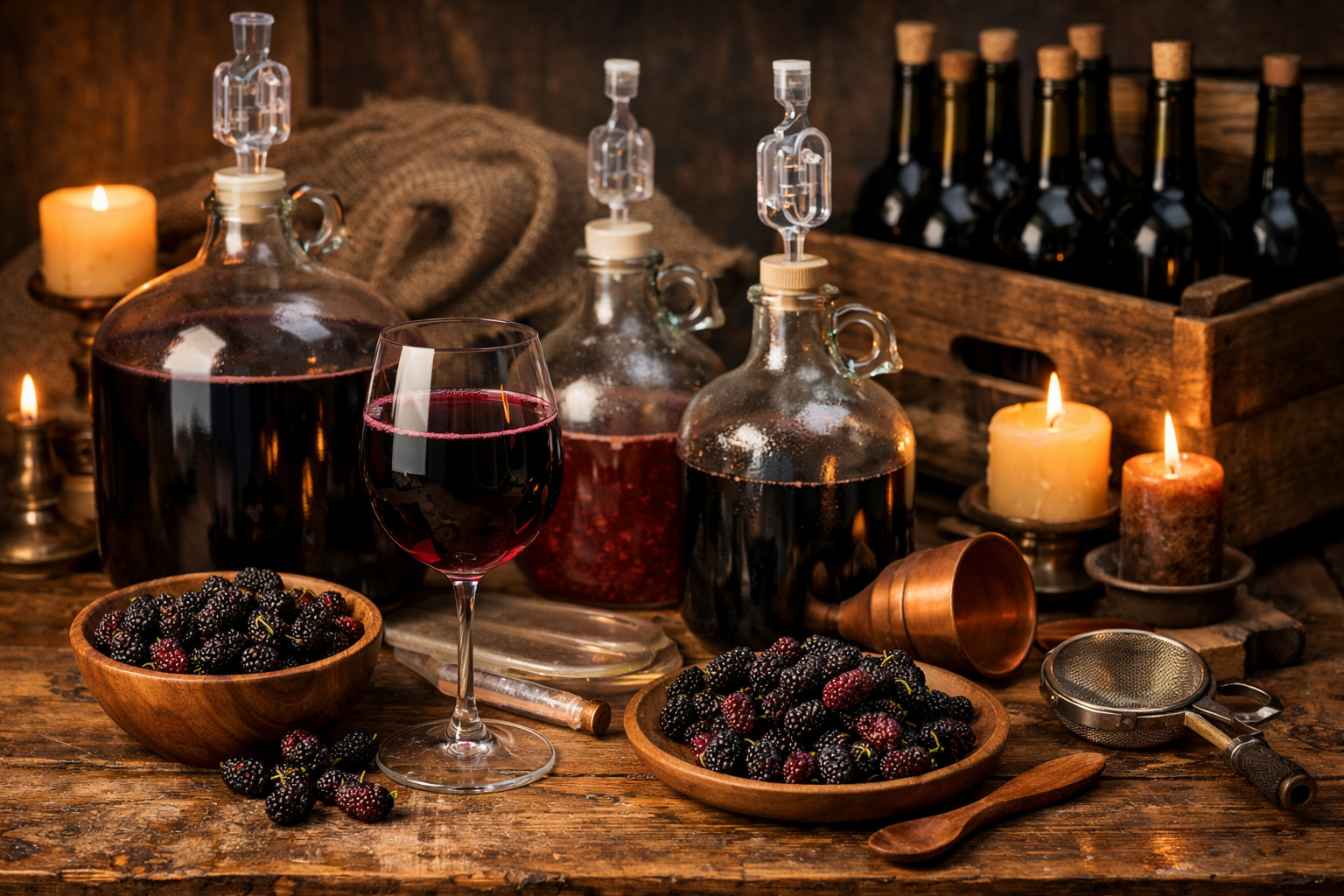
Forty-one pounds. That’s what my Illinois Everbearing dropped on me across nine days last June, and it’s the number that finally pushed me from “maybe I’ll try a batch someday” into buying real equipment instead of improvising with a bucket and a balloon. Mulberries ferment fast and hard — the sugar content and the sheer pigment load in that juice will humble a setup built for grapes or generic fruit wine. I burned through two cracked carboys and one truly disastrous vinegar batch before I figured out which pieces of gear actually hold up to a serious mulberry glut, and which ones just look fine in a photo. This is the equipment I’ve settled on after several seasons of trial and error, and why each piece earns its shelf space.
| Kit | Best For | Key Feature |
|---|---|---|
| Home Brew Ohio Upgraded 1 Gallon Wine from Fruit Kit | First batch or single experiments | Mini auto-siphon, glass carboy, reliable airlock |
| Craft A Brew Fruit Wine Making Kit | Repeated batches and variations | Supplies for roughly twenty one-gallon batches |
Why Most Beginner Wine Kits Set You Up to Fail
Most starter kits are built around grape juice or generic fruit, which means they assume clean, predictable sugar levels and none of the drama mulberries bring to a fermenter. Mulberries are pushier than that. They throw off enormous sediment, they hit peak fermentation faster than almost anything else I’ve fermented, and they’ll bubble a loosely sealed carboy right over the top if you’re not paying attention. My early batches taught me this the hard way — one smelled like vinegar within two weeks, another separated entirely because the airlock had quietly slipped loose overnight.
The cheap kits I wasted money on early had airlocks that never sealed right, siphon tubes that splashed enough to oxidize the wine before it even reached secondary fermentation, and instruction sheets that used words like “racking” without ever explaining what that meant. One arrived with a carboy that was already cracked in the box. I won’t name that one. But those failures are exactly why I now have strong, specific opinions about what belongs in a beginner setup.
The Kits I Actually Recommend (And Why)
These are the two setups I keep returning to after testing several against my own mulberry harvests. They serve different purposes, so I’ll break down who each one actually fits.
Best All-Around Starter Kit: Home Brew Ohio Upgraded 1 Gallon Wine Kit
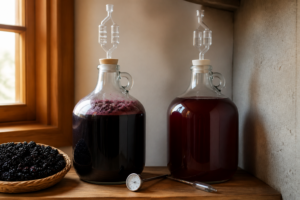
The Home Brew Ohio Upgraded 1 Gallon Wine from Fruit Kit is the one I wish had been my first purchase instead of my third. The piece that changed everything for me was the included mini auto-siphon — racking mulberry wine without one is genuinely messy, and it’s almost guaranteed to stir up the lees you just spent weeks waiting to settle. One pump starts the flow, gravity handles the rest, and the transfer stays clean. It also comes with an actual glass carboy rather than plastic, which matters for anything sitting longer than a few weeks, plus an airlock that holds a seal. If you’re bottling your first one-gallon batch, this is where I’d point you.
Best Value for Repeated Batches: Craft A Brew Fruit Wine Making Kit
If one good batch turns into an obsession with trying twenty variations — mulberry-ginger, mixed berry, a splash of elderflower — the Craft A Brew Fruit Wine Making Kit is where the value really shows up. It’s built to handle fresh fruit, frozen fruit, or juice, and the included supplies stretch across roughly twenty one-gallon batches. Because it’s designed around real fruit instead of grape concentrate, it translates naturally to mulberries, and the reusable equipment means I don’t feel precious about grabbing it for an experimental batch that might not work out.
It also happens to make a genuinely good gift for whoever you’re trying to recruit into fermenting fruit with you. Ask me how I know.
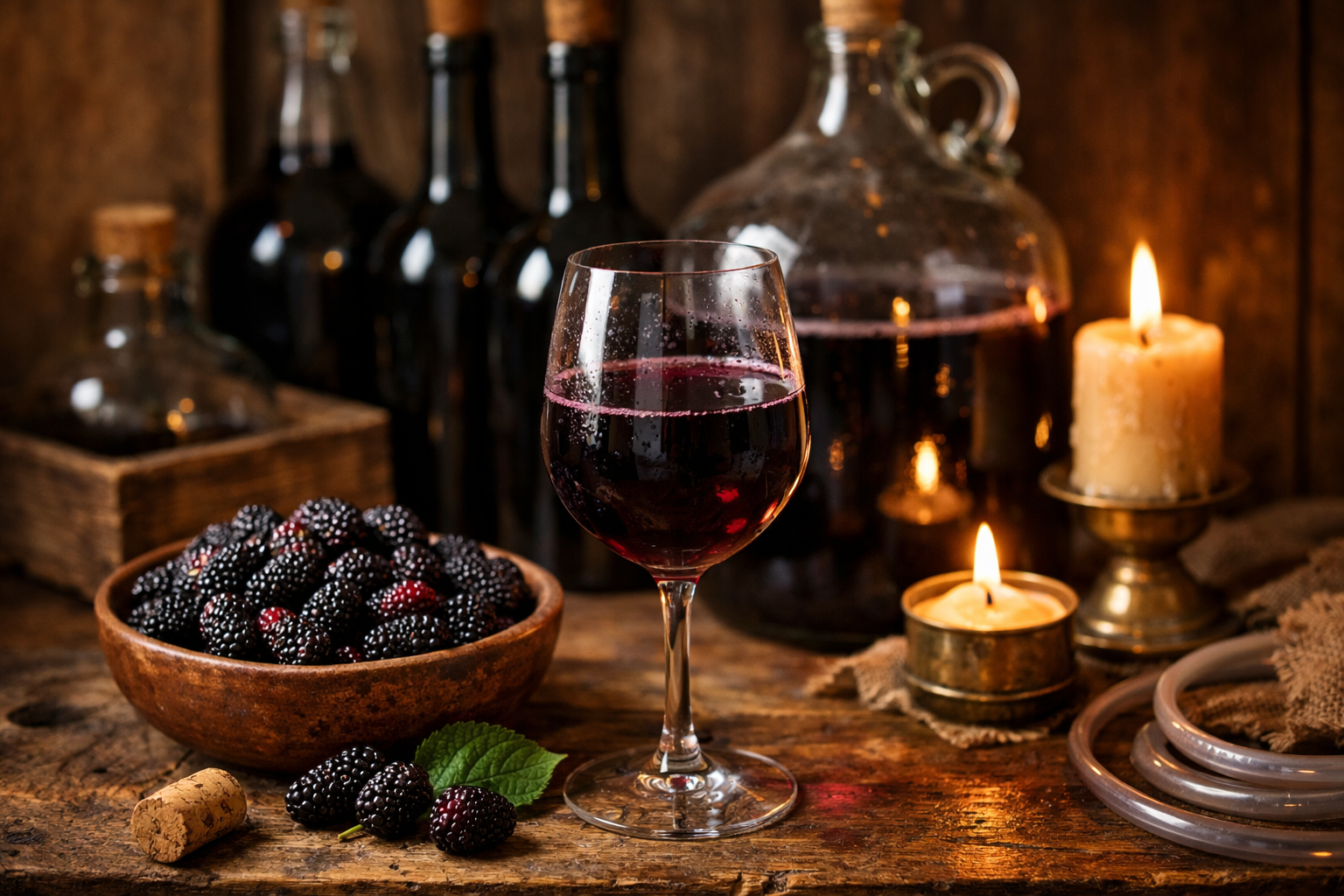
The 1-Gallon Kit That Actually Handles a Real Mulberry Glut Without Oxidizing
When a tree drops fifteen or more pounds in a three-week window, you either process the fruit fast or watch it rot where it fell. A properly sealed vessel with a reliable airlock is the actual difference between wine you’ll drink in six months and wine that quietly turns to vinegar on the shelf.
What works
- The graduated marks on the side mean I’m not guessing at juice volume or buying a separate hydrometer — a real time-saver during peak harvest.
- The airlock resists suck-back when fermentation slows, which I’ve watched ruin cheaper setups during overnight temperature swings in late summer.
- A one-gallon size is right for testing a new variety or a blend before committing five gallons to it — I run three of these at once rather than one large carboy.
What doesn’t
- The rubber stopper can crack if it’s forced in dry — wet the carboy rim first, or you’ll strip it trying to reseat the airlock after a few uses.
- Its small size means you’ll want several running if you’re serious about volume, which eats shelf space and demands more attention to consistent temperature across batches.
My first attempt at mulberry wine, in a borrowed generic carboy, separated and turned before I even noticed the airlock had slipped — I nearly wrote the whole hobby off right there. Three years and a proper kit later, I haven’t lost a single batch to oxidation. Grab the Home Brew Ohio Upgraded 1 Gallon Wine from Fruit Kit and you could have your first fermentation going by tonight.
Frequently Asked Questions
Why did my mulberry wine smell like vinegar after two weeks?
In my case it was the airlock. One of my early batches smelled like vinegar within two weeks and another separated entirely because the airlock had quietly slipped loose overnight. Mulberries ferment fast and hard, so a properly sealed vessel with a reliable airlock is the difference between drinkable wine and vinegar on the shelf.
Do I need to buy a separate hydrometer for fruit wine?
I don’t use one. The graduated marks printed on the side of the carboy mean I’m not guessing at juice volume, and they saved me from buying a separate hydrometer. During peak harvest, when I’m processing fruit as fast as it drops, that’s a real time-saver rather than one more piece of gear to clean and store.
Why does an auto-siphon matter for racking mulberry wine?
Racking mulberry wine without one is genuinely messy, and it’s almost guaranteed to stir up the lees you just spent weeks waiting to settle. With the mini auto-siphon included in the Home Brew Ohio kit, one pump starts the flow, gravity handles the rest, and the transfer stays clean instead of splashing and oxidizing the wine.
Should I use one big carboy or several small ones?
I run three one-gallon carboys at once rather than one large vessel. That size is right for testing a new variety or a blend before committing five gallons to it. The tradeoff is shelf space and more attention to keeping temperature consistent across batches, but I’d rather lose one gallon than five to a failed experiment.
Keep Reading
About This Article

Written by Ruth Nakamura. Ruth Nakamura is a backyard orchardist in the Pacific Northwest who has grown mulberries for fifteen years, cultivating twelve different varieties in her own backyard. Not a horticulturist by formal training - she shares what she has learned through hands-on growing, workshops, and connecting with nurseries and growers across the country. More about this site.
Scope and limits. Ruth is a backyard orchardist without formal horticultural training. Growing conditions vary enormously by region, so confirm variety, timing, and pest guidance with your local extension service.
Verify this against a primary source
Specifics change, and your situation may differ from the one described here. These are the authorities worth checking directly:
- USDA Plant Hardiness Zone Map — zone verification for your location
- Oregon State University Extension — fruit growing and pruning research
- USDA PLANTS Database — species range and identification