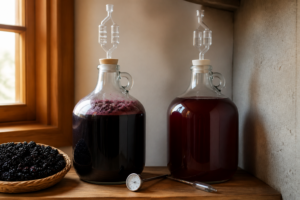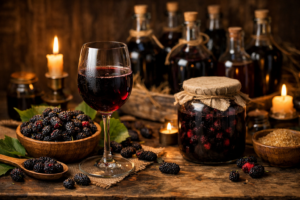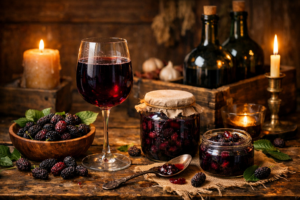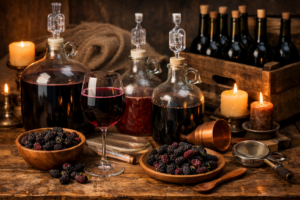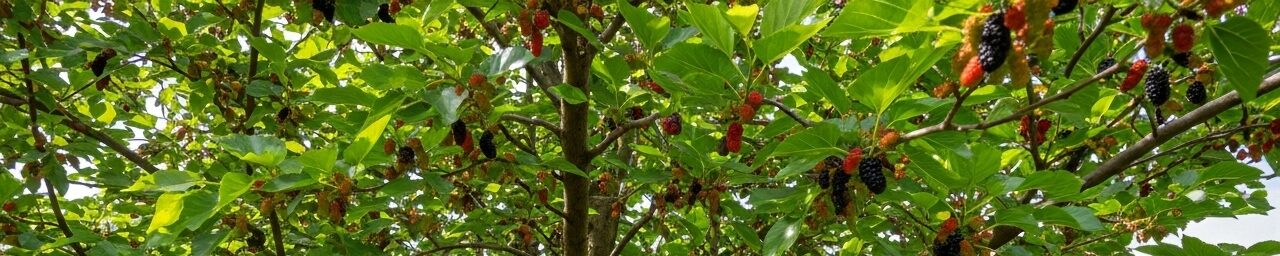
During my opening years managing mulberry trees on this property, I made just about every rookie mistake possible: I’d let whole branches worth of ripe fruit drop and rot untouched, the deck took on permanent dark stains I’m still trying to scrub away, and the ground beneath my Pakistan variety was basically a mulberry compost pile by August. By the time I hit my third season, I’d cobbled together something resembling actual workflow. This piece is essentially the instruction manual I desperately needed back then. Once I stopped wasting fruit and started thinking about preservation, I discovered that surplus harvests called for real solutions. That’s when I began running parallel experiments—pressing fresh juice from one batch of berries while simultaneously starting a fermentation with another portion from the identical pick. The results stopped me cold: despite beginning with the exact same fruit, the finished products tasted almost nothing alike. Everything here comes straight from what I’ve tasted, refined, and lived through across multiple seasons in my own yard—not borrowed from fermentation guides or winemaking forums. If you’re currently buried under more mulberries than your refrigerator can handle and you’re unsure how to process them, this comparison of mulberry wine and mulberry juice will walk you through why fermentation rewires flavor in ways that plain juice simply cannot.
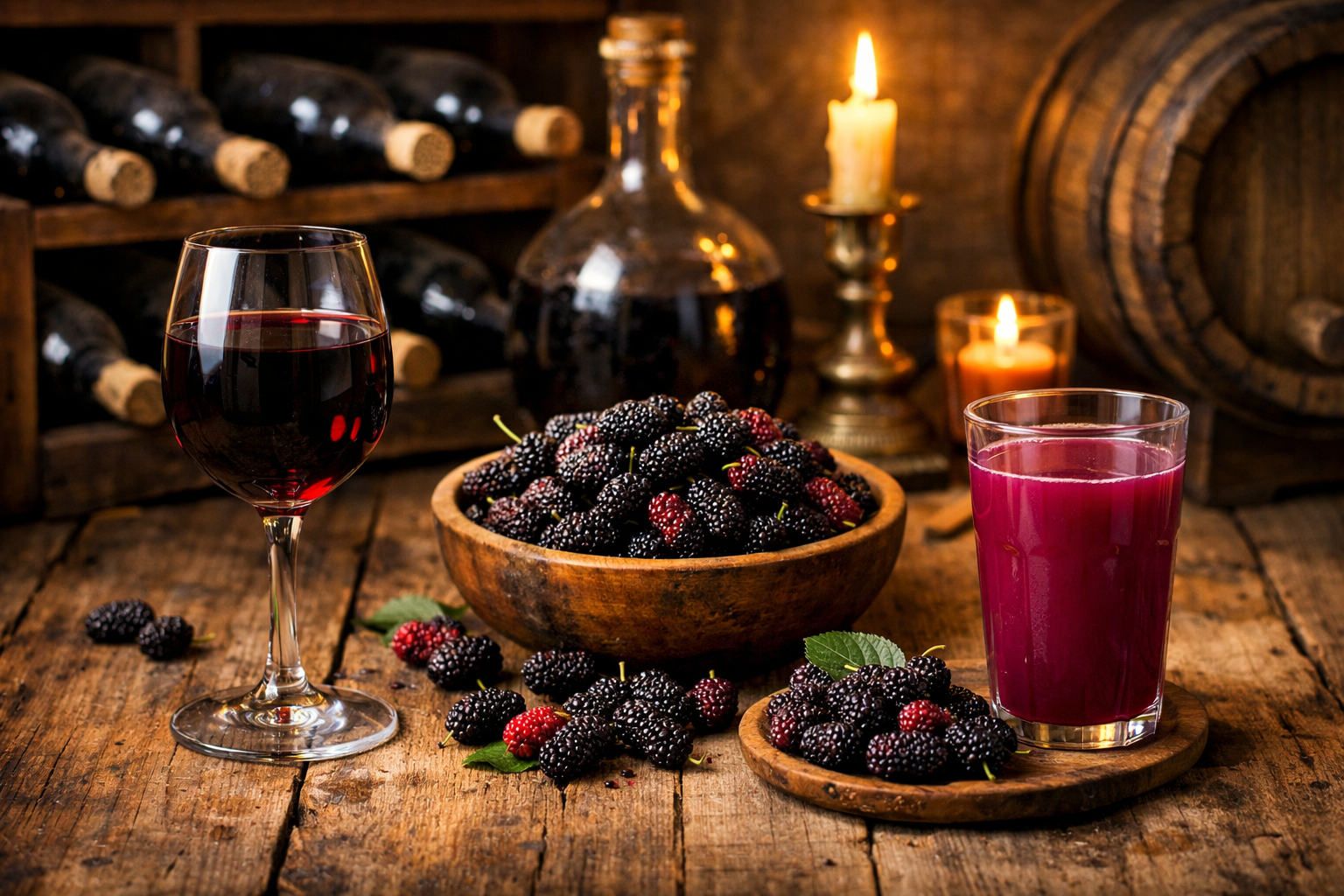
| Product | Flavor Profile | Processing | Key Result |
|---|---|---|---|
| Fresh Mulberry Juice | Blackberry depth with grape-like structure, lower acid, subtle floral undertone, jammy mouthfeel | Cold-press through fine-mesh, no additions, cold storage | Pristine taste, gorgeous color saturation, narrow flavor lane |
| Fermented Mulberry Wine | Dark berry character prominent, complex with hidden dimensions, evolves as it warms | Fermented with Red Star Premier Classique yeast, pushed to dryness | Tastes almost nothing alike despite identical starting fruit, incomplete juice by comparison |
What Fresh Mulberry Juice Actually Tastes Like (And Why It’s More Complex Than You Think)
Straight mulberry juice sits in a category all its own. If you haven’t prepared it before, imagine capturing blackberry depth with a grape-like structure, except gentler overall—lower in acid punch, carrying a subtle floral undertone that emerges early in the tasting experience. The anthocyanin concentration gives it that striking dark pigment, and the mouthfeel borders on jammy, arriving as almost luxurious even without any sweetener stirred in.
The reality, though, is that fresh juice exists in a fairly narrow flavor lane. This isn’t criticism—it’s genuinely tasty. Our household will empty a glass in minutes once I’ve poured it. The sugar presence dominates, the berry character sits right up front where you can’t miss it, and the tartness stays muted. You’re essentially tasting the mulberry’s natural personality, unadorned. There’s no complexity underneath, no hidden dimensions, nothing that evolves as it warms in your mouth. It does what fruit does.
My own batch that season got the cold-press treatment through a fine-mesh setup, received no additions, and went straight into cold storage. Pristine taste. Gorgeous color saturation. Zero fuss. I was genuinely pleased with it. Then I opened a bottle of the fermented batch and suddenly the fresh juice looked incomplete.
Which Yeast Strain Carries Mulberry Through to a Clean Finish
Mulberry juice can ferment rapidly and behave unpredictably—the natural sugar load combined with ambient wild yeasts can swing things toward vinegar or trap the fermentation midway if you don’t pitch the right culture. I discovered this painful truth during my opening three attempts, which all pivoted toward sourness long before bottling day arrived.
What succeeds
- Pushes through to dryness reliably without getting stuck, holding its ground even when mulberry’s tannin structure enters the equation.
- Allows the dark berry character to stay prominent without introducing sharp, spiritous off-flavors—the fruit remains the show’s centerpiece, not the yeast.
- A single packet handles a gallon-scale fermentation without issue, whether you’re working with juice pressed that morning or frozen fruit pulp you’ve thawed from previous season overflow.
What falls short
- Skipping proper rehydration before pitching creates lag—I once rushed this and watched fermentation crawl for seven days when it should have jumped immediately.
- No amount of good yeast rescues juice that’s already oxidized or suspect; sanitation remains the actual bottleneck, not which microbe you’re introducing.
I almost gave up on mulberry wine entirely after that vinegar disaster, convinced the whole fruit was too wild to ferment properly. Red Star Premier Classique (formerly Montrachet) Yeast changed that completely.
Frequently Asked Questions
Why does my mulberry wine keep turning sour before bottling?
Mulberry juice ferments rapidly and behaves unpredictably, since its natural sugar load combined with ambient wild yeasts can swing things toward vinegar or stall fermentation midway. My opening three attempts all pivoted toward sourness before bottling day. Pitching a reliable culture helped, but sanitation is the actual bottleneck, not which microbe you introduce.
Can I ferment mulberry wine from frozen fruit pulp?
Yes, I’ve used thawed frozen pulp from previous season overflow with no issue. A single packet of Red Star Premier Classique handles a gallon-scale fermentation whether you’re working with juice pressed that morning or fruit you froze earlier. The yeast pushes through to dryness either way without getting stuck.
Do I need to rehydrate wine yeast before pitching it?
Yes, skipping proper rehydration before pitching creates lag. I rushed this step once and watched fermentation crawl for seven days when it should have jumped immediately. It’s a small step that costs nothing, and skipping it leaves your juice sitting exposed far longer than necessary before active fermentation takes hold.
How should I press and store fresh mulberry juice?
My batch got the cold-press treatment through a fine-mesh setup, received no additions at all, and went straight into cold storage. The result was pristine taste and gorgeous color saturation with zero fuss. No sweetener is needed either, since the mouthfeel already borders on jammy and the sugar presence dominates.
Keep Reading
About This Article
Written by Ruth Nakamura. Ruth Nakamura is a backyard orchardist in the Pacific Northwest who has grown mulberries for fifteen years, cultivating twelve different varieties in her own backyard. Not a horticulturist by formal training - she shares what she has learned through hands-on growing, workshops, and connecting with nurseries and growers across the country. More about this site.
Scope and limits. Ruth is a backyard orchardist without formal horticultural training. Growing conditions vary enormously by region, so confirm variety, timing, and pest guidance with your local extension service.
Verify this against a primary source
Specifics change, and your situation may differ from the one described here. These are the authorities worth checking directly:
- USDA Plant Hardiness Zone Map — zone verification for your location
- Oregon State University Extension — fruit growing and pruning research
- USDA PLANTS Database — species range and identification