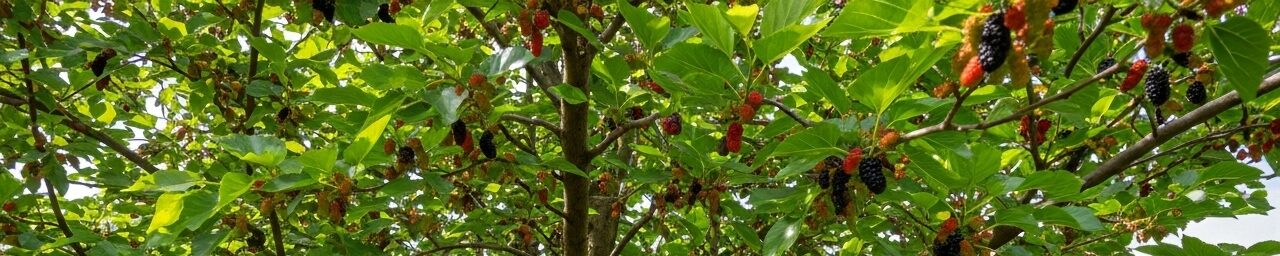
Mulberry stains have a way of announcing a good harvest. Left on a deck through a hot afternoon they darken to almost black, and the acrid, sun-baked smell soaks into the wood rather than sitting on top of it. That mess is really a symptom of something else: a mature mulberry produces far more fruit than any single household eats fresh, and a freezer fills up long before the tree stops dropping. Yet the conversation online rarely moves past jam or frozen fruit. There is a third preservation path that is unusually forgiving and almost nobody talks about: making your own mulberry vinegar. A properly fermented homemade vinegar holds onto the berry’s distinctive anthocyanin richness and that sharp, almost wine-like acidity, which opens up real kitchen versatility — and the barrier to entry is far lower than most people assume, even if fermentation feels entirely foreign to you. The method below follows standard small-batch fruit-vinegar practice: the ratios, timelines and temperature ranges come from established fermentation guidance rather than from any single season’s results, and the failure points are flagged where they usually occur.
Why Mulberry Vinegar Is Worth Making From Scratch
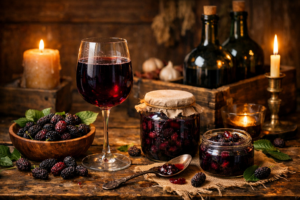
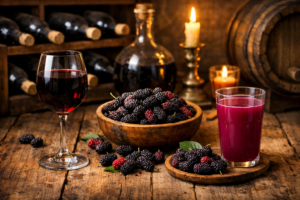
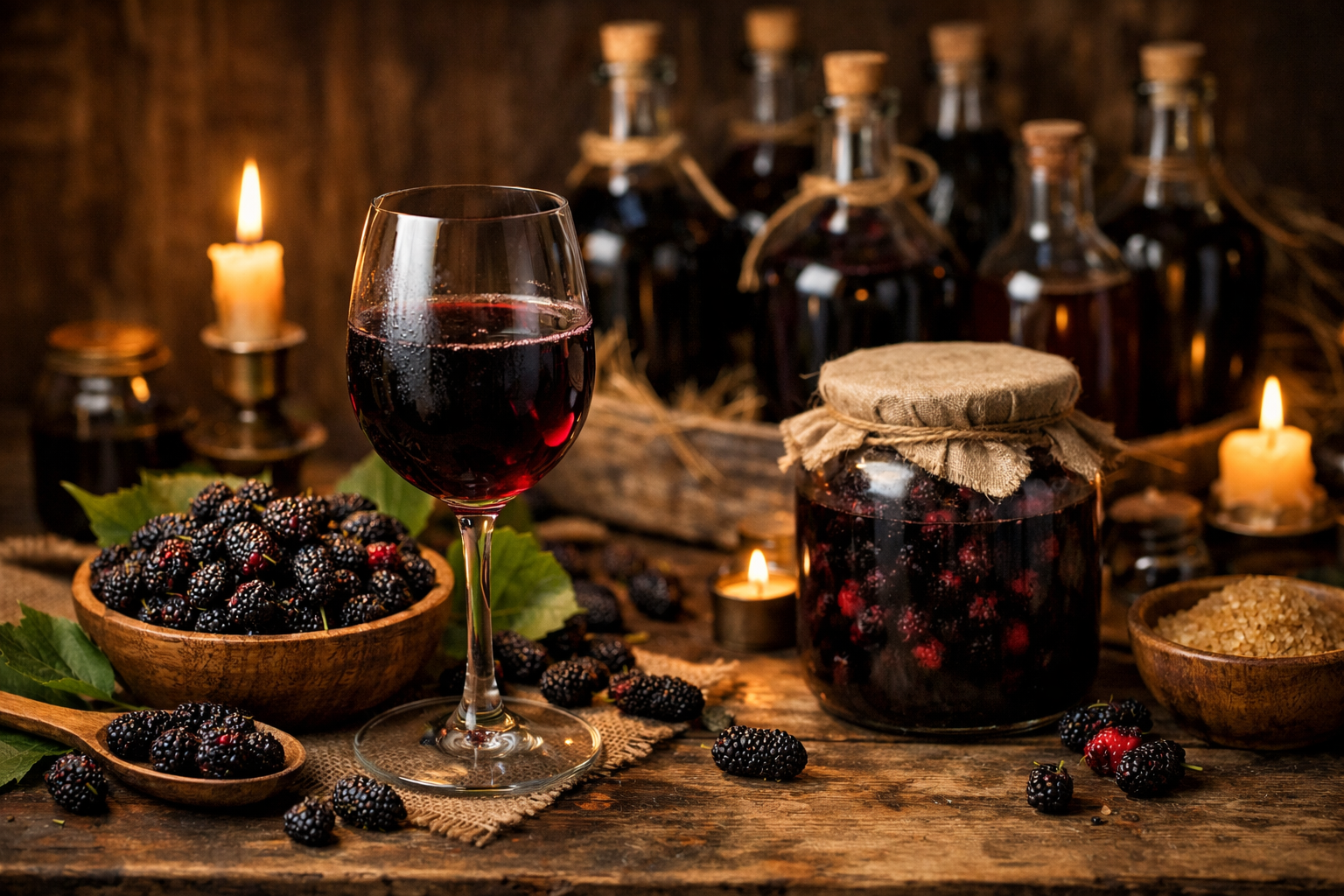
You can walk into any grocery store and find vinegar made from apples, pears, or grapes. Mulberry vinegar exists almost nowhere on retail shelves. The few bottles I’ve tracked down online cost triple what they should, taste watered down with cheaper apple cider vinegar, and bear almost no resemblance to what fresh mulberries actually taste like. Making it at home delivers something altogether different — a deep crimson liquid with fruit-forward complexity and a delicate floral note underneath the tartness. Drizzle it over soft cheese, whisk it into vinaigrettes, stir it into sparkling water, or brush it onto just-roasted root vegetables while they’re still steaming.
Mulberries pack resveratrol, anthocyanins, and vitamin C in quantities that rival most other berries. When you ferment them into vinegar — especially a raw, living vinegar with an active mother culture — those compounds don’t disappear; they transform into a probiotic-rich condiment that combines the gut-friendly benefits of fermented food with the antioxidant density of the original fruit. It won’t cure anything, but knowing you’re making something genuinely nourishing rather than just shelf-stable and delicious makes the whole endeavor feel like more than tinkering.
The full timeline asks for two weeks from start to finish, which sounds like an ordeal until you realize it’s almost entirely passive waiting. What’s actually happening is two distinct fermentation stages stacked back-to-back: alcoholic fermentation (roughly seven days) followed immediately by acetic acid fermentation (another seven days). I’ll take you through the mechanics of both.
The Kit That Finally Made My Mulberry Surplus Worth Keeping
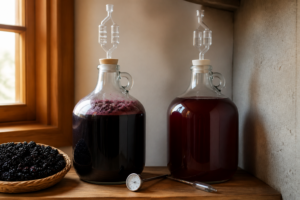
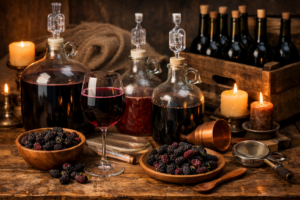
Faced with five pounds of ripe mulberries dropping faster than I could process them, and a freezer genuinely full, vinegar-making looked like the answer — but only if I had reliable equipment that could actually deliver consistent results. Two earlier attempts using improvised containers and inadequate seals led to contaminated batches. I stopped cutting corners.
What works
- The airlock valve seals reliably without any ambiguity — you watch active fermentation happening through visible bubble movement across the full two weeks, and there’s no second-guessing whether your batch is fermenting or succumbing to mold.
- A one-gallon vessel sits right in that sweet spot for handling a single harvest cycle without consuming your entire kitchen counter or forcing you to juggle multiple fermentation vessels simultaneously.
- The starter yeast included produces a clean, straightforward fermentation that actually tastes like mulberry rather than chemical solvents or metallic off-flavors.
What doesn’t
- The attachment points where tubing meets the carboy sit tight enough to be infuriating — I cracked a bung pushing the airlock into place and ended up ordering a replacement part before I could finish my first batch.
- The documentation walks through wine fermentation protocols rather than fruit vinegar specifics, leaving you to translate and adapt if fermentation is new territory for you.
I nearly abandoned the whole project on day four when I thought I saw white film forming on top, but it turned out to be harmless yeast activity—the kit’s clarity actually saved me from panic-dumping a batch that would have been fine. If you’ve got mulberries outpacing your appetite, grab the Home Brew Ohio Upgraded 1 Gallon Wine from Fruit Kit and turn that surplus into something you’ll reach for all winter.
Frequently Asked Questions
Why is there white film on my mulberry vinegar on day four?
In my batch, the white film I spotted around day four turned out to be harmless yeast activity, not mold. Being able to see clearly into the fermentation vessel saved me from panic-dumping a batch that was fine. That visibility is exactly why I stopped improvising containers after two contaminated attempts with inadequate seals.
How long does homemade mulberry vinegar take from start to finish?
The full timeline asks for two weeks, and almost all of it is passive waiting. It’s two distinct fermentation stages stacked back-to-back: alcoholic fermentation for roughly seven days, followed immediately by acetic acid fermentation for another seven days. You watch bubble movement through the airlock across the whole stretch rather than doing daily work.
Can I just buy mulberry vinegar instead of making it?
You’ll struggle to. Mulberry vinegar exists almost nowhere on retail shelves, while apple, pear and grape vinegars are in every grocery store. The few bottles I’ve tracked down online cost triple what they should, taste watered down with cheaper apple cider vinegar, and bear almost no resemblance to what fresh mulberries actually taste like.
What do you actually use mulberry vinegar for in cooking?
I drizzle it over soft cheese, whisk it into vinaigrettes, stir it into sparkling water, and brush it onto just-roasted root vegetables while they’re still steaming. Homemade, it’s a deep crimson liquid with fruit-forward complexity and a delicate floral note underneath the tartness, plus that sharp, almost wine-like acidity.
Keep Reading
About This Article

Written by Ruth Nakamura. Ruth Nakamura is a backyard orchardist in the Pacific Northwest who has grown mulberries for fifteen years, cultivating twelve different varieties in her own backyard. Not a horticulturist by formal training - she shares what she has learned through hands-on growing, workshops, and connecting with nurseries and growers across the country. More about this site.
Scope and limits. Ruth is a backyard orchardist without formal horticultural training. Growing conditions vary enormously by region, so confirm variety, timing, and pest guidance with your local extension service.
Verify this against a primary source
Specifics change, and your situation may differ from the one described here. These are the authorities worth checking directly:
- USDA Plant Hardiness Zone Map — zone verification for your location
- Oregon State University Extension — fruit growing and pruning research
- USDA PLANTS Database — species range and identification